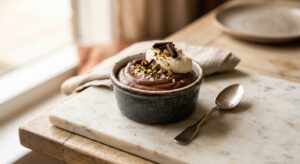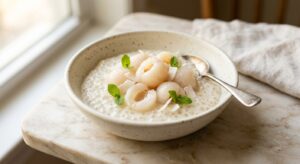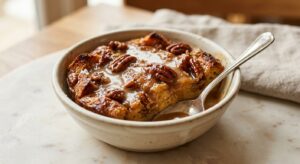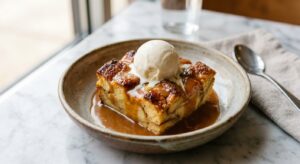
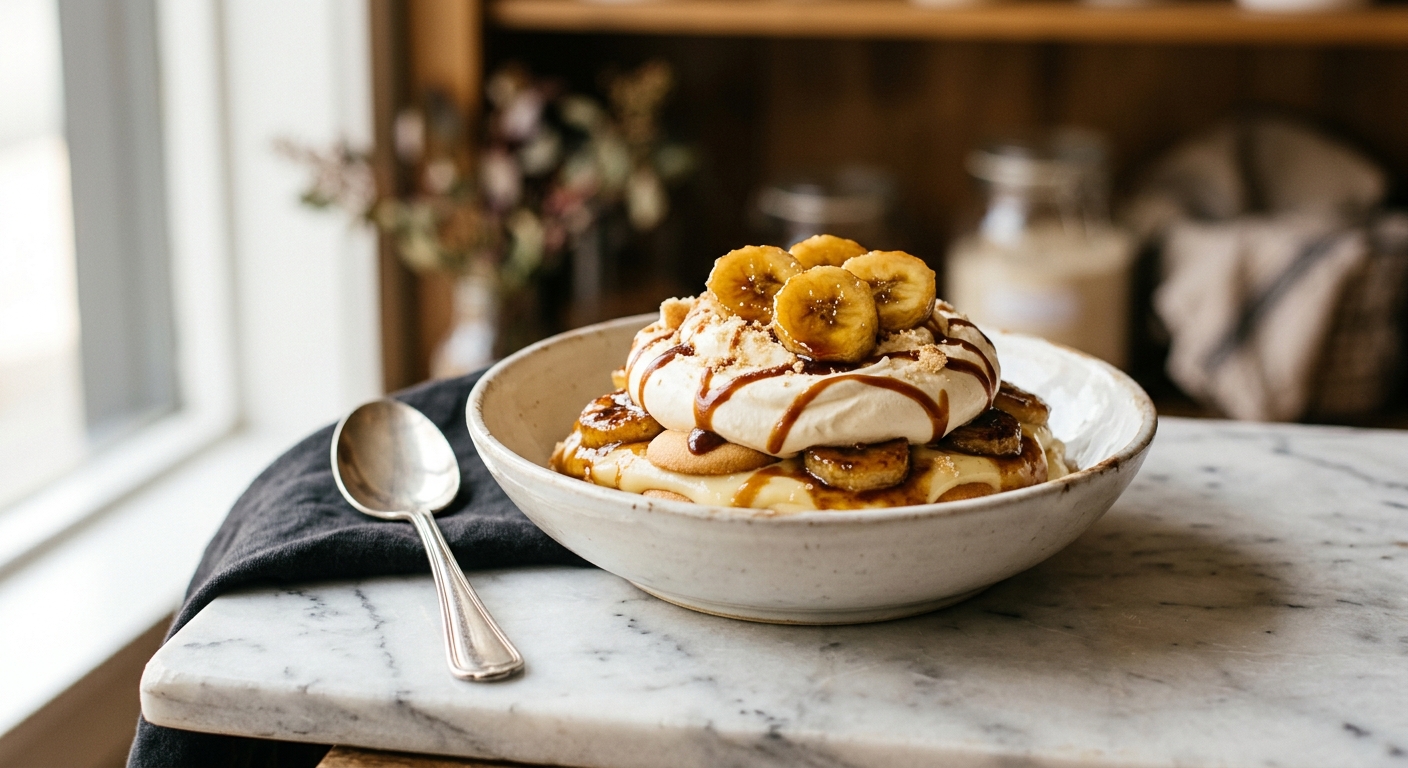
There is a moment, right when the bananas hit the hot buttered pan and the sugar starts to bubble and turn amber, that your kitchen smells like the best version of every dessert you have ever loved. The sizzle, the caramel, the warm vanilla in the air – this is that recipe. Caramelized Banana Pudding with Rum Cream is a layered, spoonable showstopper built around one simple truth: bananas are better when you give them a little heat and a little patience.
What sets this version apart is the decision to caramelize the bananas before they ever touch the pudding. Rather than layering raw slices into a cold dish, you cook them in butter and brown sugar until they are jammy, glossy, and almost candy-like at the edges. That process – called the Maillard reaction combined with caramelization – drives off moisture and concentrates the banana’s natural sugars into something far more complex and rich. The custard itself is a classic stovetop pastry cream made with egg yolks and whole milk for a thick, satiny texture that holds its layers beautifully. And the rum cream on top is just barely sweetened, just barely spiked, and absolutely essential.
This recipe sits comfortably at a medium difficulty level. If you have made pudding or pastry cream before, you will move through it with confidence. If you are newer to stovetop custards, the detailed steps and tips below will walk you through every stage. It is ideal for dinner parties and weekend projects when you want something genuinely impressive that can be made entirely ahead of time.
Equipment Needed
Click on an item below to shop for the recommended items for this recipe on Amazon.
As an Amazon Associate, we earn from qualifying purchases.
8
Ingredients
- Caramelizing
- 4 ripe but firm bananas (not overly soft – they need to hold their shape during caramelizing)
- 55 gunsalted butter, divided (about 4 tbsp)
- 65 gpacked dark brown sugar (about 1/3 cup)
- Caramelizing – See Substitutions
- 30 mldark rum (about 2 tbsp)
- Caramelizing
- 1 tsppure vanilla extract
- 0.25 tspColima Sea SaltMicroplastic Free Salt
- 720 mlwhole milk (about 3 cups) – do not substitute low-fat
- Custard
- 150 ggranulated sugar (about 3/4 cup)
- 45 gcornstarch (about 5 tbsp)
- 0.25 tspColima Sea SaltMicroplastic Free Salt
- 5 large egg yolks
- 30 gunsalted butter (about 2 tbsp)
- 1.5 tsppure vanilla extract
- 150 gvanilla wafer cookies (about 5 oz or roughly 40 cookies), such as Nilla Wafers
- Rum Cream
- 360 mlheavy whipping cream (about 1.5 cups), cold
- 25 gpowdered sugar, sifted (about 3 tbsp)
- Rum Cream – See Substitutions
- 30 mldark rum (about 2 tbsp)
- Rum Cream
- 1 tsppure vanilla extract
- —Pinch of Colima Sea SaltMicroplastic Free Salt
- —Caramel drizzle or extra banana slices, optional for garnish
Ingredient Substitutions
Instructions
- Caramelize the bananas: Peel and slice the bananas into 1/2-inch rounds. In a large skillet over medium-high heat, melt 55g butter. Once the butter is foamy and just beginning to brown, add the dark brown sugar and stir to combine. Let the mixture bubble for 1 minute without stirring until it deepens in color. Add the banana slices in a single layer and cook undisturbed for 2 minutes until the underside is golden and caramelized. Gently flip each slice and cook 1 to 2 minutes more. Remove the pan from heat, carefully add the 30ml rum (it may sputter), return to heat, and let the alcohol cook off for 1 minute. Stir in the vanilla extract and 1/4 tsp salt. Spread the caramelized bananas on a parchment-lined plate and let them cool completely.
- Make the custard: In a medium heavy-bottomed saucepan, whisk together the granulated sugar, cornstarch, and 1/4 tsp salt. Add the egg yolks and whisk until the mixture is pale and smooth, about 1 minute. Gradually pour in the whole milk, whisking constantly to prevent lumps. Place the saucepan over medium heat and cook, whisking continuously and making sure to reach the corners and edges of the pan, until the mixture thickens and comes to a full, bubbling boil – this will take 8 to 12 minutes. Once you see large bubbles breaking the surface, continue cooking and whisking for exactly 2 full minutes. This step cooks out the raw cornstarch flavor and ensures a stable set.
- Finish the custard: Remove the pan from heat. Add the 30g butter and 1.5 tsp vanilla extract and whisk until completely incorporated and glossy. If you notice any lumps, strain the custard through a fine-mesh sieve now. Press a sheet of plastic wrap directly onto the surface of the custard – this prevents a skin from forming. Let the custard cool for 20 minutes at room temperature before assembling.
- Assemble the pudding: Arrange a single layer of vanilla wafer cookies across the bottom of a 9×9-inch baking dish (or distribute among 8 individual glasses, about 4 to 5 cookies per glass). Spoon or pour roughly half of the warm custard evenly over the cookies. Arrange all of the caramelized banana slices in a single layer over the custard, reserving a few for garnish if desired. Add another layer of cookies on top of the bananas. Pour the remaining custard over the top and spread it to the edges. Smooth the surface with a spatula.
- Chill: Cover the dish tightly with plastic wrap and refrigerate for at least 3 hours, or overnight for best results. The cookies will soften into tender, cake-like layers as they absorb the custard.
- Make the rum cream: Just before serving, combine the cold heavy cream, powdered sugar, rum, vanilla extract, and pinch of salt in a chilled bowl. Using a hand mixer or stand mixer fitted with the whisk attachment, beat on medium-high speed until the cream holds firm, billowy peaks – about 3 to 4 minutes. Do not overbeat.
- Top and serve: Spread or pipe the rum cream generously over the chilled pudding. Garnish with reserved caramelized banana slices and a drizzle of caramel sauce if desired. Serve immediately once the cream is on top, or refrigerate for up to 2 hours before serving.
- Caramelize the bananas following Step 1 of the stovetop method exactly. Allow to cool completely.
- Prepare the pudding: In a large bowl, whisk together two 3.4-oz packages of instant vanilla pudding mix (such as Jell-O brand) with 720ml cold whole milk. Whisk vigorously for 2 minutes until the pudding is smooth and beginning to thicken. Let it stand for 5 minutes – it should be thick enough to hold a soft mound when dropped from a spoon. Stir in 1 tsp pure vanilla extract and 1/4 tsp fine sea salt to brighten the flavor.
- Layer the jars: Set out eight 6-ounce mason jars or glasses. Place 2 vanilla wafer cookies in the bottom of each jar, breaking them to fit if needed. Spoon a generous layer of pudding (about 3 to 4 tablespoons) into each jar over the cookies. Divide the caramelized banana slices evenly among the jars, placing them in a layer on top of the pudding. Add 1 to 2 more broken cookie pieces, then top with another layer of pudding, filling to about 1 inch from the rim.
- Chill: Cover each jar with plastic wrap or a lid and refrigerate for at least 2 hours until the pudding is fully set and the cookies have softened.
- Make the rum cream following Step 6 of the stovetop method. Top each jar with a generous dollop of rum cream just before serving. Garnish with a reserved banana slice or a crumbled cookie and serve immediately.
Nutrition Per Serving
Per 1 serving (makes one 9×9-inch dish or 8 individual 6-ounce glasses)
Why This Recipe Works
The decision to caramelize the bananas is the single most important technique in this recipe, and it is worth understanding why it matters so much. Raw bananas, while sweet, contain a high proportion of water and starch. When you cook them in hot butter and sugar, two things happen simultaneously: the Maillard reaction browns the surface proteins and sugars into hundreds of new flavor compounds, and the heat drives off excess moisture, concentrating the banana’s natural sugars into a thicker, more intensely fruity consistency. The result is a banana that tastes more like banana, holds its texture in layers rather than turning to mush, and contributes complex caramel notes that raw fruit simply cannot.
The stovetop custard is built on the chemistry of starch gelatinization and egg yolk proteins. Cornstarch granules absorb liquid and swell dramatically when heated above about 185°F (85°C), forming a thick gel. The egg yolks add richness and a secondary thickening mechanism through protein coagulation, while also emulsifying the fat and water in the milk into a silky, cohesive texture. The critical step of boiling the custard for a full 2 minutes after it thickens is not optional – it destroys an enzyme called alpha-amylase naturally present in egg yolks that would otherwise break down the starch structure, causing your custard to thin out and weep in the refrigerator overnight. Adding the butter off the heat rather than into the hot custard preserves its emulsifying power and gives the finished custard a glossier, richer mouthfeel.
The rum cream works because cold heavy cream – which is at least 36% milkfat – traps air in a stable foam when whipped. The fat globules cluster around the air bubbles and hold the structure firm. A small amount of powdered sugar stabilizes the foam slightly, while the rum adds flavor without destabilizing the cream as long as it is added in small quantities and the cream is very cold. If you find your cream struggling to whip in warm weather, chill your bowl and whisk attachments in the freezer for 15 minutes before starting.
Baker’s Tips
- Use bananas that are ripe but still firm – look for yellow skins with just a few brown spots. Overly ripe bananas will turn to mush in the pan and make the layers difficult to distinguish.
- Whisk the custard constantly and in a figure-eight motion, making sure to scrape the corners and edges of the saucepan where scorching starts first. A silicone whisk is ideal for this.
- If your custard forms lumps, do not panic. Simply pour it through a fine-mesh sieve immediately while it is still hot and whisk it smooth on the other side.
- Press plastic wrap directly onto the surface of the custard the moment you pull it off the heat. Even 30 seconds of exposure to air will begin forming a skin that is difficult to smooth back in.
- For the cleanest, most impressive individual servings, use wide-mouth mason jars or clear drinking glasses so the layers are visible from the side.
- The rum cream is best whipped to firm peaks rather than stiff peaks – you want it to hold its shape but still have a soft, pillowy quality when spooned over the pudding.
- Toasting the vanilla wafers in a 325°F (160°C) oven for 8 to 10 minutes before layering gives them a nuttier flavor and slightly extends the time before they go fully soft, which is a nice touch if you prefer some textural contrast.
Variations
- Salted caramel version: Drizzle 60ml of homemade or store-bought salted caramel sauce between the custard and banana layers before chilling. The salt cuts through the sweetness beautifully.
- Tropical twist: Replace the dark rum with coconut rum, add a layer of toasted shredded coconut between the banana and cookie layers, and use coconut cream in place of heavy cream for the topping.
- Chocolate banana version: Stir 85g of melted and cooled dark chocolate (70% cacao) into the finished custard before assembling. Use chocolate wafer cookies instead of vanilla wafers.
- Bourbon banana pudding: Swap the dark rum for an equal amount of good-quality bourbon for a slightly smokier, more Southern-inspired flavor profile.
Troubleshooting & FAQ
My custard turned lumpy. What went wrong?
My custard is runny and did not set up in the refrigerator. What happened?
My bananas turned to mush during caramelizing. How do I prevent that?
My rum cream started to look grainy and curdled. Did I overbeat it?
The cookies in my pudding are still crunchy after 3 hours. Is that normal?
Storage & Make-Ahead
- Storage: Store assembled pudding (without the rum cream topping) covered tightly in the refrigerator for up to 3 days. The cookies will continue to soften over time, which many people prefer. Add the rum cream only on the day of serving. Do not freeze the assembled pudding, as the custard and bananas will weep and separate upon thawing.
- Make-Ahead: This dessert is ideal for making ahead. The custard can be made up to 2 days in advance and stored with plastic wrap pressed directly on the surface in the refrigerator. The bananas are best caramelized on the day of assembly. The full assembled pudding (minus the rum cream) can be built the night before and refrigerated overnight, which actually improves the texture as the layers meld. Whip the rum cream fresh, no more than 2 hours before serving.