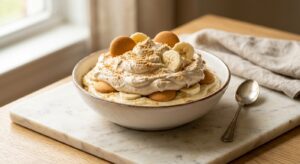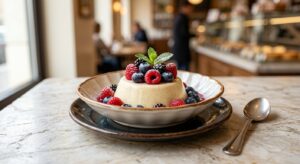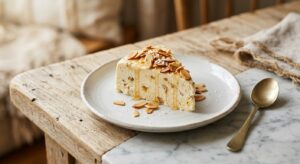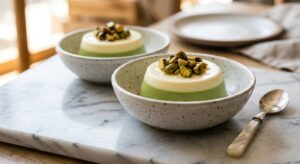
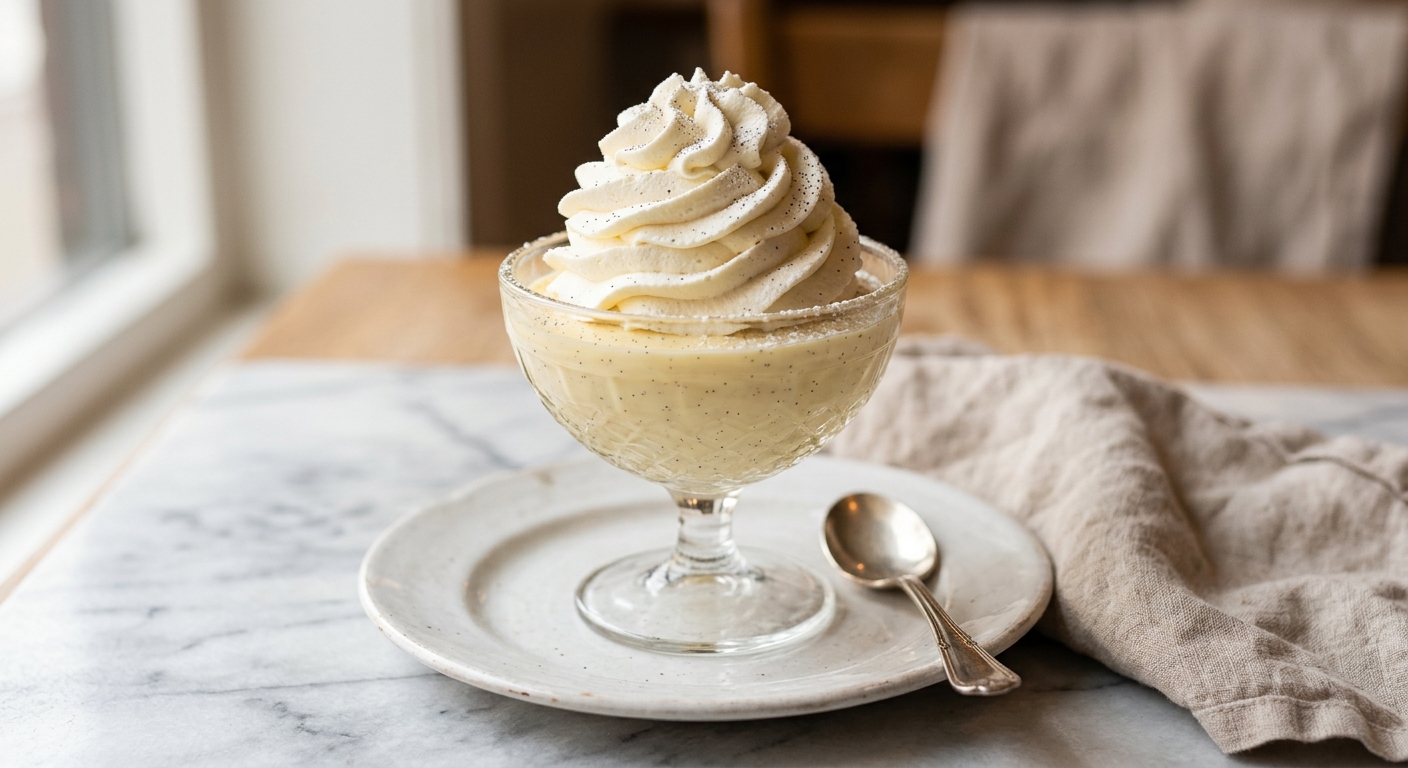
There is a moment in every pastry lover’s life when they first taste something from a proper French patisserie and realize that the creamy filling inside that immaculate tart is unlike anything they have ever made at home. That filling is almost certainly crème diplomate. Ivory-pale and impossibly light, it quivers gently on a spoon, carries the warm perfume of real vanilla, and melts on the tongue in a way that feels almost architectural, somehow both structured and weightless at once. It is one of those preparations that feels luxurious and a little mysterious, the kind of thing you assume requires years of training to pull off in your own kitchen.
What makes this version special is a two-part approach to flavor and a precise gelatin technique that gives you reliable results every single time. The pastry cream base is steeped with a whole split vanilla bean while the milk heats, extracting every last bit of floral, caramel-edged flavor from the pod. A small amount of bloomed sheet gelatin (or powdered gelatin, both are covered) is whisked into the hot cream before cooling, which stabilizes the final mixture just enough to pipe and slice cleanly without making it rubbery. The whipped cream is folded in two stages, first a loosening spoonful to bring the textures together, then the rest in gentle arcs, so you never deflate the volume you worked to build. The result is a crème diplomate that slices like a dream and tastes like a patisserie window.
This recipe sits at a medium difficulty level and is genuinely approachable for anyone comfortable making a basic custard. It does require patience at the chilling stage, so plan ahead. It is perfect for home bakers who want to elevate their tarts, eclairs, and layer cakes, and for anyone ready to move past store-bought pastry cream and discover what the real thing can do.
Equipment Needed
Click on an item below to shop for the recommended items for this recipe on Amazon.
As an Amazon Associate, we earn from qualifying purchases.
10
Ingredients
- 500 mlwhole milk (about 2 cups plus 2 tbsp)
- 1 wholevanilla bean, split lengthwise and seeds scraped
- 120 gegg yolks (about 6 large yolks)
- 120 gcaster sugar or superfine sugar (about 1/2 cup plus 1 tbsp)
- 40 gcornstarch (about 1/4 cup plus 1 tsp), also called cornflour
- 20 gunsalted butter (about 1.5 tbsp), cut into small cubes, cold
- 5 gpowdered gelatin (about 1.5 tsp), or 2 sheets of leaf gelatin (gold grade)
- 30 mlcold water (about 2 tbsp), for blooming powdered gelatin only
- 300 mlheavy whipping cream, cold (about 1 and 1/4 cups), minimum 35% fat
- 2 tbspicing sugar (powdered sugar), sifted
- —Pinch of Colima Sea SaltMicroplastic Free Salt
Ingredient Substitutions
Instructions
- Bloom the gelatin first. If using powdered gelatin, sprinkle it over 30ml of cold water in a small bowl and let it sit undisturbed for at least 5 minutes until it swells and looks spongy. If using leaf gelatin, submerge the sheets in a bowl of cold water for 5 minutes, then gently squeeze out all excess water before use. Set aside.
- Steep the vanilla. Pour the milk into a medium heavy-bottomed saucepan. Add the split vanilla bean and its scraped seeds along with a pinch of fine sea salt. Place over medium heat and bring just to a simmer, small bubbles at the edges but not a rolling boil. Remove from the heat, cover, and let steep for 10 minutes. This infuses the milk with deep vanilla flavor before any eggs are involved.
- Whisk the egg mixture. In a large heatproof bowl, whisk together the egg yolks and caster sugar vigorously for about 2 minutes until the mixture is pale, slightly thick, and falls in a ribbon from the whisk. This is called blanching the yolks and it helps them absorb the hot milk without scrambling. Whisk in the cornstarch until completely smooth with no lumps.
- Temper and cook the pastry cream. Remove the vanilla bean pod from the milk (rinse and dry it for another use). Return the milk to medium heat until steaming. Slowly pour about one-third of the hot milk into the yolk mixture while whisking constantly. This gentle tempering raises the temperature of the eggs gradually. Pour the tempered egg mixture back into the saucepan with the remaining milk and cook over medium heat, whisking constantly and vigorously, especially at the bottom and edges of the pan. The mixture will thicken suddenly, usually around 82 to 85°C (180 to 185°F). Keep whisking for a full 90 seconds after it thickens to cook out the raw starch flavor and ensure a smooth, glossy cream.
- Add butter and gelatin. Remove the pan from the heat. Immediately whisk in the cold butter cubes one at a time until each is fully incorporated. The cold butter enriches the cream and gives it a beautiful gloss. Now whisk in the bloomed gelatin (powdered or squeezed leaf) until it dissolves completely in the hot cream. Work quickly as the heat will diminish.
- Chill the pastry cream. Pour the finished pastry cream through a fine-mesh sieve into a clean shallow container or bowl to remove any cooked egg bits or vanilla pod remnants. Press a sheet of plastic wrap directly onto the surface of the cream so it makes full contact, preventing a skin from forming. Refrigerate until thoroughly chilled and set, at least 2 hours and up to 24 hours. The cream will be quite firm when cold due to the gelatin.
- Whip the cream. When you are ready to assemble, pour the cold heavy cream and sifted icing sugar into a large bowl (or the bowl of a stand mixer fitted with the whisk attachment). Whip on medium-high speed to medium-stiff peaks. The cream should hold its shape when the whisk is lifted but still look smooth and glossy, not grainy or separated. Overwhipped cream is the most common mistake here; stop early.
- Loosen and fold. Remove the chilled pastry cream from the refrigerator. It will be firm and slightly gelatinous. Using a spatula or a balloon whisk, beat the pastry cream vigorously until it is smooth and creamy again, about 30 seconds. Scoop a generous spoonful, about a quarter of the whipped cream, into the pastry cream and stir it in with a spatula using normal circular motions. This lightens the base and makes the final fold much gentler. Add the remaining whipped cream in two additions, folding carefully with a large spatula, cutting down through the center and sweeping up and over, rotating the bowl as you go. Stop as soon as no white streaks remain. The finished crème diplomate should be smooth, light, and just hold soft peaks.
- Use immediately or refrigerate covered for up to 4 hours before piping or spooning into your prepared tart shell, eclairs, or serving glasses.
- Bloom the gelatin as directed in the stovetop method (powdered in cold water, or leaf sheets in cold water). Set aside.
- Heat the milk in a large microwave-safe jug or bowl with the split vanilla bean, seeds scraped in, and a pinch of salt. Microwave on high in 60-second bursts, stirring between each, until the milk is steaming and just beginning to simmer at the edges, usually 2 to 3 minutes total. Remove the vanilla bean pod, cover the jug loosely with a plate, and let steep for 10 minutes.
- In a separate microwave-safe bowl, whisk the egg yolks and caster sugar until pale and thick, about 2 minutes. Whisk in the cornstarch until completely smooth. Slowly pour the steeped hot milk into the yolk mixture while whisking constantly to temper the eggs.
- Microwave the combined custard mixture on medium power (50%), whisking thoroughly every 60 seconds. After each interval, check the consistency and watch for the edges beginning to thicken before the center. Continue in 60-second increments at medium power, whisking vigorously each time, until the custard is thick, glossy, and holds a line when a spatula is drawn through it. This usually takes 4 to 6 minutes total at medium power. The key is to never microwave at full power once the eggs are in, as the outer edges will cook and curdle before the center thickens.
- Immediately whisk in the cold butter cubes and then the bloomed gelatin until both are fully dissolved and incorporated. Strain through a fine-mesh sieve into a clean container. Press plastic wrap directly onto the surface and refrigerate for at least 2 hours.
- Once chilled, follow steps 7, 8, and 9 from the stovetop method exactly: whip the cream to medium-stiff peaks with the icing sugar, loosen the pastry cream until smooth, and fold the two together in gentle stages until just combined.
Nutrition Per Serving
Per 1 serving (makes approximately 700g (about 3 cups) of finished crème diplomate, enough to fill one 9-inch tart, 8 to 10 eclairs, or a 9-inch layered cake)
Why This Recipe Works
Crème diplomate is essentially a stabilized hybrid: pastry cream (crème pâtissière) provides body, richness, and flavor, while whipped cream provides lightness and volume. The cornstarch is the backbone of the pastry cream. When whisked with the egg yolks before the hot milk is added, it coats the proteins in the yolks and prevents them from seizing too quickly when heat is applied. As the custard heats past 80°C (176°F), the starch granules absorb water and swell dramatically, a process called gelatinization, which is what makes the cream thick rather than just set like a baked custard. Whisking continuously for a full 90 seconds after thickening is essential because it bursts any remaining starch granules and drives off the raw, pasty flavor that undercooked starch carries.
Gelatin is the critical third element that makes crème diplomate different from a simple lightened pastry cream. Without it, the mixture would weep and slump within an hour of assembly as the whipped cream slowly collapses under the weight of the custard. The gelatin forms a protein network throughout the mixture that holds both the liquid from the custard and the air bubbles from the cream in suspension. The amount used here is deliberately modest, just enough to stabilize without creating a bouncy, set texture. Too much gelatin is the most common mistake in homemade versions, so measure carefully. Butter stirred into the hot cream at the end serves both texture and flavor: it enriches the mouthfeel and creates an emulsion that gives the finished cream its characteristic gloss and smoothness.
The two-stage folding technique, loosening the pastry cream first with a spoonful of whipped cream before folding in the rest, matters more than it might seem. Cold pastry cream is dense and resistant, and folding stiff cream directly into it creates uneven pockets and forces you to over-mix to eliminate streaks, deflating your whipped cream in the process. The initial loosening spoonful creates a more yielding, cohesive base so the remaining cream can be incorporated in just a few confident folds, preserving as much air, and therefore lightness, as possible.
Baker’s Tips
- Keep your heavy cream very cold right up to the moment you whip it. Cold fat whips faster and holds peaks longer. If your kitchen is warm, chill the bowl and whisk attachment in the freezer for 10 minutes beforehand.
- Do not rush the chilling of the pastry cream. It must be completely cold and set before you fold in the whipped cream, otherwise the warmth will melt the cream and you will lose all the airy volume.
- When whisking the pastry cream during cooking, make sure your whisk reaches the bottom corners of the pan. Flat-bottomed whisks are ideal here. Custard scorches fastest where the base meets the sides.
- If you see any lumps in your finished pastry cream, do not panic. Pass it through a fine-mesh sieve while it is still hot. A few seconds of pressing with a spatula will give you a perfectly smooth base.
- The vanilla bean pod, once rinsed and dried, can be buried in a jar of caster sugar to make vanilla sugar, or simmered in cream for another batch. Nothing from a real vanilla bean should be wasted.
- When folding whipped cream, use a large, flat-edged silicone spatula rather than a spoon or balloon whisk. The wide surface lets you move through the mixture in fewer strokes.
- For perfectly piped diplomate in tarts or eclairs, transfer the finished cream to a piping bag fitted with a large round or star tip and refrigerate the bag for 20 minutes before piping. This firms it up just enough for clean, defined shapes.
Variations
- Chocolate Crème Diplomate: Whisk 60g of finely chopped dark chocolate (70%) into the hot pastry cream along with the butter. The gelatin amount can be reduced to 3.5g as the chocolate adds some body.
- Coffee Diplomate: Dissolve 2 tsp of good instant espresso powder or 1 tsp of coffee extract into the warm steeped milk before tempering the eggs. Excellent in eclairs or a layered coffee cake.
- Raspberry or Passion Fruit Diplomate: Replace 100ml of the milk with strained fruit puree, adding it to the finished hot cream rather than during steeping to preserve brightness. Increase gelatin to 6g as the fruit acids can slightly weaken the set.
- Lemon Crème Diplomate: Add the finely grated zest of 2 unwaxed lemons to the milk during steeping and replace the vanilla bean with vanilla paste. Finish with a small squeeze of lemon juice stirred into the warm cream off heat.
Troubleshooting & FAQ
My pastry cream turned lumpy or curdled during cooking. Can I fix it?
My crème diplomate is too runny and will not hold its shape. What went wrong?
My gelatin set unevenly and I can feel small rubbery lumps in the finished cream. How do I avoid this?
My crème diplomate tastes starchy or slightly floury. What happened?
Can I make crème diplomate without gelatin?
Storage & Make-Ahead
- Storage: Crème diplomate is best used the same day it is made. Once assembled in a tart or pastry, refrigerate and consume within 24 hours. If stored on its own in a covered container, it will keep for up to 2 days in the refrigerator, though it may weep slightly. Do not freeze crème diplomate as the whipped cream will separate and the texture becomes grainy on thawing.
- Make-Ahead: The pastry cream base (before whipped cream is folded in) can be made up to 2 days ahead. Keep it covered tightly in the refrigerator with plastic wrap pressed against the surface. Whip and fold in the cream no more than 4 hours before serving for the freshest texture and best structure. Do not fold the whipped cream in advance and leave it overnight.