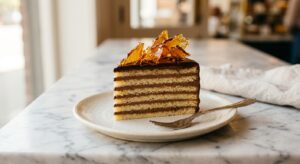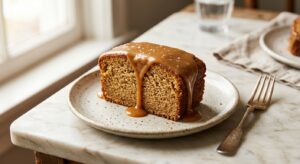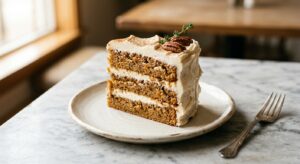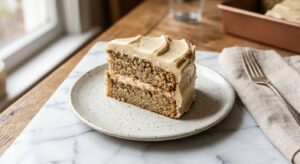
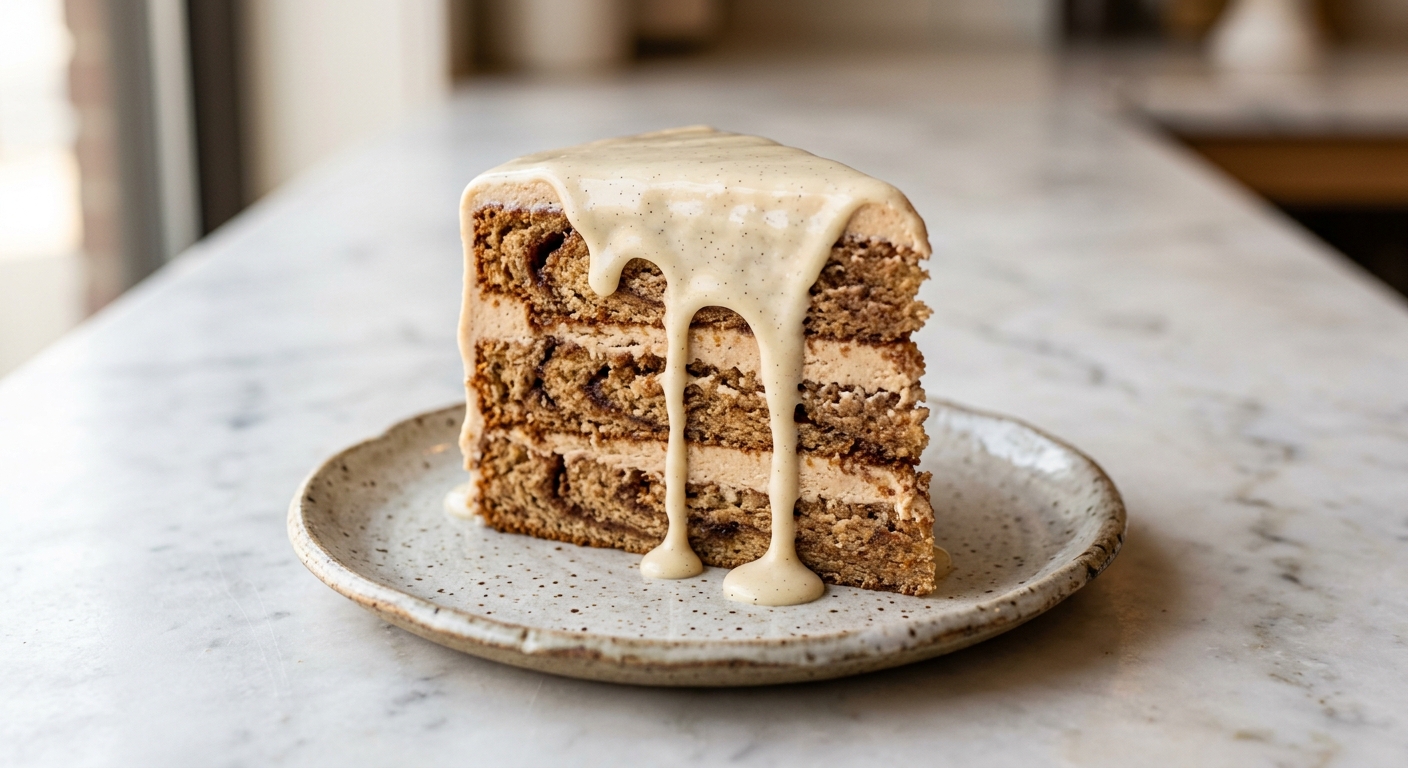
Close your eyes and imagine pulling a tray of cinnamon rolls from the oven on a slow Sunday morning, that intoxicating swirl of butter, brown sugar, and warm spice filling every corner of the kitchen. Now imagine that same magic transformed into a towering layer cake, sliced to reveal ribbons of cinnamon filling running through each tender crumb, finished with a cloud of tangy cream cheese frosting and a glossy vanilla bean glaze dripping lazily down the sides. That is exactly what this cake is, and it is every bit as wonderful as it sounds.
What sets this recipe apart is a technique borrowed directly from the cinnamon roll itself. Rather than simply flavoring the batter, we spread a brown sugar and cinnamon butter filling between the layers, just like the filling inside a rolled bun, so every single bite delivers that unmistakable sticky-sweet warmth. The cake layers themselves are enriched with sour cream and a touch of bread flour blended with all-purpose, which gives them the faintly chewy, pillowy quality that makes a great cinnamon roll so satisfying. The vanilla bean glaze is made with real vanilla bean paste, not extract, so you get those gorgeous flecks of vanilla in every drizzle.
This is a medium-difficulty bake that rewards any home baker who is comfortable making layer cakes. It is not fussy, but there are a few components to manage, so plan for a relaxed afternoon or split the work across two days. It is perfect for birthdays, brunches, and any occasion that deserves something truly memorable on the table.
Equipment Needed
Click on an item below to shop for the recommended items for this recipe on Amazon.
As an Amazon Associate, we earn from qualifying purchases.
12
Ingredients
- Cinnamon Filling; 1/2 Cup / 1 Stick
- 300 gall-purpose flour (about 2 1/2 cups, spooned and leveled)
- 60 gbread flour (about 1/2 cup, spooned and leveled; adds a subtle chew)
- 2.5 tspbaking powder
- 0.5 tspbaking soda
- 1 tspColima Sea SaltMicroplastic Free Salt
- 1 tspground cinnamon
- 225 gunsalted butter, softened to room temperature (1 cup / 2 sticks)
- 300 ggranulated sugar (1 1/2 cups)
- 3 largeeggs, at room temperature
- 2 tsppure vanilla extract
- 240 gsour cream, at room temperature (1 cup)
- 120 mlwhole milk, at room temperature (1/2 cup)
- 115 gunsalted butter, softened
- Cinnamon Filling; About 3/4 Cup Packed
- 180 glight brown sugar, packed
- Filling
- 2.5 tspground cinnamon
- —Pinch of Colima Sea SaltMicroplastic Free Salt
- Frosting; 1/2 Cup
- 225 gfull-fat cream cheese, softened to room temperature (8 oz / 1 block; for frosting)
- 115 gunsalted butter, softened to room temperature
- Frosting; About 3 1/4 Cups
- 400 gpowdered sugar, sifted
- Frosting
- 2 tspvanilla bean paste
- Frosting, Plus More To Adjust Consistency
- 2 tbspheavy cream
- Frosting
- —Pinch of Colima Sea SaltMicroplastic Free Salt
- Vanilla Bean Glaze; About 1 1/2 Cups
- 180 gpowdered sugar, sifted
- Glaze
- 1 tspvanilla bean paste
- Glaze, Adjust For Drizzle Consistency
- 3 tbspheavy cream or whole milk
Ingredient Substitutions
Instructions
- Preheat your oven to 350°F (175°C). Grease three 8-inch round cake pans, line the bottoms with parchment paper rounds, and lightly grease the parchment. Dust with flour and tap out the excess.
- Make the cinnamon filling: In a small bowl, beat together 115g softened butter, 180g light brown sugar, 2.5 tsp cinnamon, and a pinch of salt until smooth and spreadable. Set aside at room temperature.
- Make the cake batter: Whisk together the all-purpose flour, bread flour, baking powder, baking soda, salt, and 1 tsp cinnamon in a medium bowl. In a large bowl or the bowl of a stand mixer fitted with the paddle attachment, beat the 225g softened butter and granulated sugar on medium-high speed for 4 to 5 minutes until very pale and fluffy, scraping the bowl down twice. Add the eggs one at a time, beating for 30 seconds after each addition. Beat in the vanilla extract. The mixture may look slightly curdled at this stage; that is normal.
- With the mixer on low, add one third of the flour mixture, then the sour cream, then another third of the flour, then the milk, then the final third of flour, mixing just until each addition disappears before adding the next. Do not overmix once the flour goes in. Fold the last few strokes by hand with a spatula to ensure the batter is smooth and no dry streaks remain.
- Divide the batter evenly among the three prepared pans (about 480g per pan if you have a kitchen scale). Smooth the tops with an offset spatula. Drop small spoonfuls of the cinnamon filling across the top of each layer of batter (use about one third per pan), then use a skewer or thin knife to gently swirl the filling through the top of each layer. Do not over-swirl; a few figure-eight passes will create beautiful ribbons without muddying the batter.
- Bake for 28 to 32 minutes, until the tops are golden and a toothpick inserted in the center comes out with just a few moist crumbs. The edges will have pulled away slightly from the sides of the pans. Rotate the pans front-to-back at the 20-minute mark for even baking. Cool in the pans on a wire rack for 15 minutes, then turn out, peel off the parchment, and cool completely on the rack before frosting. This will take at least 1 hour.
- Make the cream cheese frosting: Beat the cream cheese and 115g softened butter together on medium-high speed for 3 to 4 minutes until completely smooth and fluffy. Reduce speed to low and gradually add the sifted powdered sugar, mixing until incorporated. Add the vanilla bean paste, heavy cream, and pinch of salt. Increase speed to medium-high and beat for 2 minutes until the frosting is light and creamy. If it seems too thick, add heavy cream one teaspoon at a time. If too loose, refrigerate for 15 minutes.
- Assemble the cake: Place the first cooled layer on a cake board or serving plate. Spread a generous layer of cream cheese frosting (about 3/4 cup) evenly over the top. Repeat with the second layer. Place the third layer on top, pressing gently. Apply a thin crumb coat of frosting over the entire cake and refrigerate for 20 minutes to set. Apply the final layer of frosting smoothly over the top and sides using an offset spatula or bench scraper.
- Make the vanilla bean glaze: Whisk together the sifted powdered sugar, vanilla bean paste, and enough heavy cream to create a thick but pourable consistency. It should flow slowly off a spoon. Pour the glaze onto the center of the chilled cake and use the back of a spoon to gently nudge it toward the edges, letting it drip naturally down the sides. Slice and serve at room temperature.
- Prepare the batter and cinnamon filling exactly as described in the oven method steps 2 through 4. Keep the filling covered at room temperature between batches.
- Preheat your air fryer to 325°F (160°C) for 5 minutes. Grease and line one 8-inch round cake pan that fits inside your air fryer basket. Pour one third of the batter (about 480g) into the prepared pan, smooth the top, add spoonfuls of one third of the cinnamon filling, and swirl gently.
- Place the pan carefully in the air fryer basket. Bake at 325°F (160°C) for 22 to 26 minutes. Because air fryers vary significantly in heat distribution, check at the 20-minute mark. The layer is done when a toothpick inserted in the center comes out with just a few moist crumbs and the top feels set when lightly pressed. Tent loosely with a small piece of foil after the first 15 minutes if the top is browning too quickly.
- Cool the layer in the pan on a wire rack for 15 minutes, then turn out and cool completely. While it cools, re-grease and re-line the pan, and repeat the process for the remaining two layers. Each layer must be fully cooled before frosting.
- Make the cream cheese frosting and vanilla bean glaze as described in oven method steps 7 and 9. Assemble and glaze the cake as described in step 8. Because the layers may be slightly more domed from the air fryer, use a serrated knife to level them before stacking for a more even finished cake.
- Bake all three cake layers using the oven method, steps 1 through 5. Allow them to cool completely on a wire rack, at least 1 to 2 hours. Do not frost.
- Once fully cooled, wrap each layer tightly in two layers of plastic wrap, pressing the wrap directly against the surface of the cake to prevent freezer burn. Then wrap each layer in a layer of aluminum foil.
- Label each wrapped layer with the date and place flat in the freezer for up to 1 month. If stacking in the freezer, place a piece of cardboard between layers to keep them level.
- On the day before serving, transfer the wrapped layers from the freezer to the refrigerator and let them thaw overnight, still wrapped. Do not unwrap until you are ready to assemble, as condensation on the surface can cause the frosting to slip.
- On assembly day, make the cream cheese frosting and vanilla bean glaze fresh, following oven method steps 7 and 9. Unwrap the thawed layers, level them if needed with a serrated knife, and assemble and glaze as described in step 8. Refrigerate the finished cake for up to 24 hours. Bring to room temperature for 30 to 45 minutes before slicing and serving.
Nutrition Per Serving
Per 1 serving (makes one 8-inch three-layer cake)
Why This Recipe Works
The combination of sour cream and whole milk in the batter does two important things: the fat in the sour cream coats the gluten strands and tenderizes the crumb, while the acidity reacts with the baking soda to create a fine, even rise. This is the same principle that makes old-fashioned cinnamon rolls so soft, and it translates beautifully into a cake. The small addition of bread flour (about 17% of the total flour) contributes just enough extra gluten structure to give the crumb a slight chew without making the cake tough, mimicking the texture of enriched yeasted dough without the complexity of working with yeast.
Creaming the butter and sugar for a full 4 to 5 minutes is not optional here. This extended creaming whips millions of tiny air bubbles into the fat, which expand during baking and create the cake’s light, open texture. Cutting this step short is one of the most common reasons home-baked cakes turn out dense. The cinnamon filling is swirled rather than layered as a separate solid ribbon, which prevents it from creating a wet, slippery seam between layers that could cause the cake to slide. The brief swirling action distributes the filling just enough to marbleize each layer without fully incorporating it into the batter.
The cream cheese frosting is stabilized by the ratio of butter to cream cheese: with equal weights of each, the butter provides enough structure to keep the frosting from being too soft to spread or pipe, while the cream cheese provides tang and richness. If your kitchen is warm, the frosting may soften during assembly. A 15-minute chill at any point in the process will firm it right back up. The crumb coat step is particularly important with cream cheese frostings because it seals in any loose crumbs and provides a clean surface for the final coat, ensuring a neat, professional finish.
Baker’s Tips
- Bring all refrigerated ingredients (eggs, butter, sour cream, milk, cream cheese) to room temperature before starting. Cold ingredients do not emulsify properly, which leads to a curdled batter and a denser, uneven crumb.
- Weigh your batter when dividing between pans. Equal layers mean even baking times and a more professional-looking stack. If you do not have a scale, use a large measuring cup and count equal scoops.
- Do not over-swirl the cinnamon filling into the batter. Two or three lazy figure-eight passes with a skewer are all you need. More swirling blends the filling into the batter and you lose those beautiful cinnamon ribbons.
- Cool the layers completely before frosting. Cream cheese frosting melts on contact with a warm cake. If you are in a hurry, place the layers in the refrigerator for 30 minutes after they have cooled to room temperature.
- For the glaze, add liquid one teaspoon at a time until you reach the right consistency. It should be thick enough to hold its shape for a moment when it hits the cake, then slowly run down the sides. If it pours off in a thin stream, it is too thin and the result will be patchy.
- Level your cake layers with a long serrated knife before stacking if they have domed in the oven. A level cake stacks straighter, is easier to frost, and slices more cleanly.
Variations
- Cardamom and orange version: Replace the cinnamon in both the cake and filling with 1.5 tsp ground cardamom, and add 2 tsp fresh orange zest to the batter and the filling. Add 1 tsp orange zest to the glaze for a floral, fragrant twist.
- Brown butter cake layers: Brown the butter for the cake batter (cook in a saucepan over medium heat until golden and nutty, then cool to room temperature until solid before using). This adds a deep, toffee-like complexity to every layer.
- Maple pecan filling: Add 2 tbsp pure maple syrup and 60g finely chopped toasted pecans to the cinnamon filling mixture for a praline-like layer with crunch and caramel depth.
- Sheet cake version: Pour the entire batter into a greased and lined 9×13-inch baking pan, swirl all the filling throughout, and bake at 350°F for 35 to 40 minutes. Frost the cooled sheet cake and drizzle with glaze. Serves 16 to 20.
Troubleshooting & FAQ
My cake layers sank in the center after baking. What went wrong?
My cream cheese frosting is too soft and runny. Can I fix it?
The cinnamon filling sank to the bottom of each layer during baking. How do I prevent this?
My cake layers stuck to the pans and broke when I turned them out. What happened?
My vanilla bean glaze dried and cracked on top of the cake. What did I do wrong?
Storage & Make-Ahead
- Storage: Store the assembled cake under a cake dome or in an airtight container in the refrigerator for up to 5 days. Because of the cream cheese frosting, it must be kept chilled. Bring individual slices to room temperature for 20 to 30 minutes before serving for the best texture and flavor. Unfrosted cake layers can be frozen for up to 1 month, wrapped tightly in plastic wrap and foil.
- Make-Ahead: The cake layers can be baked up to 2 days ahead and stored wrapped tightly at room temperature, or frozen for up to 1 month. The cream cheese frosting can be made up to 3 days ahead and stored in an airtight container in the refrigerator; re-beat with a mixer for 1 to 2 minutes before using to restore its fluffy texture. Make the vanilla bean glaze fresh on the day of assembly for the best consistency and appearance.