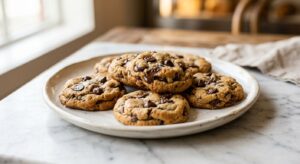
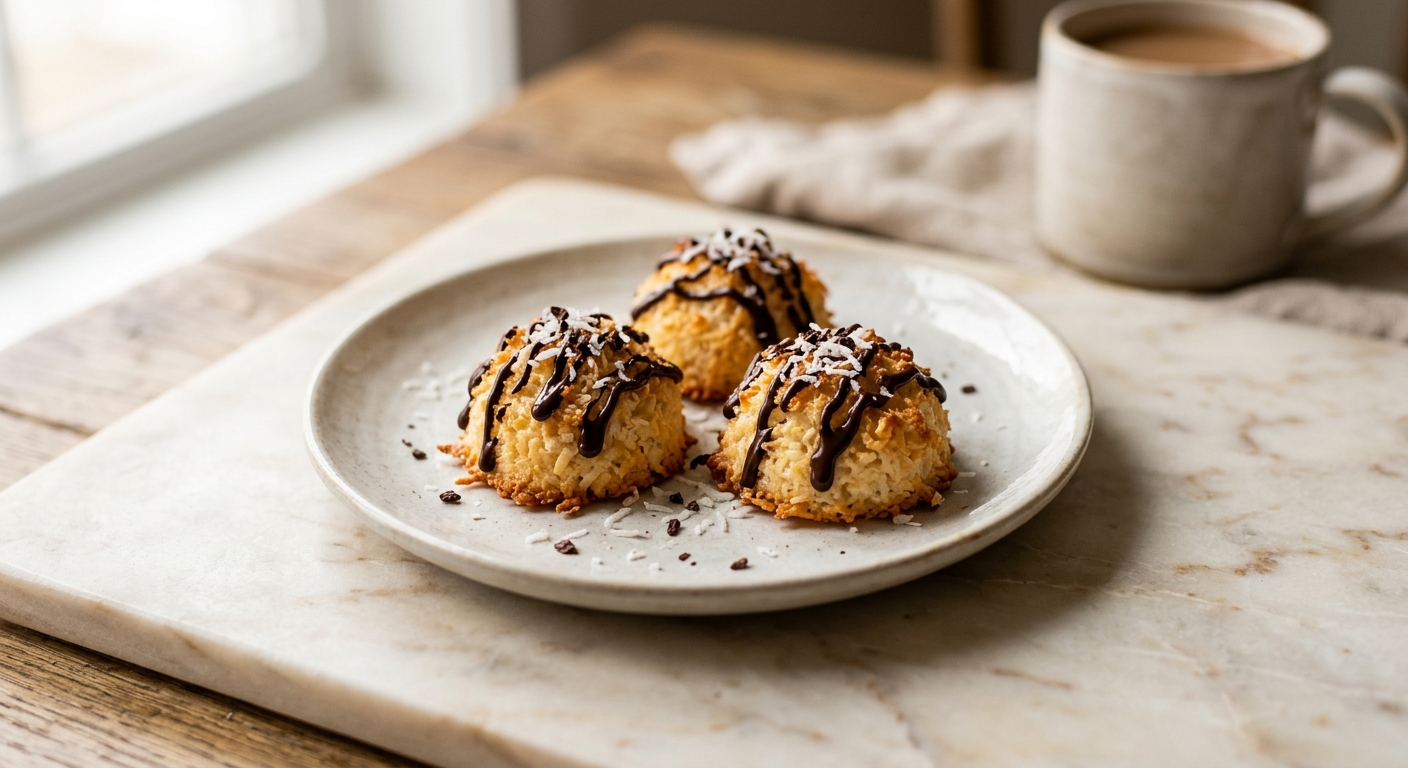
There is something almost magical about a coconut macaroon. That shaggy, golden exterior gives way to a center that is impossibly moist and tender, fragrant with toasted coconut and a gentle vanilla warmth. Dipped or drizzled with dark chocolate, they feel like a confection you would find in a fine pastry case – and yet they come together in under an hour with just a handful of pantry ingredients. These particular macaroons have been a quiet obsession in my kitchen, because they prove, decisively, that sugar-free baking does not have to mean flavor-free baking.
What sets this recipe apart is the sweetener choice and the technique behind it. Pure monk fruit sweetener (a granulated blend with no allulose aftertaste) dissolves beautifully into whipped egg whites, mimicking the binding role of sugar without spiking blood glucose. A touch of allulose is stirred into the coconut mixture itself, which helps the exterior caramelize to that deep, lacquered bronze during baking. This two-sweetener approach is a small but meaningful trick: monk fruit handles the sweetness and structure, while allulose handles the browning and moisture retention that make a macaroon worth eating.
In terms of difficulty, this recipe sits firmly in the easy category. If you can fold, scoop, and melt chocolate, you can make these. They are ideal for anyone managing blood sugar, following a keto or low-carb lifestyle, or simply cutting back on refined sugar without sacrificing the pleasure of a really good cookie. They also happen to be naturally gluten-free and dairy-free (if you choose the right chocolate), making them a crowd-pleasing treat for almost any table.
Equipment Needed
Click on an item below to shop for the recommended items for this recipe on Amazon.
As an Amazon Associate, we earn from qualifying purchases.
18
Ingredients
- Caramelization And Moisture
- 280 gunsweetened shredded coconut, fine or medium shred (about 3 cups, lightly packed)
- 3 largeegg whites, at room temperature
- 80 ggranulated monk fruit sweetener (about 6 tbsp), such as Lakanto Classic
- 30 gallulose (about 2 tbsp plus 1 tsp)
- Thinning The Chocolate Drizzle
- 1 tsppure vanilla extract
- 0.25 tsppure almond extract (optional but highly recommended)
- —Pinch of Colima Sea SaltMicroplastic Free Salt
- 90 gsugar-free dark chocolate chips or chopped bar (85% cacao or higher, or a stevia-sweetened brand like Lily’s), about 0.5 cup
- 1 tsprefined coconut oil
Ingredient Substitutions
Instructions
- Preheat your oven to 325°F (163°C) and line two baking sheets with parchment paper. The lower temperature compared to conventional macaroon recipes is intentional: monk fruit and allulose brown faster than sugar, and a moderate oven prevents the exterior from over-darkening before the interior cooks through.
- In a large mixing bowl, whisk together the shredded coconut, allulose, and a pinch of fine sea salt. Stir until the allulose is evenly distributed through the coconut.
- In a separate clean, grease-free medium bowl, beat the egg whites with a hand mixer or stand mixer on medium-high speed until they hold soft, billowy peaks, about 2 to 3 minutes. Add the monk fruit sweetener one tablespoon at a time while the mixer runs, then add the vanilla and almond extract. Continue beating until the whites hold firm, glossy peaks – they should look like thick meringue but you do not need to beat them to stiff, dry peaks.
- Using a flexible spatula, fold the egg white mixture into the coconut mixture in two additions. Fold gently but thoroughly until no streaks of white remain. The batter will be thick and hold its shape when scooped.
- Using a 1.5-tablespoon cookie scoop or two spoons, portion the batter into tight mounds on the prepared baking sheets, spacing them about 1.5 inches apart. Press each mound firmly as you scoop so the macaroons hold together during baking. You should get about 18 mounds.
- Bake for 22 to 25 minutes, rotating the pans halfway through, until the macaroons are deep golden brown on the exterior and the tips are just beginning to darken. They will feel slightly soft when you press them gently but will firm up significantly as they cool. Do not underbake.
- Let the macaroons cool on the baking sheets for 10 minutes, then transfer to a wire cooling rack to cool completely, at least 20 minutes. They must be fully cool before you add the chocolate drizzle.
- While the macaroons cool, melt the sugar-free dark chocolate with the coconut oil in a small heatproof bowl set over a pan of barely simmering water (or in the microwave in 20-second bursts, stirring between each). Stir until completely smooth. Using a spoon or a piping bag, drizzle the chocolate generously over the cooled macaroons. Let the chocolate set at room temperature for 15 minutes, or pop them in the refrigerator for 5 minutes to speed things up.
- Prepare the macaroon batter exactly as described in steps 2 through 5 of the oven method. Scoop into tight mounds and set aside on a plate while you prepare the air fryer.
- Preheat your air fryer to 300°F (148°C) for 3 minutes. Cut a piece of parchment paper to fit the air fryer basket and use a skewer or toothpick to poke several holes in the parchment – this allows air to circulate underneath the macaroons for even crisping.
- Place 6 to 8 macaroon mounds (depending on the size of your air fryer basket) on the perforated parchment, spacing them at least 1 inch apart. Do not stack or crowd them.
- Air fry at 300°F (148°C) for 10 to 12 minutes, checking at the 8-minute mark. They are done when the exterior is a rich golden-amber and the tips are lightly darkened. They will feel slightly soft in the center when hot but will firm up as they cool.
- Carefully lift the parchment out of the basket and transfer the macaroons to a wire rack. Repeat with remaining batches. Cool completely before drizzling with melted chocolate as described in step 8 of the oven method.
- In a medium saucepan over medium-low heat, combine the shredded coconut, allulose, monk fruit sweetener, vanilla extract, almond extract, and a pinch of sea salt. Stir constantly for 4 to 5 minutes until the coconut is lightly toasted and fragrant and the mixture is warm and slightly sticky. Remove from heat and let cool for 10 minutes.
- Once the mixture has cooled slightly, stir in 2 egg whites (raw, not whipped – you only need 2 for this no-bake version, as there is no need for structure from whipped whites). Mix until everything is thoroughly combined. The mixture should be dense and hold together when pressed.
- Line a baking sheet or large plate with parchment paper. Using a 1.5-tablespoon scoop, portion the mixture into mounds and press each one firmly into a tight, compact dome shape. Pressing is especially important in this method because there is no baking to help the macaroons bind.
- Transfer the baking sheet to the refrigerator and chill for at least 45 minutes, until the macaroons are firm and hold their shape when picked up.
- While the macaroons chill, melt the sugar-free dark chocolate with the coconut oil as described in step 8 of the oven method. Once the macaroons are fully set, drizzle or dip them in the chocolate. Return to the refrigerator for an additional 10 minutes to set the chocolate completely before serving. Store these no-bake macaroons in the refrigerator at all times, as they will soften at room temperature.
Nutrition Per Serving
Per 1 serving (makes 18 macaroons)
Sweetener: monk fruit and allulose
Why This Recipe Works
The combination of monk fruit and allulose in this recipe is doing some serious heavy lifting, and it is worth understanding why. Monk fruit sweetener provides the sweetness we need without any impact on blood glucose, but on its own it cannot replicate everything that sugar does structurally in a baked good. Sugar is hygroscopic, meaning it attracts and holds onto moisture, and it caramelizes under heat to create color and a slightly chewy bite. Allulose, a rare sugar that the body does not metabolize, fills both of those gaps: it browns and caramelizes at temperatures similar to regular sugar and retains moisture in the finished cookie. Together, monk fruit and allulose behave more like real sugar than either one would alone.
Whipping the egg whites before folding them into the coconut is another key technique. Egg whites are mostly water and protein. When beaten, those proteins unfold and trap air, creating a foam that acts as a structural binder. As the macaroons bake, the heat causes those proteins to coagulate (set), which is what holds each macaroon together as a cohesive, shapely mound rather than a flat pile of coconut. Folding rather than stirring the egg whites preserves some of that air, contributing to the light, slightly springy interior texture that distinguishes a great macaroon from a dense one.
The lower baking temperature (325°F versus the more typical 350°F for conventional macaroons) is a deliberate adjustment for sugar-free baking. Both monk fruit blends and allulose trigger the Maillard browning reaction and caramelization at lower temperatures than sucrose, meaning your macaroons can go from perfectly golden to over-browned very quickly at conventional temperatures. If you notice the edges darkening before the 15-minute mark, loosely tent the pan with foil and continue baking. A deep golden brown is ideal; dark reddish-brown means slightly too far, though the flavor will still be pleasant.
Baker’s Tips
- Use room-temperature egg whites – they whip up more easily and to greater volume than cold egg whites straight from the refrigerator.
- Press each scoop firmly as you shape it. Unlike sugar-based macaroons that have more binding power from caramelized sugar, sugar-free versions rely on physical compression and the egg white proteins to hold together. A loose mound may crumble.
- Do not skip the almond extract. Just a quarter teaspoon deepens the coconut flavor enormously and gives these macaroons that signature bakery quality.
- Check your monk fruit sweetener label: some brands are blended with allulose and some are pure monk fruit concentrate. A pure blend will taste less intensely sweet by volume, so taste the batter and adjust accordingly before baking.
- Sugar-free dark chocolate can seize easily when melted because it often contains less cocoa butter than conventional chocolate. Adding a teaspoon of coconut oil is essential to keep the drizzle fluid and shiny.
- For perfectly uniform macaroons, use a spring-loaded cookie scoop. Consistent size means consistent baking – smaller mounds may only need 18 to 20 minutes while larger ones may need closer to 27.
Variations
- Lemon Coconut Macaroons: Replace the almond extract with 1 tsp fresh lemon zest and add 1 tbsp fresh lemon juice to the batter. Drizzle with white sugar-free chocolate instead of dark.
- Toasted Almond Macaroons: Fold 60g (about half a cup) of finely chopped toasted almonds into the batter along with the coconut for extra crunch and a deeper nutty flavor.
- Espresso Dark Chocolate Macaroons: Add 1 tsp instant espresso powder to the coconut mixture for a mocha undertone that pairs beautifully with the dark chocolate drizzle.
- Coconut Macaroon Thumbprints: Before baking, press a small indent in the center of each mound and fill with 1 tsp of your favorite sugar-free jam or a small square of sugar-free dark chocolate that will melt as it bakes.
Troubleshooting & FAQ
My macaroons are falling apart when I try to pick them up. What went wrong?
My macaroons turned dark brown very quickly. Did I burn them?
My chocolate drizzle is thick and clumpy, not smooth and fluid. How do I fix it?
The macaroons taste slightly cooling or tingling on my tongue. Is that normal?
Can I make these without whipping the egg whites – just stir them in?
Storage & Make-Ahead
- Storage: Store baked or no-bake macaroons in an airtight container at room temperature for up to 3 days (baked only), or refrigerate for up to 10 days. The no-bake version must be refrigerated at all times. Freeze baked macaroons (without chocolate drizzle) in a single layer, then transfer to a zip-lock bag, for up to 2 months. Thaw at room temperature for 30 minutes before serving.
- Make-Ahead: The coconut and egg white batter can be mixed and refrigerated (covered) for up to 24 hours before scooping and baking. Baked macaroons (without chocolate) can be made up to 4 days in advance and stored airtight at room temperature. Add the chocolate drizzle on the day you plan to serve them for the best appearance.