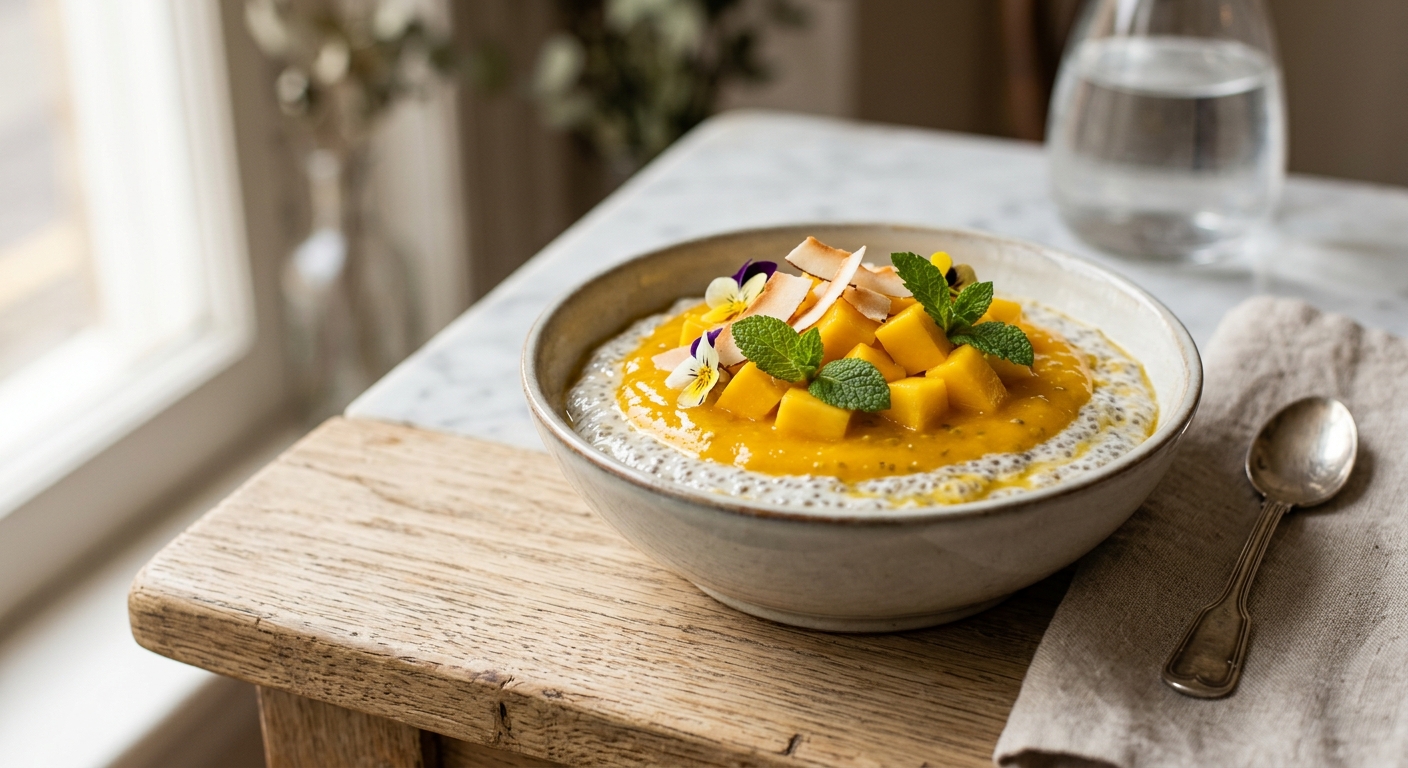
Close your eyes and imagine a dessert that tastes like a mango lassi and a coconut cream pie had a very healthy, very delicious baby. That is exactly what this mango coconut chia pudding delivers. The base is silky full-fat coconut milk, sweetened gently with monk fruit, layered beneath a vivid, sunshine-gold mango puree that smells like a tropical holiday. It is the kind of dessert that makes you feel genuinely good after eating it, not just while you are eating it.
What sets this version apart is the two-layer approach. Instead of simply stirring mango into the chia base and calling it done, we keep the coconut chia pudding and the fresh mango puree completely separate, then layer them just before serving. This gives you distinct textures and flavors in every spoonful: the soft, tapioca-like pearls of the coconut layer against the bright, fruity freshness of the mango on top. We also use a small amount of allulose blended into the mango puree to soften its texture and enhance the fruit’s natural sweetness without any cooling aftertaste.
This recipe sits firmly in the easy category and requires zero baking, zero cooking, and zero special equipment beyond a blender. It is perfect for anyone managing blood sugar, following a keto or low-carb lifestyle, or simply trying to cut refined sugar without sacrificing dessert. Meal preppers will love that four to six servings come together in about ten minutes of active work, leaving the fridge to do the rest overnight.
Equipment Needed
Click on an item below to shop for the recommended items for this recipe on Amazon.
As an Amazon Associate, we earn from qualifying purchases.
4
Ingredients
- 400 mlfull-fat coconut milk, from one 14-oz can, well shaken
- 120 mlunsweetened almond milk (or any plant milk, about 1/2 cup)
- 60 gwhite chia seeds (about 4 tablespoons)
- 30 gpowdered monk fruit sweetener (about 2 tablespoons plus 1 teaspoon), divided
- 1 tsppure vanilla extract
- —Pinch of Colima Sea SaltMicroplastic Free Salt
- 300 gfresh or frozen ripe mango chunks, thawed if frozen (about 2 cups or 2 medium mangoes)
- 15 gallulose sweetener (about 1 tablespoon), for the mango layer
- 15 mlfresh lime juice (about 1 tablespoon, from 1/2 lime)
- —To serve: toasted coconut flakes, fresh mango slices, and a small pinch of chili-lime Colima Sea SaltMicroplastic Free Salt (optional)
Ingredient Substitutions
Instructions
- Make the coconut chia base: In a medium mixing bowl or large measuring jug, whisk together the full-fat coconut milk, almond milk, 20g of the powdered monk fruit sweetener, vanilla extract, and a pinch of sea salt until the sweetener is fully dissolved, about 1 minute.
- Add the chia seeds and whisk again vigorously for 30 seconds to distribute them evenly. Let the mixture sit uncovered on the counter for 10 minutes, then whisk one more time. This second whisk is important: it breaks up any clumps that have started to form and ensures the chia seeds are evenly suspended in the liquid before chilling.
- Divide the chia base evenly among four clean glass jars or serving cups (roughly 130ml each). Seal with lids or cover tightly with plastic wrap. Refrigerate for at least 6 hours, preferably overnight (8 to 12 hours), until the pudding is thick and fully set.
- Make the mango puree: When you are ready to serve, combine the mango chunks, allulose, lime juice, and remaining 10g of monk fruit sweetener in a blender. Blend on high until completely smooth and velvety, about 45 to 60 seconds. Taste and adjust sweetness if needed. If the puree seems very thick, add 1 to 2 tablespoons of water and blend again.
- Assemble and serve: Remove the jars from the fridge. Spoon or pour approximately 3 to 4 tablespoons of the mango puree over each coconut chia pudding layer. Top with a small handful of toasted coconut flakes, a fresh slice of mango, and a tiny pinch of chili-lime salt if desired. Serve immediately.
- Warm the liquid base slightly: Gently heat the coconut milk and almond milk together in a small saucepan over low heat until just warm to the touch (about 100 to 110 degrees F, or 38 to 43 degrees C). Do not simmer or boil. Warm liquid activates the chia seeds significantly faster. Remove from heat and whisk in the monk fruit sweetener, vanilla, and salt until dissolved.
- Add the chia seeds and whisk immediately and vigorously for 1 full minute. Pour the mixture into a shallow dish rather than jars at this stage, as a wider surface area speeds up thickening.
- Place the dish in the freezer (not the fridge) for 10 minutes. Remove, stir thoroughly with a spoon, breaking up any settled seeds. Return to the freezer for another 10 minutes, then stir again. Repeat this process one more time (30 minutes total in the freezer, with two stirs).
- Transfer the partially set pudding into individual serving jars and refrigerate for 30 to 45 minutes until fully firm and cold. The pudding is ready when it holds its shape and no longer appears watery around the edges.
- While the pudding finishes chilling, make the mango puree: blend the mango chunks, allulose, lime juice, and remaining monk fruit sweetener until completely smooth. Spoon the mango puree generously over the set pudding, garnish with toasted coconut flakes and fresh mango, and serve.
- Prepare the chia base exactly as described in the No-Bake method: whisk coconut milk, almond milk, 20g monk fruit sweetener, vanilla, and salt together, then stir in the chia seeds. Let sit 10 minutes, stir again to break up clumps, then refrigerate for a minimum of 4 hours until fully set.
- Once fully set, transfer the entire chilled chia base to a high-speed blender. Blend on high for 60 to 90 seconds until the mixture is completely smooth and creamy, with no visible chia pearls. The mixture will look like a pale, thick coconut cream.
- Pour the blended coconut base back into the jars (it will be pourable at this point). Refrigerate for 30 minutes to allow the blended mixture to re-firm slightly.
- Make the mango puree: blend mango chunks, allulose, lime juice, and remaining monk fruit sweetener until completely smooth. Pour the bright mango puree over the set, blended coconut base.
- Garnish with toasted coconut flakes and fresh mango slices. For an especially elegant presentation, use a tall glass and layer coconut base and mango puree twice each, then garnish the top.
Nutrition Per Serving
Per 1 serving (makes 4 individual pudding jars (approximately 200ml each))
Sweetener: monk fruit and allulose
Why This Recipe Works
Chia seeds are botanical marvels. Each tiny seed is coated in a layer of soluble fiber called mucilage, which absorbs liquid at roughly ten to twelve times the seed’s own weight. When chia seeds are submerged in coconut milk, the mucilage swells and forms a gel matrix around each seed, creating that distinctive tapioca-like texture without any heat, starch, or gelatin. This is why the two-whisk method matters: the first mix distributes the seeds, and the second whisk, done after the initial gel formation begins, breaks apart any clumps before they can set permanently. Skip that second stir and you risk a pudding with rubbery seed clusters floating in liquid rather than a uniformly creamy base.
Monk fruit sweetener is used in the coconut base because it dissolves cleanly in cold liquid and adds no aftertaste when used in moderate amounts. In the mango layer, we switch to allulose for a specific reason: allulose behaves more like sugar than any other low-glycemic sweetener. It does not crystallize, it has no cooling effect, and it actually softens the texture of fruit purees, making the mango layer feel silkier and more like a fresh coulis than a sweetened smoothie. Both monk fruit and allulose have a glycemic index of essentially zero, which means they do not cause blood sugar spikes, making this pudding genuinely suitable for diabetics and those following low-carb lifestyles.
Full-fat coconut milk is non-negotiable for the richest result. The high saturated fat content of coconut milk does two things: it gives the pudding body and creaminess, and it slows the absorption of the natural sugars present in the mango, further moderating the glycemic response of the overall dessert. If you use light coconut milk, the pudding will set but will be noticeably thinner and less satisfying. Compensate by adding an extra tablespoon of chia seeds and expecting a slightly longer chill time.
Baker’s Tips
- Shake or stir the coconut milk can vigorously before opening. The cream and liquid separate during storage, and you want both parts for the right fat-to-liquid ratio in this recipe.
- Use powdered monk fruit sweetener rather than granulated. Granulated forms can leave a slightly gritty texture in no-cook applications where the sweetener does not have a chance to fully dissolve.
- Your mango should smell intensely fruity at the stem end. Underripe mango will produce a tart, fibrous puree that no amount of sweetener fully corrects. Frozen mango is often a more reliable choice for consistent sweetness year-round.
- Do not skip the lime juice in the mango layer. It is not just for brightness: a small amount of acid enhances the perception of sweetness and makes the mango flavor pop significantly more than unsqueezed puree.
- For the most visually striking result, use a clear glass jar or cup so the two layers are visible from the side. A wide-mouth mason jar works perfectly and looks beautiful on the table.
- If your pudding separates overnight (a thin layer of liquid on top), simply stir it back together before adding the mango layer. This is normal and happens when chia seeds settle slightly before the gel fully sets. It does not affect flavor or safety.
Variations
- Pineapple coconut version: Replace mango with 300g of fresh pineapple and add a 1/4 teaspoon of turmeric to the chia base for a golden color and subtle anti-inflammatory boost.
- Chocolate base layer: Replace 2 tablespoons of the almond milk with 2 tablespoons of unsweetened cocoa powder whisked in well, and use the mango puree on top for a chocolate-and-mango flavor combination.
- Berry swirl: Instead of a full mango layer, swirl 3 tablespoons of fresh raspberry or strawberry puree into the top of the just-set chia pudding for a marbled effect.
- High-protein version: Add one scoop of unflavored or vanilla collagen peptides or plant-based protein powder to the coconut milk base before adding the chia seeds. Increase almond milk by 2 tablespoons to compensate for the added dry ingredient.
Troubleshooting & FAQ
My chia pudding is still runny after chilling overnight. What went wrong?
There are lumps of chia seeds stuck together in my pudding. How do I prevent this?
My monk fruit sweetener has a bitter or metallic aftertaste. What can I do?
My mango puree is very thick and pasty, not smooth and pourable. How do I fix it?
Can I use the quick-set method and then store the pudding overnight?
Storage & Make-Ahead
- Storage: Store assembled jars covered in the refrigerator for up to 4 days. For best texture, store the mango puree separately and spoon it over just before serving. The chia pudding base alone keeps well for up to 5 days. Not recommended for freezing once fully set, as the texture becomes grainy upon thawing.
- Make-Ahead: This recipe is essentially designed to be made ahead. Prepare the chia base up to 5 days in advance and keep it refrigerated. The mango puree can be made up to 3 days ahead and stored in a sealed jar in the fridge. Assemble when ready to serve.