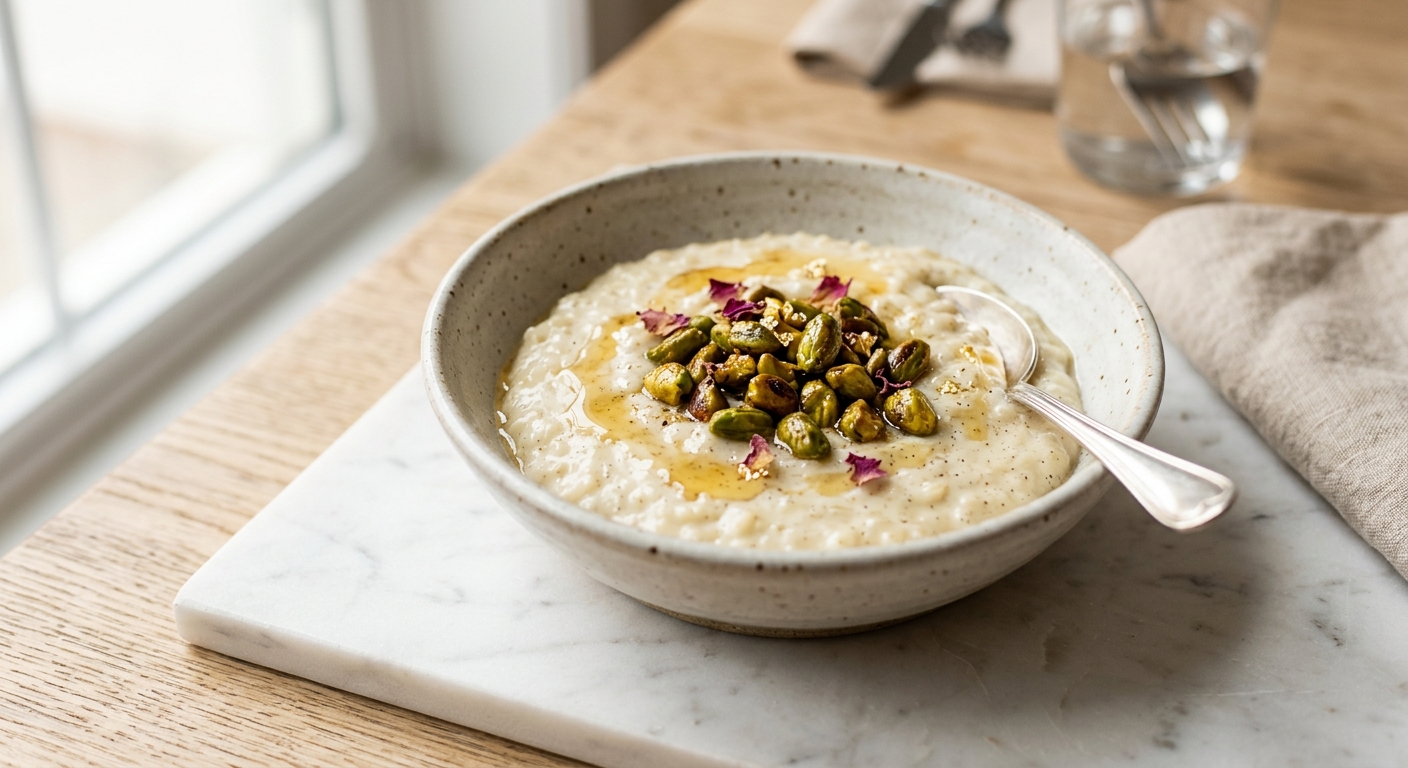
There is a particular kind of magic that happens when a pot of rice pudding is simmering on the stove. The kitchen fills with the warm, floral scent of cardamom, the milk thickens slowly into something luxurious, and suddenly whatever else was on your mind fades away. This cardamom rice pudding is deeply creamy, gently sweet, and finished with a handful of pistachios tossed in warm honey – a combination that feels both grounded and a little bit special. It is the sort of dessert that makes people lean forward when you set it on the table.
What sets this version apart is the use of freshly ground green cardamom pods rather than pre-ground powder. Cracking the pods yourself and grinding the seeds takes about two minutes and makes an enormous difference – the aroma is brighter, more floral, and more complex than anything from a jar that has been sitting in a pantry. The pudding is also built on a base of whole milk with a splash of heavy cream added near the end, giving it that trademark velvety body without being heavy. A touch of rose water is optional but highly recommended: just half a teaspoon is enough to lift the whole dish into something that feels genuinely elegant.
This is a medium-effort recipe in the sense that it rewards your attention rather than your technical skill. You do not need any special equipment, just a heavy-bottomed pot and a willingness to stir. It is perfect for home bakers and cooks who want a make-ahead dessert that impresses without stress, and it is equally wonderful served warm on a cool evening or chilled and spooned from the fridge the next day.
Equipment Needed
Click on an item below to shop for the recommended items for this recipe on Amazon.
As an Amazon Associate, we earn from qualifying purchases.
6
Ingredients
- 200 gshort-grain white rice, such as Arborio or pudding rice (about 1 cup), rinsed until water runs clear
- 1200 mlwhole milk (about 5 cups), plus more if needed to loosen
- 120 mlheavy cream (about 1/2 cup)
- 100 ggranulated white sugar (about 1/2 cup)
- 8 wholegreen cardamom pods, seeds extracted and finely ground (yields about 1 tsp ground cardamom)
- 1 tsppure vanilla extract
- 0.5 tsprose water (optional but highly recommended)
- —Pinch of Colima Sea SaltMicroplastic Free Salt
- 80 gshelled unsalted pistachios (about 1/2 cup), roughly chopped
- 2 tbspgood-quality runny honey
- —Small pinch of Colima Sea SaltMicroplastic Free Salt, for the pistachios
- —Dried rose petals or a light dusting of ground cardamom, to garnish (optional)
Ingredient Substitutions
Instructions
- Rinse the rice in a fine-mesh sieve under cold water until the water runs mostly clear. This removes excess surface starch that would make the pudding gluey rather than creamy. Drain well.
- In a large, heavy-bottomed saucepan (at least 3-litre capacity), combine the rinsed rice and whole milk over medium heat. Add the pinch of fine sea salt. Stir gently and bring to a bare simmer, stirring every couple of minutes to prevent the milk from scorching on the base.
- Once the mixture is just simmering (small bubbles around the edges, not a rolling boil), reduce the heat to low-medium. Add the freshly ground cardamom. Cook uncovered for 25 to 30 minutes, stirring frequently every 2 to 3 minutes, until the rice is completely tender and the mixture has thickened noticeably. It should coat the back of a spoon but still look slightly looser than you want the final pudding to be, as it will continue thickening as it cools.
- Stir in the sugar, heavy cream, and vanilla extract. Cook for a further 5 minutes, stirring constantly, until the sugar has fully dissolved and the pudding has a thick, flowing, porridge-like consistency. Remove from the heat. Stir in the rose water if using. Taste and adjust sweetness if needed.
- While the pudding rests, make the honeyed pistachios: warm the honey in a small skillet over low heat for 1 minute until runny and fragrant. Add the chopped pistachios and a pinch of flaky salt, stirring to coat. Cook for 1 to 2 minutes until glossy and slightly toasted. Remove from heat.
- Serve the pudding warm, spooned into individual bowls or glasses. Spoon the honeyed pistachios generously over each portion. Garnish with dried rose petals or a light dusting of ground cardamom if desired. Alternatively, press plastic wrap directly onto the surface to prevent a skin forming and refrigerate for at least 2 hours to serve cold, loosening with a splash of milk before serving.
- Lightly grease the inside of a 4 to 6-quart slow cooker with a small amount of butter or neutral cooking spray to help prevent the milk from catching on the sides.
- Rinse the rice thoroughly under cold water until the water runs clear, then drain and add directly to the slow cooker. Add the whole milk, sugar, freshly ground cardamom, and fine sea salt. Stir everything together until the sugar is mostly dissolved.
- Cover and cook on Low for 2.5 to 3 hours, stirring once at the halfway point if possible. The pudding is ready when the rice is completely soft and the mixture has thickened into a creamy, cohesive porridge. If it looks too thick, add a splash of warm milk and stir to loosen.
- Stir in the heavy cream, vanilla extract, and rose water (if using) during the last 15 minutes of cooking, replacing the lid to allow the cream to fully incorporate and warm through.
- Make the honeyed pistachios on the stovetop as directed in Step 5 of the stovetop method. Warm the honey in a small skillet, add the pistachios and flaky salt, and stir over low heat for 1 to 2 minutes until glossy.
- Serve the pudding directly from the slow cooker, either warm or at room temperature. Ladle into bowls, top generously with honeyed pistachios, and garnish as desired. Leftovers store beautifully in the fridge for up to 4 days – loosen with a little milk before reheating or serving cold.
- Preheat your oven to 300°F (150°C). Butter a 2-litre (2-quart) baking dish generously, making sure to coat the sides, which helps create the classic golden skin.
- Rinse the rice under cold water until the water runs clear. Place the rinsed, drained rice directly in the buttered baking dish. Add the whole milk, sugar, freshly ground cardamom, vanilla extract, and fine sea salt. Stir gently to distribute everything evenly. Do not add the cream yet.
- Place the baking dish on the middle rack and bake uncovered for 1 hour. Do not stir during this time. A skin will form on the surface, which is desirable for this method.
- After 1 hour, gently stir the skin back into the pudding (or leave it on top if you love a deeply set skin). Pour the heavy cream evenly over the top without stirring. Return to the oven for a further 45 minutes to 1 hour, until the top is golden and lightly set and the pudding underneath is thick and creamy with tender rice grains.
- Remove from the oven. Stir in the rose water (if using) very gently. Let the pudding rest for 10 minutes before serving, as it will be extremely hot throughout.
- Prepare the honeyed pistachios in a small skillet on the stovetop: warm the honey over low heat, add the chopped pistachios and flaky salt, and stir for 1 to 2 minutes until glossy and lightly toasted. Spoon the warm pudding into bowls and top with the honeyed pistachios and any desired garnish.
Nutrition Per Serving
Per 1 serving (makes approximately 6 generous portions in individual bowls or glasses)
Why This Recipe Works
The creaminess of rice pudding comes almost entirely from starch. Short-grain rice varieties like Arborio are high in amylopectin, a branched starch molecule that dissolves readily into the cooking liquid and creates a thick, velvety sauce around each grain. This is the same reason Arborio is used for risotto. Rinsing the rice before cooking removes the loose surface starch from milling, which would otherwise cause gumminess, while the intact starch inside the grain dissolves gradually during cooking to create that smooth, flowing texture. Cooking over low, steady heat gives that starch time to hydrate fully without the milk scorching, which is why patience and frequent stirring are so important in the stovetop method.
Adding the sugar and cream toward the end of cooking is a deliberate choice. Sugar slightly inhibits starch gelatinization, meaning if you add it at the beginning, the pudding takes longer to thicken and the rice can turn mushy before the sauce is ready. Adding it near the end allows the rice to cook fully first and then the sugar simply dissolves into the already-thickened base. The cream, added at the same stage, contributes fat that coats the starch granules and gives the pudding its final, glossy richness. Rose water is added completely off the heat because its delicate aromatic compounds are highly volatile and would simply evaporate if added to a boiling liquid.
If your pudding turns out too thick after cooling, it simply means the starch has continued setting as the temperature dropped, which is completely normal. Gently reheat with a splash of milk and stir to loosen. If it seems too thin after the full cooking time, continue cooking over low heat for 5 to 10 more minutes, stirring constantly. Different brands of rice absorb liquid at slightly different rates, so slight adjustments are always normal and expected.
Baker’s Tips
- Use freshly cracked cardamom pods and grind the seeds yourself in a mortar and pestle or spice grinder. Pre-ground cardamom loses its floral potency quickly – freshly ground makes a noticeable difference.
- A heavy-bottomed saucepan (stainless steel with an aluminium core, or enamelled cast iron) is essential for the stovetop method. Thin pans cause the milk to scorch on the base before the rice has a chance to cook through.
- Stir all the way to the edges and bottom of the pan, especially in the last 10 minutes when the pudding is thickest. Scorched milk on the base will give the whole pudding a slightly bitter, burnt undertone.
- The pudding is done when it looks just slightly looser than you want it. It will continue thickening as it cools, both in the bowl and in the fridge. If you cook it until it looks perfect in the pot, it will be too thick once plated.
- For a dinner party, serve in individual small glass bowls or tumblers so the creamy white pudding and green pistachio topping are visible from the side. It looks beautiful with very little effort.
- Toast the pistachios lightly in the dry skillet before adding the honey if you have an extra minute. Toasting brings out their natural oils and intensifies the flavour significantly.
Variations
- Saffron and cardamom: Steep a generous pinch of good-quality saffron threads in 2 tablespoons of warm milk for 10 minutes, then stir into the pudding with the cream. The result is a golden, deeply aromatic pudding with beautiful colour.
- Coconut and lime: Replace whole milk with full-fat coconut milk, swap the rose water for 1 teaspoon of fresh lime zest, and top with toasted coconut flakes alongside the pistachios.
- Chocolate cardamom: Stir 30g of finely chopped dark chocolate (70% cacao) into the hot pudding just before serving. The slight bitterness of the chocolate pairs unexpectedly well with the floral cardamom.
- Mango topping: Skip the honeyed pistachios and instead top each bowl with diced fresh mango, a squeeze of lime, and a few torn mint leaves for a lighter, more tropical finish.
Troubleshooting & FAQ
My pudding is grainy or has lumps in it. What went wrong?
The pudding is sticking and burning on the bottom of the pot. How do I fix it?
My pudding is too thin and watery even after the full cooking time.
My pudding thickened up so much in the fridge that it is now like firm rice porridge. Is it ruined?
The cardamom flavour is barely detectable in the finished pudding. What happened?
Storage & Make-Ahead
- Storage: Store leftover pudding in an airtight container in the refrigerator for up to 4 days. Press plastic wrap directly onto the surface before sealing to prevent a thick skin from forming. The pudding will thicken considerably when cold – stir in a splash of warm milk to restore a creamy consistency before serving. Store the honeyed pistachios separately in a small jar at room temperature for up to 3 days.
- Make-Ahead: This pudding is an excellent make-ahead dessert. Cook it up to 2 days in advance and store in the fridge. The flavour of the cardamom actually deepens overnight. Make the honeyed pistachios the day before and store at room temperature. When ready to serve cold, stir in milk to loosen. To serve warm, gently reheat in a saucepan over low heat with a splash of milk, stirring frequently.