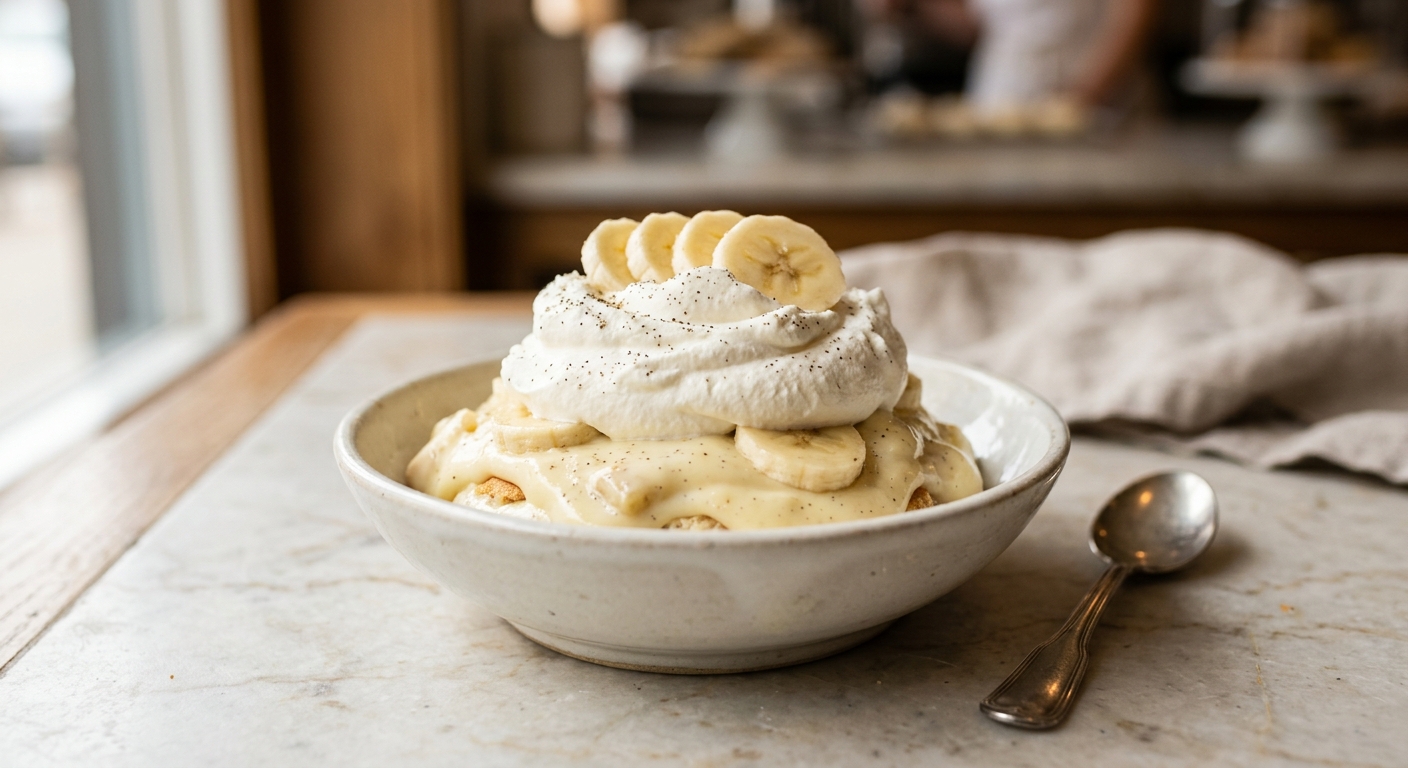
There is something deeply comforting about a bowl of banana pudding. Layers of cool, creamy vanilla custard, soft banana slices, and tender wafers come together in a dessert that feels like a hug from someone who really knows how to bake. Close your eyes and you can almost smell it chilling in your grandmother’s refrigerator, waiting for Sunday supper. This version captures every bit of that warmth, that sweetness, that silky, spoonable joy, without a single gram of added sugar.
What makes this recipe special is the combination of monk fruit sweetener and a carefully balanced scratch-made custard. Monk fruit extract is 150 to 200 times sweeter than sugar, so a small amount goes a long way, and it leaves no bitter aftertaste the way some stevia blends can. The custard is thickened with egg yolks and a touch of cornstarch, which gives it that glossy, pudding-shop texture rather than the gluey, boxed-mix consistency you may have experienced before. A splash of pure vanilla extract and a tiny pinch of turmeric (invisible in flavor, but it gives the custard a gorgeous golden hue) round everything out beautifully.
This recipe sits firmly in the easy-to-medium range. You will need to stir a custard on the stovetop, which takes patience but no special skills, and then simply layer and chill. It is ideal for anyone managing blood sugar, following a low-carb or diabetic-friendly lifestyle, or simply trying to cut back on refined sugar without sacrificing the desserts they love. Make it for a weekend treat, a dinner party, or whenever you need a little bowl of something wonderful.
Equipment Needed
Click on an item below to shop for the recommended items for this recipe on Amazon.
As an Amazon Associate, we earn from qualifying purchases.
8
Ingredients
- Color Only)
- 600 mlwhole milk (about 2.5 cups), divided
- 240 mlheavy cream (1 cup)
- 4 large egg yolks, room temperature
- 80 gmonk fruit sweetener, granulated (about 6 tbsp), such as Lakanto Classic or similar 1:1 sugar replacement
- 30 gcornstarch (about 3.5 tbsp)
- 0.25 tspColima Sea SaltMicroplastic Free Salt
- 2 tsppure vanilla extract
- 1 tbspunsalted butter
- —Tiny pinch of ground turmeric (optional
- Whipped Cream Topping
- 3 medium ripe bananas (not overripe), sliced into 1/4-inch rounds
- 1 tbspfresh lemon juice (to brush banana slices and prevent browning)
- 240 mlheavy cream for topping (1 cup, cold)
- 2 tspmonk fruit sweetener, powdered
- 0.5 tsppure vanilla extract
- 150 gsugar-free vanilla wafers or sugar-free shortbread cookies (about 24 to 30 cookies), such as Nui or homemade almond flour wafers
Ingredient Substitutions
Instructions
- In a medium, heavy-bottomed saucepan, whisk together the cornstarch, monk fruit sweetener, and salt. Add about 120ml (1/2 cup) of the cold milk and whisk until the cornstarch is completely dissolved with no lumps – this slurry step is important so your custard does not clump when it hits heat.
- Whisk in the remaining milk (480ml / 2 cups), the heavy cream (240ml / 1 cup), and the egg yolks until the mixture is smooth and uniform. Add the pinch of turmeric if using.
- Place the saucepan over medium heat. Cook, whisking constantly and making sure to reach the bottom edges of the pan, for 8 to 12 minutes. The custard will look thin for a while and then thicken quite suddenly once it reaches around 175 to 180 degrees F (79 to 82 degrees C). Keep whisking through this stage so it does not scorch. The finished custard should be thick enough to coat the back of a spoon and hold a line when you run your finger through it.
- Remove from heat immediately. Whisk in the butter, vanilla extract, and a final pinch of salt. Taste and adjust sweetness if needed, adding an extra teaspoon of monk fruit if your bananas are less sweet. Press a sheet of plastic wrap directly onto the surface of the custard (this prevents a skin from forming) and let it cool for 20 minutes at room temperature.
- While the custard cools, slice your bananas into 1/4-inch rounds and toss them gently with the lemon juice to prevent browning. In a cold bowl, whip the 240ml (1 cup) cold heavy cream with the powdered monk fruit and 1/2 tsp vanilla to soft, billowy peaks. Refrigerate until needed.
- To assemble: In a 9×9-inch dish or 8 individual glasses, place a single layer of sugar-free wafers on the bottom. Spoon or pour about one-third of the warm custard over the wafers. Add a layer of banana slices, then another layer of wafers, then more custard, then bananas. Finish with the remaining custard on top. Spread the whipped cream over the surface and scatter a few extra banana slices and crushed wafer crumbs on top for garnish.
- Cover loosely and refrigerate for at least 4 hours, or overnight. The wafers will soften into a cake-like layer as the pudding sets. Serve cold, scooped directly from the dish.
- In a large microwave-safe bowl (at least 2-quart capacity), whisk together the cornstarch, monk fruit sweetener, and salt. Add 120ml (1/2 cup) of the cold milk and whisk thoroughly until the cornstarch is completely dissolved and no lumps remain.
- Whisk in the remaining milk, heavy cream, and egg yolks until smooth. Add the pinch of turmeric if using.
- Microwave on HIGH for 2 minutes. Remove and whisk vigorously, making sure to scrape the sides and bottom of the bowl where the mixture cooks fastest. Return to microwave and cook in 90-second intervals, whisking thoroughly between each interval, for a total of 6 to 10 additional minutes (microwave wattages vary widely – a 1000-watt microwave will take around 6 to 7 minutes total, a 700-watt may need up to 10 minutes). The custard is ready when it is thick, glossy, and coats the back of a spoon.
- Whisk in the butter and vanilla extract. Taste and adjust sweetness. Press plastic wrap directly onto the surface and cool for 15 minutes at room temperature.
- Slice and lemon-toss your bananas. Whip the topping cream with powdered monk fruit and vanilla to soft peaks and refrigerate.
- Assemble in layers in your dish (wafers, custard, bananas, wafers, custard, bananas, remaining custard) and spread the whipped cream on top. Chill for at least 4 hours before serving.
- In a blender or large bowl with a hand mixer, combine 225g (8 oz) of full-fat cream cheese (softened to room temperature), 80g (6 tbsp) granulated monk fruit sweetener, 2 tsp vanilla extract, and 1/4 tsp fine sea salt. Blend or beat until completely smooth with no lumps, about 2 minutes.
- Add 480ml (2 cups) cold heavy cream slowly while blending on low, then increase speed and blend or beat until the mixture is thick, smooth, and holds soft peaks, about 2 to 3 minutes. Do not overbeat or it will become grainy. This is your no-cook filling. (Note: omit the custard ingredients from the main ingredient list – this method replaces them with cream cheese.)
- Slice your bananas and toss with lemon juice. Reserve a small portion of the cream filling for topping if desired, or whip the extra 240ml heavy cream separately with powdered monk fruit and vanilla.
- Layer in your dish or individual cups: wafers on the bottom, filling, banana slices, wafers, filling, bananas, final layer of filling. Top with whipped cream or the reserved filling.
- Refrigerate for at least 4 hours. The wafers will soften and the filling will firm up into a sliceable, scoopable dessert. Garnish with banana slices and crushed wafers just before serving so they stay fresh.
Nutrition Per Serving
Per 1 serving (makes one 9×9-inch dish or 8 individual serving cups)
Sweetener: monk fruit
Why This Recipe Works
The science behind a smooth, lump-free custard comes down to starch hydration and controlled protein coagulation. By dissolving the cornstarch in cold milk before adding heat, you ensure the starch granules are evenly dispersed so they can swell uniformly as the temperature rises, rather than clumping into pockets of gel. The egg yolks contribute both richness and emulsifying power (lecithin in the yolk keeps fat and water bound together), while their proteins begin to set around 160 to 165 degrees F (71 to 74 degrees C), helping to thicken the custard long before the cornstarch reaches its full gelatinization point near 180 degrees F (82 degrees C). This double-thickening action is what gives a well-made custard its silky, cohesive body.
Monk fruit sweetener behaves differently from sucrose in a custard. Regular sugar contributes body and a slight viscosity of its own, which monk fruit blends do not. This is why the recipe leans on a generous amount of cornstarch and the fat from heavy cream to compensate for any textural difference. The butter whisked in off the heat adds richness and creates a glossy sheen by emulsifying into the custard as it cools. The tiny pinch of turmeric is purely cosmetic: it nudges the custard toward the warm yellow color that a full-sugar custard naturally achieves through caramelization of sucrose, something that does not happen with monk fruit.
If your custard looks thin after the expected cooking time, keep going. The thickening happens rapidly and can seem sudden, but if you stop too early, the starch will not have fully gelatinized and the pudding will be loose after chilling. If you see any lumps forming, immediately pull the pan off the heat and whisk aggressively, or push the custard through a fine-mesh sieve before pressing the plastic wrap on top. A few seconds of fast whisking off the heat will usually rescue a slightly lumpy custard before it sets.
Baker’s Tips
- Use ripe but firm bananas, not overripe ones. Overripe bananas release too much liquid into the custard as the pudding chills, which can make the layers soggy and the custard watery.
- The lemon juice toss for banana slices is not optional if you want a beautiful presentation the next day. Just 1 tablespoon evenly coated will keep slices looking fresh for up to 24 hours in the refrigerator.
- Whisk constantly and do not walk away from the stovetop custard. The window between perfectly thickened and scorched is narrow. Use a heavy-bottomed saucepan (stainless or enameled cast iron, not thin non-stick) for the most even heat distribution.
- Make sure your monk fruit sweetener is a 1:1 sugar replacement blend (usually monk fruit combined with allulose). Pure monk fruit extract is far more concentrated and you would only need a fraction of the amount listed.
- For individual servings, small mason jars or clear dessert glasses make a stunning presentation and are easy to transport for gatherings.
- Powdered monk fruit (rather than granulated) dissolves instantly into the whipped cream without any grittiness. If you only have granulated, blend it in a small blender or spice grinder for 10 seconds to make your own powdered version.
Variations
- Coconut Banana Pudding: Replace the heavy cream in the custard with full-fat canned coconut cream and add 1/2 tsp coconut extract along with the vanilla. Garnish with toasted unsweetened coconut flakes.
- Chocolate Banana Pudding: Whisk 3 tbsp unsweetened Dutch-process cocoa powder into the dry ingredients before cooking for a dark, rich chocolate custard that pairs beautifully with banana.
- Strawberry-Banana: Replace half the banana slices with fresh strawberry slices for a fruity twist with a lower glycemic impact than an all-banana version.
Troubleshooting & FAQ
My custard is lumpy. What went wrong and can I fix it?
My custard never thickened, even after 15 minutes on the stove. Why?
My pudding tastes slightly cooling or menthol-like after chilling. What is that?
My banana slices turned brown and mushy in the pudding. How do I prevent this?
The pudding is watery after chilling. What happened?
Storage & Make-Ahead
- Storage: Store covered in the refrigerator for up to 3 days. The banana slices will darken slightly after day 1, but the flavor remains excellent. This pudding does not freeze well, as the custard will weep and the bananas will turn mushy upon thawing.
- Make-Ahead: This pudding is ideal for making ahead. Assemble the full pudding up to 24 hours before serving, keeping it covered in the refrigerator. The wafers will continue to soften the longer it sits, which many people prefer. The custard alone can be made up to 2 days ahead and stored with plastic wrap pressed to its surface in the refrigerator; rewarm gently and whisk smooth before assembling.