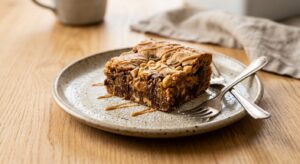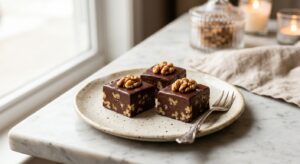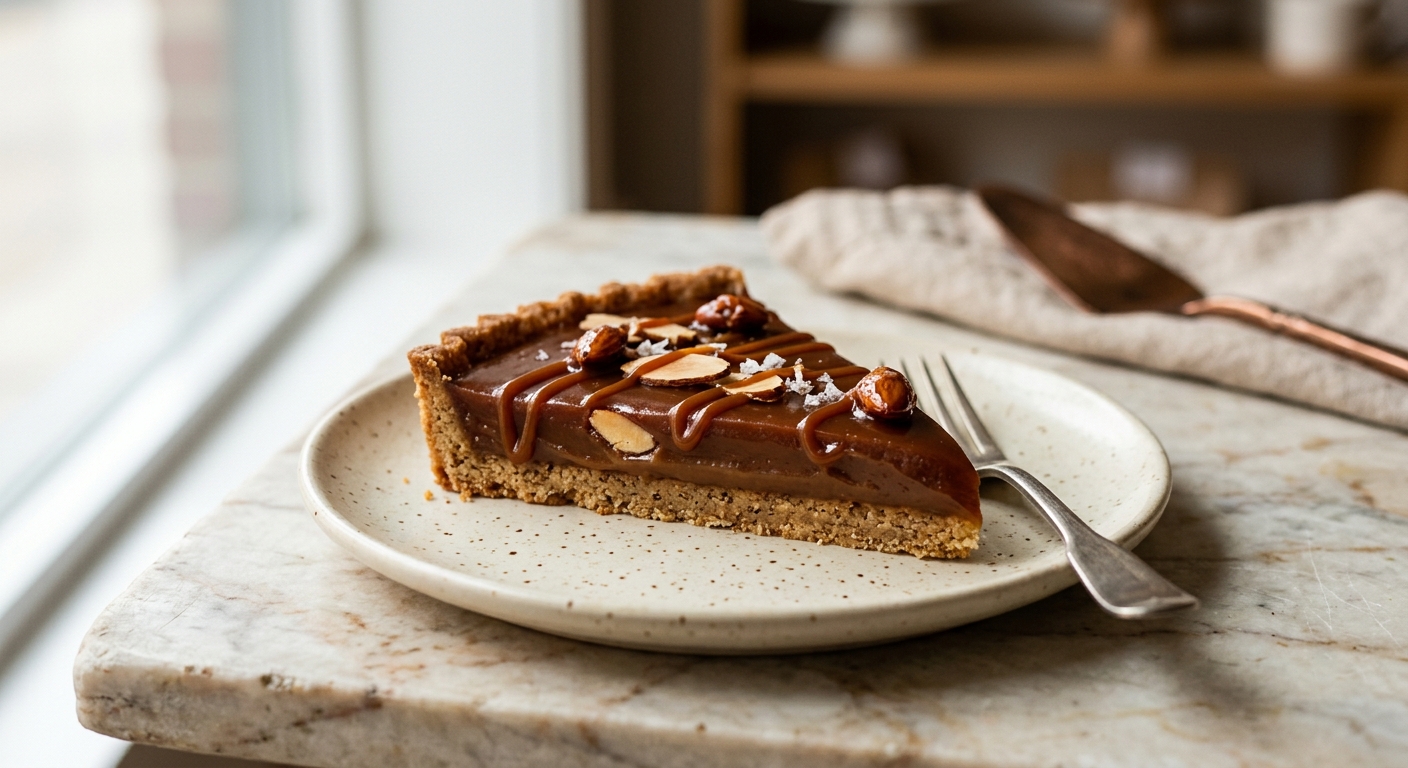
There is something almost magical about watching caramel form in a pan – the way a pale, syrupy liquid slowly deepens to amber, fills the kitchen with that unmistakable buttery-toasty perfume, and thickens into something glossy and seductive. For a long time, that magic felt off-limits for anyone watching their sugar intake. Then along came allulose, and the game changed entirely. This tart is proof: a shimmering, deeply flavored salted caramel filling cradled in a crisp, nutty almond flour crust, finished with flaky sea salt and a drizzle of dark chocolate if you are feeling indulgent.
What sets this recipe apart is the choice of allulose as the sole sweetener. Unlike allulose or monk fruit, allulose actually undergoes the Maillard browning reaction, which means it caramelizes in a way that is nearly identical to table sugar – developing real complexity, color, and that characteristic bittersweet depth. The result is a caramel that is silky and scoopable when cold, and glossy and flowing at room temperature, rather than grainy or waxy the way some sugar-free caramels can be. The almond flour crust brings richness and a gentle nuttiness that partners beautifully with the salty-sweet filling.
This is a medium-difficulty recipe, mostly because caramel requires your full attention and a reliable thermometer. That said, it is absolutely approachable for a confident home baker who has made a tart or two before. It is ideal for dinner parties, holiday entertaining, or any moment when you want to serve something genuinely impressive that happens to be sugar-free.
Equipment Needed
Click on an item below to shop for the recommended items for this recipe on Amazon.
As an Amazon Associate, we earn from qualifying purchases.
10
Ingredients
- Crust
- 240 gblanched almond flour (about 2 1/4 cups), not almond meal
- 30 gpowdered allulose (about 3 tbsp)
- 0.5 tspColima Sea SaltMicroplastic Free Salt
- 0.25 tspground cinnamon
- 56 gunsalted butter, melted and cooled (4 tbsp / 1/4 cup)
- 1 largeegg, at room temperature
- 0.5 tsppure vanilla extract
- —— Salted Caramel Filling —
- Caramel
- 300 ggranular allulose (about 1 1/2 cups)
- 80 mlheavy cream (about 1/3 cup), at room temperature
- 113 gunsalted butter, cut into 1-inch cubes and softened (8 tbsp / 1/2 cup)
- 1 tsppure vanilla extract
- 1 tspColima Sea SaltMicroplastic Free Salt (such as Maldon), plus more for topping
- —— Optional Garnish —
- 40 gdark chocolate (85% cacao or higher), finely chopped
Ingredient Substitutions
Instructions
- Make the crust: Preheat your oven to 325°F (165°C). In a medium bowl, whisk together the almond flour, powdered allulose, fine sea salt, and cinnamon. Add the melted butter, egg, and vanilla extract, and stir with a fork until a cohesive, slightly tacky dough forms.
- Press the crust evenly into the bottom and up the sides of a 9-inch round tart pan with a removable bottom. Aim for a consistent thickness of about 1/4 inch. Use the flat bottom of a measuring cup to smooth the base. Prick the bottom all over with a fork (about 12 times) to prevent puffing.
- Blind bake the crust for 16 to 18 minutes, until the edges are deep golden and the center looks dry and set. It will firm up further as it cools. Transfer to a wire rack and let cool completely, at least 30 minutes, before filling.
- Make the caramel: Place the granular allulose in a medium heavy-bottomed saucepan (light-colored if possible, so you can monitor color). Set over medium heat and let it melt without stirring for the first 2 minutes. Once the edges begin to liquefy, gently swirl the pan. Allulose melts and browns much like regular sugar. Cook until the caramel reaches a deep amber color and an instant-read thermometer reads 320 to 330°F (160 to 165°C), about 8 to 12 minutes total. Watch carefully in the final minutes as it can go from perfect to burnt quickly.
- Remove the pan from the heat. Carefully pour in the heavy cream (it will bubble vigorously). Whisk constantly until smooth. Add the softened butter a few cubes at a time, whisking after each addition until fully incorporated and glossy. Stir in the vanilla extract and flaky sea salt. Let the caramel cool in the pan for 10 minutes, stirring occasionally, until it thickens slightly but is still pourable.
- Pour the warm caramel into the fully cooled crust. Gently tilt the tart pan to spread it evenly to the edges. Scatter extra flaky sea salt over the top. If using the chocolate garnish, let the caramel set for 15 minutes, then drizzle the melted dark chocolate in thin lines across the surface.
- Refrigerate the tart, uncovered, for at least 2.5 hours (or up to overnight) until the caramel is fully set and sliceable. Run a thin knife around the edges before unmolding. Slice with a warm, dry knife for the cleanest cuts.
- Make the no-bake crust: In a food processor, pulse together the almond flour, powdered allulose, fine sea salt, and cinnamon until combined. Add the melted butter and vanilla extract (omit the egg). Pulse 6 to 8 times until the mixture resembles wet sand and clumps when pressed between your fingers.
- Press the crust mixture firmly and evenly into the bottom and up the sides of a 9-inch tart pan with a removable bottom or a 9-inch springform pan. The mixture should be compacted firmly or it will crumble when cut. Use the bottom of a flat measuring cup with consistent firm pressure.
- Place the tart pan in the freezer for at least 1 hour until the crust is hard and fully set. Do not rush this step, as an under-set crust will crumble when you add the warm caramel.
- While the crust chills, make the allulose caramel on the stovetop following the same steps as the oven method (steps 4 and 5 above): melt the allulose over medium heat until deep amber and 320 to 330°F (160 to 165°C), then whisk in the cream, butter, vanilla, and flaky salt. Cool for 10 minutes.
- Remove the crust from the freezer. Working quickly, pour the slightly cooled caramel into the frozen crust and spread evenly. Scatter flaky sea salt on top and add the chocolate drizzle if desired. Return the tart to the refrigerator (not the freezer) for a minimum of 2.5 hours to allow the caramel to fully set without the crust becoming brittle.
- Slice and serve cold. Because this crust contains no egg and was not baked, it is more delicate. Use a very sharp knife and wipe it clean between cuts.
Nutrition Per Serving
Per 1 serving (makes one 9-inch round tart, 10 slices)
Sweetener: allulose
Why This Recipe Works
The reason this tart succeeds where so many sugar-free caramels fail comes down entirely to the choice of allulose. Allulose is a rare sugar that occurs naturally in small amounts in figs and raisins. Chemically, it is a monosaccharide and an epimer of fructose, meaning the body absorbs it but does not metabolize it for energy, so it contributes virtually zero calories or glycemic impact. Crucially, allulose undergoes both the Maillard browning reaction and caramelization at temperatures similar to sucrose, something allulose and monk fruit cannot do. This is why your caramel turns genuinely golden and develops that complex bittersweet depth rather than staying a pale, flat syrup. The key difference to watch for: allulose browns slightly faster and at slightly lower temperatures than table sugar, so you should target 320 to 330°F (160 to 165°C) on a thermometer rather than going by color alone.
The almond flour crust works because almond flour is primarily fat and protein with very low starch, which means it does not develop gluten. Instead, it browns through the same Maillard reaction and sets via egg proteins coagulating in the oven. This gives a crust that is crisp when fresh and slightly sandy in texture. The small amount of allulose in the crust aids browning and adds gentle sweetness without making it cloying. Pressing the dough firmly and evenly is more important than with a traditional pastry crust because almond flour dough cannot be rolled and will have weak spots if the thickness varies. Blind baking without pie weights works here because the egg in the dough sets quickly and the natural fat content prevents significant shrinkage.
The salt is more than a garnish. Sodium ions suppress bitterness receptors on the tongue, which means the flaky sea salt on top makes the caramel taste sweeter and more balanced without adding any actual sweetness. It also creates a textural contrast against the smooth caramel that makes each bite more interesting. If your caramel seizes or becomes grainy during cooking, it is almost always because moisture from the cream hit the hot allulose too suddenly. The fix is to ensure your cream is truly at room temperature, and to pour it in a slow, steady stream while whisking vigorously rather than adding it all at once.
Baker’s Tips
- Use an instant-read or candy thermometer. Allulose caramel is genuinely difficult to judge by color alone because it can appear amber before it reaches the ideal temperature. A thermometer takes all the guesswork out and prevents over-cooking.
- Warm your cream before adding it to the caramel. Room temperature is the minimum. Cold cream hitting very hot allulose causes violent boiling and can cause the caramel to seize. If you forget, microwave the cream for 20 to 30 seconds before adding.
- Pack the crust firmly. Almond flour crusts rely entirely on compression and the binder (egg and butter) to hold together. Use the flat base of a measuring cup and press with real force, especially at the corners where the base meets the sides.
- Let the caramel cool for 10 full minutes before pouring. If it goes in too hot, it can soften the crust. If it cools too much and becomes too thick to pour, rewarm it over very low heat, stirring gently.
- Slice the tart cold. Allulose caramel remains softer than traditional caramel at room temperature. For picture-perfect slices, always cut straight from the refrigerator with a sharp knife dipped in hot water and wiped dry.
- Taste for salt before pouring the caramel. The flakiness of sea salt brands varies significantly. Taste the finished caramel and adjust before it goes into the shell. You want a clear savory-sweet contrast, not just a hint.
- Do not double the caramel recipe in one pan. Allulose needs even heat and adequate surface area to melt uniformly. A larger volume in the same pan will brown unevenly and is much harder to control.
Variations
- Espresso caramel: Stir 1 tsp of instant espresso powder into the finished caramel along with the vanilla for a deep, coffee-forward flavor that amplifies the bittersweet notes of allulose.
- Orange zest and cardamom: Add 1 tsp of finely grated orange zest and 1/4 tsp of ground cardamom to the crust dough, and finish the caramel with 1/4 tsp of orange zest for a fragrant, Moroccan-inspired twist.
- Pecan praline topping: Toast 60g of roughly chopped pecans in a dry skillet until fragrant and scatter over the caramel before it sets for added crunch and richness.
- Dairy-free version: Substitute vegan butter (stick-style) in both the crust and caramel, and use full-fat canned coconut cream in place of the heavy cream. Omit the egg in the crust and freeze-set as in the no-bake method. The coconut cream adds a subtle tropical note that works surprisingly well with the salted caramel.
Troubleshooting & FAQ
My caramel never thickened and stayed runny even after chilling. What went wrong?
My caramel seized up and turned lumpy or grainy when I added the cream. Can I fix it?
My almond flour crust crumbled when I tried to slice the tart. What happened?
Why does my caramel taste bitter or slightly harsh?
Can I use a tart pan without a removable bottom?
Storage & Make-Ahead
- Storage: Store the tart covered in the refrigerator for up to 5 days. The caramel will firm up further over time but softens beautifully at room temperature after 15 minutes. Do not store at room temperature for longer than 2 hours as the caramel will become very soft. Freeze individual slices on a parchment-lined tray until solid, then wrap tightly in plastic wrap and foil for up to 6 weeks. Thaw overnight in the refrigerator.
- Make-Ahead: This tart is an excellent make-ahead dessert. The crust can be baked and stored at room temperature, tightly wrapped, up to 2 days ahead. The fully assembled tart can be made up to 2 days before serving and refrigerated. The caramel actually improves in flavor after an overnight rest as the salt fully integrates. For the cleanest slices, always slice cold.