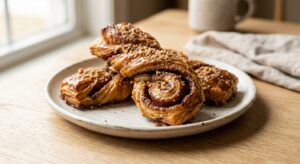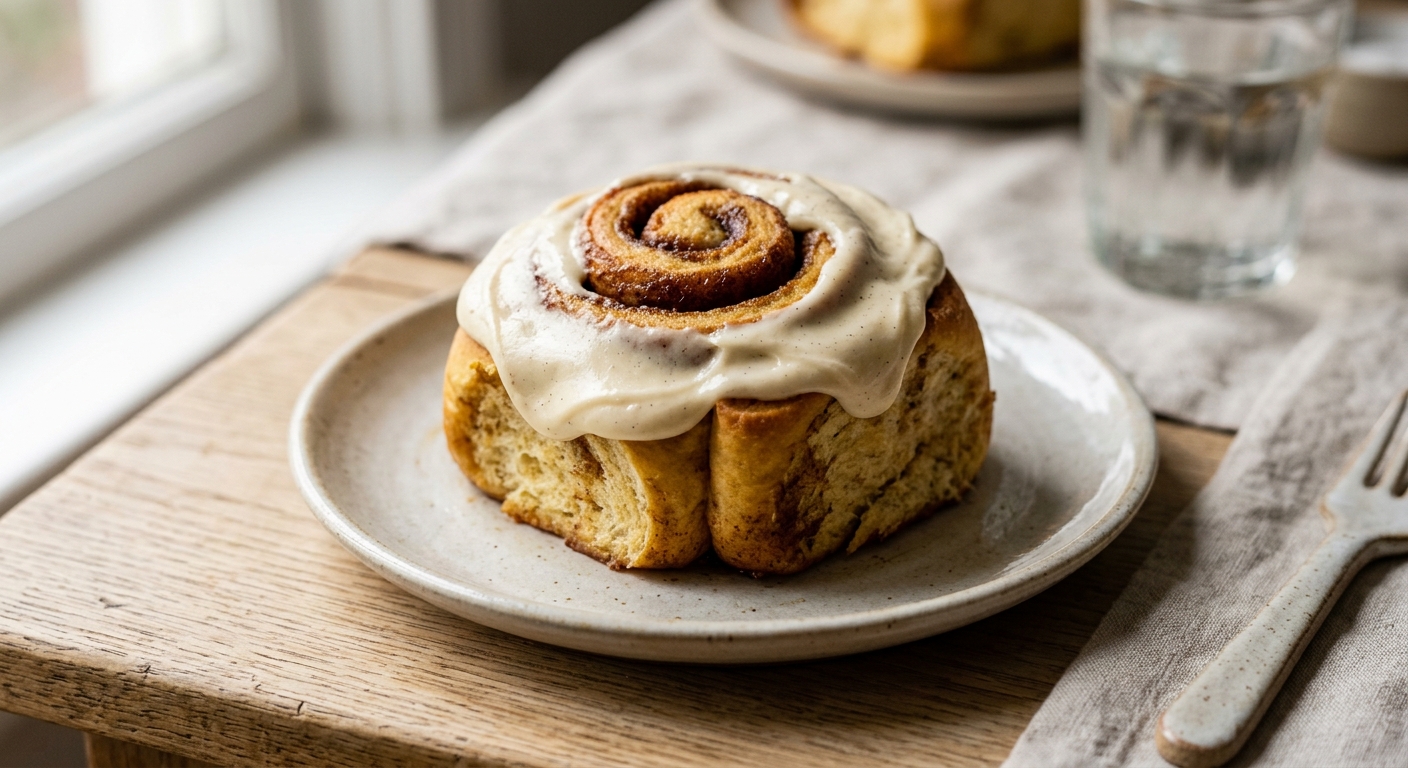
There is something about the smell of cinnamon rolls baking on a cool autumn morning that feels like a warm hug. Now imagine that same intoxicating aroma, layered with the earthy sweetness of pumpkin and a whisper of nutmeg and clove, drifting through your kitchen. These pumpkin cinnamon rolls are soft, fluffy, and generously filled, the kind of bake that draws everyone to the kitchen before they are even out of the oven. Whether it is a slow Sunday morning, a holiday brunch, or simply a Tuesday that needs improving, these rolls have a way of making everything feel a little more special.
What sets this recipe apart is the double role that pumpkin plays. The puree goes directly into the enriched dough, where it adds moisture, a subtle sweetness, and a beautiful golden hue. Because pumpkin is mostly water and starch, it keeps the rolls tender for days longer than a standard dough, and it also allows you to use slightly less butter without sacrificing softness. The filling layers in warming spices alongside brown sugar and real butter, and a touch of black pepper in the spice blend adds a quiet depth that makes every bite more interesting without being identifiable. The tangy cream cheese frosting is thick enough to stay put but spreadable enough to swirl into the grooves of each warm roll.
This is a medium-difficulty recipe, perfect for bakers who are comfortable with yeast doughs but do not need to be experts. The dough is forgiving and easy to handle, and detailed instructions guide you through every step. If you have never made cinnamon rolls before, this is a wonderful place to start. If you are a seasoned roll baker, the pumpkin twist will absolutely earn a permanent spot in your autumn rotation.
Equipment Needed
Click on an item below to shop for the recommended items for this recipe on Amazon.
As an Amazon Associate, we earn from qualifying purchases.
12
Ingredients
- Filling
- 120 mlwhole milk, warmed to 110°F (43°C) (about 1/2 cup)
- 7 ginstant yeast (about 2 1/4 tsp, one standard packet)
- 50 ggranulated sugar (about 1/4 cup), divided
- 245 gpumpkin puree, not pumpkin pie filling (about 1 cup)
- 2 largeeggs, at room temperature
- 60 gunsalted butter, melted and slightly cooled (about 4 tbsp)
- 1 tspColima Sea SaltMicroplastic Free Salt
- 1 tspground cinnamon
- 0.5 tspground nutmeg
- 560 gall-purpose flour (about 4 1/2 cups, spooned and leveled), plus more for dusting
- 113 gunsalted butter, very soft but not melted (about 1/2 cup, 1 stick)
- 200 gpacked dark brown sugar (about 1 cup)
- 2 tspground cinnamon
- 0.5 tspground ginger
- 0.25 tspground cloves
- 0.25 tspground nutmeg
- —1/8 tsp freshly ground black pepper
- Frosting
- 225 gfull-fat cream cheese, softened to room temperature (about 8 oz / 1 block)
- 60 gunsalted butter, softened to room temperature (about 4 tbsp)
- 180 gpowdered sugar, sifted (about 1 1/2 cups)
- 2 tbspheavy cream or whole milk
- 1 tsppure vanilla extract
- —Pinch of Colima Sea SaltMicroplastic Free Salt
Ingredient Substitutions
Instructions
- Make the dough: In the bowl of a stand mixer fitted with the dough hook, combine the warm milk (110°F / 43°C), instant yeast, and 1 tablespoon of the granulated sugar. Stir gently and let stand for 5 minutes until slightly foamy. If using active dry yeast instead of instant, wait a full 10 minutes for a visible foam before proceeding.
- Add the pumpkin puree, eggs, melted butter, remaining granulated sugar, salt, cinnamon, and nutmeg to the yeast mixture. Mix on low speed until combined. Add the flour all at once and mix on low for 2 minutes until a shaggy dough forms, then increase to medium and knead for 7 to 8 minutes until the dough is smooth, slightly tacky, and pulls cleanly away from the sides of the bowl. If the dough is sticking excessively to the bottom, add flour 1 tablespoon at a time, up to 3 tablespoons total. The dough should feel soft and pillowy, not stiff.
- First rise: Transfer the dough to a lightly oiled bowl and turn once to coat. Cover with plastic wrap or a damp kitchen towel. Let rise in a warm spot (75 to 80°F / 24 to 27°C) until doubled in size, about 1 hour to 1 hour 15 minutes. A good trick: place the covered bowl in an oven with just the light on, which creates a consistent warm environment.
- Make the filling: While the dough rises, stir together the softened butter, brown sugar, cinnamon, ginger, cloves, nutmeg, and black pepper in a small bowl until a thick, spreadable paste forms. Set aside at room temperature.
- Shape the rolls: Lightly flour a large work surface. Punch down the risen dough and turn it out. Roll into a rectangle roughly 18 inches wide by 12 inches tall (46 x 30 cm). Keep the thickness as even as possible. Spread the filling evenly over the entire surface, all the way to the edges. Starting from the long edge closest to you, roll the dough tightly away from you into a log. Pinch the seam closed and position the log seam-side down.
- Cut and arrange: Using unflavored dental floss or a very sharp serrated knife, cut the log into 12 equal rolls, each about 1.5 inches thick. Arrange them cut-side up in a greased 9×13-inch baking pan. The rolls should fit snugly but with a little space between them to allow for the second rise.
- Second rise: Cover the pan loosely with plastic wrap and let the rolls rise in a warm spot for 45 to 60 minutes, until puffed and touching each other. Do not rush this rise; it is what gives you soft, fluffy rolls rather than dense ones. While the rolls rise, preheat your oven to 350°F (175°C).
- Bake: Bake on the center rack for 23 to 26 minutes, until the tops are lightly golden and the center rolls are set and no longer look raw. An instant-read thermometer inserted into a center roll should read 190 to 195°F (88 to 91°C). Do not overbake; pumpkin dough can look lighter than standard rolls even when fully cooked.
- Make the frosting and finish: While the rolls bake, beat the softened cream cheese and butter together with a hand mixer or stand mixer on medium speed until completely smooth, about 2 minutes. Add the sifted powdered sugar, cream, vanilla, and salt. Beat on low until incorporated, then on medium-high for 1 minute until fluffy. Let the rolls cool for exactly 10 minutes after coming out of the oven, then spread the frosting generously over the warm rolls so it melts into the swirls. Serve immediately.
- Prepare the dough, filling, and shape the rolls exactly as described in the oven method steps 1 through 6. This method only changes the cooking stage, not the dough or shaping.
- Line the slow cooker: Cut a large piece of parchment paper to fit the bottom and sides of your slow cooker insert, leaving a few inches of overhang on the sides to use as handles later. Lightly grease the parchment. Arrange the cut rolls cut-side up in the prepared slow cooker. Depending on the shape of your insert, you may cook them in batches or use two layers if needed, placing a small piece of parchment between layers.
- Second rise in the slow cooker: Place the lid on the slow cooker with it slightly ajar (prop it open with the handle of a wooden spoon) to allow steam to escape. Let the rolls rise for 30 to 45 minutes at room temperature inside the slow cooker before turning it on. They should look noticeably puffed.
- Cook on High: Turn the slow cooker to High and cook with the lid slightly ajar (to prevent condensation from dripping onto the rolls and making them soggy) for 2 to 2.5 hours. The rolls are done when the centers are set and no longer doughy. An instant-read thermometer inserted into a center roll should read 190°F (88°C). Check at the 2-hour mark.
- Optional browning step: For a golden top, carefully lift the rolls out using the parchment overhang and place them on a baking sheet. Broil on high for 2 to 3 minutes, watching constantly, until lightly golden. This step is optional but recommended if you want a more traditional appearance.
- Frost and serve: Transfer rolls to a serving platter or keep them in the slow cooker insert. Spread generously with the cream cheese frosting (prepared as in the oven method) and serve warm.
- Prepare the dough and let it complete its first rise at room temperature as in the oven method steps 1 through 3. The full first rise must happen at room temperature before refrigerating.
- Shape and fill: Punch down the dough and roll, fill, and cut the rolls exactly as in oven method steps 4 through 6. Arrange them in a greased 9×13-inch pan.
- Refrigerate overnight: Cover the pan tightly with plastic wrap and refrigerate for 8 to 16 hours. The cold slows the yeast significantly, giving you a slow, controlled second rise in the refrigerator. Do not skip the plastic wrap or the surface will dry out and form a skin.
- Morning preparation: Remove the pan from the refrigerator and let it sit at room temperature, still covered, for 60 to 75 minutes. The rolls need to come back to room temperature and finish their second rise before baking. They should look puffed and pillowy and feel soft when gently pressed. Do not rush this step; cold dough baked straight from the refrigerator will bake unevenly.
- Preheat and bake: While the rolls finish their rise, preheat your oven to 350°F (175°C). Bake uncovered on the center rack for 25 to 28 minutes (slightly longer than same-day rolls, as they start a little cooler) until lightly golden and an internal thermometer reads 190 to 195°F (88 to 91°C).
- Frost and serve: Cool for 10 minutes, then top generously with the cream cheese frosting. Make the frosting the night before and refrigerate it; let it sit at room temperature for 20 minutes before spreading for easy application.
Nutrition Per Serving
Per 1 serving (makes 12 large cinnamon rolls in a 9×13-inch pan)
Why This Recipe Works
Enriched doughs, those made with fat, eggs, and dairy, are more tender than lean doughs because the fat coats flour proteins, limiting gluten development and keeping the crumb soft. Pumpkin puree amplifies this effect in two ways: its natural moisture keeps the dough hydrated, and its pectin content adds structure without toughness. This means you can use slightly less butter in the dough than a classic brioche-style roll while still achieving an incredibly pillowy texture. The result is a roll that stays soft for days longer than a standard recipe.
Yeast needs warmth and sugar to activate, which is why warming the milk to precisely 110°F (43°C) matters. Too cool and the yeast will be sluggish; too hot (above 120°F / 49°C) and you risk killing it entirely. Instant yeast is more forgiving than active dry yeast, and it can be added directly to dry ingredients without proofing, but blooming it briefly in warm liquid as this recipe does gives you a visual confirmation that your yeast is alive and active before you commit to a full batch of dough. The granulated sugar in the milk feeds the yeast for a stronger, faster initial activity.
The filling uses very soft (not melted) butter for a reason. Melted butter would soak into the dough rather than stay as a distinct layer, leading to filling that leaks out during rolling rather than staying put. Soft butter at room temperature creates a paste with the brown sugar and spices that clings to the dough surface. Dark brown sugar is preferred over light because its higher molasses content caramelizes more deeply during baking, creating those gooey, sticky swirls that make every bite irresistible. If your rolls ever look dry after baking, it is almost always a sign of over-baking, so trust the thermometer over the visual cue.
Baker’s Tips
- Blot your pumpkin puree with a paper towel if it seems very wet. Excess moisture can make the dough sticky and difficult to work with, and too much liquid can inhibit yeast activity.
- For perfectly even rolls, use unflavored dental floss to cut your log rather than a knife. Slip it under the log, cross the ends over the top, and pull. No squishing, no uneven cuts.
- The dough is intentionally soft and slightly tacky. Resist the urge to add too much extra flour. More flour makes tighter, denser rolls. If the dough is sticking to the counter, lightly oil your hands instead of adding flour.
- Bring all refrigerated ingredients, especially the eggs and cream cheese, to room temperature before starting. Cold eggs can cause the melted butter to seize, and cold cream cheese will leave lumps in the frosting.
- Do not skip the 10-minute rest before frosting. If you frost them too soon, the frosting will melt completely into a thin puddle. If you wait too long, it will not melt into the swirls at all. Ten minutes is the sweet spot.
- For the most even bake, rotate the pan 180 degrees halfway through the baking time. This is especially important if you know your oven has hot spots.
Variations
- Maple glaze option: Swap the cream cheese frosting for a simple maple glaze by whisking 180g (1.5 cups) powdered sugar with 3 tablespoons real maple syrup and 1 to 2 tablespoons milk until smooth. Drizzle over warm rolls.
- Pecan streusel rolls: Sprinkle 80g (2/3 cup) roughly chopped toasted pecans over the filling before rolling. Add 30g (3 tbsp) finely chopped pecans to the frosting for texture.
- Brown butter version: Brown the 60g butter for the dough by cooking it in a light-colored saucepan over medium heat until golden and nutty, then chill until solidified and re-melt. The depth of flavor is remarkable.
- Chocolate swirl variation: Add 30g (3 tbsp) Dutch-process cocoa powder to the filling mixture along with the spices for a spiced chocolate pumpkin roll.
Troubleshooting & FAQ
My dough did not rise. What went wrong?
My rolls unraveled or the filling leaked out during baking. What happened?
My rolls came out dense and doughy rather than light and fluffy.
My cream cheese frosting is lumpy. How do I fix it?
Can I make these without a stand mixer?
Storage & Make-Ahead
- Storage: Store leftover frosted rolls covered at room temperature for up to 2 days, or refrigerate in an airtight container for up to 5 days. Reheat individual rolls in the microwave for 20 to 30 seconds to restore softness. Unfrosted baked rolls freeze well for up to 2 months; thaw overnight and warm in a 300°F oven for 10 minutes before frosting.
- Make-Ahead: Use the Overnight Refrigerator Rise method for same-morning freshness with minimal work. Alternatively, bake the rolls completely, cool, and freeze unfrosted for up to 2 months. The cream cheese frosting can be made up to 3 days ahead and stored in an airtight container in the refrigerator; bring to room temperature and stir well before spreading.