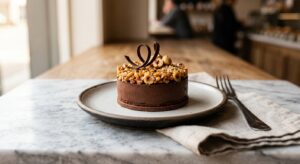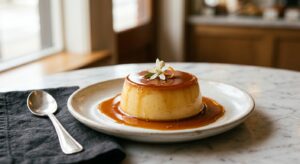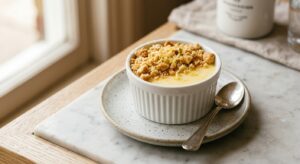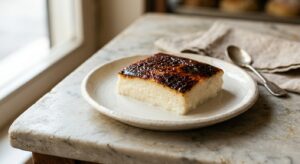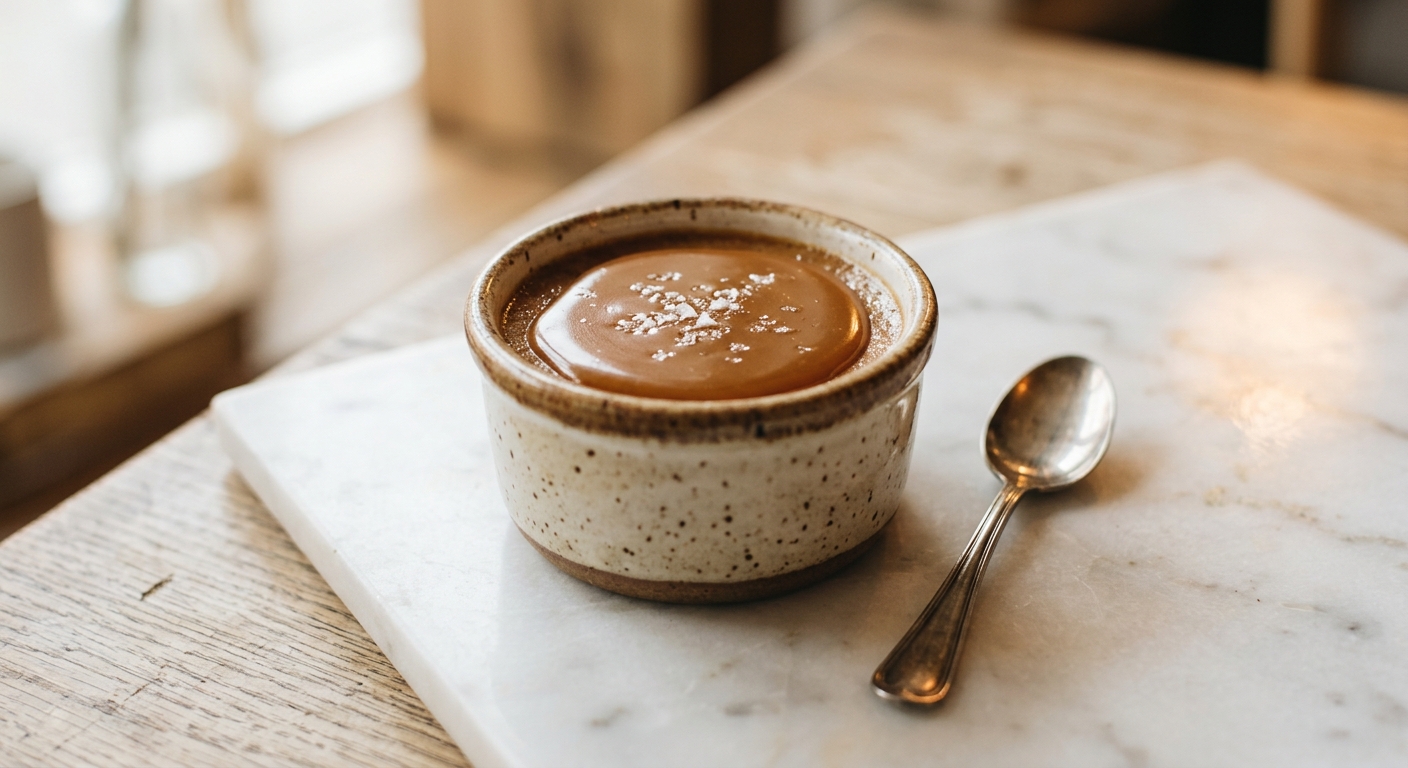
There is a moment, somewhere between stirring and waiting, when a pot of budino transforms from a loose, uncertain mixture into something thick, glossy, and trembling with promise. Brown Butter Budino is one of those desserts that feels like a secret the best Italian restaurants have been keeping. Silky and dense without being heavy, it sets into soft, spoonable cups that smell of toasted hazelnuts and warm caramel before you have even added the sauce. Served chilled with a ribbon of sea salt caramel pooled on top, it is the kind of dessert people lean in to photograph before they eat it, and then go very quiet after the first bite.
What sets this version apart is the brown butter stirred directly into the custard base. Most budino recipes use plain melted butter or skip it entirely, but browning the butter first adds a nutty, almost toffee-like depth that weaves through the whole pudding. The technique matters here: you bloom the egg yolks with sugar before tempering in the hot milk, which gives the finished custard its characteristic satiny texture rather than the grainy, eggy result you sometimes get from shortcuts. The sea salt caramel is a wet caramel built from scratch, loose enough to pour but rich enough to cling, and a proper flaky sea salt finish cuts through the sweetness in exactly the right way.
This recipe sits comfortably in the medium difficulty range. You need to pay attention and keep your mise en place organised, but nothing here requires specialist equipment or advanced technique. It is perfect for confident home bakers who want to move beyond boxed pudding and impress guests without spending all day in the kitchen. Individual serving glasses make it elegant for dinner parties, but it is just as satisfying eaten straight from a bowl on a Tuesday night.
Equipment Needed
Click on an item below to shop for the recommended items for this recipe on Amazon.
As an Amazon Associate, we earn from qualifying purchases.
6
Ingredients
- Browning
- 57 gunsalted butter (4 tbsp)
- 600 mlwhole milk (about 2.5 cups)
- 120 mlheavy cream (about 0.5 cup)
- 5 largeegg yolks, at room temperature
- 150 ggranulated sugar (about 0.75 cup), divided
- 35 gcornstarch (about 0.25 cup), sifted
- 1 tsppure vanilla extract
- —Pinch of Colima Sea SaltMicroplastic Free Salt
- Caramel
- 200 ggranulated sugar (about 1 cup)
- 60 mlwater (about 0.25 cup)
- 120 mlheavy cream, warmed (about 0.5 cup)
- 28 gunsalted butter (2 tbsp)
- 0.5 tspColima Sea SaltMicroplastic Free Salt (such as Maldon), for caramel, plus more for serving
Ingredient Substitutions
Instructions
- Brown the butter: Melt 57g of unsalted butter in a small light-colored saucepan over medium heat, swirling frequently. Cook for 4 to 6 minutes until the milk solids turn deep golden brown and the butter smells nutty and toasty. Immediately pour it into a small bowl to stop cooking and set aside.
- Warm the milk and cream: Combine the whole milk and heavy cream in a medium saucepan over medium heat. Heat until steaming and just beginning to simmer around the edges, about 5 minutes. Do not boil. Remove from heat.
- Prepare the yolk mixture: In a large heatproof bowl, whisk together the egg yolks, 150g of granulated sugar, sifted cornstarch, and a pinch of fine sea salt until the mixture is pale, thick, and completely smooth, about 2 minutes. This step dissolves the sugar and prevents lumps in the finished custard.
- Temper the eggs: Slowly pour about one-third of the hot milk mixture into the egg yolk mixture in a thin, steady stream while whisking constantly. This raises the temperature of the eggs gradually so they do not scramble. Then pour the tempered egg mixture back into the saucepan with the remaining hot milk.
- Cook the custard: Return the saucepan to medium heat and cook, whisking constantly and reaching into the corners of the pan, for 5 to 8 minutes until the mixture thickens noticeably and large bubbles begin to plop on the surface. Cook for one full minute after the first bubble appears to fully activate the cornstarch and cook out any starchy taste.
- Finish the budino: Remove from heat and immediately whisk in the browned butter and vanilla extract until fully incorporated. Strain the custard through a fine-mesh sieve into a large measuring jug or bowl with a pour spout, pressing gently with a spatula. This removes any cooked egg bits for a perfectly smooth result.
- Pour and chill: Divide the strained custard evenly among 6 serving glasses or ramekins (approximately 150ml each). Press a small piece of plastic wrap directly onto the surface of each pudding to prevent a skin from forming. Refrigerate for at least 4 hours, or overnight, until fully set and cold.
- Make the sea salt caramel: Combine 200g of sugar and 60ml of water in a medium saucepan over medium heat. Stir gently just until the sugar dissolves, then stop stirring entirely. Cook, swirling the pan occasionally, until the caramel turns a deep amber color (about 175°C on a candy thermometer), 10 to 14 minutes. Remove from heat and carefully pour in the warmed heavy cream in a slow stream (it will bubble vigorously). Whisk in the 28g of butter and 0.5 tsp flaky sea salt. Let cool for 15 minutes until pourable but not hot.
- Serve: Remove the plastic wrap from each budino. Spoon 2 to 3 tablespoons of warm sea salt caramel over each pudding and finish with an extra pinch of flaky sea salt. Serve immediately, or refrigerate with the caramel poured on top for up to 24 hours.
- Brown the butter in the microwave: Place 57g of unsalted butter in a large microwave-safe bowl (at least 1.5 litre capacity, as the custard will be cooked in this same bowl). Microwave on HIGH in 30-second bursts, swirling between each, for a total of 3 to 4 minutes until the butter is golden brown and fragrant. Watch carefully after the 2-minute mark. Pour into a small separate bowl and set aside, leaving any residue in the large bowl.
- Mix the base: Into the same large bowl, add the whole milk, heavy cream, egg yolks, 150g of granulated sugar, sifted cornstarch, and a pinch of fine sea salt. Whisk thoroughly for 2 minutes until completely smooth and no lumps of cornstarch remain. Do not skip this step, as unwhisked lumps will not smooth out during microwaving.
- Microwave the custard: Cook the mixture on MEDIUM power (50%) for 4 minutes, then remove and whisk vigorously for 30 seconds. Return to the microwave and cook on MEDIUM in 2-minute intervals, whisking thoroughly between each interval, for 8 to 12 minutes total, until the custard is visibly thickened and coats the back of a spoon heavily. It should hold a clear line when you run your finger across the spoon. Microwaves vary significantly, so watch for thickening and do not stop too early.
- Finish and strain: Whisk in the reserved browned butter and vanilla extract until smooth. Strain through a fine-mesh sieve into a measuring jug. Divide among 6 serving glasses, press plastic wrap onto each surface, and refrigerate for at least 4 hours.
- Make the stovetop caramel and serve: Follow steps 8 and 9 from the Stovetop method above to make the sea salt caramel and finish the puddings.
- Brown the butter: Using the stovetop method described in Step 1 of the Classic Method, brown the 57g of unsalted butter in a small saucepan until deep golden and nutty. Pour into a bowl and set aside.
- Prepare the custard base: In a large bowl, whisk together the whole milk, heavy cream, egg yolks, 150g of granulated sugar, sifted cornstarch, vanilla extract, and a pinch of fine sea salt until completely smooth and no cornstarch lumps remain. Whisk in the cooled browned butter. Unlike the stovetop method, you do not cook the custard first. The slow cooker will set it gently in the ramekins.
- Set up the slow cooker bain-marie: Fold a clean kitchen towel and place it in the bottom of the slow cooker insert. This cushions the ramekins and prevents the bottoms from overheating. Arrange 6 ramekins on top of the towel. Pour the uncooked custard evenly among the ramekins. Pour hot water carefully around the outside of the ramekins until it reaches halfway up their sides.
- Cook on High: Place a double layer of paper towels under the slow cooker lid before closing it. This absorbs condensation and prevents water droplets from dripping back onto the custards and creating wet spots on the surface. Cook on HIGH for 1 hour 30 minutes to 2 hours. The custards are done when the edges are set and the centres still have a very slight jiggle, similar to a just-baked cheesecake. They will firm up fully when cold.
- Cool and chill: Carefully remove the ramekins from the water bath using tongs or a slotted spoon and transfer to a wire rack. Allow to cool to room temperature, about 30 minutes, then press plastic wrap directly onto each surface and refrigerate for at least 4 hours.
- Make the caramel and serve: Follow steps 8 and 9 from the Stovetop method to make the sea salt caramel. Spoon over the chilled custards and finish with flaky sea salt just before serving.
Nutrition Per Serving
Per 1 serving (makes 6 individual pudding cups (approximately 150ml each))
Why This Recipe Works
The magic of a great budino starts with the egg yolks. Unlike whole eggs, yolks are rich in lecithin, a natural emulsifier that binds fat and water molecules together into a smooth, cohesive suspension. When you whisk the yolks with sugar before adding any heat, you are dissolving the sugar crystals and beginning to break down the protein structure, which leads to a silkier final texture. The cornstarch works alongside the yolk proteins: it gelatinizes at around 95°C and creates the thick, glossy body of the custard. This dual-thickener approach (yolks for richness and emulsification, cornstarch for structure) is what gives Italian budino its distinctive texture, which is thicker and more yielding than a French crème brûlée but smoother and more luxurious than an American pudding.
Browning the butter is a Maillard reaction, the same chemical process that browns bread crusts and seared meat. When butter is heated past its smoke point, the water evaporates and the milk solids (proteins and lactose) begin to caramelize and form hundreds of new flavor compounds, including diacetyl (buttery, nutty), furaneol (caramel-like), and various pyrazines (toasty, hazelnut). Incorporating this into a custard base distributes those complex flavors throughout every spoonful in a way that plain butter simply cannot match. The key is using a light-colored pan so you can monitor the color change closely: golden is good, deep amber is perfect, and black means start over.
For the caramel, the wet method (sugar dissolved in water before cooking) is more forgiving than the dry method because the water slows down the cooking and distributes heat evenly, reducing the risk of hot spots that cause crystallization. The critical rule is to stop stirring once the sugar has dissolved. Stirring introduces agitation that can cause sugar molecules to recrystallize around any undissolved grain or impurity, turning your smooth caramel grainy. If you see crystallization beginning on the sides of the pan, use a damp pastry brush to wash them down. Warming the cream before adding it to the hot caramel reduces the violence of the reaction and makes for a smoother, more emulsified final sauce.
Baker’s Tips
- Use a light-colored (stainless steel or enameled) saucepan for browning the butter so you can clearly see the color of the milk solids as they darken. A dark non-stick pan makes it very easy to overshoot.
- Sift the cornstarch before adding it to the egg mixture. Unsifted cornstarch clumps easily and can leave white starchy patches in the finished pudding even after cooking.
- Strain the finished custard through a fine-mesh sieve without exception, even if it looks smooth. The sieve catches any cooked egg strands that form during cooking and ensures a perfectly silky result.
- Press plastic wrap directly onto the surface of each pudding, not just over the top of the glass. Any gap between the plastic and the surface will result in a rubbery, discolored skin as the pudding cools.
- For the caramel, do not walk away. The change from perfect amber to burnt happens in under 30 seconds. Have your warmed cream measured and ready before the sugar even goes on the heat.
- Warm the cream before adding it to the caramel. Cold cream hitting hot caramel can cause violent splashing and seizing. Microwave it for 45 seconds or warm it in a small saucepan until steaming.
- If your caramel seizes and becomes lumpy when you add the cream, simply return the pan to low heat and stir gently. The lumps will dissolve as the temperature rises again.
Variations
- Espresso Brown Butter Budino: Whisk 2 tsp of instant espresso powder into the warm milk before tempering. The coffee amplifies the nutty notes of the brown butter beautifully.
- Chocolate Brown Butter Budino: Add 100g of finely chopped dark chocolate (70% cocoa) to the hot finished custard and whisk until fully melted before straining. Top with a dark chocolate caramel by adding 1 tbsp of cocoa powder to the finished sea salt caramel.
- Citrus Caramel: Stir 1 tsp of finely grated orange or blood orange zest into the finished caramel for a bright, floral counterpoint to the rich custard.
- Dairy-Free Version: Use full-fat oat milk in place of whole milk, full-fat coconut cream in place of heavy cream, and a high-quality vegan butter for browning. The budino will have a slightly softer set and a subtle coconut note.
Troubleshooting & FAQ
My custard has lumps in it. What went wrong?
Why is my caramel crystallizing and turning grainy?
My budino did not set and is still runny after chilling. What happened?
My caramel is very bitter. Did I burn it?
There is a rubbery skin on my pudding even though I covered it. How do I prevent this?
Storage & Make-Ahead
- Storage: Store covered pudding cups in the refrigerator for up to 4 days. The sea salt caramel can be stored separately in a sealed jar in the refrigerator for up to 2 weeks and gently rewarmed before serving. Do not freeze the finished budino, as the custard will weep and separate on thawing.
- Make-Ahead: The budino cups can be made up to 3 days ahead and kept covered in the refrigerator. The sea salt caramel keeps for 2 weeks refrigerated. Pour the caramel over just before serving for the cleanest presentation, or up to 24 hours ahead if you prefer it well integrated.