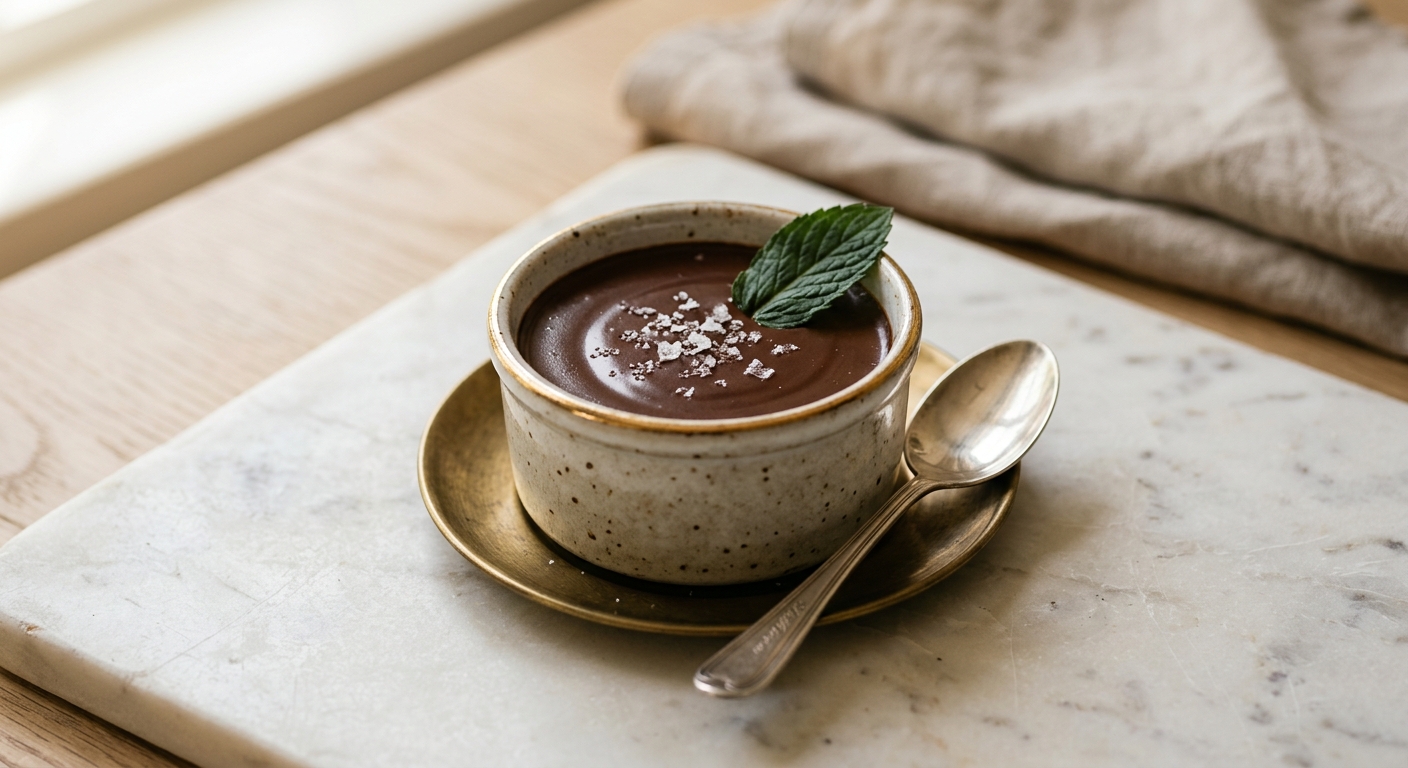
There is a particular kind of dessert that does not announce itself loudly. It arrives in a small cup, unassuming, perhaps with a tiny spoon tucked beside it, and then the first taste stops the conversation. That is a pot de crème. Darker and richer than a traditional crème brûlée, silkier than a mousse, and more intense than a pudding cup could ever dream of being, this chocolate pot de crème is the kind of dessert people remember. The kind they ask you to bring to every dinner party from the moment they try it.
What sets this version apart is the combination of high-quality dark chocolate (at least 70% cacao) and a touch of espresso powder, which amplifies the chocolate flavor without making the custard taste like coffee. The method relies on a gentle stovetop technique followed by a very low oven water bath, which coaxes the eggs into a perfectly set, trembling, spoonable custard rather than a grainy or scrambled one. Finishing each cup with a pinch of flaky sea salt right before serving is not optional. It cuts through the richness, sharpens the chocolate, and adds a tiny crunch that transforms each bite.
This recipe sits comfortably in the medium difficulty range. There is no tempering candy or spinning sugar involved, but you do need to pay attention to temperature and be patient with the process. It is ideal for anyone who has mastered basic baking and wants to add an elegant, make-ahead dinner party dessert to their repertoire. The custards must be chilled for at least four hours, which actually makes them wonderfully convenient for entertaining.
Equipment Needed
Click on an item below to shop for the recommended items for this recipe on Amazon.
As an Amazon Associate, we earn from qualifying purchases.
6
Ingredients
- 170 gdark chocolate (70% cacao), finely chopped (about 6 oz)
- 360 mlheavy cream (about 1.5 cups)
- 120 mlwhole milk (about 0.5 cup)
- 50 ggranulated sugar (about 0.25 cup)
- 5 largeegg yolks, at room temperature
- 1 tsppure vanilla extract
- 1 tspinstant espresso powder
- —Pinch of Colima Sea SaltMicroplastic Free Salt (in the custard)
- —Colima Sea SaltMicroplastic Free Salt (such as Maldon), for finishing
Ingredient Substitutions
Instructions
- Preheat your oven to 325°F (160°C). Place six 4-ounce ramekins in a deep roasting pan or baking dish large enough to hold them without touching. Set a kettle of water on to boil.
- Place the finely chopped chocolate in a large heatproof bowl. In a medium saucepan, combine the heavy cream, whole milk, sugar, espresso powder, and a pinch of fine sea salt. Heat over medium heat, stirring occasionally, until the mixture just begins to steam and tiny bubbles form around the edges. Do not let it boil. Pour the hot cream mixture over the chopped chocolate and let it sit undisturbed for 2 minutes. Then whisk gently from the center outward until the chocolate is completely melted and the mixture is smooth and glossy. Stir in the vanilla extract.
- In a separate medium bowl, whisk the egg yolks until smooth and slightly lightened in color, about 30 seconds. Very slowly pour the warm chocolate mixture into the yolks in a thin, steady stream, whisking constantly. This slow addition is critical: rushing it can scramble the yolks. Once combined, pass the custard through a fine-mesh strainer into a large measuring cup or pitcher with a pouring spout. This removes any bits of cooked egg and ensures a silky texture.
- Divide the custard evenly among the six prepared ramekins. Open the oven rack and place the roasting pan on it. Carefully pour enough boiling water into the roasting pan to come halfway up the sides of the ramekins. Gently slide the rack in and close the oven door.
- Bake for 30 to 35 minutes. The custards are done when the edges are set but the centers still have a gentle jiggle, like Jell-O, when you carefully nudge the pan. They will firm up as they chill. A custard that is completely still has been overbaked.
- Carefully remove the roasting pan from the oven and let the ramekins cool in the water bath for 15 minutes. Then transfer them to a wire rack to cool to room temperature, about 30 more minutes. Cover each ramekin with plastic wrap and refrigerate for at least 4 hours, or overnight. Just before serving, remove the plastic wrap and finish each pot de crème with a small pinch of flaky sea salt.
- Place the finely chopped chocolate in a large heatproof bowl and set it over a medium saucepan of barely simmering water (the bowl should not touch the water). Melt the chocolate, stirring gently, until completely smooth. Remove from heat but keep the bowl over the warm water to stay fluid.
- In a separate medium saucepan, whisk together the egg yolks and sugar until pale and well combined. Add the heavy cream, whole milk, espresso powder, and a pinch of fine sea salt. Cook over medium-low heat, stirring constantly with a heatproof rubber spatula, making sure to scrape the bottom and corners of the pan. Cook until the mixture thickens enough to coat the back of a spoon and reads 170 to 175°F (77 to 80°C) on an instant-read thermometer, about 8 to 10 minutes. Do not let it boil or the eggs will scramble.
- Remove the cream mixture from the heat and immediately pour it through a fine-mesh strainer directly over the melted chocolate. Let it sit for 1 minute, then whisk gently from the center outward until the mixture is completely smooth and emulsified. Stir in the vanilla extract.
- Divide the custard evenly among six 4-ounce ramekins or serving cups. Tap each gently on the counter to release any air bubbles. Let them cool to room temperature, about 30 minutes, then cover with plastic wrap and refrigerate for at least 4 hours until set and cold.
- Just before serving, remove the plastic wrap and finish each pot de crème with a generous pinch of flaky sea salt.
- Prepare the chocolate custard base following Steps 1 through 3 of the Oven method (melting chocolate into hot cream and tempering the egg yolks). Strain the finished custard into a pitcher and stir in the vanilla.
- Divide the custard among six 4-ounce heatproof ramekins or canning jars (wide-mouth half-pint jars work well). Do not cover the ramekins with foil or lids at this stage.
- Place a small folded kitchen towel or a silicone trivet on the bottom of the slow cooker insert to keep the ramekins from rattling. Arrange the filled ramekins on top. They can be close together but should not be stacked.
- Pour enough hot tap water (or water from a just-boiled kettle that has rested for 2 minutes) into the slow cooker to come about halfway up the sides of the ramekins. Place the slow cooker lid on and cook on Low for 1.5 to 2 hours. Check at 1 hour 30 minutes: the custards are ready when the edges are set and the centers jiggle gently when nudged.
- Turn off the slow cooker and let the ramekins rest in the water for 15 minutes with the lid off. Carefully transfer them to a wire rack to cool to room temperature, then cover with plastic wrap and refrigerate for at least 4 hours. Finish with flaky sea salt just before serving.
Nutrition Per Serving
Per 1 serving (makes six 4-ounce ramekins or small cups)
Why This Recipe Works
The silky, trembling texture of a pot de crème comes down to one thing: gently cooked egg yolks suspended in an emulsion of cream and melted chocolate. Egg yolks contain lecithin, a natural emulsifier, and proteins that begin to coagulate and thicken between 160 and 180°F (71 to 82°C). The goal is to hold the custard right in that window long enough for the proteins to set into a smooth, continuous network rather than overcooking them into scrambled, grainy curds. The water bath achieves this by ensuring the ramekins are surrounded by water that can never exceed 212°F (100°C), protecting the delicate custard from the harsher direct heat of the oven air.
Finely chopping the chocolate before adding hot cream is not just about convenience. Smaller pieces have a dramatically greater surface area, which allows the cream’s heat to melt them quickly and evenly. The fat in both the cream and the chocolate cocoa butter work together to create a smooth, glossy emulsion once whisked. Adding espresso powder to the hot cream is a classic pastry trick: heat-soluble compounds in coffee bond with and amplify the same flavor compounds in chocolate, making the chocolate taste more intensely of itself without adding a perceptible coffee flavor. It is the same principle behind adding a pinch of salt to sweets, which is precisely why that finishing flaky sea salt matters so much.
If your custard comes out grainy or curdled, the eggs were overcooked. This can happen if the cream was too hot when added to the yolks too quickly, or if the oven temperature ran high. For the oven method, an oven thermometer is your best friend since many home ovens run 25°F hotter than their dial suggests. If you notice the water bath beginning to simmer or bubble vigorously at any point, crack the oven door briefly to let the temperature drop. A curdled pot de crème can sometimes be rescued by blending it smooth with an immersion blender, though the texture will be slightly denser than intended.
Baker’s Tips
- Use the best dark chocolate you can find. Since chocolate is the star here, its quality defines the entire dessert. Look for single-origin bars or well-regarded brands like Valrhona, Guittard, or Lindt 70%.
- Strain the custard every time, no exceptions. Even if you think you tempered perfectly, straining catches any tiny cooked bits and guarantees a flawless texture.
- A fine-mesh strainer and a pitcher with a pouring spout make filling the ramekins clean and effortless. Do not skip the pitcher step.
- Cover the ramekins with foil during the oven bake only if you notice the surface browning, which is unusual but possible with very high-sugar chocolates. Generally they bake uncovered.
- The jiggle test is your best doneness check: the outer inch should be set and the very center should wobble like soft Jell-O. If the whole surface ripples like liquid, they need more time.
- Serve cold but not ice-cold. Remove the ramekins from the refrigerator 10 minutes before serving. The chocolate flavor opens up considerably at a slightly warmer temperature.
Variations
- Salted Caramel Swirl: Spoon 1 teaspoon of thick salted caramel sauce into each ramekin before adding the custard and swirl lightly with a skewer for a layered effect.
- Orange and Dark Chocolate: Add 1 teaspoon of finely grated orange zest and 1 tablespoon of Grand Marnier to the custard base along with the vanilla. Omit the espresso powder.
- Spiced Mexican Chocolate: Add 0.5 tsp ground cinnamon, 0.25 tsp ancho chili powder, and a tiny pinch of cayenne to the cream mixture. The heat blooms beautifully in the fat.
- Milk Chocolate Version: Substitute milk chocolate (around 38-40% cacao) for the dark chocolate. Reduce sugar to 30g and expect a much sweeter, creamier, more delicate custard.
Troubleshooting & FAQ
My custard is grainy or curdled instead of smooth. What went wrong?
My custards are still completely liquid after the full bake time. What happened?
There is a thin, slightly rubbery skin on top of my pot de crème. How do I avoid this?
The chocolate seized up and became thick and lumpy when I added the cream. How do I fix it?
Can I make these in a muffin tin instead of ramekins?
Storage & Make-Ahead
- Storage: Cover individual ramekins tightly with plastic wrap and refrigerate for up to 4 days. The texture is actually best on day 2, once fully set and cold. Do not freeze, as the custard will separate and become grainy upon thawing.
- Make-Ahead: Pot de crème is one of the most make-ahead-friendly desserts you can serve. Prepare the custards up to 3 days before serving, cover tightly, and refrigerate. Add the flaky sea salt only at the moment of serving, as it will dissolve if applied in advance. Whipped cream garnish, if desired, can be made 2 to 3 hours ahead and refrigerated.