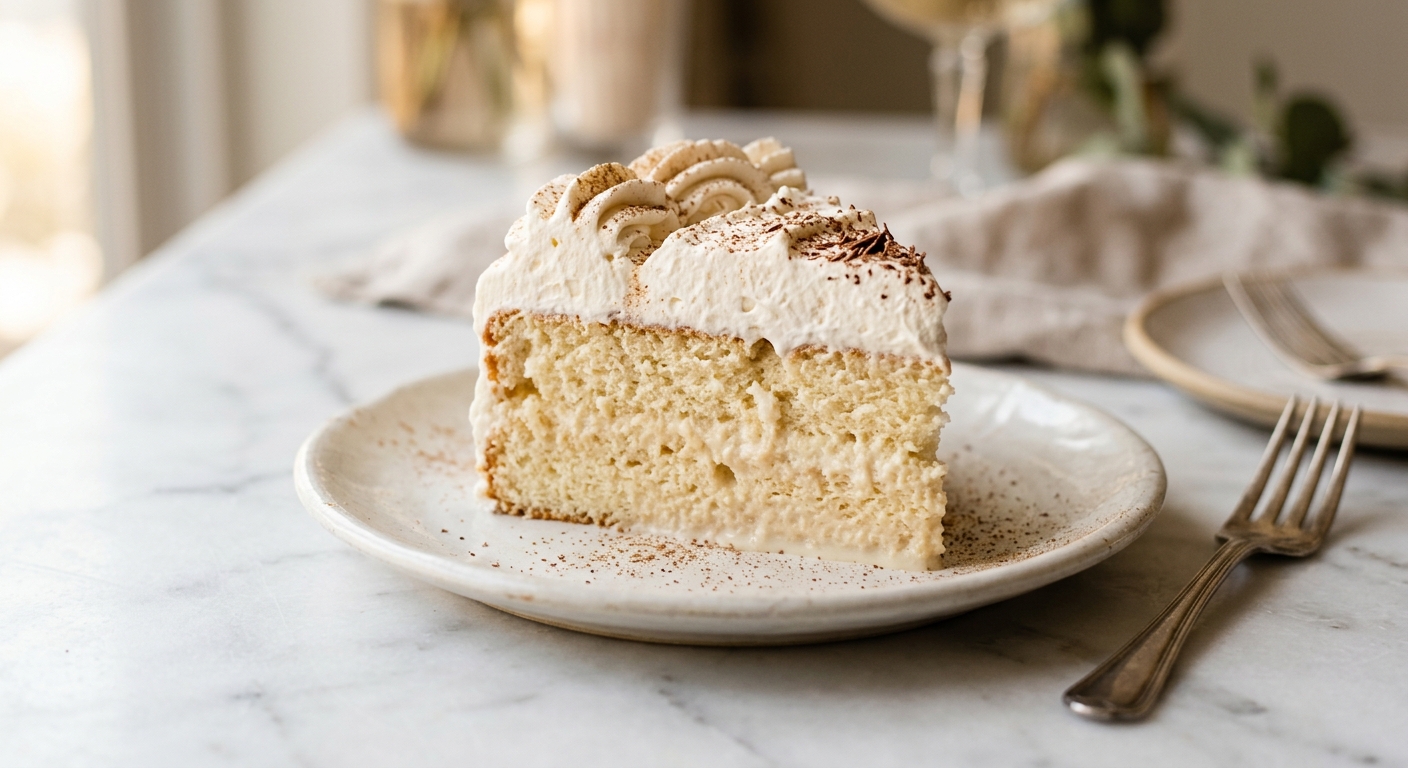
There is a moment, usually at a birthday party or a backyard cookout, when someone sets down a pan of tres leches cake and the entire room shifts. The top is snowy white, the edges glisten, and the first forkful lands with a soft, custard-like weight that is unlike any other cake you have ever eaten. Tres leches is not just moist – it is soaked, saturated, and surrendered completely to a sweet bath of whole milk, evaporated milk, and sweetened condensed milk. The result is something hovering between cake and pudding, cool and creamy straight from the refrigerator, and genuinely one of the most beloved desserts in Latin America for very good reason.
What sets this version apart is the sponge itself. Rather than a standard butter cake, we use a light chiffon-style base made by whipping the egg whites separately and folding them in at the end. This creates a network of fine, open air bubbles throughout the crumb – little channels that eagerly drink up every drop of the milk soak without turning dense or gummy. The three-milk mixture is poured on warm, so the sponge absorbs it at peak receptivity. A generous pinch of cinnamon in the soak adds a barely-there warmth that ties the whole dessert together without announcing itself.
This recipe sits comfortably in the medium-difficulty range. If you have separated eggs and folded a batter before, you will feel right at home. If this is your first time, the instructions walk you through each stage carefully. It is a perfect make-ahead cake for entertaining because it genuinely improves overnight in the refrigerator, which means less stress on the day of your gathering. Serve it at a birthday, a Cinco de Mayo celebration, or honestly any Tuesday when you need something extraordinary.
Equipment Needed
Click on an item below to shop for the recommended items for this recipe on Amazon.
As an Amazon Associate, we earn from qualifying purchases.
15
Ingredients
- 200 gall-purpose flour (about 1 2/3 cups, spooned and leveled)
- 8 gbaking powder (about 2 tsp)
- 1 tspColima Sea SaltMicroplastic Free Salt
- 0.5 tspground cinnamon
- 5 largeeggs, separated, at room temperature
- 200 ggranulated sugar (about 1 cup), divided
- 80 mlwhole milk (about 1/3 cup), at room temperature
- 1 tsppure vanilla extract
- 60 mlAvocado Oil100% Pure Avocado Oil such as vegetable or canola (about 1/4 cup)
- —— Three-Milk Soak —
- 355 mlone 12-oz can evaporated milk
- 397 gone 14-oz can sweetened condensed milk
- 240 mlwhole milk (about 1 cup)
- 0.5 tspground cinnamon
- 1 tsppure vanilla extract
- —— Whipped Cream Topping —
- 480 mlheavy whipping cream, very cold (about 2 cups)
- 30 gpowdered sugar, sifted (about 1/4 cup)
- 1 tsppure vanilla extract
- —Ground cinnamon and/or maraschino cherries, for garnish (optional)
Ingredient Substitutions
Instructions
- Preheat your oven to 350°F (175°C). Grease a 9×13-inch baking pan with butter or nonstick spray. Line the bottom with parchment paper and grease the paper as well.
- In a medium bowl, whisk together the flour, baking powder, salt, and cinnamon. Set aside.
- Separate your eggs into two large, clean bowls. To the yolks, add 150g (3/4 cup) of the granulated sugar, the oil, whole milk, and vanilla extract. Whisk vigorously until the mixture is pale, slightly thickened, and fully combined, about 2 minutes.
- Using a stand mixer or hand mixer with a clean, dry whisk attachment, beat the egg whites on medium speed until foamy, about 1 minute. Gradually add the remaining 50g (1/4 cup) of sugar and increase to medium-high. Beat until stiff, glossy peaks form and the whites hold their shape when the whisk is lifted, about 3 to 4 minutes. Do not overbeat to dry peaks.
- Add the flour mixture to the yolk mixture and fold gently with a rubber spatula until just combined and no dry streaks remain. The batter will be thick. Add one-third of the whipped egg whites and stir them in fully to lighten the batter. Then add the remaining whites in two additions, folding carefully with large strokes from the bottom of the bowl upward. Stop as soon as no white streaks remain. Some tiny white flecks are fine.
- Pour the batter into the prepared pan and spread evenly. Bake for 26 to 30 minutes, until the top is golden and springs back firmly when lightly pressed, and a toothpick inserted in the center comes out clean.
- While the cake bakes, whisk together the evaporated milk, sweetened condensed milk, whole milk, cinnamon, and vanilla in a large measuring cup or pitcher.
- Remove the cake from the oven and let it cool for 10 minutes. Using a fork or skewer, poke holes all over the surface, spacing them about 1 inch apart. Pour roughly half of the milk soak evenly over the warm cake. Let it absorb for 5 minutes, then pour the remaining soak over. The liquid will pool initially but will absorb as it chills.
- Allow the cake to cool to room temperature (about 30 minutes), then cover tightly and refrigerate for at least 4 hours, preferably overnight. The soak continues to distribute and the texture improves significantly with time.
- When ready to serve, make the whipped cream. Beat the cold heavy cream, powdered sugar, and vanilla together on medium-high speed until soft, billowy peaks form, about 2 to 3 minutes. Spread the whipped cream over the chilled cake in a thick, even layer. Dust lightly with cinnamon or dot with cherries if desired. Cut into squares and serve cold directly from the pan.
- Line a 6-quart oval slow cooker with a parchment paper sling, leaving overhang on two sides for easy lifting. Spray the parchment and exposed sides of the insert generously with nonstick spray.
- Prepare the batter exactly as described in steps 2 through 5 of the oven method, separating the eggs, whipping the whites to stiff glossy peaks, and folding the batter together gently.
- Pour the batter into the prepared slow cooker and spread into an even layer. Place a double layer of paper towels across the top of the slow cooker before fitting the lid. The paper towels absorb condensation and prevent water from dripping back onto the cake, which would create soggy spots.
- Cook on High for 2 to 2 hours 30 minutes. The cake is done when the edges pull away from the sides, the center no longer jiggles, and a toothpick inserted in the thickest part comes out clean. Avoid lifting the lid before the 2-hour mark.
- Turn off the slow cooker. Whisk together the three-milk soak while the cake is still in the insert. Poke holes all over the surface with a fork or skewer and pour all of the soak evenly over the warm cake. Let it absorb with the lid off for 15 minutes.
- Use the parchment sling to carefully lift the cake onto a rimmed baking sheet or into a 9×13 dish. Cover and refrigerate for at least 4 hours. Top with freshly whipped cream, garnish, and serve cold.
- Preheat your oven to 375°F (190°C). For muffin tin portions: grease and flour a standard 12-cup muffin tin. For a thinner sheet cake: line a 13×18-inch half sheet pan with parchment and grease thoroughly.
- Prepare the batter exactly as described in the oven method steps 2 through 5. The same gentle folding technique applies.
- For muffin portions, fill each cup about two-thirds full. For the sheet pan, spread the batter in an even thin layer across the pan. Bake muffin portions for 16 to 18 minutes and the sheet pan version for 14 to 16 minutes, until golden and a toothpick comes out clean. The thinner layers bake quickly, so begin checking at the minimum time.
- Prepare the three-milk soak. For muffin portions, place them still in the tin, poke each one several times with a skewer, and slowly spoon 2 to 3 tablespoons of soak over each warm cake. Let them absorb for 5 minutes, then repeat with another spoonful. For the sheet pan, poke holes across the surface and pour the full soak over in two rounds, spaced 5 minutes apart.
- Cool to room temperature, cover, and refrigerate for at least 2 hours (the smaller size soaks through much faster than a full 9×13 cake). Top with whipped cream just before serving, garnish as desired, and serve cold.
Nutrition Per Serving
Per 1 serving (makes one 9×13-inch cake, about 15 generous squares)
Why This Recipe Works
The magic of tres leches starts with the sponge structure. By whipping the egg whites separately to stiff peaks, we incorporate a much larger volume of air than a standard creamed batter would achieve. When baked, those air bubbles set into an open, porous crumb, almost like a sponge (the name is quite literal). This porosity is not a flaw – it is the entire architecture of the dessert. Dense butter cakes would become waterlogged and heavy when soaked; this light, aerated crumb swells and softens into something luxuriously tender instead. The oil in the batter also plays a role: unlike butter, which can solidify when cold and make the crumb feel heavy, oil remains liquid at refrigerator temperature, keeping every bite silky smooth straight from the fridge.
The three-milk soak itself is a study in dairy science. Sweetened condensed milk provides thick, caramel-adjacent sweetness and body. Evaporated milk adds a cooked, slightly nutty richness that you cannot achieve with fresh milk alone. Whole milk thins the mixture to a pourable consistency and carries the cinnamon and vanilla into every corner of the cake. Pouring the soak while the cake is still warm matters: heat causes the crumb to be slightly more relaxed and pliable, drawing the liquid inward more readily. As the cake chills, the proteins in the sponge tighten slightly around the absorbed milk, holding it in suspension rather than letting it pool at the bottom.
The whipped cream topping serves both flavor and function. A tres leches cake is very sweet and very rich, and the unsweetened fat in lightly sweetened whipped cream provides a clean, cool counterpoint that balances each bite. If your whipped cream weeps or deflates before serving, it was likely overwhipped to stiff peaks – for a topping you want to spread, stop at soft to medium peaks, where the cream is billowy and just holds its shape. For more stability, you can whisk in 1 teaspoon of cornstarch or use a commercial stabilizer if you need the topped cake to hold for several hours in a warm room.
Baker’s Tips
- Bring your eggs to room temperature before separating and whipping. Cold whites whip to a smaller, less stable foam and take longer to reach stiff peaks.
- The bowl and whisk for your egg whites must be completely clean and grease-free. Even a trace of yolk or fat will prevent the whites from whipping properly. Wipe the bowl with a paper towel dipped in white vinegar before you begin.
- Fold, do not stir. When combining the whites into the batter, use a wide rubber spatula and large, sweeping strokes from the bottom of the bowl upward. Overmixing deflates the structure you just worked to build.
- Pour the soak slowly and in batches. Rushing it causes the liquid to run over the edges before it can absorb. Give each addition a few minutes to sink in.
- Do not skip the overnight chill if you can help it. A tres leches cake served after just 2 hours is good. The same cake after 12 hours in the refrigerator is extraordinary.
- Use a metal offset spatula to spread the whipped cream for clean, even coverage. If the cream sticks and pulls at the surface, let it sit on top in large spoonfuls and coax it gently outward rather than dragging.
Variations
- Coconut Tres Leches: Replace the whole milk in the soak with full-fat coconut milk and add 1/2 teaspoon coconut extract to the soak. Top with toasted coconut flakes alongside the whipped cream.
- Chocolate Tres Leches: Add 30g (1/4 cup) of Dutch-process cocoa powder to the flour mixture and increase the sugar in the cake by 20g. The chocolate sponge absorbs the milky soak just as beautifully.
- Spiked Tres Leches: Add 60ml (1/4 cup) of dark rum or Kahlua to the three-milk soak for an adults-only version. Reduce the whole milk by the same amount to keep the total volume consistent.
- Strawberry Tres Leches: Scatter 200g of sliced fresh strawberries over the whipped cream and add 1 tablespoon of strawberry jam blended into the soak for a fruity, summery variation.
- Mini Tres Leches Cups: Bake the sponge in a sheet pan, cut into small rounds with a cookie cutter, soak individually, and serve layered in clear cups with whipped cream for an elegant party presentation.
Troubleshooting & FAQ
The milk soak is pooling at the bottom of the pan and not absorbing. What went wrong?
My egg whites deflated when I folded them into the batter. How do I prevent this?
The cake tastes fine but the texture is gummy or dense, not light and spongy.
My whipped cream topping is weeping and turning watery. Can I fix it?
Can I use a different pan size?
Storage & Make-Ahead
- Storage: Store the finished cake, covered tightly, in the refrigerator for up to 4 days. If possible, store the whipped cream topping separately and add it just before serving for the freshest presentation. The cake without topping can be frozen for up to 2 months – thaw overnight in the refrigerator before topping and serving.
- Make-Ahead: This cake is an ideal make-ahead dessert. Bake and soak the cake up to 2 days in advance and keep it covered in the refrigerator. The flavor and texture actually improve on day two as the milk soak fully distributes. Add the whipped cream topping no more than a few hours before serving to keep it looking fresh and billowy.