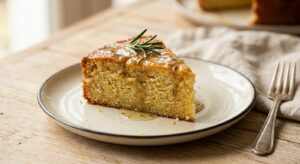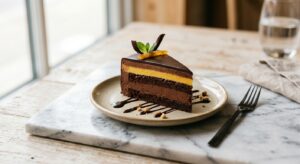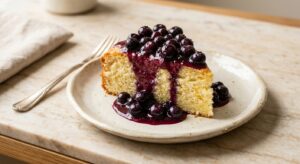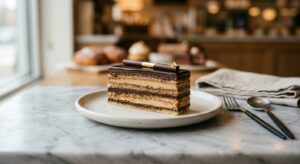
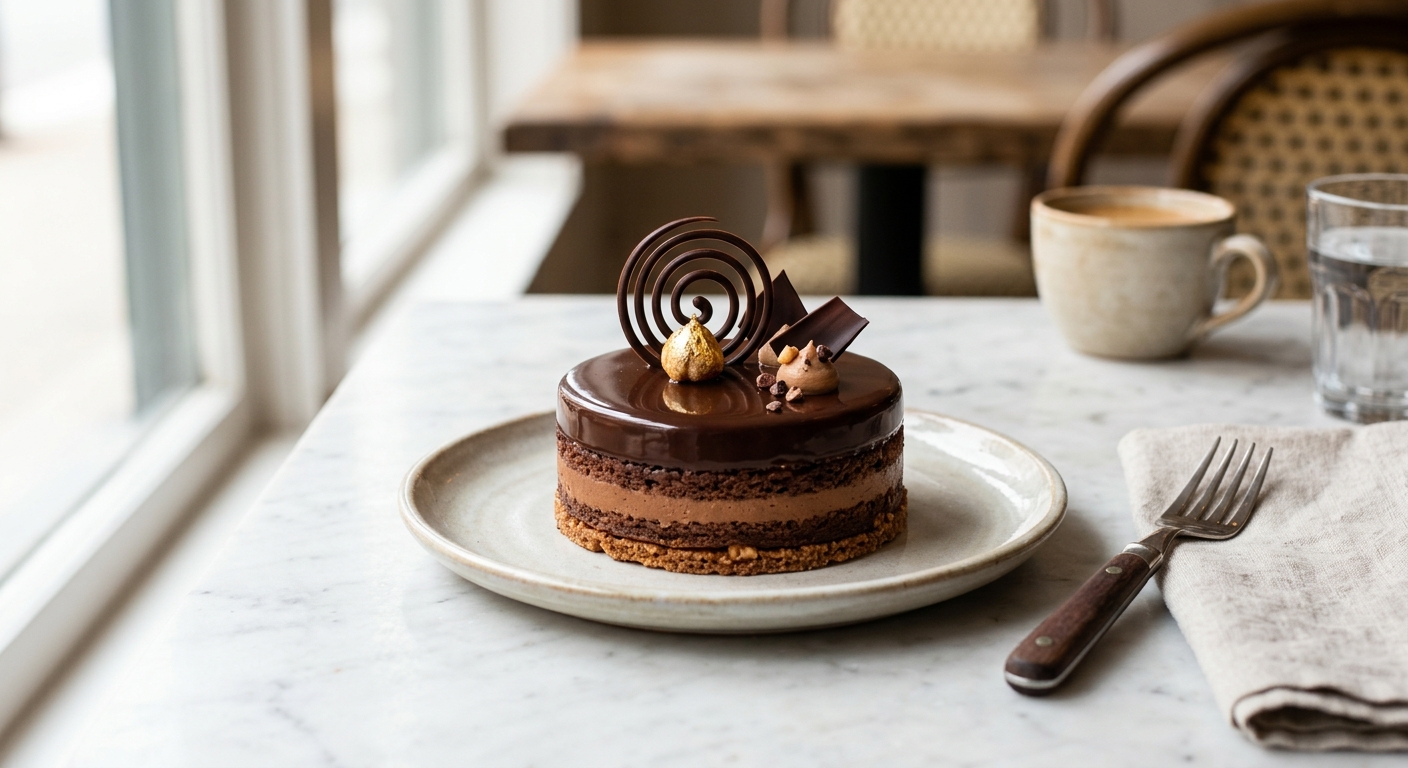
There is a particular kind of silence that falls when a truly beautiful cake is set on the table. The Chocolate Praline Entremet is one of those cakes. From the outside it looks almost too perfect, its surface an obsidian mirror catching the light, hiding the treasure of textures and flavours within. When you cut through, you reveal a cross-section of chocolate joconde sponge, a toasted hazelnut praline crémeux that quivers gently, a paper-thin sheet of feuilletine for crunch, and a dark chocolate mousse that holds everything together in cool, cloudlike softness. It is not just a cake. It is an experience.
What sets this entremet apart is the praline paste made from scratch, using deeply caramelised hazelnuts that are blitzed into a glossy, nutty butter. Store-bought praline paste works in a pinch, but the homemade version has a slightly bitter, roasted depth that transforms the crémeux from pleasant to unforgettable. The dark chocolate mirror glaze, made with bloomed gelatin and glucose syrup, is the finishing move. It self-levels as you pour it over a frozen cake, creating that signature glassy surface with almost no effort beyond patience and temperature precision. The key temperature is 32 to 35 degrees Celsius when pouring, not a degree warmer or cooler if you want that flawless finish.
This recipe sits firmly in the advanced category. It has multiple components, requires an acetate-lined cake ring, and demands that you work across two days. But each component is completely achievable if you take it one step at a time, and the make-ahead structure actually makes serving day very relaxed. This cake is ideal for celebrations, birthdays, or any occasion where you want to show someone exactly how much you care. If you have made mousse cakes or mirror glazes before and are ready for the full entremet experience, this is your recipe.
Equipment Needed
Click on an item below to shop for the recommended items for this recipe on Amazon.
As an Amazon Associate, we earn from qualifying purchases.
12
Ingredients
- Praline Paste
- 150 gblanched hazelnuts (about 1 cup)
- 150 gcaster sugar (about 3/4 cup)
- 45 mlwater (3 tbsp)
- 0.5 tspColima Sea SaltMicroplastic Free Salt
- Joconde Sponge
- 80 gwhole eggs (about 2 large eggs)
- 75 galmond flour (about 3/4 cup)
- 75 gicing sugar, sifted (about 2/3 cup)
- 20 gDutch-process cocoa powder (about 3 tbsp)
- 30 gall-purpose flour (about 3 tbsp plus 1 tsp)
- 100 gegg whites (about 3 large egg whites)
- Joconde Sponge Meringue
- 25 gcaster sugar (about 2 tbsp)
- Joconde Sponge
- 30 gunsalted butter, melted and cooled
- Feuilletine Layer
- 60 gdark chocolate, 64% cocoa, finely chopped
- 80 gpraline paste (made above, about 1/3 cup)
- 50 gfeuilletine flakes or crushed gavotte crepes (about 1 cup loosely packed)
- Praline Cremeux
- 240 mlwhole milk (1 cup)
- 240 mlheavy cream, 35% fat (1 cup)
- 80 gegg yolks (about 5 large yolks)
- 60 gcaster sugar (about 1/4 cup plus 1 tbsp)
- 5 gpowdered gelatin (about 1.5 tsp), bloomed in 30ml cold water
- 120 gpraline paste (made above, about 1/2 cup)
- Chocolate Mousse
- 240 mlwhole milk (1 cup)
- 5 gpowdered gelatin (about 1.5 tsp), bloomed in 30ml cold water
- 200 gdark chocolate, 66% cocoa, finely chopped
- 360 mlheavy cream, 35% fat, cold (1.5 cups)
- Mirror Glaze
- 150 mlwater (2/3 cup)
- 300 gcaster sugar (1.5 cups)
- 200 gglucose syrup or light corn syrup (about 2/3 cup)
- 130 mlsweetened condensed milk (about 1/2 cup)
- 12 gpowdered gelatin (about 4 tsp), bloomed in 60ml cold water
- 150 gdark chocolate, 64% cocoa, finely chopped
- —Gold leaf or crushed toasted hazelnuts, to garnish (optional)
Ingredient Substitutions
Instructions
- DAY ONE, PART 1: Make the praline paste. Toast hazelnuts in a dry skillet over medium heat, stirring often, until deep golden brown, about 8 minutes. Set aside. In a small saucepan combine 150g caster sugar and 45ml water. Cook over medium-high heat without stirring until the syrup reaches 118°C (244°F) on a candy thermometer. Add the hazelnuts, stir constantly with a silicone spatula as the sugar seizes and turns sandy, then continue stirring as it melts into a deep amber caramel coating the nuts, about 4 to 5 minutes total. Pour onto a silicone mat or lightly oiled parchment, sprinkle with fine sea salt, and cool completely. Break into pieces and blitz in a food processor for 5 to 8 minutes, scraping the sides often, until you have a smooth, pourable paste. This makes about 250g of praline paste. Reserve 80g for the feuilletine layer and 120g for the cremeux.
- DAY ONE, PART 2: Make the chocolate joconde sponge. Preheat oven to 200°C (390°F) convection or 210°C (410°F) conventional. Line a half sheet pan (46 x 33cm / 18 x 13 inches) with parchment and grease lightly. In a stand mixer with the whisk, beat whole eggs, almond flour, icing sugar, and cocoa powder on high speed for 5 minutes until pale, thick, and tripled in volume. Sift in the all-purpose flour and fold in gently. In a separate clean bowl, whisk egg whites to soft peaks, add 25g caster sugar, and continue whisking to stiff, glossy peaks. Stir the melted butter into the almond mixture, then fold in one-third of the meringue to lighten the batter, followed by the remaining meringue in two additions. Spread evenly onto the prepared pan to about 5mm thickness. Bake for 10 to 12 minutes until the sponge springs back when lightly pressed and is just pulling away from the edges. Cool in the pan on a wire rack. Once cool, cut two 18cm (7-inch) rounds using your cake ring as a guide.
- DAY ONE, PART 3: Make the feuilletine crunch layer. Melt 60g dark chocolate in a heatproof bowl set over barely simmering water (bain-marie), stirring until smooth. Remove from heat, stir in 80g praline paste until fully combined, then fold in the feuilletine flakes. Immediately press into a thin, even layer onto one of the joconde sponge rounds placed on parchment. It should be about 3 to 4mm thick. Slide onto a flat tray and freeze for 30 minutes until firm.
- DAY ONE, PART 4: Make the praline cremeux. Bloom 5g powdered gelatin in 30ml cold water for 5 minutes. In a medium saucepan, heat milk and cream over medium heat until steaming, just below a simmer. In a bowl, whisk egg yolks and caster sugar until pale and slightly thickened. Pour the hot dairy over the yolk mixture in a slow stream, whisking constantly, then return to the saucepan. Cook over low-medium heat, stirring constantly with a spatula, until the custard thickens enough to coat the back of the spoon and reaches 82°C (180°F). Remove from heat immediately. Squeeze out or stir in the bloomed gelatin until dissolved, then whisk in 120g praline paste until smooth. Strain through a fine mesh sieve. Pour into a 18cm (7-inch) ring mould lined with plastic wrap or an acetate disc, set on a flat tray. Freeze for at least 3 hours until completely solid.
- DAY ONE, PART 5: Make the dark chocolate mousse. Bloom 5g powdered gelatin in 30ml cold water for 5 minutes. Heat 240ml whole milk in a small saucepan until just simmering. Remove from heat, stir in the bloomed gelatin until dissolved. Pour over the 200g finely chopped dark chocolate in a bowl. Let sit 1 minute, then stir from the centre outward until a smooth ganache forms. Let the ganache cool to 35°C (95°F), checking with an instant-read thermometer. In a separate chilled bowl, whip 360ml cold heavy cream to soft peaks (the cream should hold a shape but not look stiff or dry). Fold one-third of the whipped cream into the ganache to lighten it, then fold in the remaining cream in two additions, working quickly and gently. The mousse should be smooth and pourable but not runny. Use immediately.
- DAY ONE, PART 6: Assemble the entremet. Line a 20cm (8-inch) cake ring that is at least 6cm tall with a strip of acetate inside. Set on a flat tray lined with parchment. Pour a 2cm layer of chocolate mousse into the base of the ring and freeze for 15 minutes until just firm on the surface. Remove the frozen praline cremeux disc from the ring and place it centred on the semi-set mousse layer, pressing gently. Add another thin layer of mousse over the cremeux just to cover. Carefully lower in the feuilletine-topped joconde disc, feuilletine side facing down toward the cremeux, pressing gently. Place the second plain joconde round on top. Pour remaining mousse over and around the edges, filling the ring to the top. Smooth the surface with a small offset spatula. Freeze overnight (minimum 8 hours, up to 48 hours).
- DAY TWO, PART 1: Make the mirror glaze. Bloom 12g powdered gelatin in 60ml cold water for 5 minutes. In a medium saucepan, combine water, caster sugar, and glucose syrup. Bring to a full boil over medium-high heat, stirring to dissolve the sugar, then remove from heat. Stir in the condensed milk, then stir in the bloomed gelatin until fully dissolved. Pour this hot mixture over the 150g finely chopped dark chocolate in a tall, narrow container. Let stand 1 minute, then use an immersion blender held at the bottom of the container (to avoid incorporating air bubbles) to blend until perfectly smooth and glossy. Press plastic wrap directly onto the surface and let the glaze cool to 32 to 35°C (90 to 95°F). This is critical. Too warm and it will slide off the frozen cake. Too cool and it will set too thick before flowing.
- DAY TWO, PART 2: Glaze and serve. Remove the frozen entremet from the freezer. Unmould by running a warm cloth briefly around the outside of the ring, then lift the ring and peel away the acetate strip. Place the cake on a wire rack set over a clean baking tray to catch drips. When the glaze is at precisely 32 to 35°C (use a thermometer), pour it slowly and steadily from the centre of the cake outward in a single continuous pour, letting it flow over the sides by itself. Do not spread it with a spatula. Let the glaze drip for 2 minutes, then use a small offset spatula to slide the cake onto your serving plate. Decorate with gold leaf or crushed toasted hazelnuts along the base edge if desired. Refrigerate for at least 4 hours before slicing to allow the mousse to thaw fully. Slice with a hot, dry knife, wiping clean between cuts.
- Follow all Day One steps exactly as written in the oven method for the praline paste, chocolate joconde sponge, feuilletine layer, praline cremeux, chocolate mousse, and the full assembly. Freeze the assembled entremet overnight.
- DAY TWO, velvet cocoa finish option: Remove the frozen entremet from the ring and peel away the acetate. Working quickly in a cold kitchen or outdoors in cool weather, hold a fine mesh sieve about 30cm above the frozen cake. Tap sifted Dutch-process cocoa powder through the sieve in a thin, even layer over the top and sides of the frozen cake, turning the rack as needed. The cold surface makes the cocoa cling and creates a beautiful suede-like texture. Transfer immediately to the refrigerator.
- DAY TWO, ganache drip finish option: Make a simple ganache by heating 120ml heavy cream until just simmering and pouring it over 120g finely chopped dark chocolate. Stir until smooth and let cool to about 38°C (100°F). Place the unmoulded frozen cake on a rack over a tray. Pour the ganache over the top, letting it drip naturally over the sides. This sets quickly on the frozen surface. Transfer to the refrigerator.
- Regardless of finish chosen, refrigerate the cake for at least 4 to 6 hours to allow the mousse and cremeux to thaw fully before slicing. The layers should be soft, sliceable, and distinct when the cake is at refrigerator temperature.
- Slice with a hot, dry knife wiped clean between each cut. Serve within 20 minutes of slicing for the best texture, as the mousse begins to soften at room temperature.
Nutrition Per Serving
Per 1 serving (makes one 20cm (8-inch) round entremet, approximately 6cm tall)
Why This Recipe Works
The architecture of an entremet is not arbitrary. Each layer is chosen for a specific textural or flavour role, and the order matters. The joconde sponge is used rather than a standard genoise because it contains almond flour, which contributes fat and flavour density while keeping the sponge thin and flexible enough to cut cleanly. The cocoa-joconde stays moist even after freezing because the almond fat does not firm up the way a butter-heavy cake would. Freezing the whole entremet before glazing is not just a make-ahead convenience but a structural necessity. A frozen surface gives the mousse the rigidity to hold its shape when unmoulded, and it is what allows the mirror glaze to set in seconds on contact rather than soaking in or sliding off.
The mirror glaze works through the precise interaction of gelatin, glucose, and temperature. Glucose syrup (or corn syrup) is hygroscopic and adds viscosity and shine that sugar alone cannot achieve. The condensed milk adds sweetness and a slight opacity that makes the glaze read as deeply glossy rather than translucent. The gelatin concentration is calibrated so the glaze flows smoothly at 32 to 35°C but sets quickly when it hits the frozen cake at minus 18°C. Even a few degrees off makes a meaningful difference: above 37°C it will run off completely; below 30°C it will set too thick and look lumpy. An instant-read thermometer is not optional here.
The praline cremeux is a classic creme anglaise base set with gelatin, which gives it a texture that is richer and denser than mousse but softer than a traditional pastry cream. Cooking the custard to exactly 82°C ensures the egg yolks are fully cooked and the starch (if any) is hydrated, but going higher risks curdling. If your cremeux looks slightly grainy, strain it while still warm and blend with an immersion blender. The feuilletine layer, sandwiched between the cremeux and the sponge, stays crisp during freezing and provides the essential textural contrast. It softens slightly in the refrigerator over time, which is why this cake is best served within 48 hours of glazing.
Baker’s Tips
- Read through the entire recipe before starting and organise your components over two days. Trying to make everything in one day is stressful and increases the chance of rushing a critical temperature step.
- The most important tool in this recipe is an instant-read thermometer. Use it for the praline caramel, the cremeux, the ganache cooling temperature, and especially the mirror glaze.
- When making praline paste, be patient with the food processor. It can take up to 8 minutes of blending for the nuts to release enough oil to become a paste. Do not add any liquid to help it along.
- To avoid air bubbles in the mirror glaze, keep the immersion blender submerged at all times and blend slowly. Bubbles are nearly impossible to remove once set. If you see bubbles in the glaze, gently pass a kitchen torch over the surface of the glaze in the container before pouring.
- Always assemble the entremet upside down in the ring (the flat, smooth side that was touching the acetate becomes the top) for the sharpest edges and flattest glaze surface.
- Acetate collar strips are essential. Standard acetate from a craft store works perfectly. Cut a strip that is at least 7cm tall and long enough to line the inside of your 20cm ring.
- Have your serving plate ready before you begin glazing. Once glazed, the cake needs to be transferred quickly and cleanly before the glaze fully sets.
- If your mirror glaze cools below the working temperature before you finish pouring, you can briefly warm the container by setting it in a bowl of warm water and stirring gently. Do not microwave the glaze or reheat it aggressively, as this can break the emulsion.
Variations
- Coffee praline version: Add 10g instant espresso powder to the milk when making the cremeux for a mocha-praline flavour profile that pairs beautifully with the dark chocolate mousse.
- Almond and orange: Replace hazelnuts with almonds in the praline paste, and add 1 tsp finely grated orange zest to the joconde sponge batter for a brighter, Florentine-inspired flavour.
- Milk chocolate mousse: Substitute milk chocolate (40% cocoa) for the dark chocolate in the mousse only. Use slightly less gelatin (3.5g instead of 5g) as milk chocolate sets firmer due to its milk solids.
- Raspberry insert: Replace the praline cremeux layer with a raspberry confit (250g fresh or frozen raspberries cooked with 60g sugar and 5g pectin NH, set in the same ring mould) for a fruit-forward contrast to the chocolate and hazelnut.
Troubleshooting & FAQ
My mirror glaze is dull and streaky, not glossy. What went wrong?
My praline paste is grainy and will not smooth out. Is it ruined?
My chocolate mousse is lumpy or has streaks of solid chocolate in it. What happened?
The entremet is soft and the layers are sliding when I try to unmould it. Did I not freeze it long enough?
My joconde sponge cracked when I tried to cut rounds from it. How do I prevent this?
Storage & Make-Ahead
- Storage: Refrigerate the finished, glazed cake under a cake dome for up to 3 days. The glaze will remain intact but will lose some shine after day one. Individual slices can be stored in an airtight container in the refrigerator for up to 3 days. The fully assembled and frozen (unglazed) entremet can be kept in the freezer, tightly wrapped, for up to 3 weeks. Glaze directly from frozen on the day of serving.
- Make-Ahead: This recipe is designed to be made ahead. The praline paste can be made up to 2 weeks in advance and stored in an airtight jar at room temperature. The fully assembled, unglazed entremet keeps in the freezer for up to 3 weeks. The mirror glaze can be made up to 1 week ahead, stored in the refrigerator, and gently rewarmed to 32 to 35°C before using. Do not glaze the cake more than 24 hours before serving for the best mirror finish.