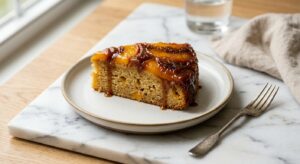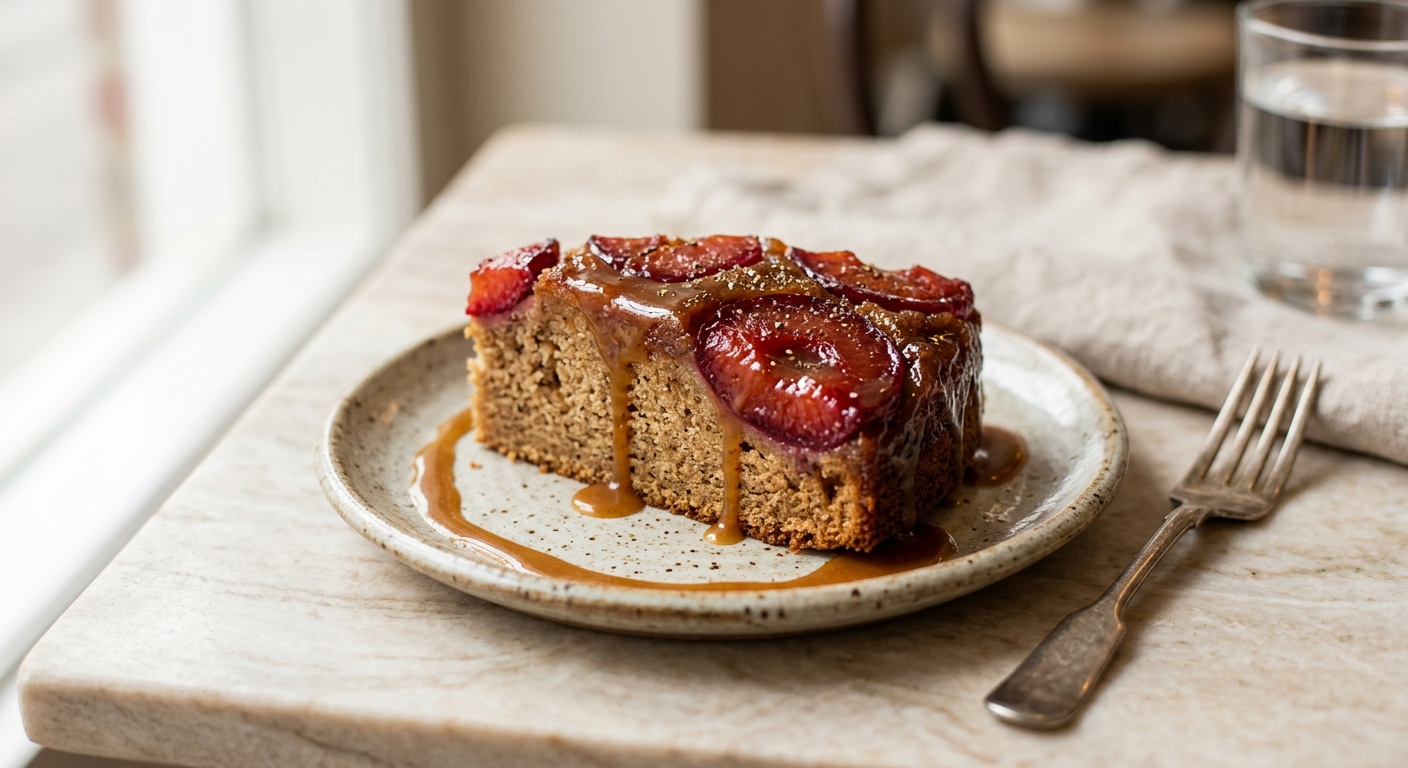
There is a specific kind of magic that happens when you invert an upside-down cake onto a serving plate. The moment the pan lifts away and those deep burgundy and gold plum halves are revealed, glistening under a lacquer of cardamom-scented caramel, is one of the most satisfying reveals in all of home baking. Stone fruit season deserves a cake like this: unapologetically bold in color, deeply perfumed, and gorgeous without a single piped rosette or dusting of powdered sugar.
What sets this version apart is the combination of brown butter in the cake batter and whole cardamom pods toasted directly into the caramel base. Brown butter adds a deep, nutty complexity that plain melted butter simply cannot offer, and it plays beautifully against the tartness of ripe plums. The cardamom, bloomed gently in the bubbling caramel, releases its floral, citrusy oils in a way that ground cardamom from a jar never quite achieves. A supporting cast of cinnamon, ginger, and black pepper rounds everything out into something that feels both ancient and entirely new.
This cake sits comfortably in the medium difficulty range. The caramel is a simple, unfussy butter-and-sugar base rather than a tricky dry caramel, so even cautious bakers can nail it. If you have made a few simple cakes before and are comfortable with a mixer, you will feel right at home. It is perfect for autumn weekend baking, dinner parties where you want a showstopper that requires no assembly, or any afternoon when the plums at the market are too beautiful to resist.
Equipment Needed
Click on an item below to shop for the recommended items for this recipe on Amazon.
As an Amazon Associate, we earn from qualifying purchases.
10
Ingredients
- 6 ripe but firm plums (about 680g / 1.5 lbs), halved and pitted
- 85 gunsalted butter (6 tbsp) for the caramel base
- 150 gpacked light brown sugar (3/4 cup) for the caramel base
- 6 whole green cardamom pods, lightly crushed
- —Pinch of Colima Sea SaltMicroplastic Free Salt for the caramel
- 115 gunsalted butter (1/2 cup / 1 stick) for the cake batter
- 200 ggranulated sugar (1 cup) for the cake batter
- 2 large eggs, at room temperature
- 1 large egg yolk, at room temperature
- 120 mlfull-fat sour cream (1/2 cup), at room temperature
- 60 mlwhole milk (1/4 cup), at room temperature
- 1 tsppure vanilla extract
- 190 gall-purpose flour (1.5 cups, spooned and leveled)
- 1.5 tspbaking powder
- 0.25 tspbaking soda
- 0.5 tspColima Sea SaltMicroplastic Free Salt
- 1 tspground cinnamon
- 0.5 tspground cardamom
- 0.25 tspground ginger
- 0.125 tspfreshly ground black pepper
Ingredient Substitutions
Instructions
- Preheat your oven to 350°F (175°C). Grease the sides of a 9-inch round cake pan (at least 2 inches deep) with butter or nonstick spray. Do not line the bottom with parchment.
- Brown the butter for the caramel: melt 85g butter in a light-colored saucepan over medium heat, swirling frequently, until the foam subsides and the milk solids turn a deep golden brown and smell nutty, about 5 to 6 minutes. Add the crushed cardamom pods and let them sizzle in the brown butter for 30 seconds. Add the brown sugar and pinch of salt and stir until the sugar is mostly dissolved and the mixture is glossy, about 1 to 2 minutes. Pour the caramel immediately into the prepared pan, discard the cardamom pods, and tilt to coat the bottom evenly. Arrange the plum halves cut-side down in a single, snug layer over the caramel. Set aside.
- Brown the butter for the cake batter: in the same saucepan (no need to wash it), melt 115g butter over medium heat, swirling frequently, until golden brown and nutty-smelling, about 5 minutes. Pour into a large bowl or stand mixer bowl and let cool for 10 minutes.
- Whisk the granulated sugar into the cooled brown butter until combined. Add the eggs, egg yolk, vanilla extract, sour cream, and whole milk, whisking vigorously until the mixture is smooth and slightly emulsified, about 1 minute.
- In a separate bowl, whisk together the flour, baking powder, baking soda, salt, cinnamon, ground cardamom, ginger, and black pepper. Add the dry ingredients to the wet ingredients and fold gently with a rubber spatula until just combined. A few small flour streaks are fine. Do not overmix.
- Pour the batter over the plums and smooth the top with an offset spatula, making sure the batter reaches the edges and fills any gaps around the fruit.
- Bake for 43 to 48 minutes, until the top is a deep golden brown, the cake has pulled slightly away from the sides of the pan, and a skewer inserted into the center of the cake (not into a plum) comes out with just a few moist crumbs. If the top is browning too quickly after 30 minutes, tent loosely with foil.
- Let the cake cool in the pan on a wire rack for exactly 10 minutes, no more and no less. Run a thin knife around the edge of the pan. Place a serving plate or board firmly on top of the pan, hold both together confidently, and invert in one swift motion. Leave the pan in place for 30 seconds to let the caramel settle onto the cake, then lift it off. If any plums stick to the pan, simply lift them out and press them back into position. Serve warm or at room temperature.
- Line the insert of a 6-quart oval or round slow cooker with a single sheet of parchment paper, leaving enough overhang on the sides to act as handles for lifting the cake out. Lightly grease the parchment.
- Make the caramel base as described in the oven method (Steps 2), but skip browning the butter for this method. Instead, simply melt the 85g butter in a small saucepan over medium heat, add the crushed cardamom pods, brown sugar, and salt, stir until the sugar dissolves into a glossy mixture, and pour directly into the lined slow cooker insert. Discard the cardamom pods. Arrange the plum halves cut-side down over the caramel.
- Brown the butter for the batter as described in oven Step 3. Prepare the full cake batter exactly as described in oven Steps 4 and 5.
- Pour the batter over the arranged plums and smooth the top. Lay a double layer of paper towels across the top of the slow cooker insert before placing the lid on. This absorbs the condensation that collects under the lid and prevents it from dripping onto the cake and creating a wet, gummy surface.
- Cook on High for 2 hours 15 minutes to 2 hours 45 minutes. The cake is done when the edges are set, the top looks matte and dry (not glossy or wet), and a skewer inserted into the center comes out with moist crumbs. The center will be slightly softer than an oven-baked cake.
- Turn off the slow cooker and remove the lid. Let the cake rest uncovered in the insert for 20 minutes to firm up slightly. Use the parchment handles to lift the cake out. Place a serving plate on top of the cake and invert. Peel away the parchment carefully. Serve warm, spooned directly from the plate, with cream or ice cream.
- Scale the recipe: use 4 small plums, 55g butter and 100g brown sugar for the caramel, 75g butter and 130g sugar for the batter, 1 egg plus 1 yolk, 75ml sour cream, 40ml milk, 125g flour, and reduce the leavening and spices proportionally. Prepare a 7-inch round cake pan that fits your air fryer by greasing the sides well.
- Make the caramel base and arrange the plums exactly as described in the oven method Steps 2 and 3, using the scaled amounts. The process is identical.
- Prepare the scaled cake batter following oven method Steps 3 through 5. Pour over the plums in the 7-inch pan and smooth the top.
- Preheat your air fryer to 320°F (160°C) for 3 minutes. Place the pan into the basket. To prevent the top from over-browning before the center sets, loosely tent the pan with a small piece of foil for the first 20 minutes, then remove the foil for the final 10 to 15 minutes to allow the top to brown.
- Bake for 30 to 35 minutes total, until a skewer inserted in the center comes out with just a few moist crumbs. Because air fryers vary significantly, begin checking at 28 minutes. Let the cake cool in the pan for 10 minutes, then invert onto a plate as described in oven Step 8.
Nutrition Per Serving
Per 1 serving (makes one 9-inch round upside-down cake)
Why This Recipe Works
Brown butter is the single most important technique in this cake, and it does double duty. In the caramel base, it adds hundreds of new flavor compounds created by the Maillard reaction as the milk solids in the butter toast, layering nutty, toffee-like depth onto the sweet brown sugar. In the cake batter itself, those same compounds weave through every bite of the crumb, giving the cake a complexity that makes people ask what your secret ingredient is. The key to successful brown butter is using a light-colored pan so you can see the color change clearly, and pulling it off the heat the moment it turns a deep amber and smells like hazelnuts. It continues to darken from residual heat, so timing matters.
The combination of sour cream and a whole egg plus extra yolk in the batter is deliberate. Sour cream is acidic, which tenderizes gluten strands and reacts with the baking soda for a fine, even crumb. Its fat content also contributes to moisture that lasts for days. The extra egg yolk adds richness and emulsifying lecithin, which helps the fat and liquid ingredients bind smoothly into a cohesive batter that bakes up with a velvety, close crumb. This is the kind of crumb that holds together cleanly when sliced but melts on the tongue, which is exactly what you want under a juicy caramel-soaked fruit topping.
The 10-minute resting period after baking is not optional. When the cake first comes out of the oven, the caramel is still liquid and hot. If you invert immediately, the caramel floods out from under the fruit and pools on your plate before it can cling to the cake. Ten minutes allows the caramel to cool just enough to thicken into a glossy, clingy glaze. If you wait longer than 15 minutes, the caramel may begin to set and the cake can stick. If that happens, do not panic: place the pan back on the stovetop over low heat for 30 seconds to re-melt the caramel slightly, then try inverting again.
Baker’s Tips
- Choose plums that are ripe but still firm to the touch. Overripe plums will collapse in the oven and release so much liquid that the caramel becomes watery rather than jammy.
- Do not skip greasing the sides of the pan. The bottom is covered by caramel, but the sides need grease to release cleanly when you invert.
- Arrange the plums cut-side down for the most dramatic presentation when inverted: the rounded, jewel-like skin faces up on the finished cake. Fill any gaps with smaller plum wedges or halves.
- Have your serving plate ready before you invert, and make sure it is larger than the pan by at least an inch all around to catch any caramel run-off.
- Bring the sour cream, eggs, and milk to room temperature before mixing. Cold dairy ingredients can cause the brown butter to seize and clump, creating a lumpy batter.
- Use a thin flexible knife, not a thick butter knife, to run around the edge of the pan before inverting. You want to cut cleanly through any caramel that has crept up the sides without tearing the cake.
- If your plums are very tart, you can toss them with 1 tablespoon of sugar before arranging them in the pan. If they are very sweet, a tiny squeeze of lemon juice over the cut sides brightens the flavor.
Variations
- Honey and orange: replace 50g of the brown sugar in the caramel with 2 tbsp of dark honey, and add 1 tsp of orange zest to the cake batter along with the vanilla. The honey caramelizes differently, creating a more complex, floral base.
- Chai spice version: replace the cinnamon, cardamom, ginger, and pepper in the batter with 1.5 tsp of store-bought or homemade chai spice blend, and add a small pinch of ground cloves and ground star anise.
- Brown sugar and almond: replace 30g of the all-purpose flour with 30g of finely ground blanched almond flour. Add 1/4 tsp of almond extract along with the vanilla. The almond flour adds a moist, slightly dense richness that pairs beautifully with the plums.
- Nectarine and rose: substitute nectarines for the plums and add 1 tsp of rose water to the caramel base. Omit the black pepper and increase the ground cardamom to 3/4 tsp.
Troubleshooting & FAQ
My caramel topping was sticky and gummy instead of glossy when I inverted the cake. What happened?
The plums stuck to the pan and came out in pieces when I inverted. How do I fix this?
My cake batter looks curdled after I added the eggs to the brown butter. Is it ruined?
The top of my cake is browning very fast but the center is still jiggly. What should I do?
My finished cake tasted flat and the spices were not very noticeable. What went wrong?
Storage & Make-Ahead
- Storage: Store loosely covered at room temperature for up to 2 days. The caramel top stays glossy and the fruit stays tender. For longer storage, refrigerate covered for up to 5 days and bring to room temperature before serving. The cake can also be frozen, cut into slices and wrapped individually, for up to 2 months. Thaw overnight in the refrigerator.
- Make-Ahead: The cake is best on the day it is baked, but it genuinely improves overnight as the caramel soaks into the crumb. You can make the entire cake up to 1 day ahead and store it at room temperature, covered. Reheat individual slices gently in the microwave for 20 to 30 seconds if you prefer it warm. The caramel base can be made and the plums arranged in the pan up to 4 hours ahead, then stored in the refrigerator while you prepare the batter fresh before baking.