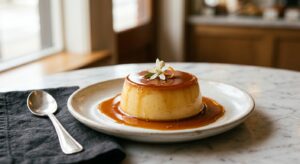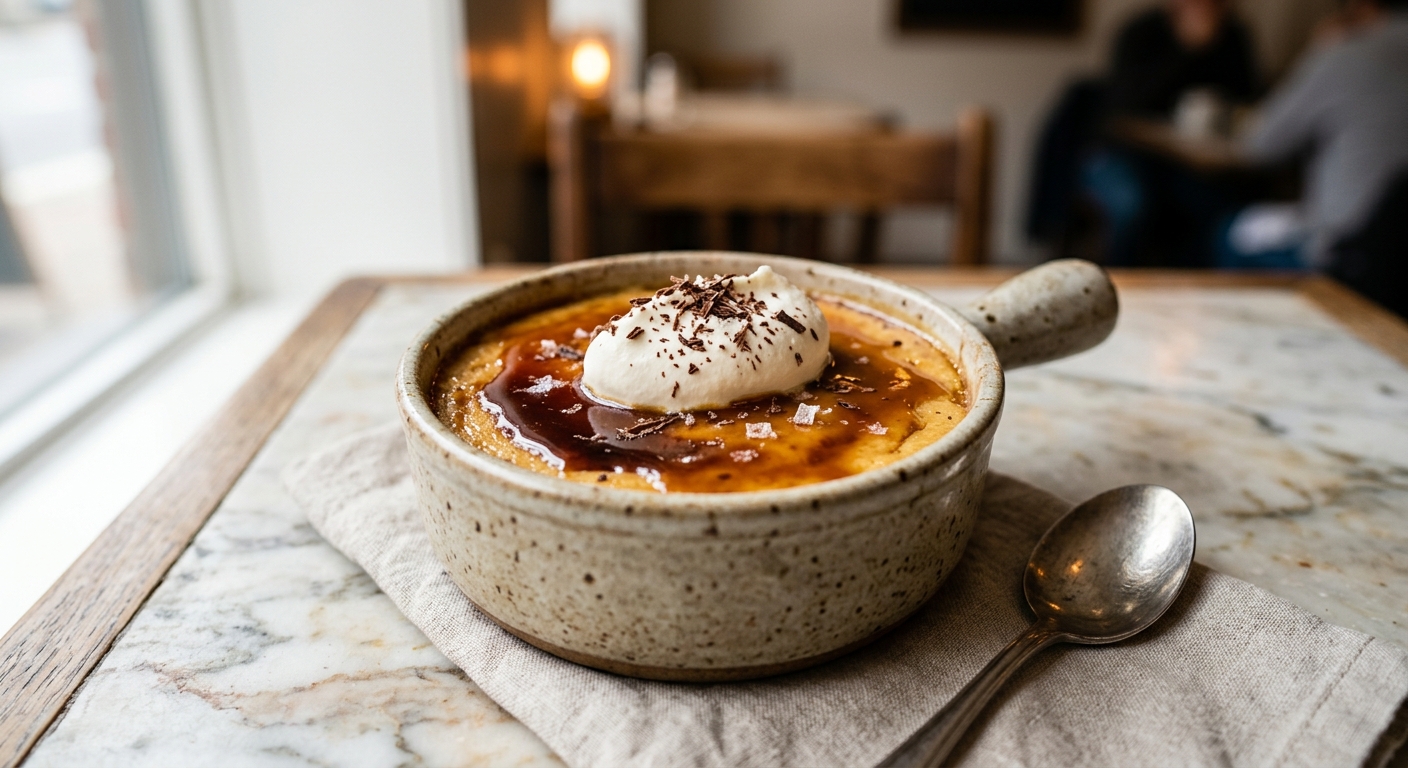
There is something almost nostalgic about a bowl of butterscotch pudding, the kind that arrives in a little glass dish with a cloud of whipped cream and maybe a curl of toffee on top. But the pudding most of us grew up eating, made from a powder-filled envelope, is only a pale shadow of what butterscotch pudding can actually be. The real thing is amber and glossy, deeply caramelized, with a warm toffee aroma that fills the whole kitchen. It is the kind of dessert that makes people close their eyes when they take the first spoonful.
What sets this version apart is a two-step flavor-building process that most recipes skip. First, the butter is cooked until it browns and the milk solids turn golden and nutty, adding a layer of complexity that plain melted butter simply cannot offer. Then the dark brown sugar is added and allowed to bubble and deepen in that browned butter before any liquid touches the pan. This brief caramelization step transforms the sugar from sweet to something genuinely complex, with bittersweet, almost smoky notes underneath all that butterscotch warmth. The egg yolks add richness and a custard-like body that cornstarch alone can never replicate.
This is a medium-difficulty recipe, though most of the technique is simply patience and attention at the stove. It is ideal for anyone who wants to impress guests with a restaurant-quality plated dessert, or for a quiet weekend afternoon when you want to make something genuinely special. The pudding needs at least two hours to chill and set, so plan ahead, and do not skip the plastic-wrap-on-the-surface step unless you enjoy peeling off pudding skin.
Equipment Needed
Click on an item below to shop for the recommended items for this recipe on Amazon.
As an Amazon Associate, we earn from qualifying purchases.
6
Ingredients
- Serving
- 56 gunsalted butter (4 tbsp), cut into pieces
- 200 gdark brown sugar, packed (about 1 cup firmly packed)
- 35 gcornstarch (about 4 tbsp)
- 0.75 tspColima Sea SaltMicroplastic Free Salt
- 720 mlwhole milk (3 cups), divided
- 240 mlheavy cream (1 cup)
- 4 largeegg yolks, at room temperature
- 2 tsppure vanilla extract
- 1 tbspdark rum or bourbon (optional, but highly recommended)
- —Lightly sweetened whipped cream
- Finishing (optional)
- —Colima Sea SaltMicroplastic Free Salt
Ingredient Substitutions
Instructions
- In a medium heavy-bottomed saucepan (3-quart), melt the butter over medium heat, stirring occasionally. Continue cooking for 3 to 5 minutes, swirling the pan gently, until the butter smells nutty and the milk solids at the bottom have turned a deep golden brown. Watch carefully, as it can go from brown to burnt quickly.
- Add the dark brown sugar and salt all at once to the browned butter. Stir with a heatproof spatula and cook over medium heat for 1 to 2 minutes, until the sugar melts into the butter and the mixture bubbles vigorously and smells deeply caramelized. It will look quite thick and glossy.
- In a medium bowl, whisk together the cornstarch with 120ml (1/2 cup) of the cold whole milk until completely smooth with no lumps. Add the egg yolks and whisk again until fully combined. Set aside.
- Carefully pour the remaining 600ml (2.5 cups) whole milk and all the heavy cream into the caramelized sugar mixture in the pan. The mixture will bubble and steam dramatically. Stir and cook over medium heat, stirring frequently, until the liquid is hot and the caramel has fully dissolved, about 3 to 4 minutes.
- Remove the pan from heat briefly and slowly pour about 120ml (1/2 cup) of the hot butterscotch mixture into the cornstarch-egg yolk mixture, whisking constantly. This tempers the eggs so they do not scramble. Then pour the warmed egg mixture back into the saucepan, whisking the whole time.
- Return the pan to medium heat. Cook, whisking constantly and making sure to reach the edges and bottom of the pan, until the pudding thickens and comes to a full, slow boil, about 4 to 6 minutes. Once you see large bubbles popping at the surface, cook for exactly 1 more minute, still whisking. This final minute cooks out the starchy taste and fully activates the thickening power of the cornstarch.
- Remove from heat and stir in the vanilla extract and the rum or bourbon, if using. Pour the pudding through a fine-mesh strainer set over a large measuring cup or bowl, pressing through with a spatula to catch any cooked egg bits. Divide evenly among 6 serving glasses or ramekins.
- Press a sheet of plastic wrap directly onto the surface of each pudding (this prevents a skin from forming). Refrigerate for at least 2 hours, or up to 3 days, until fully set and cold. Serve topped with lightly sweetened whipped cream and a pinch of flaky sea salt.
- Place the butter in a large deep microwave-safe bowl (at least 2.5-quart capacity). Microwave on High in 30-second intervals, watching carefully, until the butter has melted and is beginning to smell nutty and turn golden, about 2 to 3 minutes total. The butter will not brown as dramatically as on the stovetop, but this step still adds flavor.
- Add the dark brown sugar and salt to the browned butter and stir well. Microwave on High for 1 minute, stir, then microwave for another 30 seconds. The sugar should be melted and bubbling.
- In a separate bowl, whisk the cornstarch into 120ml (1/2 cup) of the cold milk until completely smooth. Whisk in the egg yolks until fully combined. Set aside. Whisk the remaining 600ml milk and the heavy cream into the hot sugar-butter mixture in the large bowl.
- Microwave the milk and caramel mixture on High for 4 minutes, stopping to whisk thoroughly every 2 minutes, until it is hot and steaming. Slowly pour about 120ml of the hot mixture into the cornstarch-egg mixture while whisking constantly to temper the eggs. Whisk the tempered egg mixture back into the large bowl.
- Return the bowl to the microwave and cook on High in 2-minute intervals, whisking vigorously at each interval, until the pudding has thickened noticeably and shows slow bubbles when stirred, about 6 to 8 minutes total. After the last interval, whisk hard for 30 seconds to ensure a smooth, lump-free texture.
- Stir in the vanilla extract and rum or bourbon, if using. Pour through a fine-mesh strainer into your serving glasses or ramekins. Press plastic wrap onto each surface and refrigerate for at least 2 hours until set. Serve with whipped cream and flaky sea salt.
Nutrition Per Serving
Per 1 serving (makes 6 individual pudding cups (about 150ml each))
Why This Recipe Works
The two most important techniques in this recipe are browning the butter and briefly caramelizing the sugar before adding liquid. When butter is cooked past melting, the water evaporates and the milk solids undergo a Maillard reaction, producing dozens of complex flavor compounds including diacetyl (a buttery, toffee note) and various nutty aromatic molecules. Adding the brown sugar directly to this browned butter and letting it sizzle for a minute pushes the sucrose toward partial caramelization, breaking it into glucose and fructose and producing furans, maltol, and other aromatic compounds responsible for that deep, almost bittersweet butterscotch character. Together, these two steps create a layered flavor that no amount of added extract can reproduce.
The combination of cornstarch and egg yolks for thickening is deliberate. Cornstarch provides structure and ensures the pudding sets firmly enough to hold its shape in a glass, while the egg yolks add fat-soluble flavor compounds and lecithin, which contributes to the glossy, smooth, emulsified texture. The tempering step, where hot liquid is added slowly to the egg-cornstarch mixture before everything goes back into the pot, is essential: it gradually raises the temperature of the yolks so the proteins denature gently and evenly rather than scrambling into chunks. Cooking the pudding to a full boil after tempering, and then holding that boil for one full minute, is also critical. Cornstarch granules need to fully hydrate and burst at high heat to develop their maximum thickening power, and the amylase enzymes present in egg yolks will actively thin a cornstarch pudding if the mixture is not brought to a proper boil to deactivate them.
If your pudding seems thin after chilling, it was likely not cooked to a full boil, or the cornstarch was not fully dissolved in cold milk before being added. If it is lumpy, the eggs scrambled slightly, which is why straining the finished pudding through a fine-mesh sieve is a non-negotiable step: it catches any small cooked egg bits and guarantees a silky result every time.
Baker’s Tips
- Use a heavy-bottomed saucepan. Thin pans create hot spots that can scorch the sugar or scramble the eggs near the sides of the pan.
- Dissolve the cornstarch completely in cold milk before adding the egg yolks. Any undissolved starch lumps will survive cooking and end up in your pudding.
- Do not walk away during the final thickening stage. Constant whisking, especially at the edges and bottom of the pan, prevents scorching and keeps the pudding smooth.
- Strain the pudding every time, even if it looks smooth. This is your insurance policy against any stray egg bits or undissolved starch.
- Press the plastic wrap firmly and completely flat onto the pudding surface. Any air pockets or lifted edges will result in a thick, rubbery skin.
- The pudding will look quite thin when you pour it into the glasses. Do not panic. It thickens significantly as it cools and will be properly set after 2 hours in the refrigerator.
- For the cleanest presentation, use clear glass cups or ramekins so the gorgeous amber color of the pudding shows through.
Variations
- Salted Caramel Butterscotch: Increase the fine sea salt to 1.25 tsp in the recipe and finish each serving with a generous pinch of flaky Maldon salt for a more assertive sweet-salty contrast.
- Butterscotch Banana Pudding: Layer the finished pudding in a trifle dish or individual cups with sliced ripe bananas and vanilla wafers. Top with whipped cream and crushed wafers.
- Dairy-Free Version: Use vegan butter (watch it carefully as it browns faster), full-fat canned coconut milk in place of the heavy cream, and a quality oat milk in place of whole milk. Increase cornstarch by 5g to compensate for the lower protein content and omit the egg yolks, using 55g cornstarch total.
- Butterscotch Pie Filling: Pour the finished hot pudding (before chilling) into a pre-baked 9-inch pie shell. Chill for at least 4 hours until fully set. Top with a thick layer of whipped cream and serve cold.
Troubleshooting & FAQ
My pudding is still liquid after chilling for 2 hours. What went wrong?
My pudding is lumpy. Did I scramble the eggs?
My butterscotch smells burnt and bitter. Can I save it?
A thick skin formed on my pudding even though I covered it. What happened?
My pudding tastes starchy or pasty. How do I avoid this?
Storage & Make-Ahead
- Storage: Store covered puddings (plastic wrap pressed to the surface) in the refrigerator for up to 3 days. Do not freeze, as the custard will weep and become grainy upon thawing.
- Make-Ahead: This pudding is an ideal make-ahead dessert. It can be prepared up to 3 days in advance and stored in the refrigerator. Add the whipped cream topping just before serving. The pudding actually improves in flavor after 24 hours as the butterscotch notes deepen.