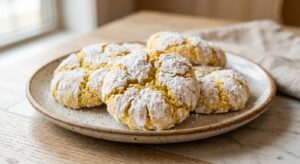
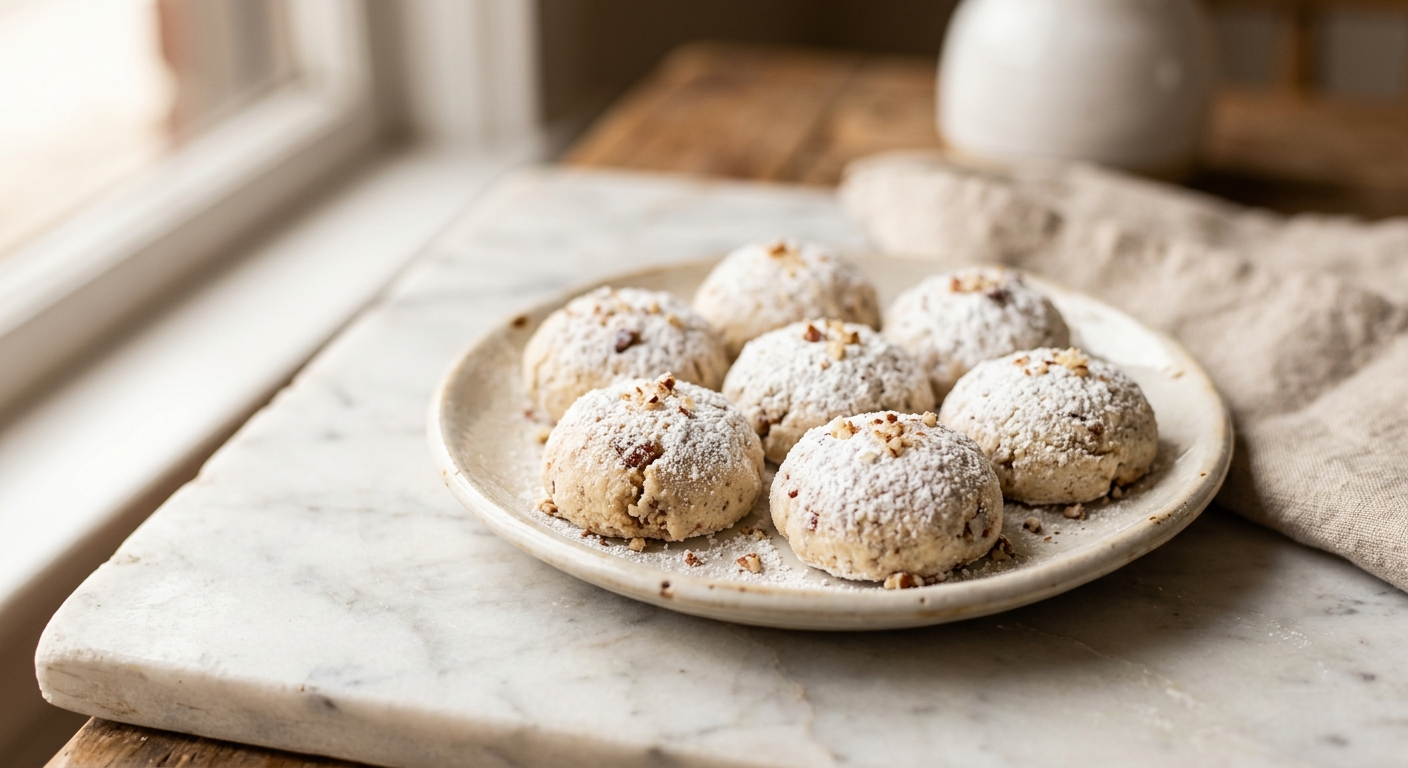
There is something almost magical about the moment a Mexican wedding cookie dissolves on your tongue, that fleeting second when the powdered sugar cloud gives way to a warm, nutty, buttery crumb that simply ceases to exist before you have even finished the thought. These cookies go by many names – Russian tea cakes, snowball cookies, polvorones – but no matter what your grandmother called them, the feeling they conjure is universal: a tin of these on a holiday table, dusted white like a little snowdrift, is one of the most comforting sights in all of baking.
What sets this version apart is a double commitment to flavor. First, the pecans are toasted before they are ground, a step that takes only eight minutes but transforms their flavor from mild and buttery to deeply nutty and almost caramel-like. Second, a full two teaspoons of pure vanilla extract and a half teaspoon of almond extract are added to the dough, a combination that gives these cookies a warm, aromatic backbone you simply cannot get from vanilla alone. The dough is also chilled briefly before baking, which helps the cookies hold their round shape and prevents them from spreading into flat discs.
These cookies sit firmly in the easy category, requiring no special equipment beyond a food processor and a baking sheet, and no advanced techniques. They are perfect for holiday cookie swaps, wedding favors, or an afternoon when you want something genuinely lovely with very little fuss. The recipe doubles beautifully and the baked cookies freeze perfectly, which means a batch made today can still bring joy three months from now.
Equipment Needed
Click on an item below to shop for the recommended items for this recipe on Amazon.
As an Amazon Associate, we earn from qualifying purchases.
36
Ingredients
- 200 graw pecan halves (about 2 cups)
- 230 gunsalted butter, at room temperature (1 cup or 2 sticks)
- 60 gpowdered sugar, sifted (about 1/2 cup), plus extra for rolling
- 2 tsppure vanilla extract
- 0.5 tsppure almond extract
- 240 gall-purpose flour (about 2 cups, spooned and leveled)
- 0.5 tspColima Sea SaltMicroplastic Free Salt
- 0.25 tspground cinnamon
- 200 gpowdered sugar for rolling (about 1 3/4 cups), sifted
Ingredient Substitutions
Instructions
- Toast the pecans: Spread the pecan halves in a single layer on a dry rimmed baking sheet. Bake at 350°F (175°C) for 8 minutes, stirring once halfway through, until fragrant and one shade darker. Watch carefully, as they can go from toasted to burned quickly. Tip onto a plate and let cool completely, at least 15 minutes. Do not skip this step – toasting dramatically deepens their flavor.
- Grind the pecans: Place the cooled pecans in a food processor and pulse in short 1-second bursts, 8 to 10 times, until they resemble coarse, damp sand. Stop before they turn into paste. A few slightly larger pieces are fine and add pleasant texture. Set aside.
- Make the dough: In a stand mixer fitted with the paddle attachment, or using a hand mixer and a large bowl, beat the room-temperature butter on medium speed for 2 minutes until pale and creamy. Add the 60g of sifted powdered sugar and beat on medium-low for another 2 minutes, scraping down the sides of the bowl once, until light and fluffy. Add the vanilla and almond extracts and mix to combine.
- Add the dry ingredients: Add the flour, salt, cinnamon, and ground pecans to the butter mixture all at once. Mix on low speed just until the dough comes together and no dry flour streaks remain, about 30 to 45 seconds. Do not overmix. The dough will be soft and a little crumbly-looking but should hold together when pressed.
- Chill the dough: Flatten the dough into a disc, wrap in plastic wrap, and refrigerate for 30 minutes. This firms the butter back up so the cookies hold their round shape in the oven and do not flatten.
- Preheat and portion: While the dough chills, preheat your oven to 350°F (175°C) and line two large baking sheets with parchment paper. Scoop the chilled dough using a tablespoon measure or a #60 cookie scoop (about 18g per cookie) and roll each portion between your palms into a smooth ball. Place 1.5 inches apart on the prepared baking sheets.
- Bake: Bake one sheet at a time on the center rack for 13 to 15 minutes, until the bottoms are very lightly golden and the tops look set but not browned. The cookies will feel slightly underdone, which is correct. They firm up as they cool. Let the cookies cool on the baking sheet for exactly 5 minutes – they need to be warm but not hot for the first rolling.
- Roll in powdered sugar: Place the sifted rolling powdered sugar in a wide, shallow bowl. Gently roll each warm cookie in the sugar, turning to coat all sides. Set on a wire rack and let cool completely, about 20 minutes. Once fully cooled, roll each cookie in powdered sugar a second time for a thick, snowy coating that will not soak in. The double roll is the secret to cookies that look bakery-perfect even hours later.
- Toast the pecans in the air fryer: Place the pecan halves in the air fryer basket in a single layer. Air fry at 325°F (165°C) for 4 to 5 minutes, shaking the basket once at the halfway point. Watch closely – air fryers run hot and nuts can burn in seconds. They are ready when fragrant and slightly darkened. Tip onto a plate and cool completely.
- Grind the pecans and make the dough: Follow steps 2 through 5 of the oven method exactly, pulsing the cooled pecans in a food processor to coarse sand, creaming the butter and sugar, mixing in the extracts, combining with the dry ingredients and pecans, and chilling the dough for 30 minutes.
- Portion the cookies: Cut a piece of parchment to fit your air fryer basket (or use the basket liner that came with it). Scoop and roll the chilled dough into balls of about 18g each. Work in batches that fit in a single layer with at least an inch of space between cookies – do not stack or crowd them.
- Air fry: Preheat the air fryer to 325°F (165°C) for 3 minutes. Place one batch of cookies on the parchment in the basket. Air fry for 9 to 10 minutes, until the bottoms are very lightly golden and the surfaces look dry and set. The lower temperature compared to oven baking prevents the outside from browning too fast before the center is done. Let rest in the basket for 3 minutes before removing.
- Roll in sugar: Transfer the warm cookies to a wire rack and let cool 4 minutes. Roll each cookie in sifted powdered sugar while still warm to get the first coat. Cool completely on the rack, then roll a second time for the classic snowy finish.
- Prepare the dough balls: Make the dough through the chilling step as described in the oven method. Portion and roll all the dough into balls of about 18g each.
- Freeze on a tray: Arrange the raw dough balls in a single layer on a parchment-lined baking sheet, not touching each other. Freeze uncovered for 1 hour until completely solid. This flash-freeze step prevents the balls from clumping together in storage.
- Transfer to long-term storage: Once frozen solid, transfer the dough balls to a zip-top freezer bag or airtight container, pressing out as much air as possible. Label with the date. They will keep for up to 3 months in the freezer.
- Bake from frozen: When ready to bake, preheat your oven to 350°F (175°C) and line a baking sheet with parchment. Place the frozen dough balls directly from the freezer onto the baking sheet, spacing them 1.5 inches apart. Do not thaw first – thawing makes them spread unevenly. Bake for 16 to 18 minutes, 2 to 4 minutes longer than the fresh dough time, until the bottoms are lightly golden and the tops look set.
- Cool and roll in sugar: Let the baked cookies cool on the pan for 5 minutes, then roll in sifted powdered sugar while warm, cool completely on a rack, and roll a second time. They will be indistinguishable from freshly made cookies baked the same day.
Nutrition Per Serving
Per 1 serving (makes about 36 cookies)
Why This Recipe Works
Mexican wedding cookies are a classic example of a high-fat, low-moisture shortbread. The very high ratio of butter to flour (nearly 1:1 by weight) is exactly what gives these cookies their signature melt-in-your-mouth texture. Because there is so little water in the dough (butter is about 80% fat and only 16 to 18% water, with no eggs or milk added), very little gluten develops during mixing. Gluten is what gives bread its chew, so its near-absence here results in a cookie that crumbles and dissolves on contact with the warmth of your mouth rather than requiring any chewing at all. This is why overmixing the dough is one of the most common mistakes: even the small amount of mixing needed to develop gluten will result in a noticeably tougher cookie.
Toasting the pecans is not just a flavor upgrade, it is a textural one too. Raw pecans contain significant moisture, and when ground into the dough, that moisture can contribute to a slightly gummy or dense result. Toasting drives off that moisture and causes the Maillard reaction in the nut’s proteins, creating dozens of new aromatic compounds. The result is a drier, more friable ground nut that integrates seamlessly into the sandy shortbread crumb while adding a richer, more complex flavor. Chilling the dough is equally important: cold butter moves slowly in the oven, meaning the cookies hold their round shape and stay compact rather than spreading before the structure sets.
The double roll in powdered sugar is both practical and scientific. The first roll, done while the cookies are still warm, allows a thin layer of sugar to partially melt and absorb into the surface, creating a light adhesive layer. The second roll, once the cookies are completely cold, deposits a thick, dry, matte coating that stays put. If you roll cold cookies only once, the sugar looks thin and patchy. If you roll warm cookies twice, the second coat dissolves into the first and you lose that beautiful snowy finish. Timing the double roll correctly is the single most important detail in making these look as good as they taste.
Baker’s Tips
- Make sure your butter is genuinely at room temperature, about 68 to 70°F. Butter that is too cold will not cream properly and will leave the dough crumbly and difficult to roll into balls. Butter that is too warm will make the dough greasy and sticky.
- When grinding the pecans, pulse rather than running the food processor continuously. Stopping to check the texture every few pulses is the best way to avoid accidentally making pecan butter.
- If your dough feels too crumbly to roll into balls after chilling, let it sit at room temperature for 5 minutes and try again. Squeezing a ball firmly in your palm two or three times before rolling it smooth helps compact the dough.
- For the most even bake, weigh your dough balls at 18g each rather than eyeballing them. Cookies that are all the same size will all be done at the same time.
- Sift your powdered sugar before rolling. Lumpy powdered sugar will give you an uneven, clumpy coating instead of a smooth, elegant snow-dusted finish.
- If you are making these for gifting or a cookie swap, the second powdered sugar roll can be done right before packing or serving for the freshest-looking result.
Variations
- Cardamom and rose version: Replace the cinnamon with 1/4 tsp ground cardamom and add 1 tsp rose water along with the vanilla. Roll finished cookies in powdered sugar mixed with a pinch of cardamom.
- Chocolate-dipped: After the final sugar roll and once cookies are fully cooled, dip the bottom half of each cookie in tempered dark chocolate and place on parchment to set. The bittersweet chocolate against the sweet, snowy coating is stunning.
- Lemon pecan: Replace the almond extract with 1 tsp finely grated lemon zest (added with the butter) and add 1 tsp fresh lemon juice with the vanilla. Bright and fragrant, especially lovely in spring.
- Mixed nut version: Use 100g pecans and 100g blanched almonds, both toasted and ground together, for a more complex flavor profile.
Troubleshooting & FAQ
My cookies are spreading and flattening in the oven instead of staying round.
The powdered sugar coating is melting off and becoming sticky or translucent after a few hours.
My cookies taste a bit greasy or dense rather than light and sandy.
The dough is too crumbly and falls apart when I try to roll it into balls.
My cookies taste bland even though I followed the recipe.
Storage & Make-Ahead
- Storage: Store cooled cookies in an airtight container at room temperature for up to 10 days. Layer them with parchment paper to protect the sugar coating. Freeze baked cookies for up to 3 months – thaw at room temperature, then give them a fresh roll in powdered sugar before serving.
- Make-Ahead: The dough can be made and refrigerated up to 3 days in advance, tightly wrapped. Raw dough balls can be frozen for up to 3 months and baked directly from frozen (add 2 to 4 extra minutes to the bake time). Baked and cooled cookies (without the second sugar roll) can be frozen, then thawed and re-rolled before serving.