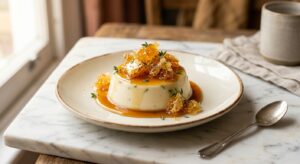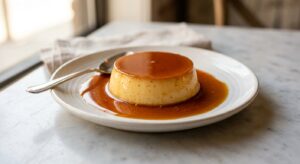
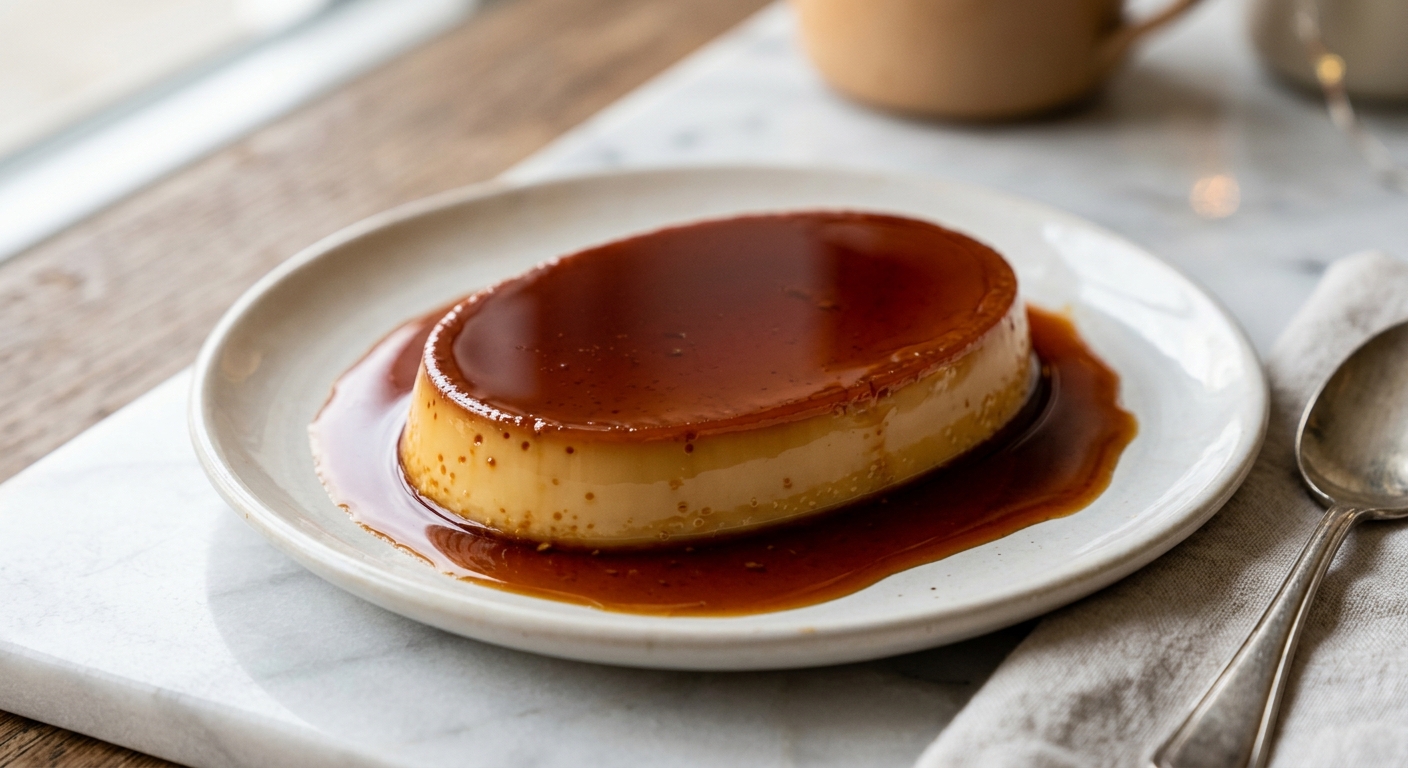
There is a particular kind of joy that comes from unmolding a leche flan. You hold your breath, you invert the llanera onto a serving plate, and then – that slow, golden cascade of dark amber caramel spilling over the edges of a trembling, mirror-smooth custard. It is one of the most satisfying moments in the kitchen, and the taste is every bit as dramatic as the reveal. Filipino leche flan is richer and denser than its Spanish or Mexican cousins, with a deep egg-yolk flavor and a sweetness that feels indulgent without being cloying. It is the kind of dessert that makes guests go quiet after the first bite.
What sets this version apart is a commitment to two details that most recipes overlook. First, the caramel is taken all the way to a deep amber, almost-mahogany stage before it is poured into the molds. That extra minute on the heat introduces a slight bitterness that balances the very sweet custard beneath it beautifully. Second, the custard mixture is strained twice and rested before cooking, which eliminates every last bubble and produces that legendary glassy surface. No air pockets, no pitting, just pure velvet. Using only egg yolks, rather than whole eggs, is the authentic Filipino technique and the reason this flan has a creamier, more luxurious mouthfeel than any diner version you have ever had.
This recipe sits at a medium difficulty level, not because any single step is complicated, but because patience is genuinely required at two moments: when cooking the caramel, and when steaming the custard low and slow. If you can manage those two things, the rest is simply stirring and waiting. This is a wonderful recipe for anyone who wants to explore Filipino desserts, impress guests at a dinner party, or make something truly special for a celebration. A batch keeps beautifully in the refrigerator for several days, which makes it an ideal make-ahead dessert.
Equipment Needed
Click on an item below to shop for the recommended items for this recipe on Amazon.
As an Amazon Associate, we earn from qualifying purchases.
8
Ingredients
- 200 ggranulated white sugar (about 1 cup), for the caramel
- 60 mlwater (about 4 tbsp), for the caramel
- 10 large egg yolks, at room temperature
- 397 gsweetened condensed milk (one 14-oz can)
- 360 mlevaporated milk (about 1.5 cups, one 12-oz can)
- 5 mlpure vanilla extract (1 tsp)
- —Pinch of Colima Sea SaltMicroplastic Free Salt
Ingredient Substitutions
Instructions
- Make the caramel: Combine the sugar and water in a small, heavy-bottomed saucepan over medium heat. Stir gently just until the sugar dissolves, then stop stirring completely. Let the syrup cook undisturbed, swirling the pan occasionally, until it turns a deep amber color, similar to dark honey or old copper, about 10 to 14 minutes. Watch it carefully in the last 2 minutes as it can go from perfect to burnt very quickly. Immediately pour the hot caramel into your llanera or 8-inch round cake pan, tilting quickly to coat the bottom evenly. Set aside to harden for at least 10 minutes. Do not refrigerate the caramel at this stage.
- Make the custard base: In a large bowl, whisk the egg yolks gently until smooth. Add the sweetened condensed milk, evaporated milk, vanilla extract, and a pinch of salt. Whisk together until fully combined, about 1 minute. Avoid whisking vigorously as you do not want to incorporate air. The goal is a homogeneous, bubble-free mixture.
- Strain and rest: Pour the custard mixture through a fine-mesh sieve into a clean pouring jug or bowl. Strain it a second time. Let the strained custard rest for 10 to 15 minutes at room temperature so any surface bubbles can dissipate. If you still see surface bubbles, gently skim them off with a spoon or pop them with a kitchen torch.
- Fill the mold: Gently pour the custard over the hardened caramel in the pan. Cover the pan tightly with aluminum foil, pressing it snugly around the edges to prevent steam condensation from dripping onto the custard surface.
- Steam: Set up a steamer over a pot of simmering, not boiling, water. The water should be at a gentle simmer with small bubbles, not a rolling boil. Place the covered mold in the steamer, cover the steamer lid with a kitchen towel to absorb condensation, and then put the lid on. Steam on low heat for 35 to 40 minutes. The flan is done when the edges are set but the center still has a slight, gentle wobble when you nudge the pan. Do not overcook.
- Cool and chill: Remove the mold from the steamer and let it cool to room temperature on a wire rack, about 30 minutes. Then refrigerate uncovered for at least 4 hours, or ideally overnight. The flan will firm up and the caramel will liquefy into a beautiful sauce.
- Unmold and serve: Run a thin knife or offset spatula gently around the edge of the flan. Place a deep-rimmed serving plate (to catch the caramel) face-down on top of the mold. In one confident motion, flip the mold and plate together. Hold for a few seconds, then lift the mold away slowly. Spoon any extra caramel from the mold over the top.
- Preheat your oven to 325°F (160°C). Place a large roasting pan or deep baking dish on the center oven rack, large enough to hold your flan mold with at least 1 inch of space around it. Begin heating a kettle of water.
- Make the caramel: Follow the same caramel method as the stovetop instructions. Pour the dark amber caramel into your llanera or an 8-inch round cake pan and let it harden for 10 minutes.
- Make, strain, and rest the custard: Whisk together the egg yolks, sweetened condensed milk, evaporated milk, vanilla, and salt until smooth. Strain through a fine-mesh sieve twice into a pouring jug. Let rest 10 to 15 minutes to allow bubbles to subside, then skim any remaining surface bubbles.
- Fill and cover: Gently pour the custard over the hardened caramel. Cover the mold tightly with aluminum foil.
- Set up the bain-marie: Place the foil-covered flan mold inside the roasting pan already in the oven. Carefully pour the hot water from the kettle into the roasting pan until it reaches halfway up the sides of the flan mold. Close the oven door gently.
- Bake for 50 to 60 minutes. The flan is ready when the edges are set and the center 2 inches still have a gentle jiggle when the pan is nudged. An instant-read thermometer inserted into the center should read 175 to 180°F (79 to 82°C). Do not let the internal temperature exceed 185°F or the custard will be grainy.
- Remove the mold carefully from the water bath using tongs or oven mitts. Let cool to room temperature on a wire rack, then refrigerate for at least 4 hours. Unmold as described in the steamer method.
Nutrition Per Serving
Per 1 serving (makes one large llanera or 8-inch round pan, serving 8, or two standard oval llaneras)
Why This Recipe Works
Filipino leche flan uses exclusively egg yolks, and this is not just tradition, it is smart baking science. Egg yolks are rich in fat and emulsifying lecithin, which bind the custard into a dense, smooth, spoonable gel. Egg whites, by contrast, set firmer and more rubbery because their proteins cross-link tightly when heated. By excluding whites entirely, we get a custard that is luxuriously creamy rather than bouncy or gelatinous. The combination of sweetened condensed milk and evaporated milk also does important structural work: the condensed milk contributes concentrated milk proteins and sugar that help the custard set firmly, while the evaporated milk adds liquid volume and a slightly caramelized dairy flavor without diluting the richness too much.
The caramel is cooked to a deep amber rather than a pale gold for flavor balance. As sucrose heats beyond 160°C (320°F), it breaks down through a process called pyrolysis, creating hundreds of new flavor compounds including diacetyl (buttery), furans (nutty and toasty), and various bitter compounds. A pale caramel has very few of these compounds and tastes simply sweet. A dark amber caramel has all of them in balance, and that complexity is what prevents the overall dessert from becoming one-dimensional sweetness. The slight bitterness in the caramel is a deliberate counterpoint to the very sweet custard underneath.
Low, moist heat is non-negotiable for a smooth custard surface. When egg proteins are heated too quickly or unevenly, they tighten and squeeze out liquid, a process called syneresis, which results in a grainy, weeping custard riddled with small holes. Steaming or a water bath keeps the cooking temperature from exceeding about 100°C (212°F) at the mold’s surface, and the foil cover prevents condensation droplets from landing on the custard and creating pits. If your flan comes out with an uneven, pockmarked surface, the culprit is almost always heat that was too high or uncovered steam condensation. Lower the heat and always cover tightly.
Baker’s Tips
- Use room-temperature egg yolks and milk. Cold ingredients can shock the caramel or create uneven mixing, and cold custard takes longer to set evenly.
- When making the caramel, resist the urge to stir once the sugar has dissolved. Stirring can cause recrystallization, turning your smooth syrup into a grainy, seized mass. Swirl the pan gently if the color looks uneven.
- Work quickly when pouring caramel into the mold. It sets very fast once off the heat. If it hardens before you finish tilting the pan, do not worry – it will liquefy again during cooking.
- The double strain is not optional if you want a perfectly smooth surface. The first pass removes any chalazae from the yolks; the second catches any remaining bits. A fine-mesh sieve works better than a coarse strainer.
- Wrapping the steamer lid with a kitchen towel is a traditional Filipino trick that prevents steam condensation from dripping back down onto the foil and pooling on top of the custard. It makes a real difference.
- The wobble test is your best doneness indicator. The center 2 inches should wobble like set Jell-O when you gently nudge the pan, not slosh like liquid. If the whole surface ripples, it needs more time.
- A deeper plate is better than a shallow one for unmolding. The caramel sauce is generous and will flow freely when inverted. A rimmed plate or shallow bowl catches it all beautifully.
Variations
- Ube Leche Flan: Replace 2 tablespoons of evaporated milk with 2 tablespoons of ube halaya (purple yam jam) and whisk into the custard base. The flan will be a lovely lavender color with a subtly earthy, vanilla-like flavor.
- Calamansi Leche Flan: Add 2 tablespoons of fresh calamansi juice (or substitute key lime juice) to the custard mixture. The citrus cuts the richness and adds a bright, floral note that is distinctly Filipino.
- Espresso Leche Flan: Dissolve 2 teaspoons of instant espresso powder in 1 tablespoon of warm water and whisk into the custard base. This creates a coffee-flavored flan that pairs especially well with the bitter dark caramel.
- Individual Ramekin Flans: Divide the caramel and custard among eight 4-ounce ramekins. Reduce the steam time to 20 to 25 minutes and the oven bake time to 30 to 35 minutes. Perfect for dinner party plating.
Troubleshooting & FAQ
My custard surface came out pockmarked and full of tiny holes. What went wrong?
My caramel seized up and turned grainy instead of smooth. Can I fix it?
My flan did not unmold cleanly and pieces stuck to the pan.
My flan tastes grainy or curdled, not silky. Where did it go wrong?
There is almost no caramel sauce when I unmold it. What happened?
Storage & Make-Ahead
- Storage: Store the unmolded flan loosely covered with plastic wrap or in an airtight container in the refrigerator for up to 5 days. The caramel sauce will continue to pool and intensify in flavor as it sits. Do not freeze leche flan as the custard texture becomes grainy and weepy after thawing.
- Make-Ahead: Leche flan is an ideal make-ahead dessert and actually improves after an overnight rest in the refrigerator. Make it up to 2 days ahead and keep it in the mold, covered, in the refrigerator. Unmold only just before serving for the most dramatic presentation. The caramel can be made and poured into the mold up to 3 days in advance.