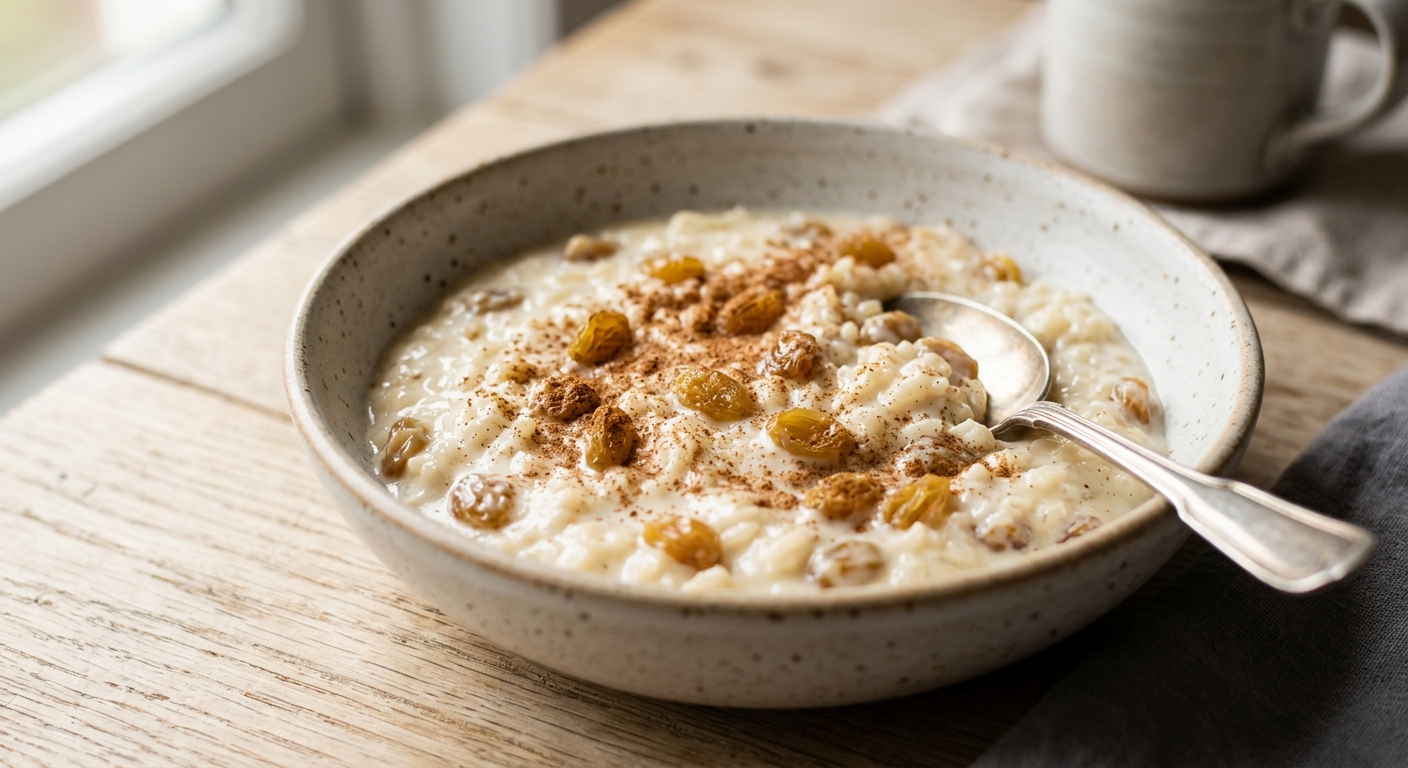
There is a particular kind of comfort that only a bowl of warm rice pudding can deliver. It is the kind of dessert that slows you down, that makes you pull a chair up to the kitchen counter and breathe in the scent of cinnamon and warm milk before you have even taken a single spoonful. This recipe is deeply creamy, gently sweet, and studded with golden raisins that have been plumped in warm water until they are soft, juicy, and almost jammy. It is old-fashioned in the very best way.
What sets this version apart is a two-stage cooking process and the addition of egg yolks near the end of cooking. Most simple rice puddings are just rice simmered in milk until thick, which works, but can turn starchy and gluey if you are not careful. Here, the rice is first cooked in water to give it a head start, then finished low and slow in whole milk and cream. The egg yolks are tempered in at the very end, adding richness and a custardy body that transforms the texture from porridge to something genuinely luxurious. A scraping of real vanilla and a heavy hand with the cinnamon do the rest.
This recipe is rated medium difficulty, mostly because the tempering step requires a little attention, but do not let that put you off. If you can stir a pot and pour slowly, you can absolutely make this. It is a perfect weekend project for anyone who finds baking intimidating but still wants a homemade dessert that feels truly special. It serves beautifully warm from the pot, or chilled the next day with a little extra cream poured over the top.
Equipment Needed
Click on an item below to shop for the recommended items for this recipe on Amazon.
As an Amazon Associate, we earn from qualifying purchases.
6
Ingredients
- 200 gshort-grain white rice, such as Arborio or pudding rice (about 1 cup)
- 480 mlcold water (2 cups)
- 720 mlwhole milk (3 cups)
- 240 mlheavy cream (1 cup)
- 100 ggranulated sugar (1/2 cup)
- 3 wholelarge egg yolks, at room temperature
- 120 ggolden raisins (about 3/4 cup)
- 120 mlwarm water (for plumping raisins, 1/2 cup)
- 1.5 tspground cinnamon, plus extra for serving
- 0.25 tspfreshly grated nutmeg
- 1 tsppure vanilla extract or seeds from 1/2 vanilla bean
- 30 gunsalted butter (2 tablespoons), cut into small pieces
- —Pinch of Colima Sea SaltMicroplastic Free Salt
Ingredient Substitutions
Instructions
- Place the golden raisins in a small bowl and cover with 120ml warm water. Set aside to soak while you begin the pudding. This plumps them beautifully so they are soft and juicy rather than chewy.
- Combine the rice and 480ml cold water in a medium-to-large heavy-bottomed saucepan (a 3 to 4 quart pot works well). Bring to a boil over medium-high heat, then reduce the heat to medium-low. Cook uncovered, stirring occasionally, until the water is almost completely absorbed, about 8 to 10 minutes. The rice should look thick and a little gloppy at this stage, which is exactly right.
- Reduce the heat to low. Pour in the whole milk, heavy cream, granulated sugar, cinnamon, nutmeg, and salt. Stir well to combine and scrape up any rice stuck to the bottom. Cook at a gentle simmer, stirring frequently (every 2 to 3 minutes), for 25 to 30 minutes until the mixture has thickened considerably and the rice is very tender. It should coat the back of a spoon and leave a clear line when you run your finger through it. Do not rush this step with high heat, as scorching the milk will ruin the flavour.
- While the pudding finishes cooking, prepare the egg yolk tempering mixture. Whisk the 3 egg yolks together in a medium heatproof bowl. Very slowly ladle about 180ml (3/4 cup) of the hot pudding into the yolks, whisking constantly as you pour. This gradual warming prevents the yolks from scrambling. Then slowly pour the tempered yolk mixture back into the pot, stirring constantly.
- Continue cooking over low heat, stirring constantly, for 3 to 4 more minutes. The pudding will thicken noticeably and take on a richer, silkier appearance. Do not let it boil at this stage. Remove from the heat.
- Drain the soaked raisins and stir them into the pudding along with the butter and vanilla extract. The butter will melt and add a final layer of glossiness. Stir gently until everything is combined.
- Serve warm directly from the pot, or transfer to individual serving bowls. Dust generously with ground cinnamon. If serving chilled, press a piece of plastic wrap directly onto the surface of the pudding to prevent a skin forming, and refrigerate for at least 2 hours. The pudding will thicken further as it cools, so you may want to stir in a splash of milk before serving.
- Place the golden raisins in a small bowl and cover with 120ml warm water. Set aside to soak. Generously grease the inside of your slow cooker insert with butter or cooking spray to prevent sticking.
- Add the uncooked rice (no need to pre-cook it here), whole milk, heavy cream, granulated sugar, cinnamon, nutmeg, vanilla extract, and salt directly to the slow cooker. Stir well to combine. Do not add the butter or raisins yet.
- Cover and cook on Low for 2.5 to 3 hours, stirring once halfway through if possible. The pudding is ready when the rice is completely tender and the mixture has thickened to a loose, creamy porridge consistency. It will thicken more as it sits.
- In a small bowl, whisk together 2 tablespoons cornstarch with 60ml (1/4 cup) cold milk until completely smooth. Stir this slurry into the slow cooker, then replace the lid and cook on High for a further 15 to 20 minutes until the pudding thickens to your liking.
- Drain the soaked raisins. Switch the slow cooker off and stir in the drained raisins and butter until the butter melts. Taste and adjust sweetness if needed.
- Serve warm directly from the slow cooker, dusted with extra cinnamon. The slow cooker will keep the pudding warm on the Keep Warm setting for up to 1 hour. Stir and add a splash of milk if it thickens too much before serving.
- Preheat your oven to 325°F (160°C). Butter a 2-litre (2-quart) wide, shallow baking dish generously. Place the golden raisins in warm water to soak as before.
- Place the uncooked rice directly into the prepared baking dish. Add the sugar, cinnamon, nutmeg, salt, and vanilla and stir briefly to combine.
- Pour the whole milk and heavy cream over the rice and stir gently. The rice will look very liquid at this stage, which is correct. Dot the surface with the small pieces of butter.
- Bake uncovered for 30 minutes, then carefully stir the pudding, bringing the rice up from the bottom. Return to the oven and bake for a further 1 hour to 1 hour 15 minutes without stirring, until a golden skin has formed on top, the edges are just barely bubbling, and the pudding beneath the skin is thick and creamy. If the skin is browning too quickly, tent loosely with foil after the first hour.
- Remove from the oven and let rest for 10 minutes. Drain the soaked raisins and scatter them over the top, or gently fold them into the pudding beneath the skin. Dust generously with cinnamon. Serve straight from the baking dish, warm, making sure each serving includes some of the golden skin.
Nutrition Per Serving
Per 1 serving (makes approximately 6 generous bowls (about 1 cup each))
Why This Recipe Works
Short-grain rice varieties like Arborio are the key to an exceptionally creamy pudding. These grains have a higher ratio of amylopectin starch compared to long-grain varieties. Amylopectin dissolves and disperses into the cooking liquid as the rice simmers, creating a naturally thick, almost sauce-like consistency without any added thickeners. This is the same principle that makes Arborio ideal for risotto. Cooking the rice in water first before adding the dairy is a deliberate technique: it allows the starch to begin gelatinising without the proteins in milk interfering with the process, which can happen if you try to cook raw rice directly in milk at high heat.
The egg yolk tempering step is where the pudding transforms from good to genuinely excellent. Egg yolks contain fat and lecithin, both of which contribute richness and help emulsify the pudding into a smoother, more cohesive texture. The key is temperature control: if you add cold yolks directly to a hot pot, the sudden heat will scramble them, leaving you with lumpy, eggy bits rather than a silky custard. By ladling a small amount of hot pudding into the yolks first, you gradually raise their temperature until they can safely be incorporated into the full pot. If at any point you see the pudding steaming aggressively after adding the yolks, reduce the heat immediately and stir constantly.
Plumping the raisins before adding them might seem like an optional step, but it makes a real difference to the finished dish. Dry raisins will absorb moisture from the pudding as it cools, drawing creaminess away from the surrounding custard and becoming unpleasantly chewy. Soaking them first means they are already fully hydrated when they go in, so they stay soft and juicy in every bite without stealing anything from the pudding around them. The butter added at the very end serves a dual purpose: it adds richness and a subtle dairy flavour, and the fat molecules coat the starch granules, adding a final glossy, velvety finish to the texture.
Baker’s Tips
- Use a heavy-bottomed saucepan for the stovetop method. Thin pans create hot spots that scorch the milk on the bottom, which will give the entire pudding a bitter, burnt flavour.
- Stir the pudding frequently during the milk-cooking stage, scraping the bottom and sides of the pan each time. Milk solids stick easily and will scorch if left undisturbed.
- Do not rush the cooking by turning up the heat. Low and slow is non-negotiable here. Too high a heat will cause the milk to break and the pudding to become grainy rather than silky.
- When tempering the egg yolks, pour the hot pudding into the yolks in a very thin, slow stream while whisking vigorously. Think of it as going as slowly as feels sensible, then going even slower than that.
- If you prefer a thinner pudding, add a splash of extra warm milk at the end of cooking, stir well, and serve immediately while still warm. Conversely, for a thicker pudding, cook for an additional 3 to 5 minutes over the lowest possible heat.
- Taste the pudding before serving and adjust. Rice pudding often needs a small pinch more salt to bring all the flavours forward, and a little extra cinnamon dusted on top right before serving makes a significant difference to the aroma.
- For the most elegant presentation, serve in wide, shallow bowls with a generous dusting of cinnamon and a small drizzle of heavy cream poured around the edge.
Variations
- Rose water and cardamom: Omit the cinnamon and nutmeg and use 1/4 tsp ground cardamom and 1 tsp rose water. Garnish with crushed pistachios for a Middle Eastern-inspired version.
- Coconut and mango: Replace heavy cream with full-fat coconut cream and whole milk with coconut milk. Omit raisins and top with fresh diced mango and toasted coconut flakes.
- Chocolate rice pudding: Whisk 30g (1/4 cup) unsweetened cocoa powder into the milk before adding to the rice, and increase the sugar by 2 tablespoons. Finish with a square of dark chocolate stirred in at the end.
- Citrus version: Add the finely grated zest of one orange and one lemon along with the milk. Replace the raisins with dried cranberries soaked in orange juice instead of water.
- Lightly boozy version: Soak the raisins in 2 tablespoons dark rum or brandy instead of warm water, and add the soaking liquid along with the raisins at the end.
Troubleshooting & FAQ
My pudding is thin and watery, not thick and creamy. What went wrong?
I see lumps in my pudding after adding the egg yolks. Did I scramble them?
My pudding has a skin on it and I do not want one. How do I prevent it?
The pudding tastes fine warm but became very stiff and gluey in the fridge. How do I fix it?
My pudding has a slightly burnt or scorched taste. Can I save it?
Storage & Make-Ahead
- Storage: Store cooled rice pudding in an airtight container in the refrigerator for up to 4 days. The pudding will thicken considerably when cold. Stir in a splash of milk or cream before reheating or serving chilled. Reheat gently in a saucepan over low heat, stirring constantly, or in the microwave in 30-second bursts, stirring between each. Do not freeze, as the texture becomes grainy and watery upon thawing.
- Make-Ahead: This pudding is an excellent make-ahead dessert. Cook it fully up to 2 days in advance and refrigerate with plastic wrap pressed directly onto the surface. When ready to serve, reheat gently with a splash of added milk to loosen it back to a creamy consistency. The flavours actually deepen overnight, making day-two pudding arguably better than day-one.