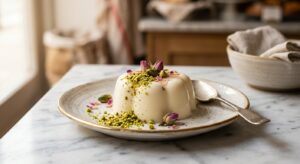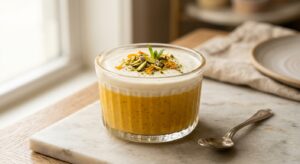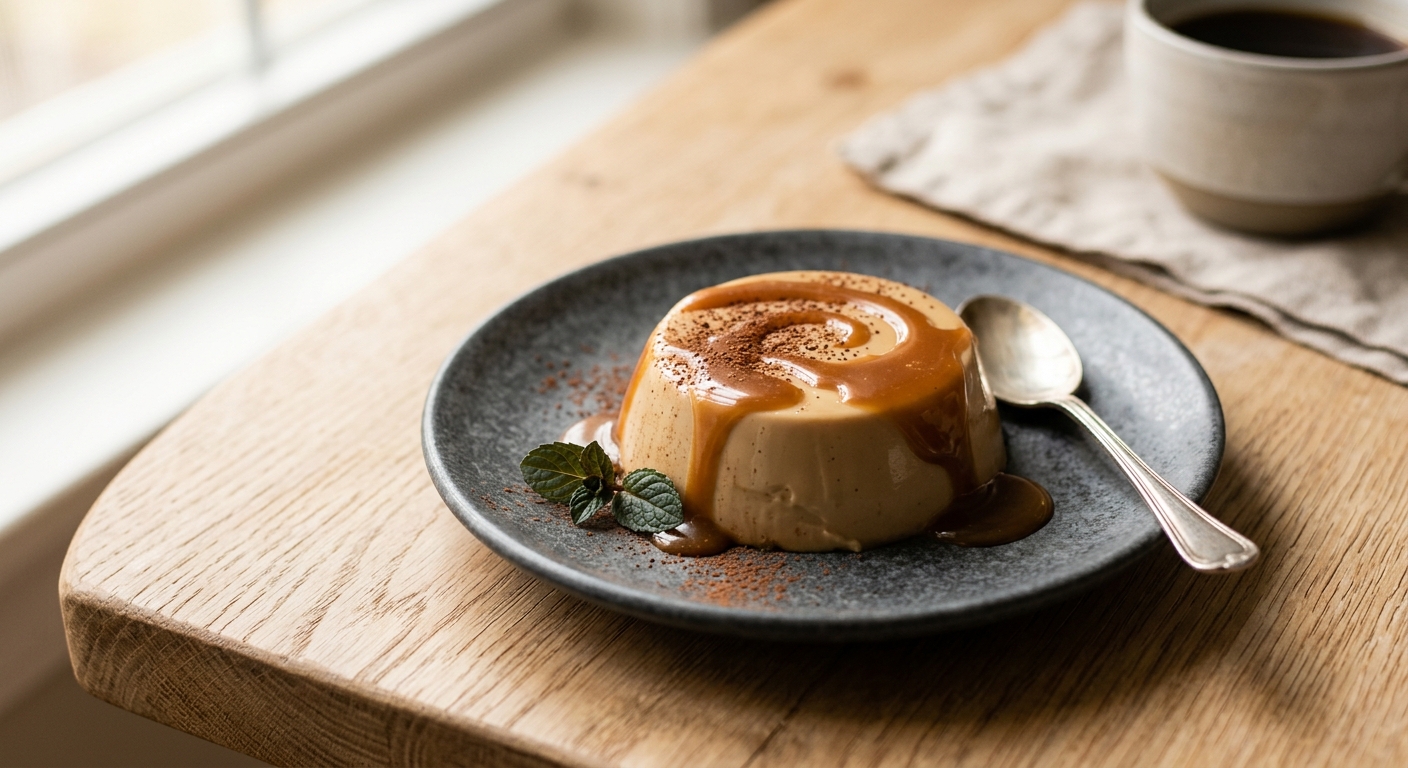
There is something quietly spectacular about a panna cotta that trembles when you set it on the table. This cold brew coffee version has all that delicate, barely-there wobble, but beneath that pale caramel surface lies a deep, roasted coffee flavor that is smooth rather than sharp, complex rather than bitter. It is the kind of dessert that makes guests pause mid-conversation and ask, very seriously, for the recipe.
What sets this version apart is the use of cold brew concentrate rather than brewed espresso or instant coffee. Cold brew is steeped slowly in cold water for 12 to 24 hours, which draws out the coffee’s natural sweetness and chocolatey depth while leaving behind much of the acidity and bitterness that hot brewing produces. The result is a coffee flavor that is bold and sophisticated without overpowering the cream. A salted caramel drizzle added at serving plays beautifully against that bitterness, and a pinch of flaky sea salt on top ties everything together.
Panna cotta has a reputation for being fancy, but it is genuinely one of the easiest desserts a home baker can make. There is no oven, no water bath, and no custard to temper. If you can bloom gelatin and heat cream, you can make this. It is perfect for dinner party hosts who want a showstopping dessert ready in the fridge long before guests arrive, and equally perfect for anyone who just wants something beautiful and coffee-flavored waiting for them after a long day.
Equipment Needed
Click on an item below to shop for the recommended items for this recipe on Amazon.
As an Amazon Associate, we earn from qualifying purchases.
6
Ingredients
- Blooming The Gelatin
- 7 gpowdered unflavored gelatin (about 2.5 tsp, or 1 standard sachet plus a scant 1/2 tsp)
- 45 mlcold water (3 tbsp)
- 480 mlheavy cream (double cream), about 2 cups
- 180 mlwhole milk, about 3/4 cup
- 120 mlcold brew coffee concentrate (store-bought or homemade), about 1/2 cup
- 70 ggranulated white sugar (about 1/3 cup)
- 1 tsppure vanilla extract
- —Pinch of Colima Sea SaltMicroplastic Free Salt
- Salted Caramel
- 150 ggranulated white sugar (about 3/4 cup)
- 60 mlheavy cream, warmed (about 1/4 cup)
- 30 gunsalted butter, cubed and at room temperature (about 2 tbsp)
- 0.5 tspColima Sea SaltMicroplastic Free Salt (such as Maldon), plus extra to finish
- —Lightly whipped cream, to serve (optional)
Ingredient Substitutions
Instructions
- Bloom the gelatin: Pour the cold water into a small bowl and sprinkle the powdered gelatin evenly over the surface. Do not stir. Let it sit undisturbed for 5 to 10 minutes until the gelatin has absorbed the water and looks swollen and granular, like wet sand. This step is essential: unblooomed gelatin added directly to hot liquid will not dissolve evenly and can leave rubbery lumps in your finished panna cotta.
- Make the panna cotta base: Combine the heavy cream, whole milk, cold brew concentrate, sugar, vanilla extract, and fine sea salt in a medium saucepan over medium heat. Stir gently and heat until the mixture is steaming and just beginning to simmer around the edges (about 70 to 75 degrees C / 160 degrees F). Do not let it boil. Remove from heat.
- Dissolve the gelatin: Add the bloomed gelatin to the hot cream mixture and whisk gently but thoroughly for about 1 to 2 minutes until the gelatin is completely dissolved. Tilt the pan and look for any undissolved granules. If you see any, return the pan to very low heat for 30 seconds and whisk again. Do not let the mixture boil after adding gelatin, as boiling can weaken its setting power.
- Strain and pour: For the smoothest possible texture, pour the mixture through a fine-mesh sieve into a large measuring jug with a pour spout. This removes any gelatin granules or skin that may have formed. Divide the mixture evenly among 6 lightly greased ramekins, small glasses, or dessert cups (approximately 150ml capacity each). A kitchen scale is helpful here for equal portions.
- Chill: Let the panna cottas cool at room temperature for 15 minutes, then cover each loosely with plastic wrap, being careful not to let the wrap touch the surface. Refrigerate for a minimum of 4 hours, or ideally overnight. They will keep in the fridge for up to 3 days.
- Make the salted caramel: When ready to serve, make the caramel. Place the 150g of sugar in a light-colored saucepan over medium heat. Do not stir. Watch carefully as the edges begin to melt and turn amber, then gently swirl the pan to encourage even melting. Continue cooking until the caramel is a deep amber color, about the color of an old penny (170 to 175 degrees C / 338 to 347 degrees F if using a thermometer). Remove from heat immediately.
- Finish the caramel: Carefully pour the warm cream into the caramel. It will bubble dramatically, so stand back. Stir with a heatproof spatula, then add the cubed butter and stir until smooth. Add the flaky sea salt. If any hardened sugar lumps form, return the pan to low heat and stir until dissolved. Let the caramel cool for 10 minutes before using.
- Serve: To unmold, run a thin knife around the edge of each ramekin, place a serving plate on top, and invert with a confident flip. If the panna cotta resists, dip the base of the ramekin briefly in warm water for 10 seconds. Drizzle generously with salted caramel, finish with a pinch of flaky sea salt, and add a small spoon of lightly whipped cream if desired. Alternatively, serve directly in the glasses for an elegant no-unmold presentation.
- Follow Steps 1 through 4 of the primary stovetop method exactly: bloom the gelatin, heat the cream mixture, dissolve the gelatin, strain, and pour into serving vessels.
- Cool the filled ramekins at room temperature for 15 minutes to allow the mixture to stop steaming before going into the freezer. Skipping this step can cause condensation and uneven setting.
- Place the uncovered ramekins in the freezer on a flat, level surface. Freeze for exactly 45 to 60 minutes. Check at 45 minutes: the panna cotta should be set around the edges and just barely firm in the center. It should not be frozen solid. If it feels fully hard to the touch, transfer immediately to the refrigerator.
- Once the panna cottas are set, transfer them to the refrigerator to temper for 15 minutes before serving. This ensures the center is fully set and the texture is uniformly silky rather than icy.
- Make the salted caramel and serve as described in Steps 6 through 8 of the primary method. Because this method is designed for speed, the panna cottas are best served in the glasses rather than unmolded, as the brief freeze can sometimes make clean unmolding less reliable.
Nutrition Per Serving
Per 1 serving (makes 6 individual panna cottas in 150ml ramekins or glasses)
Why This Recipe Works
Panna cotta means ‘cooked cream’ in Italian, and its silky, trembling texture depends entirely on one ingredient: gelatin. Gelatin is a protein derived from collagen that, when dissolved in warm liquid and then chilled, forms a loose three-dimensional protein network that traps the liquid inside. The ratio of gelatin to liquid is the single most important variable in panna cotta. This recipe uses 7g of gelatin per 720ml of total liquid, which produces the ideal barely-set, quivering texture. More gelatin and you get something rubbery and bouncy; less and the panna cotta may not hold its shape when unmolded. Blooming the gelatin in cold water first is not optional: it hydrates each granule individually so they dissolve evenly when introduced to heat, preventing any gritty or lumpy texture in the finished dessert.
The choice of cold brew concentrate over hot-brewed coffee is a deliberate flavor decision with a scientific basis. Hot water extracts coffee compounds rapidly and indiscriminately, pulling out both the pleasant aromatic compounds and the harsher chlorogenic acids and quinines that create bitterness and acidity. Cold water extracts the same aromatic compounds but at a far slower rate, which means fewer of those harsh acids make it into the liquid. The result is a coffee that tastes naturally sweeter, rounder, and more chocolatey. When that concentrate is gently heated with cream (rather than boiled), those delicate aromatics are preserved rather than cooked off, giving the panna cotta a coffee flavor that is deep and complex without any harshness.
The salted caramel is made using the dry caramel method, meaning sugar is melted without any added water. Dry caramel caramelizes faster and more evenly, and there is no risk of crystallization from water evaporation. The key troubleshooting point here is color: caramel should reach a deep amber before you add the cream. A pale caramel tastes simply sweet with no complexity; a dark amber caramel has hundreds of flavor compounds developed through the Maillard reaction and pyrolysis, including buttery, nutty, and slightly bitter notes that make it the perfect counterpoint to the coffee cream below it.
Baker’s Tips
- Use a light-colored or stainless saucepan for the caramel so you can accurately judge the color as it darkens. Dark non-stick pans make it impossible to see when you have hit the right amber tone.
- Lightly greasing the ramekins with a neutral oil (such as sunflower or light olive oil) before filling makes unmolding significantly easier and does not affect the flavor.
- If your cold brew concentrate is particularly strong or particularly mild, taste the cream mixture before adding the gelatin and adjust with a little more concentrate or a splash more milk to dial in the coffee intensity you prefer.
- Pour the cream mixture into a large measuring jug with a pour spout after straining. This makes dividing it cleanly into ramekins much easier and less messy than ladling.
- For a perfectly level set on panna cottas served in glasses, make sure your refrigerator shelf is completely level before placing them inside. Use a small spirit level if you are particular about it.
- Do not rush the bloom time for the gelatin. Five minutes is the minimum; 10 minutes is better. Properly bloomed gelatin dissolves almost instantly in warm liquid, while under-bloomed gelatin can leave gritty specks.
Variations
- Mocha panna cotta: Add 1 tbsp of Dutch-process cocoa powder to the cream mixture when heating. Whisk well to dissolve. Serve with a drizzle of chocolate ganache instead of caramel.
- Cardamom cold brew panna cotta: Add 4 lightly crushed green cardamom pods to the cream while heating, then remove before pouring. The cardamom adds a floral, spiced warmth that pairs beautifully with coffee.
- Vanilla bean panna cotta swirl: Reserve 200ml of the cream mixture before adding the cold brew. Keep it plain (or add half a scraped vanilla bean). Pour the coffee panna cotta into glasses, let it set for 1 hour in the fridge, then pour the plain vanilla layer on top for an elegant layered effect.
- Espresso martini panna cotta: Replace 30ml of the cold brew concentrate with 30ml of coffee liqueur (such as Kahlua). The alcohol slightly inhibits setting, so chill for an extra hour.
Troubleshooting & FAQ
My panna cotta did not set and is still liquid after 4 hours in the fridge. What went wrong?
My panna cotta is rubbery and bouncy instead of silky and soft. How do I fix it?
My caramel seized up and turned grainy and hard when I added the cream. What happened?
The panna cotta cracked or tore when I tried to unmold it. Can I prevent this?
My finished panna cotta has a slightly grainy or uneven texture. What caused it?
Storage & Make-Ahead
- Storage: Panna cottas (without caramel) can be stored covered in the refrigerator for up to 3 days. The salted caramel can be stored in a sealed jar at room temperature for up to 2 weeks or refrigerated for up to 1 month. Warm the caramel gently before drizzling. Panna cotta does not freeze well for long-term storage once fully set.
- Make-Ahead: This dessert is ideal for making ahead. Prepare the panna cottas up to 3 days before serving and keep them covered in the refrigerator. The salted caramel can be made up to 2 weeks in advance. Simply assemble at serving time for a completely stress-free dinner party dessert.