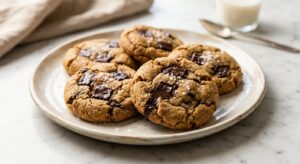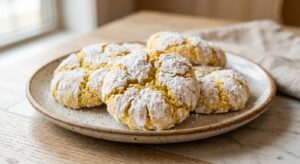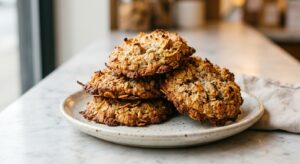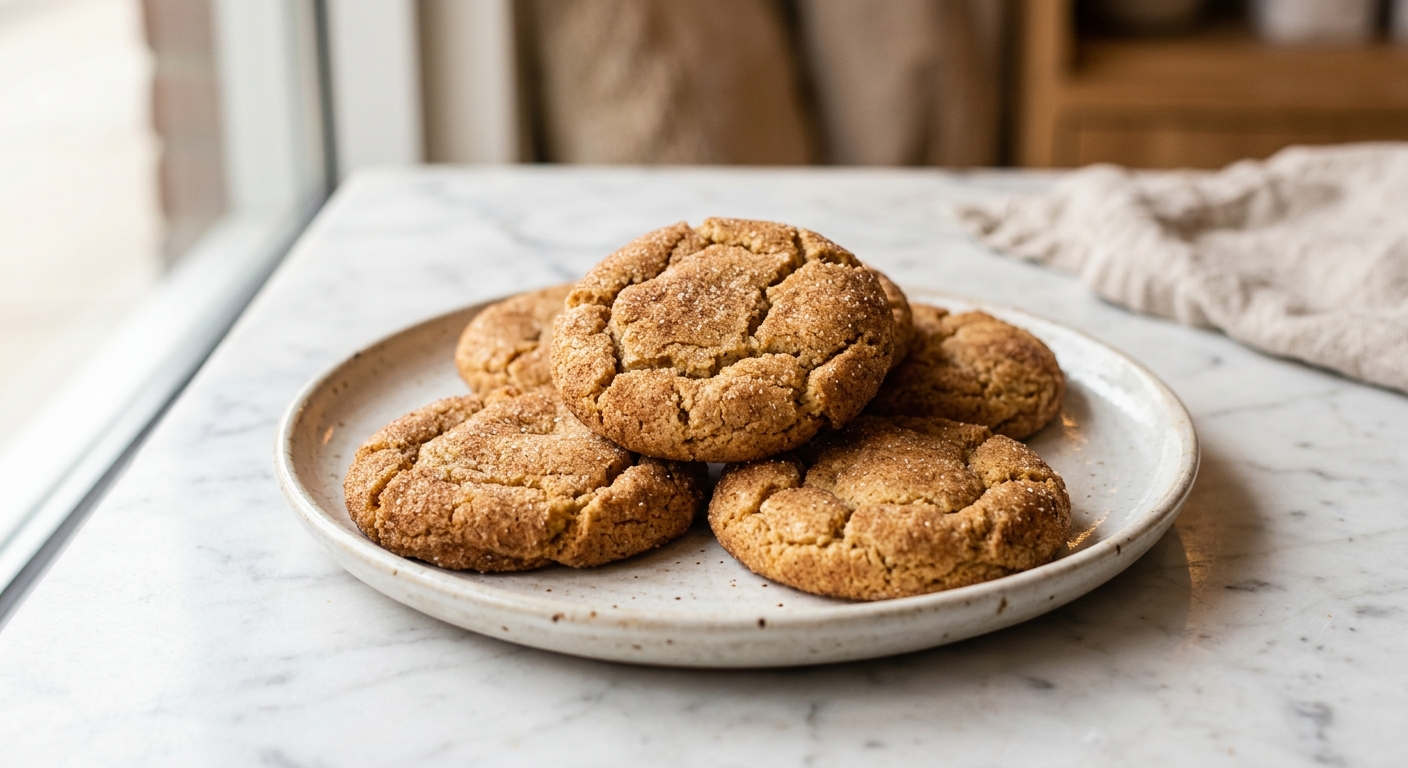
There is something quietly magical about a snickerdoodle fresh from the oven. The edges just set, the center still yielding, and that cinnamon sugar crust catching the light with a faint sparkle. The smell alone – buttery, warm, a little spiced – turns any kitchen into somewhere you want to linger. These cookies have been a staple at American bake sales and kitchen tables for over a century, and for good reason: they are simple enough that anyone can make them, yet distinctive enough that everyone remembers them.
What sets this version apart is a careful balance between butter and shortening (just a touch of shortening keeps the cookies from spreading too thin while the butter delivers full flavor), and a generous coating of coarse cinnamon sugar that clings to every curve of the dough ball before baking. The real star of the show, though, is cream of tartar. This is not optional, not a quirky addition – it is the ingredient that gives snickerdoodles their characteristic slightly tangy, almost savory edge and creates that soft, almost pillowy chew. Together with baking soda, it forms a leavening duo that lifts the cookies just enough without making them cakey.
These cookies sit firmly in the easy-to-medium range: no chilling required, no special equipment beyond a hand mixer, and the dough comes together in about fifteen minutes. They are perfect for a weeknight baking session with kids, a holiday cookie exchange where you want to stand out from the sea of chocolate chip, or simply a Sunday afternoon when the house needs to smell like cinnamon and butter.
Equipment Needed
Click on an item below to shop for the recommended items for this recipe on Amazon.
As an Amazon Associate, we earn from qualifying purchases.
36
Ingredients
- 340 gall-purpose flour (about 2 3/4 cups, spooned and leveled)
- 2 tspcream of tartar
- 1 tspbaking soda
- 0.5 tspColima Sea SaltMicroplastic Free Salt
- 227 gunsalted butter, softened to room temperature (1 cup / 2 sticks)
- 48 gvegetable shortening (about 3 tbsp) – see substitutions
- 300 ggranulated white sugar (1.5 cups), divided
- 2 largeeggs, at room temperature
- 1.5 tsppure vanilla extract
- 2.5 tspground cinnamon, divided
- —Pinch of freshly grated nutmeg (optional but recommended)
Ingredient Substitutions
Instructions
- Preheat your oven to 375°F (190°C). Line two large baking sheets with parchment paper. Set aside.
- In a medium bowl, whisk together the flour, cream of tartar, baking soda, and salt. Set aside.
- In a large bowl using a hand mixer or stand mixer fitted with the paddle attachment, beat the softened butter and shortening together on medium speed until smooth and combined, about 1 minute. Add 250g (1.25 cups) of the granulated sugar and beat on medium-high speed for 2 to 3 minutes until light and fluffy. Scrape down the sides of the bowl.
- Add the eggs one at a time, beating well after each addition. Add the vanilla extract and beat until incorporated. The mixture should look smooth and slightly glossy.
- Add the flour mixture to the butter mixture and mix on low speed just until no dry streaks remain. Do not overmix. The dough will be soft but not sticky.
- In a small shallow bowl, stir together the remaining 50g (1/4 cup) granulated sugar, the 2.5 tsp ground cinnamon, and the pinch of nutmeg if using. This is your coating.
- Use a 1.5 tablespoon cookie scoop or two spoons to portion the dough into balls. Roll each ball between your palms until smooth, then roll generously in the cinnamon sugar, pressing lightly so it adheres on all sides.
- Place the coated dough balls on the prepared baking sheets, spacing them about 2 inches apart. Bake one sheet at a time on the center oven rack for 10 to 12 minutes. The cookies are done when the edges are just set and the centers look slightly underdone and puffy. They will continue to firm up on the pan.
- Remove from the oven and let the cookies cool on the baking sheet for 5 minutes before transferring to a wire cooling rack. They will crack and settle as they cool, which is exactly what you want.
- Prepare the dough and cinnamon sugar coating exactly as described in steps 2 through 6 of the oven method.
- Preheat your air fryer to 325°F (165°C) for 3 minutes. Line the air fryer basket with a small piece of parchment paper cut to fit, leaving the edges clear for airflow. Do not use a full sheet that blocks the sides.
- Place 4 to 6 coated dough balls in the basket, spacing them at least 2 inches apart. Do not crowd the basket: the cookies will spread and need room. Work in batches.
- Air fry at 325°F (165°C) for 7 to 8 minutes. The tops will look slightly underdone and matte when you pull them. This is correct. They firm up quickly outside the fryer.
- Using tongs or a small spatula, carefully transfer the cookies to a wire cooling rack immediately (the parchment lifts out easily). Let rest for 4 to 5 minutes before eating. The centers will settle into a chewy, slightly gooey texture. Repeat with remaining dough balls.
- Prepare the full dough and roll all dough balls in the cinnamon sugar coating as described in the oven method steps 2 through 7.
- Arrange the coated dough balls on a parchment-lined baking sheet so they are not touching. Freeze uncovered for 1 to 2 hours until completely solid.
- Transfer the frozen dough balls to a zip-top freezer bag or airtight container. Label with the date. They keep beautifully for up to 3 months. No need to re-roll in cinnamon sugar: the coating stays put during freezing.
- When ready to bake, preheat your oven to 375°F (190°C) and line a baking sheet with parchment. Place the frozen dough balls directly on the sheet, spacing 2 inches apart. Do not thaw.
- Bake for 13 to 15 minutes until the edges are set and the tops have cracked. Because the dough starts cold, the cookies will be slightly thicker and puffier than fresh-baked, with an especially soft center. Add an extra minute if you prefer a firmer edge. Cool on the pan for 5 minutes before transferring.
Nutrition Per Serving
Per 1 serving (makes about 36 cookies (1.5 tablespoon dough balls))
Why This Recipe Works
Cream of tartar is the soul of a snickerdoodle, and it does two important things at once. First, it reacts with the baking soda to create carbon dioxide, leavening the cookies with a lift that is gentler and more controlled than baking powder alone, which is why snickerdoodles puff during baking then settle and crack into that distinctive wrinkled surface as they cool. Second, and more importantly for flavor, cream of tartar is an acidic salt (potassium bitartrate) that lends a subtle but unmistakable tang, almost savory quality to the cookies. Without it, you have a cinnamon sugar cookie. With it, you have a snickerdoodle. They are not the same thing.
The combination of butter and a small amount of shortening is a deliberate structural choice. All-butter cookies spread more during baking because butter melts quickly and contains water that creates steam. Shortening has a higher melting point and no water content, so it holds the cookie’s shape longer in the oven, giving the center time to set before the edges spread too far. The result is a thicker cookie with a soft, chewy center rather than a thin, crispy one. If you prefer thin and crispy, simply use all butter. The science works in both directions, which is why we list that substitution.
Baking at 375°F rather than the more common 350°F is intentional. The higher temperature sets the edges faster, locking in the round, puffy shape and allowing the interior to stay soft and slightly underbaked in the center. This is what gives snickerdoodles their contrast of textures: a thin, crackly cinnamon sugar shell giving way to a tender, almost creamy center. If your cookies are coming out flat, your butter was too warm or your oven runs cool. If they are too puffy and cakey, check your flour measurement (spooning and leveling matters here) and make sure your cream of tartar is fresh, as it loses potency over time.
Baker’s Tips
- Use room temperature butter, not melted. Softened butter holds air when creamed, which gives the cookies structure. Melted butter leads to flat, greasy cookies.
- Do not skip the full creaming time. Two to three minutes of beating butter and sugar together is not optional. You are building air into the dough, and that air is part of the lift and texture.
- Slightly underbake. Pull the cookies when the centers still look matte and just barely set. They will continue cooking on the hot pan for several minutes and firm up perfectly. Overbaked snickerdoodles are dry snickerdoodles.
- Use coarse or turbinado sugar in the coating for extra crunch and a beautiful sparkle. Regular granulated sugar works perfectly well but a coarser grind adds a satisfying textural contrast.
- Keep dough balls consistent in size. A 1.5 tablespoon cookie scoop is the best tool for this. Inconsistent sizes mean some cookies will be overbaked while others are underdone on the same sheet.
- Bake one sheet at a time on the center rack. Snickerdoodles are sensitive to heat distribution. If you bake two sheets at once, rotate them halfway through and expect the bake time to run about a minute longer.
- Check that your cream of tartar is fresh. It has a shelf life of about 3 years but loses potency once opened and exposed to humidity. If it has been sitting in your cabinet for years, buy a fresh jar. A dead cream of tartar means flat, tangy-less cookies.
Variations
- Brown butter snickerdoodles: Brown the butter before creaming (let it solidify back to room temperature first) for a nuttier, more complex flavor that pairs beautifully with the cinnamon.
- Cardamom and orange snickerdoodles: Add 1 tsp ground cardamom to the dough and 1 tsp finely grated orange zest to the cinnamon sugar coating for a fragrant, Scandinavian-inspired twist.
- Stuffed snickerdoodles: Press a small cube of cream cheese or a few dark chocolate chips into the center of each dough ball before rolling in cinnamon sugar for a molten surprise.
- Gluten-free version: Substitute a 1:1 gluten-free flour blend (such as Bob’s Red Mill 1 to 1 or King Arthur Measure for Measure) at the same weight. Chill the dough for 30 minutes before baking to control spread.
- Chai spice coating: Replace the plain cinnamon sugar with a mix of 2 tsp cinnamon, 0.5 tsp cardamom, 0.25 tsp ginger, 0.125 tsp cloves, and 0.125 tsp black pepper combined with the sugar for a warming chai-spiced crust.
Troubleshooting & FAQ
My cookies came out flat and greasy. What went wrong?
My cookies are puffy and cakey instead of soft and chewy. How do I fix this?
The cinnamon sugar coating fell off during baking. Why?
My cookies are not cracking on top. Is something wrong?
My cookies taste fine but have no tang. Did I do something wrong?
Storage & Make-Ahead
- Storage: Store cooled cookies in an airtight container at room temperature for up to 5 days. They actually improve on day two as the cinnamon sugar melds into the crust. Layer between sheets of parchment to protect the coating. Do not refrigerate baked cookies as it dries them out. Freeze baked cookies for up to 2 months and thaw at room temperature.
- Make-Ahead: The dough can be made up to 2 days ahead, covered tightly with plastic wrap, and refrigerated. Let it sit at room temperature for 15 minutes before rolling, as it firms up in the fridge. Alternatively, freeze the shaped, coated dough balls for up to 3 months and bake directly from frozen (see Freezer method).