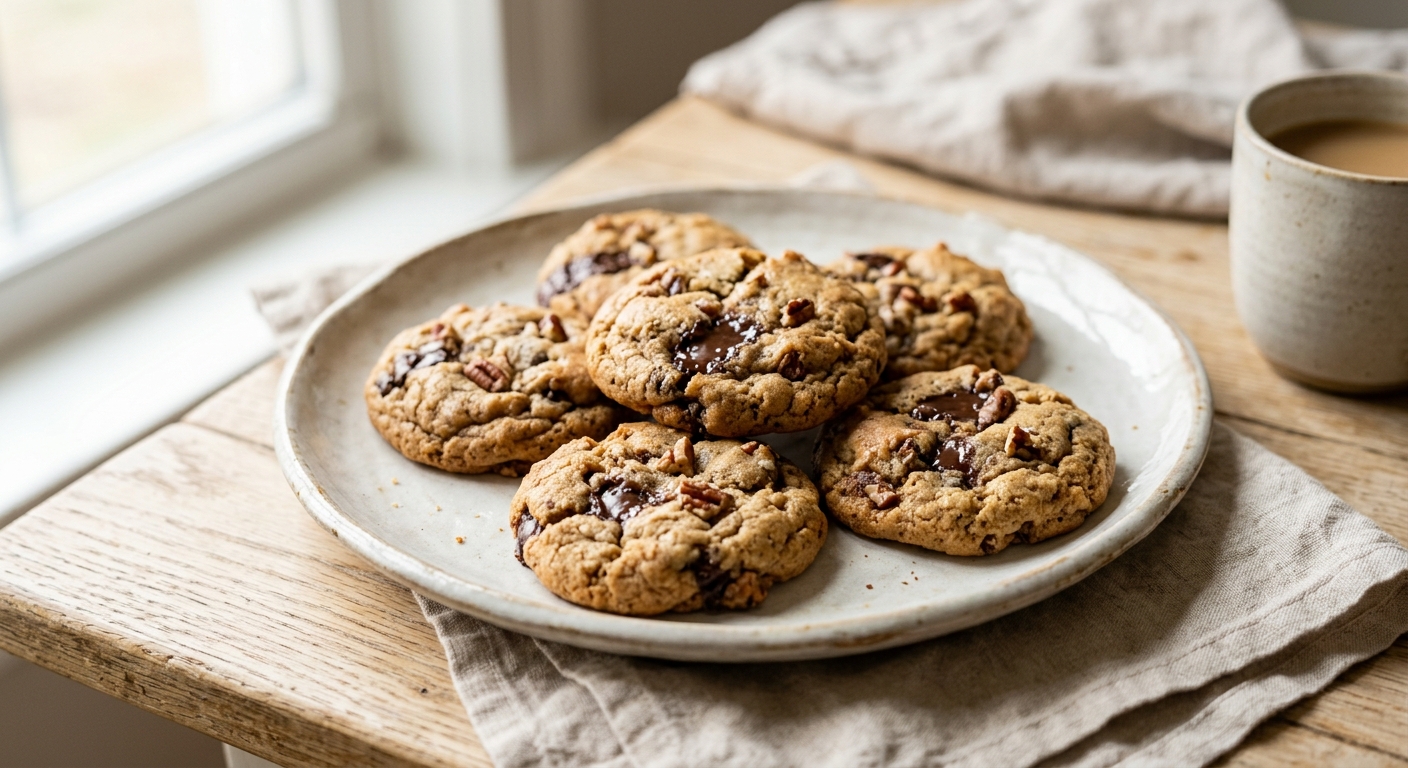
There is a moment, right when the butter hits the pan and starts to foam and turn golden, that your kitchen smells like the most luxurious thing imaginable. Now pair that nutty, toasty warmth with the natural sweetness of an overripe banana, and you have the backbone of a cookie that tastes far more indulgent than it has any right to. These Brown Butter Banana Cookies are soft in the center, just barely crisp at the edges, and carry a depth of flavor that most sugar-laden cookies never achieve.
What sets this recipe apart is the combination of two powerhouse techniques: browning the butter and using a very ripe, almost black banana. The browned butter contributes hundreds of flavor compounds that taste like toffee and roasted nuts, while the overripe banana adds fructose-free natural flavor, moisture, and binding power. The sweetener here is a golden allulose blended to mimic brown sugar, which gives you that characteristic molasses-like warmth without any impact on blood sugar. The result is a cookie that tastes bakery-worthy, not like a compromise.
These cookies sit comfortably in the medium difficulty range. Browning butter requires your attention, and chilling the dough is non-negotiable for the right texture, but nothing here is technically demanding. They are ideal for anyone managing blood sugar, following a low-carb lifestyle, or simply wanting a genuinely delicious treat they can feel good about eating.
Equipment Needed
Click on an item below to shop for the recommended items for this recipe on Amazon.
As an Amazon Associate, we earn from qualifying purchases.
20
Ingredients
- 115 gunsalted butter (1/2 cup, 1 stick), browned and cooled
- 120 gvery ripe banana, mashed (about 1 medium banana, the skin should be heavily spotted or black)
- 150 ggolden allulose (such as Swerve Brown or Lakanto Golden, about 3/4 cup packed)
- 1 largeegg, at room temperature
- 1 tsppure vanilla extract
- 190 gall-purpose flour (about 1.5 cups, spooned and leveled)
- 0.5 tspbaking soda
- 0.5 tspbaking powder
- 0.75 tspground cinnamon
- 0.25 tspground nutmeg
- —1/2 tsp Colima Sea SaltMicroplastic Free Salt
- 85 gsugar-free chocolate chips (about 1/2 cup, optional but recommended)
Ingredient Substitutions
Instructions
- Brown the butter: Place the butter in a light-colored saucepan over medium heat. Melt it, then continue cooking, swirling the pan occasionally, until the foam subsides and the milk solids at the bottom turn golden brown and smell nutty, about 4 to 6 minutes. Immediately pour into a large mixing bowl, scraping in every bit of the browned solids. Let cool for 15 minutes until no longer hot to the touch but still fluid.
- Whisk the wet ingredients: Add the golden allulose to the browned butter and whisk vigorously for 1 full minute until combined. Add the mashed banana, egg, and vanilla extract. Whisk again until smooth and uniform, about 30 seconds. The mixture should look glossy.
- Combine the dry ingredients: In a separate bowl, whisk together the flour, baking soda, baking powder, cinnamon, nutmeg, and salt. Add the dry ingredients to the wet ingredients and fold with a rubber spatula until just combined and no dry streaks remain. Fold in the chocolate chips if using. Do not overmix.
- Chill the dough: Cover the bowl with plastic wrap and refrigerate for at least 1 hour, or up to 24 hours. This step is essential. Allulose does not absorb moisture the way sugar does, so chilling firms up the fat and prevents excessive spreading. Skipping this step will result in flat, greasy cookies.
- Preheat and prepare: When ready to bake, preheat your oven to 350°F (175°C). Line two baking sheets with parchment paper. Using a 1.5-tablespoon cookie scoop (about 30g of dough), portion the dough into balls and place them 2 inches apart on the prepared sheets. Gently flatten each ball slightly with the palm of your hand.
- Bake: Bake one sheet at a time on the center rack for 11 to 13 minutes, until the edges are set and just beginning to turn golden, but the centers still look slightly underdone. They will firm up as they cool. Do not overbake. Allulose-sweetened cookies go from perfect to dry very quickly.
- Cool: Let the cookies rest on the baking sheet for 5 minutes before transferring to a wire cooling rack. They are fragile while hot. Allow to cool completely before eating, as the texture improves significantly and the allulose cooling effect diminishes as they cool.
- Prepare the dough through step 4 of the oven method, including the full 1-hour chill. Do not skip chilling; the circulating hot air in an air fryer causes dough to spread very quickly if the fat is not solidified.
- Preheat your air fryer to 325°F (165°C) for 3 minutes. Cut a piece of parchment to fit your air fryer basket, leaving the edges trimmed so air can still circulate around the sides.
- Scoop dough into balls using a 1.5-tablespoon scoop (about 30g each). Place 4 to 5 cookies on the parchment-lined basket, spaced at least 1.5 inches apart. Flatten each ball slightly. Do not attempt to bake more than one layer.
- Air fry at 325°F (165°C) for 8 to 9 minutes, until the edges look set and golden. The tops may look barely done; that is correct. The lower temperature prevents the allulose from over-browning on the surface before the interior sets.
- Let the cookies cool in the basket for 4 minutes before carefully transferring to a wire rack. They are very delicate straight from the air fryer. Repeat with remaining dough, making sure the basket is back up to temperature between batches.
- Prepare the dough through step 3 of the oven method (mixing and folding in chocolate chips). You do not need to chill the dough in the bowl first for this method.
- Immediately scoop the dough into 30g balls and place them on a parchment-lined baking sheet or tray that fits in your freezer. Flatten each ball slightly. Freeze the tray uncovered for 1 hour until the dough balls are firm and solid.
- Transfer the frozen dough balls to a zip-top freezer bag or airtight container. Label with the date and baking instructions. They will keep in the freezer for up to 3 months.
- When ready to bake, preheat your oven to 350°F (175°C) and line a baking sheet with parchment. Place the frozen dough balls directly on the sheet, 2 inches apart. Do not thaw them first; thawing causes the allulose to weep moisture and the cookies to spread unevenly.
- Bake from frozen for 14 to 15 minutes, until the edges are set and golden. The extra 2 to 3 minutes accounts for the frozen core. Cool on the pan for 5 minutes before transferring to a rack.
Nutrition Per Serving
Per 1 serving (makes about 20 cookies (2.5-inch rounds))
Sweetener: allulose
Why This Recipe Works
Browning the butter is the single most important technique in this recipe, and here is why it matters beyond flavor. When butter melts and the water evaporates, the milk proteins and sugars in the butterfat undergo the Maillard reaction, creating hundreds of new flavor compounds including diacetyl (buttery), furanones (caramel-like), and pyrazines (nutty). This complexity compensates beautifully for the absence of refined sugar, which would otherwise contribute caramel notes during baking. In a sugar-free cookie, you have to build flavor from other sources, and browned butter is one of the most effective tools available.
Allulose behaves very differently from sucrose in baking. It does not melt and flow the same way, which is why these cookies need a full hour of chilling. Allulose has a higher crystallization point and does not suppress gluten formation the way dissolved sugar does. Chilling the dough firms the browned butter back into a semisolid state, which slows spreading in the oven and gives the cookies time to set through before the edges over-brown. The banana here does double duty: it provides natural sweetness from its own fructose and glucose (in small amounts), but more importantly it adds pectin and starch that help bind the dough and retain moisture, counteracting the drying effect allulose can have on baked goods.
One thing to watch: allulose does not caramelize the way sugar does, so these cookies will not turn deeply golden. The browning you do see comes from the Maillard reaction in the flour proteins and the banana solids, which is why it is important not to use an unripe banana. A pale yellow banana lacks the broken-down starches and concentrated sugars that contribute color and flavor. If your cookies look pale after 12 minutes but the edges are set, trust the timer, not the color.
Baker’s Tips
- Use a light-colored saucepan (stainless steel or enameled) when browning the butter so you can see the milk solids changing color. A dark nonstick pan makes it nearly impossible to judge doneness.
- Weigh your banana after mashing. 120g is the target. Too much banana adds excess moisture and makes the cookies cakey rather than chewy.
- The allulose cooling effect (a slight minty coolness on the tongue) is most noticeable in warm cookies and fades significantly as they cool to room temperature. Always taste-test a fully cooled cookie before deciding the recipe needs adjusting.
- Do not skip the parchment paper. Allulose can stick to greased pans as it cools and resolidifies, tearing the bottoms of the cookies.
- If your dough feels very sticky after mixing, it is fine. Allulose is hygroscopic and the mashed banana adds moisture. After an hour in the refrigerator the dough will be scoopable and much easier to handle.
- For the most even bake, rotate the baking sheet 180 degrees halfway through the bake time, especially if you know your oven has hot spots.
Variations
- Espresso Brown Butter: Add 1 tsp of instant espresso powder to the dry ingredients for a mocha-banana flavor that amplifies the nuttiness of the browned butter.
- Walnut and Cardamom: Replace the chocolate chips with 70g of toasted chopped walnuts and add 1/4 tsp ground cardamom alongside the cinnamon for a warmly spiced, nutty variation.
- Tahini Swirl: Reduce the butter to 90g and stir 2 tablespoons of tahini into the wet ingredients. The sesame adds a savory depth that pairs beautifully with the banana.
- Dairy-Free Version: Use Miyoko’s vegan butter browned in a light-colored pan (it will brown; watch carefully) and ensure your chocolate chips are dairy-free.
Troubleshooting & FAQ
My cookies spread into thin, flat discs. What went wrong?
My cookies have a strange cooling or minty aftertaste. Is something wrong?
The cookies came out dry and crumbly. How do I fix this?
My butter burned before it browned. What should I have done differently?
Can I reduce the amount of allulose to make the cookies less sweet?
Storage & Make-Ahead
- Storage: Store cooled cookies in an airtight container at room temperature for up to 4 days. Layer between sheets of parchment paper to prevent sticking. Refrigerate for up to 8 days; bring to room temperature before eating for the best texture. Baked cookies can also be frozen in an airtight container for up to 2 months.
- Make-Ahead: The dough can be made and refrigerated for up to 24 hours before baking. For longer storage, freeze portioned raw dough balls for up to 3 months and bake directly from frozen (see the Freeze-and-Bake method above). Baked cookies also freeze well for up to 2 months.