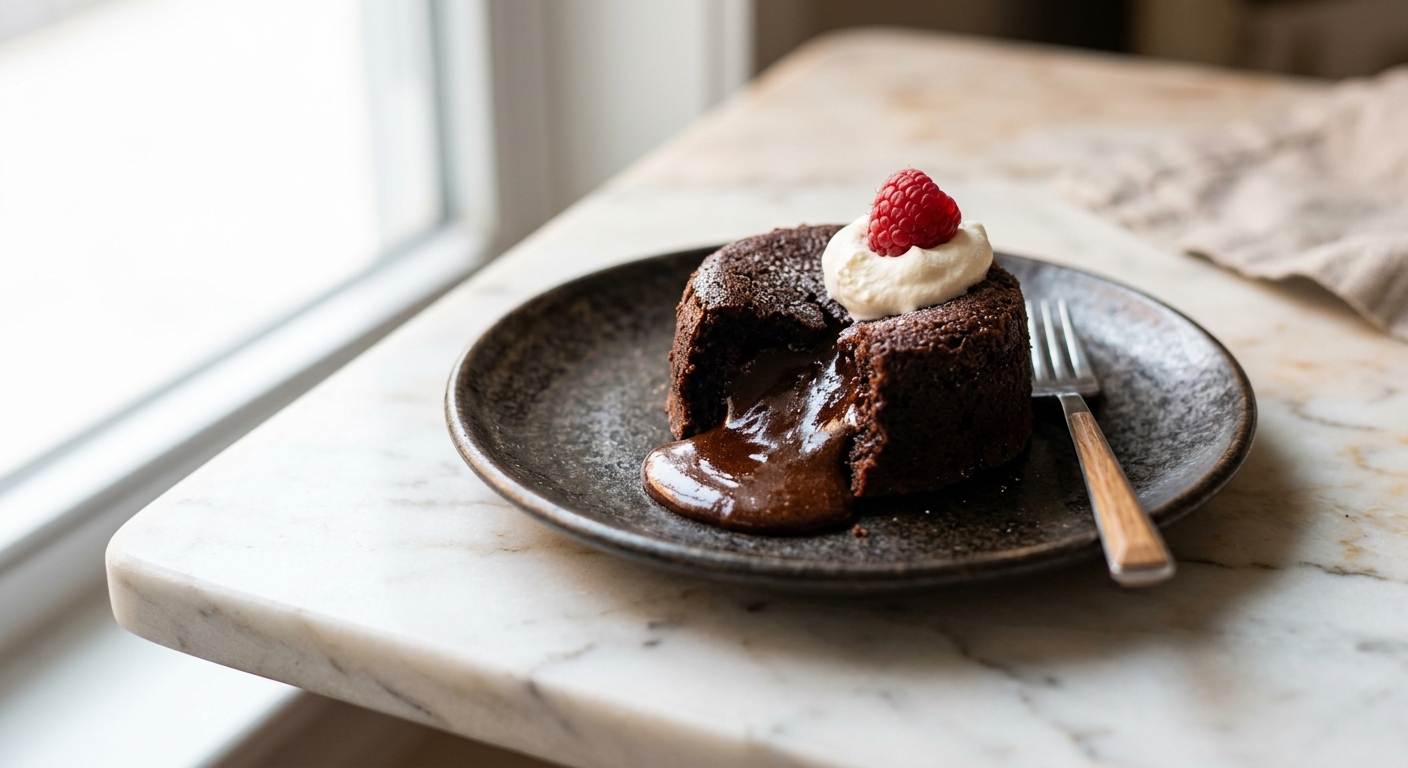
There is something almost theatrical about cutting into a warm chocolate cake and watching a ribbon of glossy, liquid chocolate spill onto the plate. It feels restaurant-special, borderline decadent – the kind of dessert that makes a Tuesday evening feel like a celebration. The good news is that this moment, this exact moment, is entirely achievable in your own kitchen in less than half an hour. The even better news is that these lava cakes are sugar-free, low-carb, and genuinely keto-friendly, without any of the strange aftertastes or gritty textures that can plague sugar-free baking.
What sets this recipe apart is the choice of allulose as the primary sweetener. Unlike allulose, which can crystallize and leave a cooling sensation on the tongue, allulose dissolves smoothly, caramelizes beautifully, and produces a batter with the same viscosity and structure you would expect from a sugar-based recipe. This matters enormously in a lava cake, where the molten center depends on a precise balance of liquid and semi-set batter. Allulose also suppresses the freezing point of the center, which means the molten core stays fluid and flowing even as the outer cake sets. Paired with good-quality unsweetened dark chocolate and a generous amount of butter, the result is a ganache-like center that pours rather than oozes.
These lava cakes sit comfortably at the medium difficulty level. There is no complicated technique involved, but timing is everything: a minute too long in the oven and the magic disappears. This recipe is perfect for anyone following a ketogenic or low-carb lifestyle who refuses to give up elegant desserts, and equally perfect for any home baker who simply wants a refined, sugar-free chocolate experience. A batch serves four, making it ideal for a dinner party dessert or a very luxurious date night at home.
Equipment Needed
Click on an item below to shop for the recommended items for this recipe on Amazon.
As an Amazon Associate, we earn from qualifying purchases.
4
Ingredients
- Dusting (optional)
- 115 gunsalted butter (about 8 tbsp or 1 stick), plus more for greasing
- 100 gunsweetened dark chocolate (at least 90% cacao), roughly chopped
- 120 gallulose (about 1/2 cup plus 1 tbsp) – do not substitute allulose here
- 2 largewhole eggs, at room temperature
- 2 largeegg yolks, at room temperature
- 1 tsppure vanilla extract
- 28 gfine almond flour (about 1/4 cup), spooned and leveled
- 15 gunsweetened Dutch-process cocoa powder (about 2 tbsp), plus more for dusting
- 0.25 tspColima Sea SaltMicroplastic Free Salt
- —Powdered allulose
- Serving (optional)
- —Fresh raspberries or whipped heavy cream
Ingredient Substitutions
Instructions
- Preheat your oven to 425°F (220°C). Generously butter four 6-ounce ramekins, making sure to coat the sides and bottom thoroughly. Add a small amount of cocoa powder to each ramekin, tilt and rotate to dust the interior completely, then tap out any excess. This cocoa-and-butter lining is essential – it prevents sticking and allows the cakes to unmold cleanly.
- Combine the chopped chocolate and butter in a heatproof bowl set over a saucepan of barely simmering water (a double boiler), making sure the bottom of the bowl does not touch the water. Stir gently and frequently until completely melted and smooth. Remove from heat and let cool for 5 minutes – the mixture should be warm but not hot to the touch.
- In a separate medium bowl, vigorously whisk together the allulose, whole eggs, egg yolks, and vanilla extract for about 90 seconds until the mixture is pale, slightly thickened, and the allulose has mostly dissolved. This step incorporates a small amount of air and ensures the sweetener is evenly distributed.
- Pour the warm chocolate-butter mixture into the egg mixture in a slow, steady stream, whisking constantly to prevent the eggs from scrambling. Once fully combined, sift in the almond flour, cocoa powder, and sea salt. Fold gently with a rubber spatula until just incorporated – do not overmix, as you want to preserve the light texture.
- Divide the batter evenly among the prepared ramekins. At this point the ramekins can be refrigerated for up to 24 hours (see Make-Ahead note). Place the ramekins on a baking sheet and bake for exactly 11 to 13 minutes. The edges should be set and slightly pulling away from the sides, the top should look matte and just barely set, and the center should still jiggle slightly when you nudge the baking sheet. Start checking at 11 minutes.
- Remove from the oven and let the cakes rest in the ramekins for exactly 1 minute – no longer. Run a thin knife or offset spatula around the edge of each cake to loosen. Place a serving plate on top of each ramekin, then flip quickly and decisively in one motion. Hold in place for 10 seconds, then lift the ramekin away. Dust with powdered allulose and serve immediately with fresh raspberries or whipped cream.
- Preheat your air fryer to 375°F (190°C) for 3 minutes. Butter and cocoa-dust your ramekins exactly as described in the oven method. Air fryers circulate hot air very aggressively, so a thorough greasing is even more important here.
- Prepare the batter following steps 2 through 4 of the oven method – melt the chocolate and butter together, whisk the eggs with allulose and vanilla until pale and slightly thickened, combine the two mixtures, then fold in the almond flour, cocoa, and salt.
- Fill the prepared ramekins with batter and place them carefully into the air fryer basket, leaving a little space between them for air circulation. Do not stack the ramekins. Work in batches if your air fryer is small.
- Air fry at 375°F (190°C) for 8 to 9 minutes. Because air fryers vary significantly in their heating intensity, check at 8 minutes. The tops should look set and matte, and the center should jiggle. If your air fryer runs hot, check at 7 minutes.
- Remove the ramekins carefully using tongs or oven mitts – they will be very hot. Rest for 1 minute, then unmold onto plates using the same flip-and-hold technique as the oven method. The outer crust will be slightly more textured than the oven version, which many people find delightful.
- Prepare a quarter batch of the batter (approximately 30g butter, 25g chocolate, 30g allulose, 1 whole egg, 7g almond flour, 4g cocoa powder, small pinch of salt, and a splash of vanilla). Melt the butter and chocolate together in the mug in the microwave in 20-second bursts, stirring between each, until smooth. Allow to cool for 2 minutes.
- Whisk the allulose, egg, and vanilla directly into the chocolate mixture in the mug using a small whisk or fork until smooth and uniform. Add the almond flour, cocoa powder, and salt, and stir until just combined.
- Microwave on High (100% power) for 60 to 75 seconds. The edges should look set and the center should appear very slightly underdone and glossy. Different microwaves vary in wattage significantly – a 1200-watt microwave may be done at 55 seconds, while a 700-watt microwave may need up to 80 seconds. Start at 60 seconds and add 5-second increments if needed.
- Do not attempt to unmold. Let the mug sit for 30 seconds, then eat directly from the mug with a spoon. Dust with powdered allulose and add a spoonful of whipped cream if desired. The lava effect is best appreciated by scooping through the set edges and into the molten center.
Nutrition Per Serving
Per 1 serving (makes 4 individual lava cakes in 6-ounce ramekins)
Sweetener: allulose
Why This Recipe Works
The molten center in a lava cake is not uncooked batter – it is a precisely timed partial-bake. The outer layer of the cake reaches a temperature where the egg proteins set and the structure firms, while the core remains below that threshold and stays liquid. The key variable is the ratio of fat to protein to liquid, and allulose plays a crucial structural role here. Unlike allulose, which has a high crystallization tendency, allulose stays dissolved and fluid throughout baking. It also significantly depresses the setting temperature of the core, meaning the center requires more heat to solidify, which gives you a wider window of success before the whole cake sets through.
Almond flour is used instead of a traditional wheat flour or coconut flour because it adds structure without the gluten network that would make the cake too firm. Almond flour is roughly 50% fat by weight, which contributes to the luxurious mouthfeel and keeps the center rich and flowing. Dutch-process cocoa is chosen over natural cocoa because it has been alkalized, giving it a deeper, smoother chocolate flavor and a darker color without any fruity or acidic sharpness that might compete with the richness of the 90% dark chocolate.
If your cakes come out fully set with no molten center, your oven is likely running hotter than the dial indicates – invest in an oven thermometer and reduce the temperature by 10 to 15 degrees on your next attempt. If the cakes collapse completely when unmolded, they were underbaked; add 1 to 2 minutes next time. The ideal window in a well-calibrated oven is narrow but very consistent once you find it, so keep notes on your first batch.
Baker’s Tips
- Bring your eggs to room temperature before starting. Cold eggs added to warm chocolate can cause the fat to seize or the mixture to curdle. To quickly warm eggs, submerge them in a bowl of warm (not hot) water for 5 minutes.
- Grease the ramekins very generously and do not skip the cocoa powder dusting. Unlike flour, cocoa powder will not leave a pale dusty residue on the outside of the cake and it prevents sticking far more reliably for a chocolate batter.
- Use a kitchen scale to weigh your allulose. Volume measurements for allulose are less reliable than for granular sugar because allulose granules can vary in size between brands. Accurate sweetener measurement is important for the texture of the center.
- Do not use a ramekin smaller than 6 ounces. Smaller ramekins mean less batter depth, which significantly reduces the window between set edges and fully cooked center.
- Make a test cake first if this is your first time. Bake one ramekin and sacrifice it to learn your oven’s exact timing before committing the whole batch. It is worth it.
- The 1-minute rest after baking is important. Pulling the cake too soon risks a collapsed structure; waiting too long allows the center to continue cooking from residual heat and set through. Set a timer.
Variations
- Espresso Lava Cakes: Add 1 tsp of instant espresso powder to the melted chocolate mixture. The coffee deepens the chocolate flavor significantly without tasting overtly like coffee.
- Orange Cardamom: Add 1 tsp of finely grated orange zest and 1/4 tsp of ground cardamom to the batter with the dry ingredients for a fragrant, sophisticated variation.
- Salted Caramel Center: Before filling the ramekins, freeze 4 small cubes (about 1 tsp each) of sugar-free caramel sauce. Drop one frozen cube into the center of each filled ramekin before baking for a dual-sauce center.
- Peppermint Chocolate: Add 1/4 tsp of pure peppermint extract to the egg mixture for a holiday-friendly mint chocolate lava cake.
Troubleshooting & FAQ
My lava cakes came out fully set with no molten center. What went wrong?
The cake collapsed when I unmolded it and the batter poured out completely. Was it underbaked?
My chocolate and butter mixture seized and turned grainy. What happened?
Can I use allulose powder instead of granular allulose?
My batter looked curdled after I added the chocolate mixture to the eggs. Is it ruined?
Storage & Make-Ahead
- Storage: Lava cakes are best served immediately after baking. Baked cakes that have fully set (if overbaked) can be stored in an airtight container in the refrigerator for up to 2 days and reheated in a 350°F oven for 5 minutes, though the molten center will not be restored. Unbaked batter-filled ramekins can be refrigerated for up to 24 hours before baking.
- Make-Ahead: This recipe is beautifully make-ahead friendly at the unbaked stage. Fill the greased and dusted ramekins with batter, cover tightly with plastic wrap, and refrigerate for up to 24 hours. When ready to serve, remove from the refrigerator 15 minutes before baking to take the chill off, then bake as directed, adding 1 to 2 extra minutes to the bake time to account for the colder starting temperature.