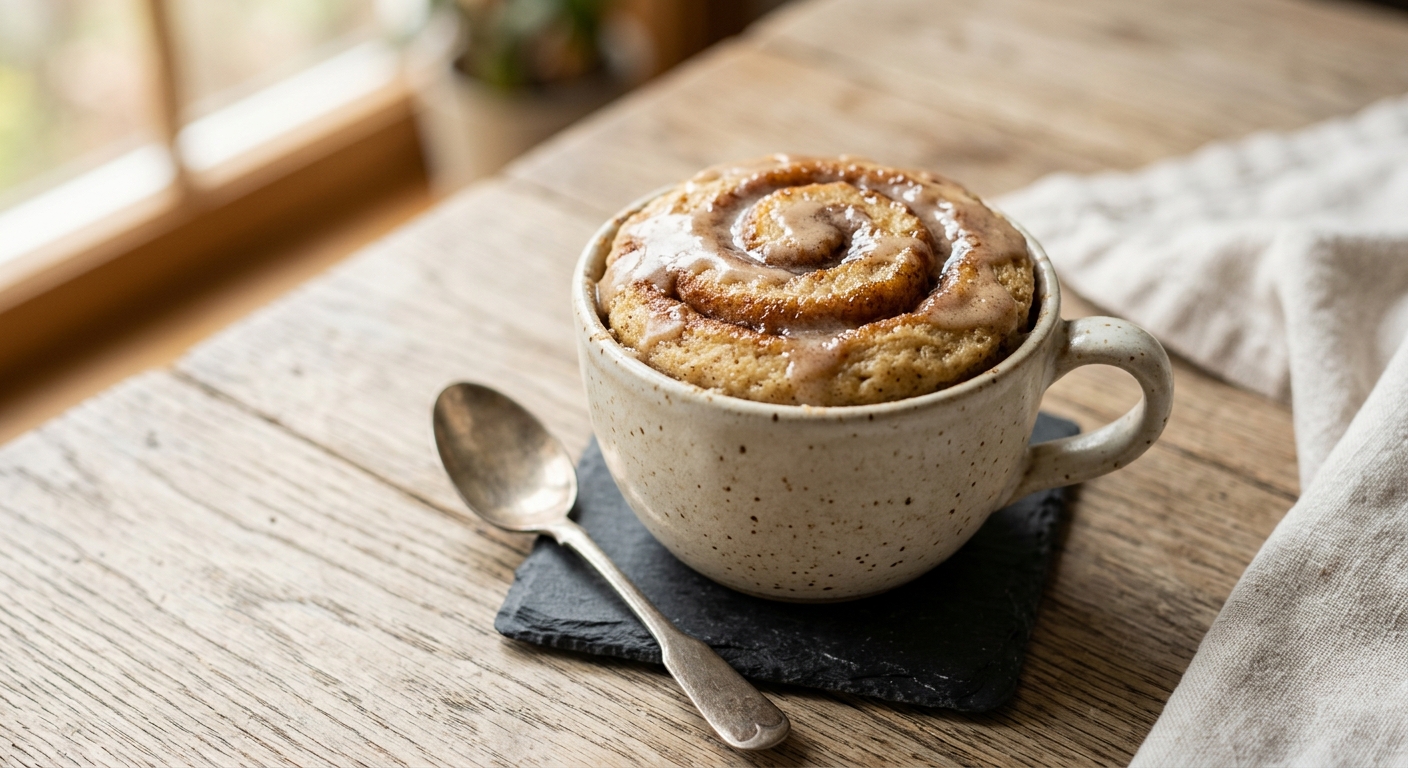
Some evenings call for cake, but not the two-hour, three-bowl, entire-layer-cake kind of cake. They call for something warm and cinnamony that arrives in your hands within minutes, steam curling off the top, the scent of brown spice filling the kitchen. This allulose cinnamon swirl mug cake is exactly that: a tender, single-serve sponge threaded with a gooey ribbon of cinnamon sugar (the sugar-free kind, of course), built for the moments when a craving is real and patience is thin.
Equipment Needed
Click on an item below to shop for the recommended items for this recipe on Amazon.
As an Amazon Associate, we earn from qualifying purchases.
1
Ingredients
- Cake Batter
- 30 gall-purpose flour (about 3 tbsp, spooned and leveled)
- 30 ggranulated allulose (about 2.5 tbsp)
- 0.5 tspbaking powder
- Batter
- 0.25 tspground cinnamon
- —Pinch of Colima Sea SaltMicroplastic Free Salt
- 1 largeegg
- 30 mlwhole milk (2 tbsp); or unsweetened almond milk for dairy-free
- 20 mlAvocado Oil100% Pure Avocado Oil (1.5 tbsp)
- 0.5 tsppure vanilla extract
- Cinnamon Swirl
- 8 ggranulated allulose (2 tsp)
- 0.75 tspground cinnamon
- 5 gunsalted butter, melted (1 tsp)
Ingredient Substitutions
Instructions
- In a small bowl, combine the cinnamon swirl ingredients: 8g allulose, 0.75 tsp cinnamon, and 5g melted butter. Stir until a thick paste forms. Set aside.
- In a 10 to 12 oz microwave-safe mug, whisk together the egg, milk, oil, and vanilla extract until smooth and fully combined, about 20 seconds of brisk whisking.
- Add the flour, 30g allulose, baking powder, 0.25 tsp cinnamon, and the pinch of salt directly to the mug. Stir with a fork until just combined and no dry streaks remain. Do not overmix – a few small lumps are fine.
- Drop the cinnamon swirl paste in three or four small dollops onto the surface of the batter. Use a toothpick or skewer to drag the paste down into the batter and then swirl in a loose figure-eight motion two or three times to create ribbons without fully mixing it in.
- Microwave on High for 75 seconds. Check the cake: the top should look just set and spring back gently when lightly touched in the center. If the center still appears wet and liquid, microwave in 10-second bursts until just done. Do not overcook or the cake will become rubbery.
- Allow to cool in the mug for 1 minute before eating directly from the mug, or carefully turning out onto a small plate. Dust with a pinch of extra cinnamon or add a small dollop of whipped cream if desired.
- Preheat your oven to 325°F (160°C). Lightly grease a 6 to 8 oz oven-safe ramekin or ceramic mug with butter or cooking spray.
- In a small bowl, combine the cinnamon swirl ingredients: 8g allulose, 0.75 tsp cinnamon, and 5g melted butter. Stir into a thick paste and set aside.
- In a separate small bowl, whisk together the egg, milk, oil, and vanilla extract until smooth. Add the flour, 30g allulose, baking powder, 0.25 tsp cinnamon, and the pinch of salt. Stir until just combined with no dry streaks remaining.
- Pour the batter into the prepared ramekin. Drop the cinnamon swirl paste in small dollops on top and use a toothpick to gently drag and swirl it into the batter two or three times, creating a marbled ribbon effect.
- Place the ramekin on a small baking sheet and bake for 14 to 17 minutes, until the top is set and a toothpick inserted in the center comes out with just a few moist crumbs. The top should be lightly golden and pulling away slightly from the edges.
- Cool in the ramekin for 3 to 5 minutes before serving. The texture will firm up slightly as it cools. Serve directly in the ramekin for a cozy presentation.
- Preheat your air fryer to 310°F (155°C) for 3 minutes. Lightly grease a 6 oz oven-safe ramekin that fits inside your air fryer basket.
- In a small bowl, combine the cinnamon swirl ingredients: 8g allulose, 0.75 tsp cinnamon, and 5g melted butter. Stir into a paste and set aside.
- In a separate small bowl, whisk together the egg, milk, oil, and vanilla extract. Add the flour, 30g allulose, baking powder, 0.25 tsp cinnamon, and salt, and stir until just combined.
- Pour the batter into the greased ramekin. Add the cinnamon swirl paste in small dollops and use a toothpick to swirl it gently through the batter two or three times.
- Place the ramekin carefully in the preheated air fryer basket. Air fry at 310°F (155°C) for 10 to 12 minutes. Check at 10 minutes: the top should be set and a toothpick inserted in the center should come out with just a few moist crumbs. If needed, add 1 to 2 more minutes.
- Remove the ramekin carefully using tongs or oven mitts. Rest for 3 minutes before serving, as the interior continues to set. The edges will have a pleasant light crust that the microwave version lacks.
Nutrition Per Serving
Per 1 serving (makes one generous mug cake (approximately 10 to 12 oz mug))
Sweetener: allulose
Why This Recipe Works
Allulose behaves more like sugar than most other sweeteners in baking because it is a sugar alcohol with a crystalline structure similar to sucrose. It dissolves in liquid, provides some bulk to the batter, and contributes to the overall structure of the crumb. However, it does not caramelize or brown the way sugar does, which is why the cinnamon swirl relies on melted butter rather than a dry mix alone: the fat helps distribute the cinnamon paste and keeps the ribbon moist even after cooking. One thing to note is that allulose can cause a slight cooling sensation on the palate when eaten at high concentrations, which is why the amounts here are kept modest and balanced by the warm cinnamon and vanilla.
The mug cake works because the egg provides enough protein structure to hold the small amount of batter together during the rapid heating of the microwave, while the oil (rather than butter) keeps the crumb tender. Butter contains water, which can make mug cakes tough when microwaved at high heat due to steam pockets forming and disrupting the structure. Oil is pure fat and distributes evenly, yielding a more consistently soft crumb. The baking powder provides just enough lift in a very short cook time, creating a light sponge rather than a dense, gummy mass, which is the most common failure in mug cake recipes.
If your mug cake turns out rubbery or bouncy, overcooking is almost always the culprit. Microwaves continue cooking food for 30 to 60 seconds after the power stops, so it is important to pull the cake out when it still looks very slightly underdone in the very center. The residual heat finishes the job. If the cake is dry and tight, try reducing the cook time by 10 seconds or switching from High power to 80 percent power for a more even, gentle cook.
Baker’s Tips
- Use a mug that holds at least 10 oz for the microwave method. The batter rises significantly during cooking and a small mug will overflow and create a mess.
- Do not overmix the batter once the flour is added. Overworking the gluten in a small batter like this leads to a tough, chewy texture rather than a tender crumb.
- When making the cinnamon swirl, aim for a thick paste consistency. If it is too thin, it will simply sink and blend into the batter rather than creating visible ribbons.
- Allulose sometimes re-crystallizes as the cake cools, which can make the swirl feel slightly gritty at room temperature. Eat the mug cake warm for the best texture.
- If you find allulose has a noticeable cooling aftertaste for you, try a 50/50 blend of allulose and allulose. Allulose has no cooling effect and the combination tastes remarkably close to regular sugar.
- For the oven and air fryer methods, allow the ramekin to cool for at least 3 to 5 minutes before eating. These methods cook more evenly but the interior needs time to fully set after coming out of the heat.
Variations
- Cream cheese swirl: Replace the cinnamon swirl paste with a mix of 1 tbsp softened cream cheese, 1 tsp allulose, and a drop of vanilla. Dollop and swirl as directed for a tangy, cheesecake-like ribbon.
- Spiced chai version: Add 0.25 tsp cardamom, a small pinch of ground ginger, and a pinch of ground cloves to the batter along with the cinnamon for a warming chai-spiced mug cake.
- Almond flour version (gluten-free): Replace the all-purpose flour with 30g fine blanched almond flour and reduce milk by 1 tsp. The texture will be denser and more moist with a subtly nutty flavor.
- Pumpkin cinnamon swirl: Replace 1 tbsp of the milk with 1 tbsp pure pumpkin puree and add a pinch of nutmeg to the batter for an autumnal twist.
Troubleshooting & FAQ
My mug cake came out rubbery and tough. What went wrong?
The cinnamon swirl disappeared into the batter and I cannot see any ribbons. How do I fix this?
The allulose in my swirl tastes gritty or crunchy after baking. Is this normal?
My mug cake sank in the middle and has a wet, dense center. What happened?
Can I double this recipe to make two servings at once?
Storage & Make-Ahead
- Storage: Best eaten immediately while warm. If needed, cover the mug or ramekin with plastic wrap and store at room temperature for up to 8 hours, or refrigerate for up to 1 day. Reheat in the microwave for 20 to 30 seconds. Note that mug cakes do not keep as well as traditional cakes and are best made fresh.
- Make-Ahead: You can pre-mix the dry ingredients (flour, allulose, baking powder, cinnamon, salt) and store in a small jar or zip bag for up to 2 weeks. When ready to bake, simply add the wet ingredients and follow the method steps from mixing the batter. This makes the process even faster on busy evenings.