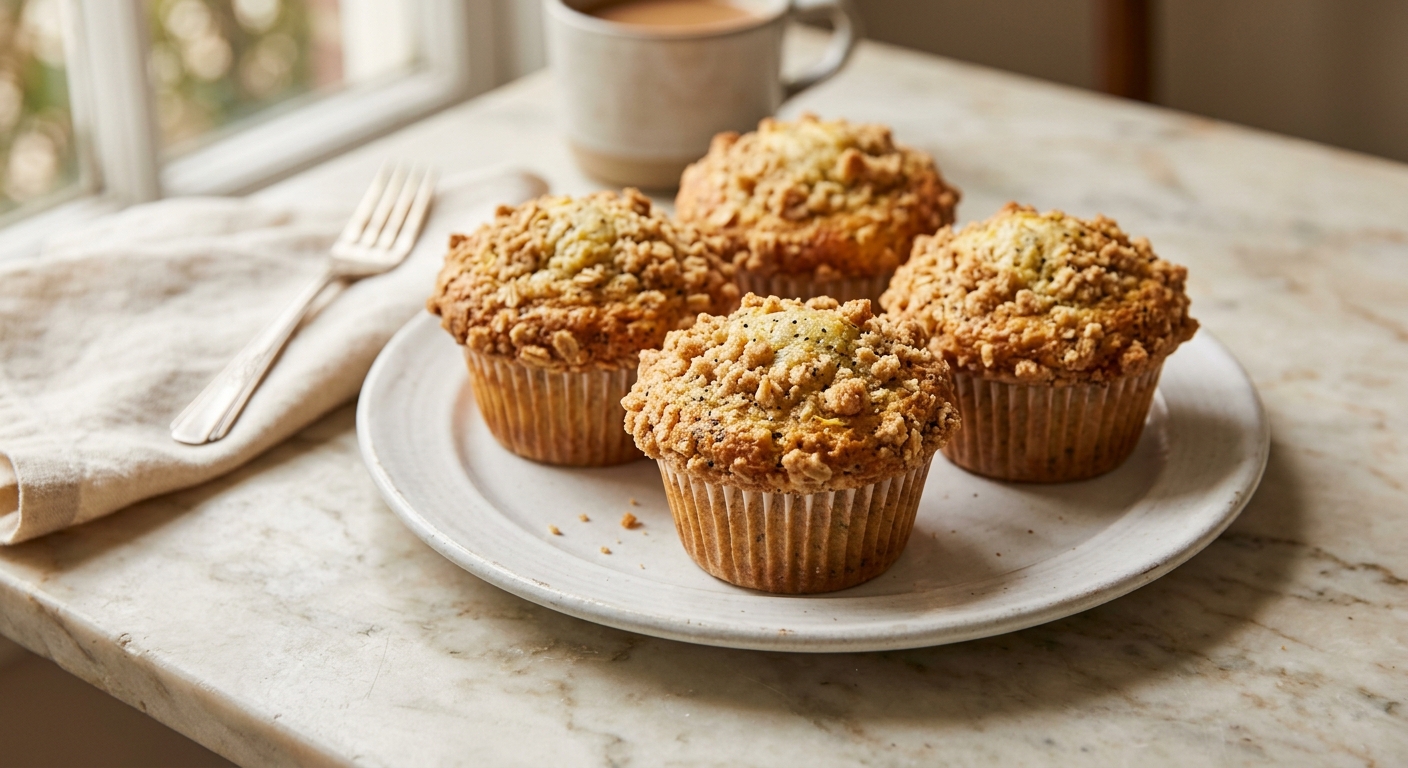
There is something quietly wonderful about a great lemon poppy seed muffin. Not flashy, not trendy – just a beautifully tender crumb, a sharp citrus perfume, and those tiny dark seeds scattered throughout like little surprises. When you pull a tray of these from the oven and the warm lemony steam rises to meet you, the whole kitchen feels a little brighter. These are the kind of muffins you bake on a slow Sunday morning, or when a friend needs cheering up, or simply because you have a pile of lemons on the counter and good intentions.
What sets this version apart is a generous measure of fresh lemon zest worked directly into the sugar before the wet ingredients are added – a technique that releases the essential oils from the zest and perfumes every part of the batter with real, vibrant lemon flavor rather than a faint background note. A full cup of sour cream replaces the standard milk, giving the crumb exceptional moisture and a subtle tang that plays beautifully against the sweetness. And the streusel – cold butter, flour, brown sugar, and a whisper of cinnamon pressed together with your fingertips – bakes into a shatteringly crisp crown that makes these muffins feel genuinely special.
These muffins sit comfortably in the medium difficulty range: there is no mixer required and the batter comes together quickly, but the streusel adds a small extra step and the key to a high, domed muffin top requires a little technique (nothing complicated – just a hot oven and a rested batter). They are perfect for weekend bakers who want something a step above the everyday without committing to a full cake project. If you can zest a lemon and fold a batter gently, you can absolutely make these.
Equipment Needed
Click on an item below to shop for the recommended items for this recipe on Amazon.
As an Amazon Associate, we earn from qualifying purchases.
12
Ingredients
- 300 gall-purpose flour (about 2 1/2 cups, spooned and leveled)
- 200 ggranulated sugar (about 1 cup)
- 2 tbsppoppy seeds
- 2 tspbaking powder
- 0.5 tspbaking soda
- 0.5 tspColima Sea SaltMicroplastic Free Salt
- 2 tbspfinely grated lemon zest (from about 3 large lemons)
- 240 gfull-fat sour cream (about 1 cup), at room temperature
- 120 mlAvocado Oil100% Pure Avocado Oil (about 1/2 cup)
- 2 largeeggs, at room temperature
- 60 mlfresh lemon juice (about 2 large lemons, about 1/4 cup)
- 1 tsppure vanilla extract
- —Streusel Topping:
- 75 gall-purpose flour (about 1/3 cup)
- 60 gpacked light brown sugar (about 1/4 cup firmly packed)
- 0.5 tspground cinnamon
- 45 gcold unsalted butter, cut into small cubes (about 3 tbsp)
- —Optional Lemon Glaze:
- 80 gpowdered sugar (about 2/3 cup, sifted)
- 1.5 tbspfresh lemon juice
Ingredient Substitutions
Instructions
- Make the streusel first: Combine the flour, brown sugar, and cinnamon in a small bowl. Add the cold butter cubes and use your fingertips to press and pinch the butter into the dry ingredients until the mixture resembles coarse, clumpy crumbs with some pea-sized pieces remaining. Do not overwork it – the chunks are what create that crunchy texture. Refrigerate the streusel while you make the batter.
- Preheat your oven to 425°F (220°C). Line a standard 12-cup muffin tin with paper liners or grease thoroughly with butter or non-stick spray.
- In a large bowl, combine the granulated sugar and lemon zest. Use your fingertips to rub the zest into the sugar for about 60 seconds until the sugar is fragrant, pale yellow, and slightly damp. This step releases the lemon oils into the sugar and is worth the extra minute.
- Add the sour cream, oil, eggs, lemon juice, and vanilla extract to the lemon sugar. Whisk until smooth and well combined, about 30 seconds.
- Add the flour, poppy seeds, baking powder, baking soda, and salt directly to the wet mixture. Using a rubber spatula, fold gently until just combined – stop as soon as no dry streaks of flour remain. A few small lumps in the batter are absolutely fine and preferable to an overmixed batter. Let the batter rest in the bowl for 10 minutes; this allows the leavening to begin activating and helps the flour fully hydrate, which gives you better dome.
- Divide the batter evenly among the prepared muffin cups, filling each about three-quarters full. Scatter a generous pinch of the chilled streusel over each muffin, pressing it very lightly so it adheres.
- Place the muffin tin in the preheated 425°F (220°C) oven. After exactly 5 minutes, reduce the oven temperature to 350°F (175°C) without opening the oven door. Continue baking for 15 to 17 more minutes, until a toothpick inserted in the center of a muffin comes out clean or with just a crumb or two. The tops should be golden and the streusel should look crisp and set.
- Let the muffins cool in the tin for 5 minutes, then transfer them to a wire rack. If making the optional lemon glaze, whisk together the powdered sugar and lemon juice until smooth, then drizzle over the muffins once they are fully cooled.
- Prepare the streusel and batter following steps 1 through 5 of the oven method exactly. The batter and streusel are identical; only the cooking method changes.
- Preheat your air fryer to 325°F (163°C) for 3 minutes. Place 4 to 6 silicone muffin cups in the air fryer basket in a single layer, leaving a little space between them for air to circulate. Do not stack or crowd them.
- Fill each silicone cup about three-quarters full with batter. Top each generously with chilled streusel, pressing it gently to adhere. Do not use paper liners in the air fryer as they can blow around; silicone cups or lightly greased ramekins are essential.
- Air fry at 325°F (163°C) for 12 to 14 minutes. Check at the 12-minute mark by inserting a toothpick into the center of the largest muffin – it should come out clean or with a crumb or two. If the streusel is browning too fast before the center is cooked, lay a small piece of foil loosely over the tops for the last 3 minutes.
- Carefully remove the muffins (the silicone cups will be hot) and cool on a wire rack for 5 minutes before handling. Bake remaining batter in batches. Drizzle with the optional lemon glaze once fully cooled.
- Prepare the streusel and batter following steps 1 through 5 of the oven method. For the streusel, pinch the pieces a little smaller than usual so they sit neatly on top of the smaller muffins.
- Preheat your oven to 375°F (190°C). Grease a 24-cup mini muffin tin thoroughly with non-stick spray, or use mini paper liners. You will need to bake in two batches for 36 muffins, or use two tins.
- Fill each mini muffin cup about two-thirds to three-quarters full with batter – a small cookie scoop or a spoon works well. Top each with a small pinch of streusel, pressing very gently.
- Bake at 375°F (190°C) for 10 to 12 minutes until golden and a toothpick comes out clean. Mini muffins bake quickly, so start checking at 10 minutes. Do not use the temperature-drop technique from the oven method here as the bake time is too short for it to make a difference.
- Cool in the tin for 3 minutes, then transfer to a wire rack. If glazing, use the same lemon glaze drizzled with a spoon or apply with a small pastry brush for a neater finish on the miniature tops.
Nutrition Per Serving
Per 1 serving (makes 12 standard muffins)
Why This Recipe Works
The most important step in this recipe is rubbing the lemon zest into the granulated sugar before any other ingredients are added. Lemon zest contains aromatic essential oils held within the cells of the outer peel. When you physically rub those zest pieces against the abrasive sugar crystals, you break open those oil-containing cells and release the volatile compounds directly into the sugar. The result is a lemon-infused sugar that perfumes every single drop of the batter, giving you a much more vivid, front-of-palate lemon flavor than simply stirring zest into a finished batter would achieve. This is the single biggest technique difference between a good lemon muffin and a great one.
Sour cream is used instead of milk for two important reasons. First, its high fat content coats the flour proteins and slows gluten development, giving you a more tender, finer crumb. Second, its natural acidity reacts with the baking soda in the recipe to produce carbon dioxide bubbles during baking, contributing to lift and lightness. The combination of both baking powder and baking soda here is intentional: baking powder provides the primary lift and activates in two stages (once when wet, once when heated), while the baking soda neutralizes some of the acidity from the sour cream and lemon juice so the muffins do not taste sharp, and contributes a little extra browning on the crust through the Maillard reaction.
The two-temperature baking method – starting at a high 425°F (220°C) for 5 minutes before dropping to 350°F (175°C) – is the key to that tall, domed muffin top bakeries achieve. The initial burst of high heat causes rapid steam production and fast leavening activation, creating a quick rise before the crust sets. Once the crust sets around the edges, the continued heat drives the center of the muffin upward, forming the characteristic dome. If you bake the entire time at 350°F (175°C), the heat rises too gradually and the muffin sets before it has fully domed. The 10-minute batter rest before baking allows the baking powder to begin activating and the flour to hydrate fully, which also contributes to better structure and a less gummy crumb.
Baker’s Tips
- Bring the sour cream and eggs to room temperature before starting. Cold ingredients can cause the batter to look slightly curdled or lumpy, which makes it harder to know when you have mixed just enough.
- Spoon and level your flour rather than scooping it directly with the measuring cup. Scooping packs the flour and can add up to 20 to 30 percent more flour than intended, leading to dry, dense muffins. Better yet, use a kitchen scale.
- Do not overmix the batter once the flour goes in. Stir only until the last streak of flour disappears. Overmixing develops gluten strands that make muffins tough and can cause peaked, uneven tops rather than smooth domes.
- Keep the streusel cold until the moment it goes on top of the batter. Cold butter in the streusel means it melts more slowly in the oven, giving the crumble time to crisp rather than melt into a greasy paste.
- Use a cookie scoop or ice cream scoop to portion the batter for perfectly even muffins that all finish baking at the same time. A standard scoop (about 3 tablespoons) fills a muffin cup to just the right level.
- Zest your lemons before juicing them. It is nearly impossible to zest a juiced lemon, and you need both for this recipe. Also, roll the lemon firmly against the countertop a few times before juicing to break down the internal membranes and extract more juice.
- If you do not have a second oven thermometer and suspect your oven runs hot, check the muffins at 18 minutes rather than 20. Overbaked muffins dry out quickly and lose their tender crumb.
Variations
- Lemon blueberry version: Fold 150g (about 1 cup) fresh or frozen blueberries into the finished batter along with the poppy seeds. If using frozen berries, do not thaw them first to prevent streaking.
- Orange poppy seed muffins: Replace all lemon zest and juice with navel orange zest and fresh orange juice for a sweeter, rounder citrus flavor. Add 1/2 tsp cardamom to the batter for a Scandinavian-inspired twist.
- Lemon cream cheese swirl: Place a small teaspoon of sweetened cream cheese (4 oz cream cheese beaten with 2 tbsp sugar and 1 tsp vanilla) in the center of each muffin cup before adding the full scoop of batter on top. The cream cheese creates a hidden creamy core.
- Glazed lemon loaf: Pour the entire batter into a greased 9×5-inch loaf pan lined with parchment. Skip the streusel or keep it. Bake at 350°F (175°C) for 50 to 60 minutes until a skewer comes out clean. Glaze generously while still warm.
Troubleshooting & FAQ
My muffins did not dome – they came out flat or sunken in the middle. What went wrong?
My streusel melted into the batter instead of staying crumbly on top. How do I prevent this?
The muffins taste barely lemony even though I used the right amount of zest. What happened?
My muffins are tough and chewy rather than tender. What did I do wrong?
Can I make these muffins without paper liners, and how do I stop them from sticking?
Storage & Make-Ahead
- Storage: Store muffins in an airtight container at room temperature for up to 3 days. To preserve the streusel crunch, store them in a single layer or with parchment between layers rather than stacking. Refrigerate for up to 5 days, though the streusel will soften slightly in the fridge. Freeze unglazed muffins individually wrapped in plastic wrap, then placed in a zip-lock bag, for up to 3 months. Thaw at room temperature for 1 to 2 hours or warm gently in a 300°F (150°C) oven for 8 minutes.
- Make-Ahead: The streusel can be made up to 5 days ahead and stored in an airtight container in the refrigerator. The batter can be mixed and portioned into the muffin tin the night before, covered tightly with plastic wrap, and refrigerated overnight – bake straight from the fridge, adding 2 to 3 minutes to the bake time. Fully baked and cooled muffins freeze beautifully for up to 3 months. The lemon glaze should always be made fresh just before serving.