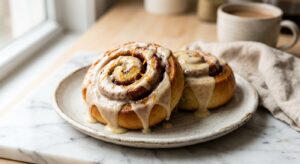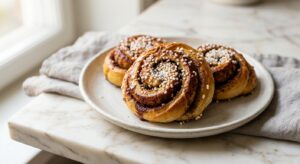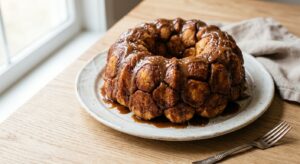
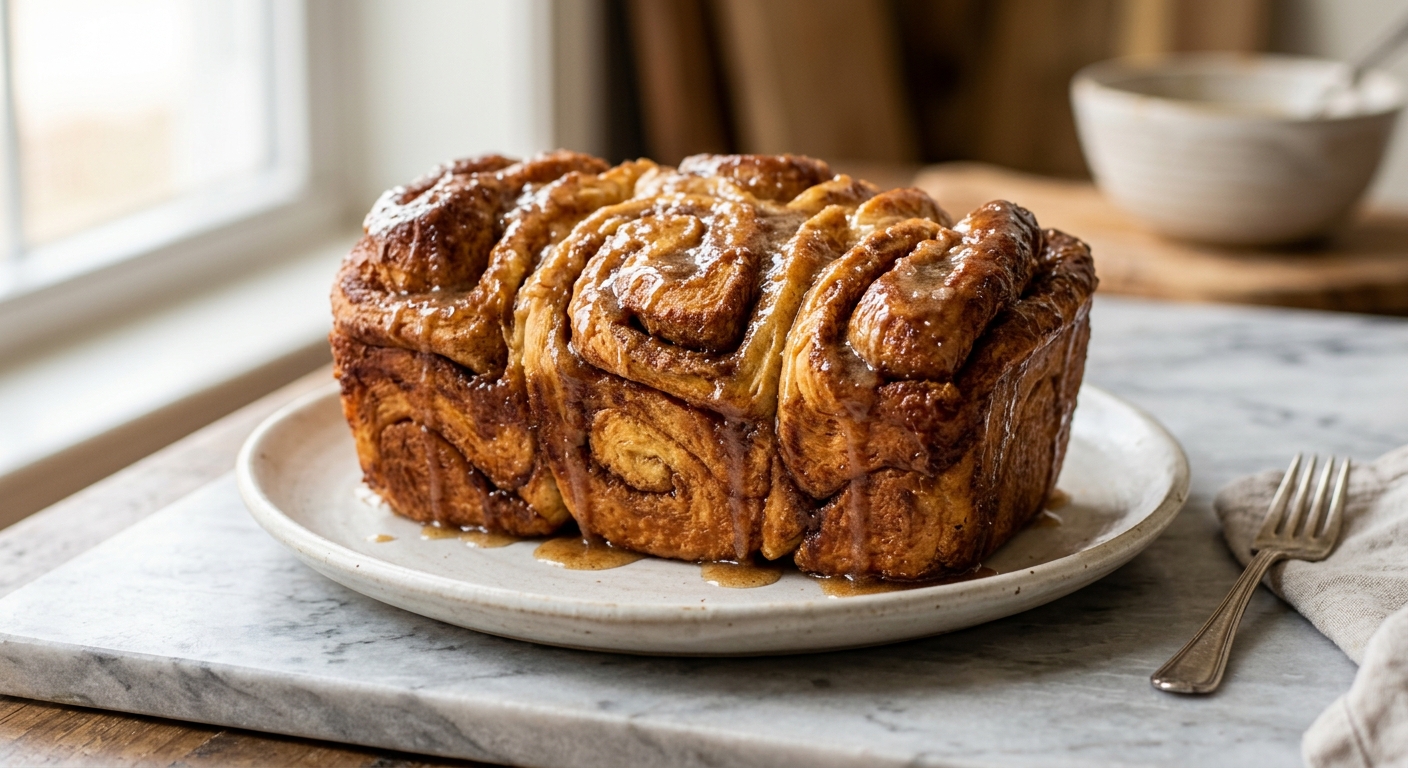
There is something deeply satisfying about bread you are meant to pull apart with your hands. No slicing, no plates required, just warm, yielding layers of soft dough coated in cinnamon sugar, each strip slightly crisp at the edges and pillowy at the center. Pull-apart cinnamon sugar bread sits somewhere between a yeasted cinnamon roll and a monkey bread, borrowing the best qualities of both: the structure and chew of a proper enriched dough, and that irresistible caramelized cinnamon filling that seeps into every crevice as it bakes.
What sets this version apart is a brown butter base for both the filling and the glaze. Instead of simply melting butter and tossing it with cinnamon and sugar, we cook the butter until the milk solids turn golden and nutty, adding a depth of flavor that plain melted butter simply cannot match. The dough itself is an enriched brioche-style loaf made with whole milk, eggs, and a touch of honey, which gives it a tender crumb that stays soft for days. The technique of stacking dough rectangles and standing them on their edge in the loaf pan creates those dramatic, tear-apart layers without any complicated shaping.
This recipe sits comfortably at a medium difficulty level. If you have made yeasted bread before, you will find the process straightforward. If this is your first time working with yeast, do not be intimidated: the steps are clearly laid out and there are tips throughout to help you succeed. This bread is perfect for a leisurely weekend morning, a festive brunch spread, or any time you want to fill your home with the scent of something truly wonderful baking in the oven.
Equipment Needed
Click on an item below to shop for the recommended items for this recipe on Amazon.
As an Amazon Associate, we earn from qualifying purchases.
10
Ingredients
- 60 mlwhole milk, warmed to 110°F (43°C) (about 1/4 cup)
- 7 gactive dry yeast (1 standard packet, about 2 1/4 tsp)
- 1 tspgranulated sugar (for proofing the yeast)
- 360 gall-purpose flour (about 3 cups, spooned and leveled), plus extra for dusting
- 50 ggranulated sugar (about 1/4 cup)
- 1 tspColima Sea SaltMicroplastic Free Salt
- 2 largeeggs, at room temperature
- 60 mlwhole milk, at room temperature (about 1/4 cup)
- 1 tbsphoney
- 85 gunsalted butter, softened to room temperature (about 6 tbsp), cut into cubes
- —For the Brown Butter Cinnamon Filling:
- 85 gunsalted butter (about 6 tbsp)
- 150 glight brown sugar, packed (about 3/4 cup)
- 2 tspground cinnamon
- 0.25 tspground cardamom
- —For the Brown Butter Glaze:
- 42 gunsalted butter (about 3 tbsp)
- 120 gpowdered sugar, sifted (about 1 cup)
- 2 tbspwhole milk or heavy cream
- 0.5 tsppure vanilla extract
- —Pinch of Colima Sea SaltMicroplastic Free Salt
Ingredient Substitutions
Instructions
- Proof the yeast: In a small bowl, combine the warm milk (110°F/43°C), yeast, and 1 tsp granulated sugar. Stir gently and let sit for 5 to 10 minutes until foamy and fragrant. If the mixture does not foam, your yeast may be expired or your milk was too hot. Start fresh before proceeding.
- Make the dough: In the bowl of a stand mixer fitted with the dough hook, whisk together the flour, 50g granulated sugar, and salt. Add the eggs, room-temperature milk, honey, and the foamy yeast mixture. Mix on low speed until a shaggy dough forms, about 2 minutes. Increase to medium speed and knead for 4 minutes.
- Add the butter: With the mixer running on medium-low, add the softened butter one or two cubes at a time, waiting for each addition to be fully incorporated before adding the next. This takes patience, about 6 to 8 minutes total. Once all the butter is in, increase speed to medium-high and knead for another 4 to 5 minutes until the dough is smooth, elastic, and slightly tacky but not sticky. It should pass the windowpane test: stretch a small piece thin enough to see light through without tearing.
- First rise: Shape the dough into a ball and place it in a lightly oiled bowl. Cover with plastic wrap or a damp kitchen towel and let rise in a warm spot (75 to 80°F/24 to 27°C) for 1 to 1.5 hours until doubled in size. A cold oven with a mug of boiling water placed inside works well as a proofing environment.
- Make the brown butter filling: While the dough rises, melt 85g butter in a small light-colored saucepan over medium heat. Swirl occasionally and cook for 4 to 6 minutes until the foam subsides, the butter turns golden amber, and it smells nutty. Immediately pour into a heatproof bowl to stop cooking. Stir in the brown sugar, cinnamon, and cardamom until a thick paste forms. Let cool to a spreadable consistency.
- Shape the bread: Grease a 9×5-inch loaf pan and line with parchment paper, leaving overhang on the two long sides. On a lightly floured surface, roll the risen dough into a 12×18-inch rectangle, about 1/4 inch thick. Spread the cooled cinnamon filling evenly over the entire surface, going all the way to the edges. Using a sharp knife or pizza cutter, cut the dough into 6 strips lengthwise (each about 2 inches wide). Stack the strips directly on top of one another, then cut the stacked strips crosswise into 6 equal squares (about 2×2 inches each). You will have 6 stacks of 6 layered squares, 36 squares total. Stand the stacks on their cut edge and nestle them side by side into the prepared loaf pan, filling in any gaps snugly.
- Second rise: Cover the pan loosely with oiled plastic wrap and let rise for 45 minutes to 1 hour until the dough is puffed and pillowy, coming close to the top of the pan.
- Bake: Preheat your oven to 350°F (175°C). Bake the loaf for 30 to 35 minutes until deep golden brown on top. If the top is browning too quickly after 20 minutes, tent loosely with foil. The internal temperature should read 190 to 195°F (88 to 91°C) on an instant-read thermometer. Let cool in the pan for 15 minutes.
- Make the glaze and finish: Brown the remaining 42g butter in a small saucepan as before. Whisk in the sifted powdered sugar, milk, vanilla, and a pinch of salt until smooth and pourable. Use the parchment overhang to lift the loaf onto a wire rack, then drizzle the glaze generously over the warm bread. Serve warm, pulling apart the layers by hand.
- Follow the full dough and filling recipe exactly as written in the oven method through the first rise (steps 1 to 5). Halve all ingredient quantities if your air fryer pan is small, or make the full batch and bake in two rounds.
- Shape for the round pan: After rolling and filling the dough, cut into squares as directed. Grease a 7-inch or 8-inch round cake pan. Stand the layered squares on their edge and arrange them in a circular pattern in the pan, packing them snugly. The round shape works just as well as the loaf format for pull-apart presentation.
- Second rise: Cover loosely and let rise for 45 minutes until puffed. Meanwhile, preheat your air fryer to 320°F (160°C) for 5 minutes.
- Bake: Place the pan in the air fryer basket. Bake at 320°F (160°C) for 22 to 25 minutes. Check at the 15-minute mark: if the top is browning quickly, lay a small piece of foil over the pan (do not seal tightly, just drape). The bread is done when it is deeply golden and the center layers are no longer doughy when you gently pull one apart to check. Internal temperature should reach 190°F (88°C).
- Let cool in the pan for 10 minutes, then top with the brown butter glaze. The air fryer bread will have a slightly more defined crust on top, which is a lovely contrast to the soft, gooey interior. Serve immediately from the pan.
- Follow the full dough and filling recipe exactly as written in the oven method through the first rise (steps 1 to 5). Halve all ingredient quantities if using a small (3-quart) slow cooker, or use the full recipe in a 6-quart oval slow cooker.
- Prepare the slow cooker: Cut two long strips of parchment paper and lay them in a cross pattern inside the slow cooker insert, with overhang on all sides. Lightly grease the parchment. This sling is essential: it is how you will safely lift the finished loaf out.
- Shape: Roll, fill, cut, and stack the dough as directed in the oven method shaping step. Arrange the stacked squares standing on their edge in an oval or round shape directly on the parchment lining, fitting them snugly to the shape of your insert.
- Second rise and cook: Cover the slow cooker with the lid and let the dough rest and puff for 30 minutes (it will continue rising as it cooks). Turn the slow cooker to High and cook for 2 to 2.5 hours. Resist lifting the lid for the first 90 minutes. The bread is ready when the internal temperature reaches 190°F (88°C) and the dough is fully set. The top will look pale and matte.
- Optional broil for color: Carefully lift the bread out using the parchment sling and place it on a baking sheet. Broil on High 6 inches from the element for 2 to 3 minutes until the top is lightly golden. Watch constantly as it can burn quickly. Transfer to a wire rack, drizzle with the brown butter glaze, and serve warm.
Nutrition Per Serving
Per 1 serving (makes one 9×5-inch pull-apart loaf)
Why This Recipe Works
The magic of pull-apart bread lies in how the dough is laminated with filling and then stacked and stood on edge. When the bread bakes, the individual squares puff into each other, fusing at their edges while the filling layers remain visible as ribbons of caramelized cinnamon sugar inside. Using an enriched dough (one containing butter, eggs, and milk) rather than a lean bread dough is deliberate: the fat and protein from these ingredients tenderize the gluten network, producing a soft, pillowy crumb that tears apart cleanly rather than shredding. The honey adds a touch of hygroscopic sweetness, meaning it attracts and holds moisture, which is why this bread stays soft longer than a simple white bread.
Browning the butter before incorporating it into the filling is more than a flavor flourish. When butter is cooked past the melting point, the water evaporates and the milk solids undergo the Maillard reaction, creating hundreds of new flavor compounds including diacetyl (buttery), furanones (caramel-like), and pyrazines (nutty). This means your filling has far more complexity than raw melted butter could provide. In the glaze, that same brown butter adds warmth and depth that cuts through the sweetness of the powdered sugar.
If your dough feels too sticky during kneading, resist the urge to add a lot of flour. Enriched doughs are naturally tacky because of the fat content, and adding too much flour will make the final bread dense and dry. A lightly floured surface and a bench scraper are your best tools. If the dough tears when you try to roll it out (a sign of tight gluten), cover it and let it rest for 10 minutes before trying again. Resting allows the gluten strands to relax and the dough will roll out smoothly.
Baker’s Tips
- Temperature matters for yeast: warm milk should feel like comfortable bathwater, not hot. Use an instant-read thermometer if you are unsure. Above 120°F (49°C) will kill the yeast.
- Use a light-colored saucepan for browning butter so you can clearly see the color change from yellow to golden amber. Dark pans make it easy to burn the butter before you notice.
- When stacking the filled dough strips, work quickly but do not worry about perfect alignment. Rustic, uneven stacks actually create more interesting layers in the finished bread.
- The windowpane test is your best indicator of proper gluten development. Stretch a golf-ball-sized piece of dough between your fingers. If it stretches translucent without tearing, the gluten is well developed and your bread will have great texture.
- For clean cuts through the stacked dough strips, use a sharp chef’s knife or a bench scraper in one confident downward press. A sawing motion will compress the layers and drag the filling.
- If your kitchen is cold (below 70°F/21°C), rise times can be 30 to 60 minutes longer. Be patient and go by look and feel rather than strictly by the clock: the dough should be visibly doubled in size.
- Let the brown butter filling cool until it is thick and spreadable, like soft peanut butter. If it is too warm and liquid, it will pool and drip off the dough rather than staying in a defined layer.
Variations
- Apple Spice: Add 80g of finely diced, well-drained sauteed apple to the filling along with 1/4 tsp ground nutmeg and a pinch of cloves for an autumn version.
- Chocolate Hazelnut: Replace the cinnamon filling with a mixture of 85g brown butter, 120g Nutella, and 60g finely chopped toasted hazelnuts. Omit the cardamom.
- Lemon Cardamom: Replace the cinnamon with 2 tsp ground cardamom and add the zest of one lemon to the filling. Swap the vanilla in the glaze for 1 tbsp fresh lemon juice.
- Cream Cheese Stuffed: Dot small teaspoons of cold cream cheese (about 115g total) over the filling before stacking the strips for pockets of tangy creaminess throughout.
Troubleshooting & FAQ
My dough did not rise at all. What went wrong?
The filling leaked out the bottom of the pan and burned during baking. How do I prevent this?
My bread is golden on top but the middle layers are still doughy. What happened?
My dough is incredibly sticky and hard to handle. Should I add more flour?
My glaze is too thick or too thin. How do I fix it?
Storage & Make-Ahead
- Storage: Store leftover bread loosely covered at room temperature for up to 2 days. For longer storage, wrap individual portions in plastic wrap and refrigerate for up to 5 days. Reheat in a 300°F (150°C) oven for 8 to 10 minutes, or microwave a single portion for 20 seconds to revive the soft texture. The unglazed, baked loaf can be frozen tightly wrapped for up to 2 months. Thaw at room temperature and glaze just before serving.
- Make-Ahead: The dough can be made through the first rise, then covered tightly and refrigerated overnight (up to 16 hours). The cold fermentation actually improves the flavor. The next morning, remove from the fridge, let sit at room temperature for 30 minutes, then proceed with shaping and the second rise. The cinnamon filling can also be made 2 days ahead and stored covered at room temperature. Re-warm briefly before spreading if it has stiffened.