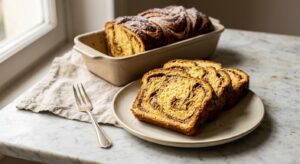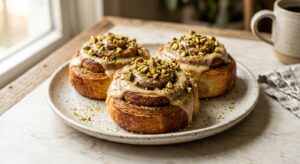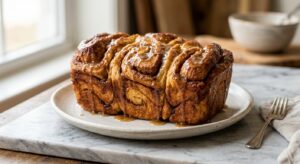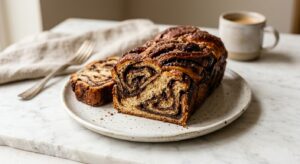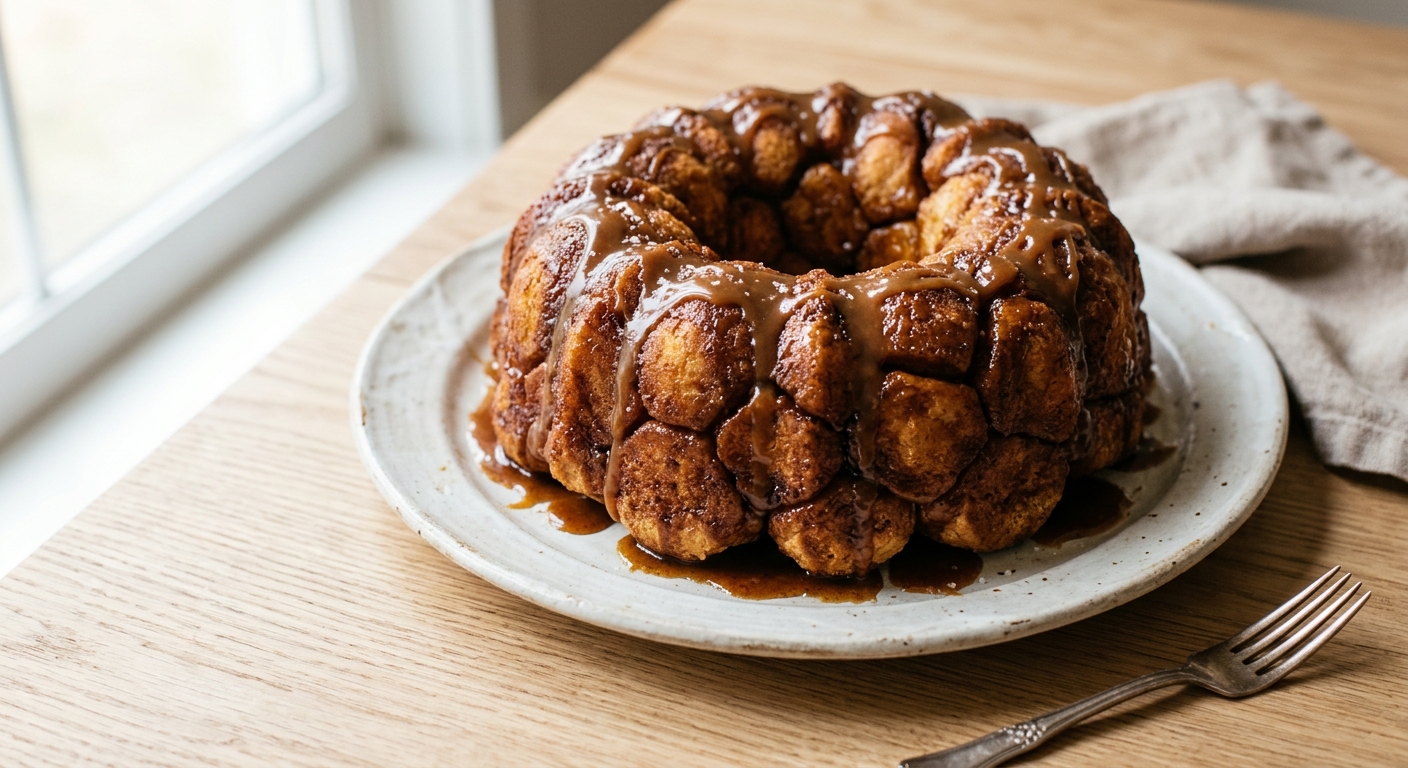
There is something almost magical about pulling a warm, sticky piece of monkey bread from the pan and watching the caramel stretch in long, glossy threads. This is the kind of baking that fills your kitchen with the scent of cinnamon and brown sugar an hour before anyone is out of bed – and has the whole family migrating toward the oven without being asked. Each little dough ball is soft and pillowy on the inside, with a slightly crisp, caramelized edge where it made contact with the pan. It is communal, generous, and deeply comforting.
What sets this version apart is the double-layer caramel technique. Rather than relying on a single pour of sauce at the bottom, you build caramel in two stages: a brown butter and dark brown sugar base goes into the pan before the dough balls, and a second pour of salted caramel sauce is drizzled over the top just before baking. This means every single piece is coated, not just the lucky ones on the bottom. The salt is not an afterthought either – it balances the sweetness and makes the caramel flavor taste more complex and more deeply of itself. A touch of vanilla in the dough adds warmth that weaves through every bite.
This recipe falls into the medium difficulty range – the yeasted dough is forgiving and requires only one rise, which keeps the timeline manageable. It is a perfect weekend bake for anyone comfortable with yeast, and an ideal project for beginner bread bakers who want something impressive with real techniques to practice. The slow cooker method included here is genuinely useful for holiday mornings when oven space is at a premium, or when you want the bread ready and warm without hovering over the kitchen.
Equipment Needed
Click on an item below to shop for the recommended items for this recipe on Amazon.
As an Amazon Associate, we earn from qualifying purchases.
12
Ingredients
- Cinnamon Coating
- 480 gall-purpose flour (about 4 cups, spooned and leveled), plus more for dusting
- 7 ginstant yeast (1 packet or 2.25 tsp)
- 50 ggranulated sugar (about 1/4 cup)
- 1 tspColima Sea SaltMicroplastic Free Salt
- 240 mlwhole milk (1 cup), warmed to 110°F (43°C)
- 60 gunsalted butter (4 tbsp), melted and slightly cooled
- 2 largeeggs, at room temperature
- 1 tsppure vanilla extract
- 200 ggranulated sugar (about 1 cup)
- 2.5 tspground cinnamon
- 0.25 tspground nutmeg
- Caramel Base
- 113 gunsalted butter (1 stick / 8 tbsp)
- 200 gdark brown sugar, packed (about 1 cup)
- 60 mlheavy cream (1/4 cup)
- 1 tspColima Sea SaltMicroplastic Free Salt (such as Maldon)
- 1 tsppure vanilla extract
- Coating Dough Balls
- 80 gunsalted butter (about 5.5 tbsp), melted
Ingredient Substitutions
Instructions
- Make the dough: In the bowl of a stand mixer fitted with the dough hook (or a large bowl if mixing by hand), whisk together the flour, instant yeast, granulated sugar, and fine sea salt. In a separate small bowl, whisk together the warm milk (110°F / 43°C), melted butter, eggs, and vanilla. Pour the wet ingredients into the dry ingredients and mix on medium-low speed for 5 to 7 minutes until the dough is smooth, slightly tacky, and pulls cleanly away from the sides of the bowl. If the dough is sticking aggressively to the bowl after 3 minutes, add flour 1 tablespoon at a time until it comes together. The dough should feel soft and pliable, not stiff.
- First rise: Shape the dough into a ball, place it in a lightly greased bowl, cover with plastic wrap or a clean damp towel, and let it rise in a warm spot for 60 minutes until roughly doubled in size. A great warm spot is an oven with just the light on, or an oven preheated to 200°F (93°C) and then turned off.
- Make the caramel base: While the dough rises, melt the 113g of butter in a small saucepan over medium heat. Continue cooking, swirling occasionally, for 3 to 4 minutes until the butter turns golden and smells nutty (this is brown butter). Remove from heat and immediately whisk in the dark brown sugar, heavy cream, flaky sea salt, and vanilla. Return to medium heat and stir for 1 minute until the sugar dissolves and the mixture is smooth and glossy. Pour two-thirds of this caramel into the bottom of a well-greased 10-inch Bundt pan. Reserve the remaining one-third. Set aside.
- Prepare the cinnamon coating: In a shallow bowl, whisk together the 200g granulated sugar, cinnamon, and nutmeg. Place the 80g of melted butter in a separate small bowl.
- Shape and coat the dough balls: Punch down the risen dough and turn it out onto a lightly floured surface. Divide the dough into approximately 40 to 50 small pieces, each about the size of a large grape (roughly 20g each). Roll each piece between your palms into a smooth ball. Working in batches, dip each ball first in the melted butter, letting the excess drip off, then roll generously in the cinnamon sugar mixture to coat all sides. Arrange the coated balls in a single somewhat loose layer over the caramel in the Bundt pan, then stack a second layer on top of any gaps. Drizzle the reserved one-third of caramel over the top of the arranged dough balls.
- Second rise: Cover the pan loosely with plastic wrap and let the dough rise for 20 to 25 minutes at room temperature until the balls look puffy and have grown into each other slightly. Meanwhile, preheat your oven to 350°F (175°C).
- Bake: Place the Bundt pan on a foil-lined baking sheet (to catch any caramel that bubbles over) and bake for 33 to 38 minutes until the top is deep golden brown and the internal temperature of the dough in the center reads at least 190°F (88°C). The top will look quite dark, which is correct – that is caramelized sugar, not burned dough. If the top is browning very quickly after 25 minutes, tent loosely with foil.
- Cool and invert: This step is critical. Let the pan cool on a wire rack for exactly 5 to 10 minutes – no longer. If you wait too long, the caramel will set and the bread will stick. Place a large serving plate or platter over the pan and invert in one confident motion. Leave the pan in place for 30 seconds to allow all the caramel to drip down over the bread, then lift it off. Serve warm and pull apart to eat.
- Prepare the dough and caramel base following the same steps as the oven method through the end of Step 5. Instead of a Bundt pan, generously grease the insert of a 6-quart oval slow cooker. Pour two-thirds of the caramel into the bottom and arrange the coated dough balls in layers on top, drizzling the remaining caramel over them.
- Place a double layer of paper towels under the slow cooker lid before securing it. This absorbs condensation so that steam does not drip back onto the bread and create soggy patches. Cover and cook on High for 2 hours to 2 hours 30 minutes. The bread is done when it is set in the center and no longer looks doughy when you peel back a top piece. An instant-read thermometer inserted into the center should read 190°F (88°C).
- For a lightly crisped top (recommended): Once the bread reads 190°F, carefully transfer the slow cooker insert to your oven broiler set to High and broil for 3 to 5 minutes, watching constantly, until the top deepens in color. Alternatively, skip this step if you prefer a fully soft result.
- Cool and serve: Let the slow cooker insert rest for 5 minutes, then invert the bread onto a large serving platter. Allow the caramel to drip down for 30 seconds before removing the insert. Serve immediately while warm. Note that the slow cooker version will not have the same deeply caramelized bottom crust as the oven version, but the interior texture will be exceptionally soft.
- Prepare a half batch of the dough and caramel base following the same steps as the oven method. Grease a 7-inch air fryer-safe Bundt or tube pan generously. Pour two-thirds of the caramel into the bottom of the prepared pan, arrange the coated dough balls in layers, and drizzle the remaining caramel on top.
- Second rise: Cover the pan loosely and let the dough balls rise for 20 minutes while the air fryer preheats. Preheat your air fryer to 320°F (160°C) for 5 minutes. Do not use the highest temperature – lower heat is essential here so the caramel does not burn before the dough cooks through.
- Place the pan in the air fryer basket. If there is space between the pan and the heating element, place a small square of foil over the top of the pan for the first 15 minutes to prevent the tops from over-browning before the center is cooked. Bake at 320°F (160°C) for 22 to 26 minutes total, removing the foil for the final 7 minutes.
- Check doneness with an instant-read thermometer: the center dough should reach 190°F (88°C). If needed, continue baking in 3-minute increments. Carefully remove the hot pan from the basket using tongs and silicone oven mitts.
- Let the pan rest for 5 minutes, then invert onto a serving plate. The air fryer version will have the crispiest exterior caramel of all three methods. Serve warm.
Nutrition Per Serving
Per 1 serving (makes one 10-inch Bundt pan, serving 10 to 12)
Why This Recipe Works
The foundation of great monkey bread is a slightly enriched yeasted dough, and the ratio here is deliberately calibrated for softness. The eggs add structure and richness through both protein and fat, while the whole milk provides moisture and the melted butter coats the gluten strands to keep the crumb tender rather than chewy. Instant yeast is used for reliability and simplicity – it hydrates directly in the dough without proofing, giving you one fewer thing to worry about. The single rise (rather than the traditional two rises used for sandwich bread) keeps the schedule manageable without sacrificing flavor, because the enrichments in the dough develop plenty of taste even in a shorter fermentation window.
The double-layer caramel strategy is the heart of what makes this recipe special. Caramel is denser than raw dough, and in a single-pour recipe, it all sinks to the bottom during baking, leaving the upper dough balls dry and under-flavored. By reserving one-third of the caramel to pour over the top before baking, you create a top-down flow: as the bread bakes and the butter melts, the caramel percolates down between the dough balls and meets the bottom layer coming up. The result is even coating throughout. Brown butter in the caramel base is not decorative – browning the milk solids in butter creates hundreds of new flavor compounds (the Maillard reaction at work), adding nuttiness, toffee notes, and depth that plain melted butter simply cannot replicate. The flaky sea salt on top is crucial: salt suppresses bitterness, enhances sweetness perception, and makes the caramel taste more dimensional and less one-note.
The 5 to 10 minute cooling window before inverting is the most technically important instruction in the whole recipe. The caramel must stay fluid enough to release cleanly from the pan but cool enough not to splash when inverted. Too soon and you risk burning yourself with liquid caramel; too long and the sugars re-crystallize, bonding the bread to the pan. If you do wait too long and the bread sticks, place the pan back in a 300°F (150°C) oven for 3 to 4 minutes to re-melt the caramel, then try again immediately.
Baker’s Tips
- Measure the milk temperature with an instant-read thermometer. Too cold (below 100°F / 38°C) and the yeast activates sluggishly; too hot (above 120°F / 49°C) and you risk killing the yeast entirely. 110°F (43°C) is the sweet spot.
- Do not flour the dough balls before dipping them in butter and cinnamon sugar. A thin coating of butter is what makes the sugar adhere in a proper crust. Flour on the surface will prevent the butter from sticking.
- Cut the dough pieces consistently. Uneven pieces mean some balls cook faster than others, resulting in a mix of done and under-done dough in the same pan. A kitchen scale for portioning (around 20g per ball) makes a real difference.
- Grease the Bundt pan very generously with softened butter or baking spray with flour, paying careful attention to every ridge and the center tube. This is not the time to be stingy. A single sticky spot can cause the whole bread to tear during inversion.
- Keep the first layer of dough balls loose in the pan, not packed in tightly. The balls need room to expand during the second rise and baking. They will fill in any gaps on their own.
- Place the pan on a foil-lined baking sheet before it goes into the oven. Caramel bubbles and overflows during baking, and cleaning baked-on caramel from the oven floor is far more work than lining a sheet pan.
- Serve the bread from the platter rather than transferring it again. Monkey bread is sticky and fragile when warm, and it is much easier (and more impressive) to bring the whole plate to the table.
Variations
- Apple Pie Monkey Bread: Add 1 medium apple, peeled and finely diced, tossed with 1 tsp cinnamon and 1 tbsp brown sugar, scattered between the layers of dough balls before baking.
- Chocolate Hazelnut: Replace the cinnamon sugar coating with a mixture of 150g granulated sugar and 3 tbsp unsweetened cocoa powder, and add a layer of Nutella dolloped between the dough layers.
- Cream Cheese Drizzle: Whisk together 115g softened cream cheese, 120g powdered sugar, 2 to 3 tbsp milk, and 1 tsp vanilla until smooth. Drizzle over the inverted warm bread just before serving for a tangy contrast to the caramel.
- Pumpkin Spice: Replace the cinnamon-nutmeg coating with 1.5 tsp cinnamon, 0.5 tsp ginger, 0.25 tsp cloves, and 0.25 tsp allspice, and add 60g pumpkin puree to the dough with the wet ingredients (reduce milk by 2 tbsp to compensate).
- Savory Herb and Garlic: Skip the cinnamon sugar coating and caramel entirely. Instead, toss dough balls in 80g melted butter mixed with 4 minced garlic cloves and 2 tbsp fresh rosemary. Scatter 100g shredded Gruyere between layers and bake as directed.
Troubleshooting & FAQ
My dough did not rise at all after an hour. What went wrong?
The bread stuck to the Bundt pan and tore when I tried to invert it. Can I fix this?
The top of my monkey bread is very dark but the center dough still seems raw. How do I fix this?
My caramel base is grainy and sugary rather than smooth. What happened?
The dough balls did not puff up and stick together during baking – they look separate and dry. What went wrong?
Storage & Make-Ahead
- Storage: Monkey bread is best eaten the day it is made while warm. Leftovers can be stored covered at room temperature for up to 2 days – the caramel will firm up, so reheat individual pieces in the microwave for 15 to 20 seconds to restore the gooey texture. For longer storage, wrap tightly and refrigerate for up to 4 days. The assembled, unrisen pan can be covered tightly and refrigerated overnight: remove from the fridge, let it come to room temperature and complete its rise (45 to 60 minutes), then bake as directed.
- Make-Ahead: The dough can be made through the first rise, then covered tightly and refrigerated overnight (up to 16 hours). The next morning, let the dough sit at room temperature for 20 minutes before portioning and rolling. The caramel base can also be made up to 3 days ahead and stored in a jar in the refrigerator; gently rewarm it until pourable before using. For a true make-ahead breakfast, assemble the entire pan through Step 5, cover tightly with plastic wrap, and refrigerate overnight. In the morning, remove from the fridge, let it proof at room temperature for 45 to 60 minutes until visibly puffy, then bake as directed.