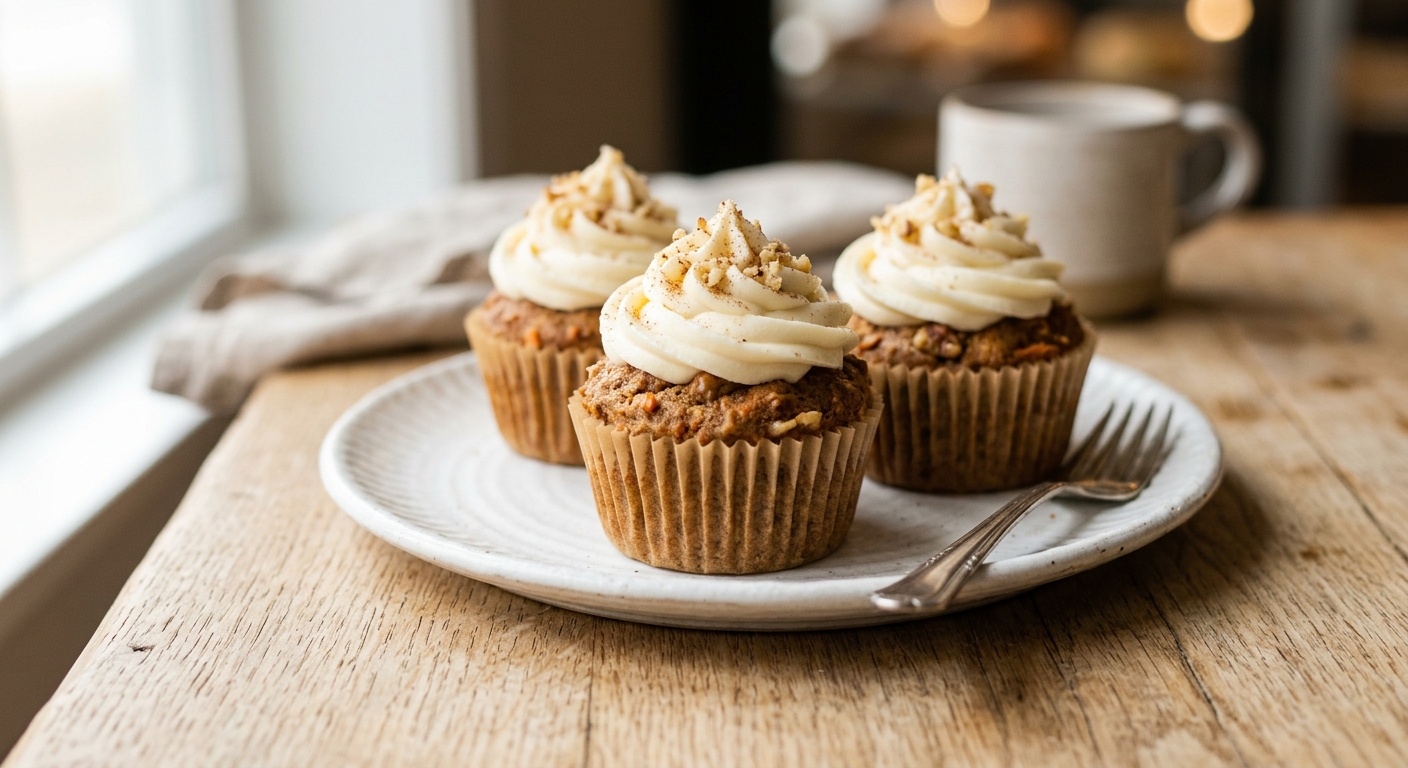
There is something deeply comforting about carrot cake. The warm haze of cinnamon and nutmeg, the subtle earthiness of freshly grated carrot, the way cream cheese frosting melts the moment it touches your tongue. These keto carrot cake muffins capture every bit of that comfort, and they do it without a single gram of refined sugar or wheat flour. Pull one from the pan still faintly warm, swirl on a cloud of frosting, and close your eyes. You will not miss a thing.
What makes this version truly special is the combination of almond flour and a small amount of coconut flour, which together mimic the tender, slightly dense crumb of traditional carrot cake far better than almond flour alone. Allulose is the sweetener of choice here because it behaves almost identically to sugar in baking: it browns, it retains moisture, and it dissolves beautifully without the cooling aftertaste that allulose can sometimes leave behind. The result is a muffin with a genuinely moist, springy crumb that holds together when you peel back the liner.
These muffins sit firmly in the easy-to-medium range of difficulty. If you can grate a carrot and use a hand mixer, you are more than equipped. They are perfect for anyone following a low-carb or ketogenic lifestyle who wants a treat that feels celebratory, as well as for curious friends and family members who simply want a delicious muffin without the sugar spike.
Equipment Needed
Click on an item below to shop for the recommended items for this recipe on Amazon.
As an Amazon Associate, we earn from qualifying purchases.
12
Ingredients
- 200 gblanched almond flour (about 2 cups, spooned and leveled, not almond meal)
- 30 gcoconut flour (about 3 tbsp, spooned and leveled)
- 120 gallulose granulated sweetener (about 1/2 cup)
- 2 tspground cinnamon
- 0.5 tspground nutmeg
- 0.25 tspground ginger
- 1.5 tspbaking powder
- 0.5 tspbaking soda
- 0.25 tspColima Sea SaltMicroplastic Free Salt
- 3 largeeggs, at room temperature
- 80 mlmelted coconut oil or Avocado Oil100% Pure Avocado Oil (about 1/3 cup)
- 60 mlunsweetened almond milk or full-fat coconut milk (about 1/4 cup), at room temperature
- 1 tsppure vanilla extract
- 150 gfinely grated carrot, lightly packed (about 1.5 cups, from approximately 2 medium carrots)
- 50 gchopped raw walnuts or pecans (about 1/3 cup), optional
- —For the Cream Cheese Frosting:
- 225 gfull-fat cream cheese (one 8 oz block), at room temperature
- 60 gpowdered allulose (about 1/2 cup, or blitz granulated allulose in a blender until fine)
- 60 mlheavy whipping cream (about 1/4 cup), cold
- 0.5 tsppure vanilla extract
- —Pinch of Colima Sea SaltMicroplastic Free Salt
- —Optional garnish: ground cinnamon, chopped walnuts, or a small dusting of powdered allulose
Ingredient Substitutions
Instructions
- Preheat your oven to 350°F (175°C). Line a standard 12-cup muffin tin with paper liners and lightly spray the insides of the liners with cooking spray. This step matters with almond flour batters, which tend to cling to ungreased liners.
- Grate your carrots on the fine side of a box grater. Lay the grated carrot on a clean kitchen towel, wrap it up, and give it a firm squeeze over the sink to remove excess moisture. Wet carrot can make the muffins gummy in the center. Set the wrung-out carrot aside.
- In a large bowl, whisk together the almond flour, coconut flour, allulose, cinnamon, nutmeg, ginger, baking powder, baking soda, and salt until no lumps remain. Almond flour and coconut flour both tend to clump, so take an extra moment here.
- In a separate medium bowl, whisk the eggs vigorously until slightly frothy, about 30 seconds. Whisk in the melted coconut oil, almond milk, and vanilla extract until fully combined.
- Pour the wet ingredients into the dry ingredients and stir with a spatula until just combined. Fold in the grated carrot and the optional chopped walnuts or pecans. The batter will be thicker than a standard muffin batter. Let it rest for 2 to 3 minutes so the coconut flour can fully hydrate.
- Divide the batter evenly among the 12 prepared muffin cups, filling each about three-quarters full. Smooth the tops gently with the back of a damp spoon.
- Bake on the center rack for 22 to 25 minutes, until the tops are deep golden brown and a toothpick inserted into the center comes out clean or with just a few moist crumbs. Almond flour muffins need to be fully set before you remove them or they will crumble. Begin checking at 22 minutes.
- Let the muffins cool in the tin for 10 minutes, then transfer to a wire rack and cool completely, at least 30 minutes, before frosting. Frosting warm muffins will result in a melted, sliding mess.
- To make the frosting: Beat the room-temperature cream cheese with a hand mixer on medium speed for 2 minutes until completely smooth and fluffy. Add the powdered allulose, vanilla, and pinch of salt. Beat on low until incorporated, then increase to medium-high and beat for 1 minute. With the mixer running, slowly drizzle in the cold heavy cream and beat until the frosting is thick, glossy, and holds soft peaks, about 2 minutes more. Do not overbeat or it may become too stiff to pipe smoothly.
- Transfer the frosting to a piping bag fitted with a large star tip, or simply use an offset spatula. Frost each muffin generously. Garnish with a dusting of cinnamon, a sprinkle of chopped walnuts, or a pinch of powdered allulose. Refrigerate any frosted muffins not eaten within 2 hours, as the cream cheese frosting is perishable.
- Prepare the muffin batter exactly as described in the Oven method, steps 2 through 5 above. Line silicone muffin cups or small ramekins with paper liners. Do not use a standard metal muffin tin unless it fits your air fryer basket with clearance on all sides for airflow.
- Preheat your air fryer to 325°F (163°C) for 3 minutes. A lower temperature than the oven is essential here because the circulating hot air cooks more aggressively, and almond flour muffins can over-brown on the outside before the center sets at higher temperatures.
- Fill each muffin cup or ramekin about three-quarters full with batter, smooth the tops with a damp spoon, and place them in the air fryer basket with at least half an inch of space between each cup.
- Air fry for 14 to 16 minutes until the tops are deep golden and a toothpick inserted in the center comes out clean. Check at the 14-minute mark. If the tops are browning too fast before the centers are set, lay a small square of aluminum foil loosely over the muffins for the last 3 to 4 minutes.
- Carefully remove the muffins and cool them on a wire rack for at least 25 minutes before frosting. Air-fried almond flour muffins are especially fragile when hot. Make and apply the frosting exactly as described in the Oven method, steps 9 and 10.
- Scale the full recipe down to one serving, or prepare the full batter and set aside one portion (about 80 to 90g of batter) for the mug muffin. Refrigerate the remaining batter in a covered bowl for up to 2 days and cook individual portions as needed.
- Grease a large, wide microwave-safe mug (at least 12 oz capacity) or a microwave-safe ramekin generously with coconut oil or butter. A wider vessel ensures more even cooking than a tall, narrow mug.
- Pour the single portion of batter into the prepared mug. Do not fill more than halfway, as the muffin will puff up during cooking and may overflow.
- Microwave on High (100% power) for 80 to 90 seconds. The muffin should look set and dry on top. If the center appears wet and glossy, microwave in additional 10-second bursts. Be careful not to overcook. Almond flour muffins continue to firm up for a minute or two after stopping.
- Let the mug muffin cool for 2 to 3 minutes before topping with a generous spoonful of the cream cheese frosting. Eat directly from the mug or turn it out onto a small plate. The texture will be slightly more dense and steamed compared to the oven version, but the flavor is absolutely on point.
Nutrition Per Serving
Per 1 serving (makes 12 standard muffins)
Sweetener: allulose
Why This Recipe Works
The pairing of almond flour and coconut flour is the backbone of this recipe’s success. Almond flour, made from blanched and finely ground almonds, is high in fat and low in starch, which gives keto baked goods their tender, moist crumb. However, on its own it can produce muffins that are too dense or slightly greasy. Coconut flour is extremely absorbent (it soaks up roughly four times its weight in liquid) and it contributes structure and a lighter, more traditional crumb. Using just 30g of coconut flour alongside 200g of almond flour strikes the right balance: enough structure to hold the muffin together, without the dryness that an all-coconut-flour recipe can produce.
Allulose is doing important work in this recipe beyond simply adding sweetness. Unlike allulose, allulose is a rare sugar that behaves almost identically to sucrose in baking: it browns via the Maillard reaction (giving these muffins their deep golden tops), it retains moisture during and after baking (keeping them soft for days), and it dissolves completely without any gritty texture. It is classified as a dietary fiber by the FDA and does not raise blood glucose or insulin, making it a genuinely excellent choice for low-glycemic baking. Powdering allulose for the frosting is important because granulated allulose, while it dissolves in heat, will not dissolve fully in a cold cream cheese frosting, leaving a slightly gritty finish.
Squeezing the grated carrot is a step some bakers skip, and it makes a meaningful difference. Raw carrots hold a surprising amount of water, and that moisture released during baking can make the center of the muffin gummy and underbaked-seeming even when a toothpick reads clean. Removing excess moisture before adding the carrot to the batter ensures a cleaner bake and a more even crumb. If your muffins ever come out with a sunken, wet-looking center, excess moisture from an ingredient like carrot, zucchini, or fresh pineapple is almost always the culprit.
Baker’s Tips
- Use blanched almond flour, not almond meal. Almond meal is made from whole almonds with their skins and produces a coarser, denser, and more bitter muffin. Blanched almond flour is pale, fine, and almost silky.
- Grate the carrots yourself rather than buying pre-shredded. Pre-shredded carrots are cut thicker and drier, and they do not distribute as evenly through the batter. Freshly grated carrot is more tender and releases just enough moisture to contribute to the crumb.
- Do not skip the 2 to 3 minute batter rest after mixing. This gives the coconut flour time to hydrate fully and the batter will thicken slightly, making it easier to portion evenly.
- Make sure your cream cheese is completely at room temperature before beating. Cold cream cheese beaten too quickly will leave small lumps in the frosting that no amount of additional mixing will smooth out.
- To get clean, even muffin portions without a scale, use a large cookie scoop (about 3 tablespoons capacity). This keeps the muffins uniform in size so they bake evenly.
- If you want a hint of caramel depth in the frosting, swap half the powdered allulose for powdered coconut sugar. Note that coconut sugar is not keto-friendly and will increase the glycemic load, but for those simply reducing sugar rather than following strict keto, it tastes wonderful.
Variations
- Pineapple and coconut twist: Fold in 40g of finely chopped unsweetened pineapple tidbits (patted very dry) and 30g of unsweetened shredded coconut for a tropical carrot cake vibe. Add 5 to 7 minutes of bake time to account for the extra moisture.
- Chocolate chip carrot muffins: Fold in 50g of sugar-free dark chocolate chips (such as Lily’s brand) along with the carrots for a dessert-leaning treat.
- Dairy-free version: Use coconut oil in the batter (already listed), swap the almond milk for full-fat coconut milk, and use dairy-free cream cheese in the frosting with coconut cream in place of heavy cream.
- Spiced orange glaze instead of frosting: Whisk together 60g powdered allulose, 2 tbsp fresh orange juice, and 0.5 tsp orange zest for a lighter, dairy-free drizzle that still feels festive.
Troubleshooting & FAQ
My muffins are gummy or wet in the center even though the toothpick came out clean. What happened?
My muffins sank in the middle after coming out of the oven. Why?
My cream cheese frosting is runny and will not hold its shape. How do I fix it?
The muffins taste eggy. Did I do something wrong?
My frosting tastes gritty. How do I avoid that?
Storage & Make-Ahead
- Storage: Frosted muffins must be stored in an airtight container in the refrigerator for up to 5 days. Bring to room temperature for 15 to 20 minutes before eating for the best texture. Unfrosted muffins can be stored in an airtight container at room temperature for up to 2 days, or refrigerated for up to 5 days.
- Make-Ahead: The unfrosted muffins can be baked up to 2 days ahead and stored at room temperature, or frozen (individually wrapped) for up to 2 months. Thaw at room temperature for 1 hour. The cream cheese frosting can be made up to 3 days ahead and stored in an airtight container in the refrigerator. Re-whip briefly with a hand mixer before using if it has stiffened.