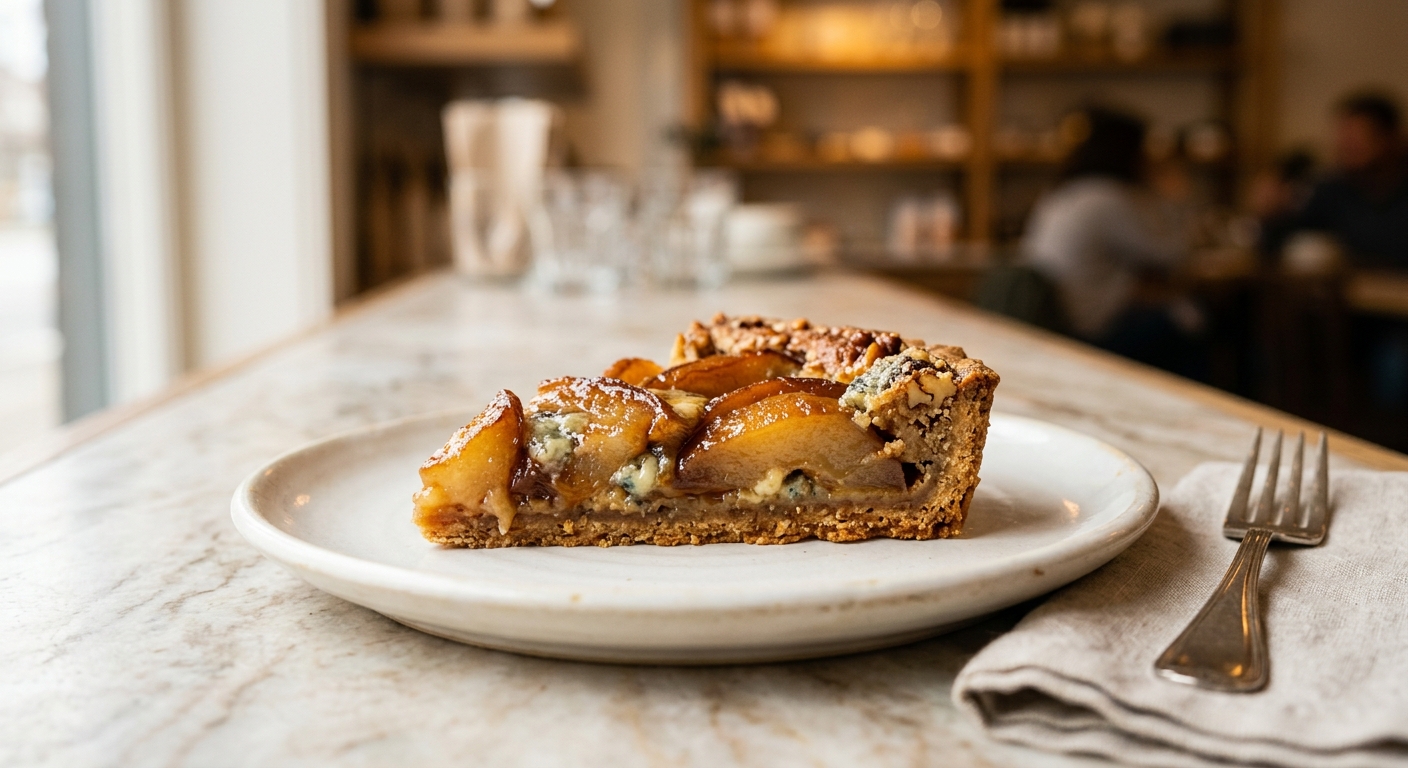
There is something almost magical about the combination of ripe, golden pears and sharp, creamy blue cheese. The sweetness of the fruit softens the bold salinity of the cheese, and the whole thing, nestled inside a crisp, honey-scented walnut pastry shell, becomes something far greater than the sum of its parts. Imagine pulling this tart from the oven: the pears fanned in elegant slices across a billowy custard filling, their edges just beginning to caramelize, the kitchen filling with the warm, nutty fragrance of toasted walnuts and butter. Whether you serve it as a sophisticated starter, a luxurious lunch with a green salad, or a conversation-starting dessert course, this tart always earns a moment of hushed appreciation at the table.
What sets this version apart is a walnut-enriched shortcrust pastry, sweetened with just a touch of honey, that provides a nutty, slightly sweet counterpoint to the savory filling. The filling itself is a classic custard base made with eggs and cream, but we add a generous crumble of Gorgonzola dolce (or your preferred blue cheese) and a fragrant hit of fresh thyme. The pears are briefly sautéed in butter and a splash of white wine before they go in, which concentrates their flavor and prevents them from releasing too much moisture into the custard during baking. This one extra step is the difference between a soggy tart and a perfectly set, silky slice.
The difficulty here is medium: the pastry requires a light hand and a proper blind bake, and the custard needs gentle heat to set without curdling. That said, this is absolutely achievable for a home baker with a little patience. It is a perfect weekend project, a stunning dish for a dinner party, or a treat for anyone who appreciates bold, sophisticated flavors. If you have never baked a savory-leaning tart before, this is the recipe to start with.
Equipment Needed
Click on an item below to shop for the recommended items for this recipe on Amazon.
As an Amazon Associate, we earn from qualifying purchases.
8
Ingredients
- Sautéing Pears
- 180 gall-purpose flour (about 1.5 cups, spooned and leveled)
- 40 gwalnuts, very finely ground in a food processor (about 1/3 cup)
- 20 gpowdered sugar (about 2.5 tbsp)
- 0.5 tspColima Sea SaltMicroplastic Free Salt
- 115 gunsalted butter, cold and cubed (about 1/2 cup or 1 stick)
- 1 tbsphoney
- 2 tbspice water, plus more as needed
- 3 mediumripe but firm Bosc or Anjou pears (about 600g total)
- 15 gunsalted butter (1 tbsp)
- 60 mldry white wine (about 1/4 cup)
- 1 tbspgranulated sugar
- 150 gblue cheese, such as Gorgonzola dolce or Roquefort, crumbled (about 5 oz)
- 3 largeeggs
- 240 mlheavy cream (about 1 cup)
- 60 mlwhole milk (about 1/4 cup)
- 1 tspfresh thyme leaves (plus extra sprigs for garnish)
- 0.25 tspfreshly ground black pepper
- —Pinch of freshly grated nutmeg
- Drizzling After Baking
- 2 tbsphoney
- Garnish (about 1/4 Cup)
- 30 gwalnut halves, lightly toasted
Ingredient Substitutions
Instructions
- Make the walnut pastry: In a large bowl or food processor, combine the flour, finely ground walnuts, powdered sugar, and fine sea salt. Add the cold cubed butter and work it in with your fingertips (or pulse in the food processor) until the mixture resembles coarse breadcrumbs with a few pea-sized butter pieces remaining. Drizzle in the honey and 2 tablespoons of ice water. Mix or pulse until the dough just barely comes together – it should hold when squeezed but not be sticky. Add ice water one teaspoon at a time if needed. Do not overwork. Shape into a flat disc, wrap in plastic wrap, and refrigerate for at least 30 minutes.
- Blind bake the shell: Preheat your oven to 375°F (190°C). On a lightly floured surface, roll the chilled dough into an 11-inch circle, about 1/8 inch thick. Carefully transfer to a 9-inch round tart pan with a removable bottom, pressing it gently into the corners and up the sides. Trim the overhang flush with the top of the pan. Prick the base all over with a fork, then line with parchment paper and fill with pie weights or dried beans. Bake for 15 minutes, then remove the parchment and weights and bake for a further 5 minutes until the base looks dry and just barely golden. Set aside. Reduce the oven temperature to 325°F (165°C).
- Sauté the pears: While the shell cools, peel, core, and slice the pears lengthwise into 1/4-inch slices. Melt 15g of butter in a large skillet over medium heat. Add the pear slices, granulated sugar, and white wine. Cook, turning gently once or twice, for about 4 to 5 minutes until the pears are just beginning to soften and the wine has evaporated. They should be pliable but still hold their shape. Spread them on a plate and allow to cool slightly.
- Make the custard: In a medium bowl, whisk together the eggs, heavy cream, and whole milk until smooth. Add the fresh thyme leaves, black pepper, and a pinch of freshly grated nutmeg. Whisk to combine. Taste and adjust seasoning – remember that the blue cheese will add significant saltiness, so hold off on adding extra salt until after baking.
- Assemble and bake: Scatter two-thirds of the crumbled blue cheese evenly across the bottom of the blind-baked tart shell. Arrange the sautéed pear slices over the cheese in a fanned pattern or in overlapping concentric rows. Pour the custard mixture slowly and evenly over the pears and cheese – pour it in gently so the arrangement stays intact. Scatter the remaining blue cheese on top. Place the tart pan on a baking sheet to catch any drips. Bake at 325°F (165°C) for 33 to 37 minutes, until the custard is set at the edges but has just a very slight wobble in the very center when the pan is gently nudged.
- Rest and garnish: Remove the tart from the oven and allow it to cool on a wire rack for at least 20 minutes before unmolding. The custard will continue to firm up as it rests. Once cooled to warm or room temperature, drizzle with honey, scatter the toasted walnut halves over the top, and finish with a few fresh thyme sprigs. Slice and serve warm or at room temperature.
- Prepare the pastry and filling ingredients following the same method as the oven version (steps 1 and 3 to 4 above), but scale all ingredients down by half for a 7-inch tart. Chill the pastry disc for at least 30 minutes.
- Roll the chilled dough into a 9-inch circle on a lightly floured surface. Press it into a 7-inch round tart pan with a removable bottom. Trim the edges, prick the base with a fork, and line with a small piece of parchment paper and pie weights or dried beans.
- Blind bake the shell: Preheat your air fryer to 350°F (175°C) for 3 minutes. Place the tart pan in the basket (use a foil sling for easy retrieval if needed). Air fry for 10 minutes with the weights, then carefully remove the parchment and weights and air fry for a further 2 minutes until the base looks dry and lightly golden. Remove and allow to cool. Reduce the air fryer temperature to 300°F (150°C).
- Assemble the tart in the cooled shell exactly as described in the oven method: layer blue cheese, sautéed pears, pour over the custard, and top with remaining cheese.
- Air fry at 300°F (150°C) for 22 to 25 minutes, checking at the 20-minute mark. The tart is done when the edges are set and the center has a gentle wobble only. The lower temperature is critical here – air fryers circulate heat intensely and can cause the custard to puff and crack if too hot. Cool for at least 15 minutes before unmolding, then garnish with honey, walnuts, and thyme.
Nutrition Per Serving
Per 1 serving (makes one 9-inch round tart)
Why This Recipe Works
The walnut pastry is built on the classic shortcrust principle of keeping fat cold and handling the dough minimally. Cold butter creates steam pockets during baking, producing layers and flakiness, while the finely ground walnuts add fat and flavor without disrupting the gluten network significantly. The small amount of powdered sugar keeps the crust tender by slightly inhibiting gluten development, and the honey adds moisture and subtle sweetness without making the dough sticky. Blind baking is non-negotiable for any tart with a liquid filling: without it, the steam from the custard would render the base pale and raw, the dreaded soggy bottom. The fork pricks and pie weights prevent the pastry from puffing up as steam builds beneath it during the initial bake.
Sautéing the pears before baking solves a common problem with fruit tarts: raw fruit contains a great deal of water, which releases during baking and can water down or break the custard. By cooking the pears briefly in butter, sugar, and wine first, we drive off excess moisture, concentrate the pear flavor, and introduce a light caramelization. The white wine adds acidity that keeps the fruit from tasting flat and helps it retain its shape. This is the same principle used in professional patisserie when making fruit galettes or tarts: pre-cooking or macerating fruit protects the integrity of the pastry base.
The custard is a ratio-based preparation: eggs provide structure through protein coagulation, while cream and milk add richness and tenderness. The lower baking temperature of 325°F (165°C) is intentional. Egg proteins begin to set around 160°F (71°C) and can curdle or become rubbery above 185°F (85°C). A gentle oven allows the custard to set slowly and evenly from the outside in, resulting in a silky, just-trembling texture rather than a tough, porous one. If you notice the edges setting faster than the center, a small strip of foil around the tart rim will slow them down and allow the center to catch up.
Baker’s Tips
- Choose pears that are ripe but still firm to the touch. Overripe pears will turn mushy during sautéing and collapse in the tart. Bosc pears are ideal because they hold their shape exceptionally well under heat.
- When blind baking, make sure the parchment extends well above the pastry edges so you can lift the weights out cleanly without disturbing the shell.
- Pour the custard into the assembled tart while the tart pan is already positioned on the oven rack. This avoids the precarious journey across the kitchen with a full pan of liquid.
- The tart is done when it wobbles like just-set Jell-O in the very center only. If the whole surface wobbles, give it 3 to 4 more minutes. If it has puffed up in the center, it is overdone but will still be edible once cooled.
- Gorgonzola dolce (young, creamy Gorgonzola) is strongly recommended over aged or crumbly blue cheeses here. Its softer texture melts more evenly into the custard and is less overpoweringly sharp.
- Let the finished tart rest for at least 20 minutes before slicing. The custard needs time to fully firm up as it cools, and cutting too early will result in runny slices.
- A light drizzle of good-quality honey right before serving ties the sweet and savory elements together beautifully. Chestnut or wildflower honey work particularly well with blue cheese.
Variations
- Fig and blue cheese version: Replace the pears with 6 to 8 fresh figs, halved, skipping the sauté step entirely. Arrange cut-side up in the tart shell. Reduce overall sweetness by omitting the drizzled honey, or swap it for a balsamic glaze.
- Caramelized onion base: Spread a thin layer of deeply caramelized onions (about 2 large onions cooked down in butter for 40 minutes) on the blind-baked base before adding the pears and cheese. This adds extraordinary depth and makes the tart even more savory.
- Pear and brie version: Swap the blue cheese for 150g of ripe brie (rind removed) for a milder, more crowd-pleasing tart. Add a teaspoon of Dijon mustard whisked into the custard for a gentle kick.
- Mini tart version: Use a 12-cup mini tart pan or individual 4-inch tart rings. Reduce bake time for the filled tarts to 18 to 22 minutes at 325°F (165°C). Perfect for dinner party appetizers.
Troubleshooting & FAQ
My pastry shrank dramatically during blind baking. What happened?
My custard filling is still wobbly and liquid-looking after the stated bake time. What should I do?
The bottom of my tart is soggy even though I blind baked it.
The custard puffed up in the center and cracked during baking. Is it ruined?
The blue cheese flavor is barely noticeable in the finished tart. How can I get more flavor?
Storage & Make-Ahead
- Storage: Store the cooled tart loosely covered in the refrigerator for up to 3 days. The pastry will soften slightly over time. Reheat individual slices in a 325°F (165°C) oven for 8 to 10 minutes to refresh the crust. Not recommended for freezing, as the custard filling can weep and become grainy upon thawing.
- Make-Ahead: The walnut pastry dough can be made up to 3 days ahead and stored wrapped in the refrigerator, or frozen for up to 1 month (thaw overnight in the fridge before rolling). The tart shell can be blind-baked up to 1 day ahead and stored at room temperature, loosely covered. The pears can be sautéed up to 1 day ahead and refrigerated. Assemble and bake the completed tart the day you plan to serve it for the best texture and flavor.