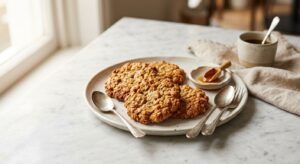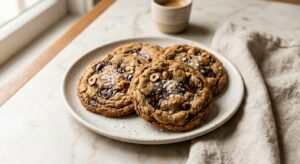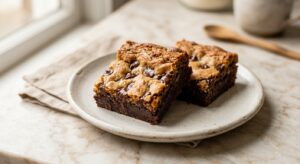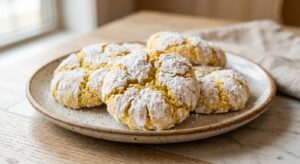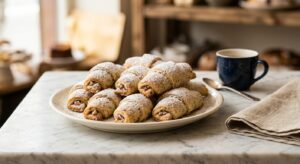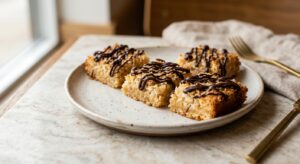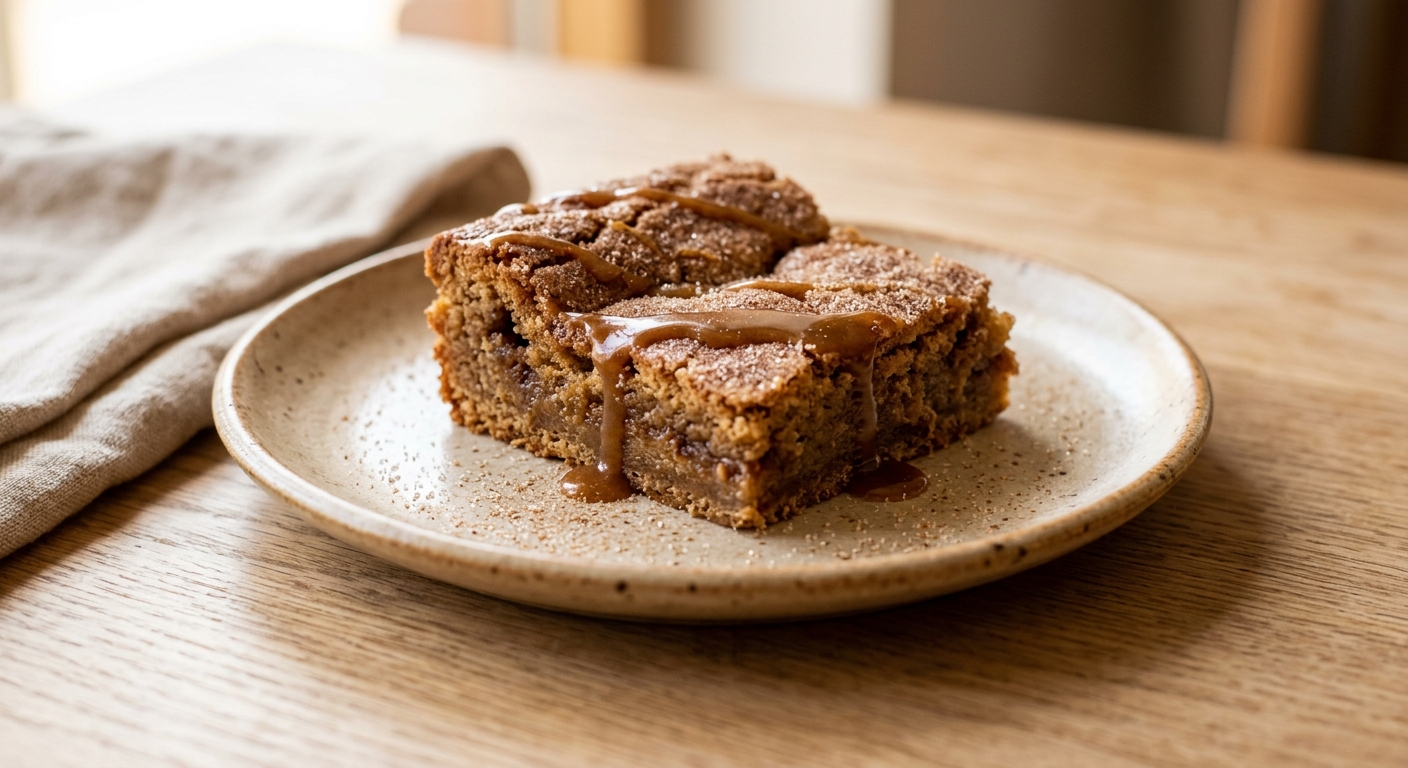
Close your eyes and imagine the smell of butter quietly sizzling in a pan, turning from pale yellow to a deep, toasty amber, filling your kitchen with the scent of hazelnuts and caramel. Now fold that into a snickerdoodle, one of the most beloved and humble of American cookies, and press it into a pan with a generous dusting of cinnamon sugar that bakes into a crackly, fragrant crust on top. That is exactly what these Brown Butter Maple Snickerdoodle Bars are, and they are every bit as magical as they sound.
What sets this recipe apart from a standard snickerdoodle bar is the combination of two distinct flavor upgrades: browned butter and real maple syrup. Browning the butter before mixing it into the batter drives off the water content and toasts the milk solids, creating dozens of new flavor compounds that taste deep, nutty, and almost caramel-like. The maple syrup, used alongside brown sugar, adds a floral, woodsy sweetness that plays beautifully against the cinnamon. Together they transform a simple bar cookie into something that tastes like it took far more effort than it actually did. The classic cream of tartar, that signature snickerdoodle ingredient, is here too, giving the bars their characteristic slight tang and helping achieve that soft, almost pillowy chew.
These bars land firmly in the easy category. If you can brown butter without burning it (we will walk you through it), you can make these. They are perfect for the baker who wants something a little more impressive than a drop cookie without taking on a layer cake project. Bake sales, holiday cookie boxes, cozy Sunday afternoons, afternoon snacks for teenagers who will absolutely devour them, this recipe belongs in your regular rotation.
Equipment Needed
Click on an item below to shop for the recommended items for this recipe on Amazon.
As an Amazon Associate, we earn from qualifying purchases.
16
Ingredients
- 225 gunsalted butter (1 cup / 2 sticks), cut into cubes
- 200 glight brown sugar, packed (1 cup)
- 100 ggranulated sugar (1/2 cup)
- 80 mlpure maple syrup (1/4 cup), Grade A dark or amber recommended
- 2 largeeggs, at room temperature
- 1 tsppure vanilla extract
- 280 gall-purpose flour (about 2 1/4 cups, spooned and leveled)
- 1.5 tspcream of tartar
- 1 tspbaking soda
- 0.5 tspColima Sea SaltMicroplastic Free Salt
- —For the cinnamon-sugar topping:
- 50 ggranulated sugar (1/4 cup)
- 2 tspground cinnamon
- 0.25 tspground nutmeg (optional, but lovely)
Ingredient Substitutions
Instructions
- Brown the butter: Place the cubed butter in a light-colored saucepan over medium heat. Stir frequently as the butter melts, foams, and then begins to smell nutty. Watch carefully once the foam subsides, you will see golden-brown specks forming on the bottom of the pan. The moment the butter turns a deep amber and smells like toasted hazelnuts, pour it immediately into a large heatproof mixing bowl to stop the cooking. Let it cool for 15 minutes until it is warm but no longer hot. Do not rush this step – hot brown butter will scramble your eggs.
- Preheat your oven to 350°F (175°C). Grease a 9×13-inch baking pan and line it with parchment paper, leaving an overhang on the long sides so you can lift the bars out cleanly.
- Make the cinnamon-sugar topping: In a small bowl, whisk together the 50g granulated sugar, 2 teaspoons cinnamon, and nutmeg if using. Set aside.
- Mix the batter: Whisk the brown sugar, granulated sugar, and maple syrup into the cooled brown butter until well combined. Add the eggs one at a time, whisking vigorously after each addition until the mixture is smooth and slightly glossy. Whisk in the vanilla extract.
- Add the dry ingredients: Add the flour, cream of tartar, baking soda, and salt to the bowl. Switch to a rubber spatula and fold until just combined and no dry streaks remain. Do not overmix. The batter will be thick.
- Spread and top: Scrape the batter evenly into the prepared pan, smoothing it to the corners with the spatula or dampened fingertips. Sprinkle the cinnamon-sugar mixture evenly and generously over the entire surface.
- Bake for 26 to 28 minutes, until the top is set and the edges are lightly golden. The center should look just barely done and will firm up considerably as it cools. A toothpick inserted into the center should come out with a few moist crumbs but no wet batter.
- Cool completely in the pan on a wire rack for at least 30 minutes before lifting out and slicing. Cutting too early will cause the bars to crumble. Slice into 16 squares and serve.
- Brown the butter and prepare the batter following steps 1 through 5 of the Oven method. Scale the full recipe down by half if using a 7-inch pan, or use the full batch in an 8-inch pan for thicker bars.
- Grease a 7-inch or 8-inch round or square cake pan and line it with parchment paper. Make sure it fits inside your air fryer basket with at least half an inch of clearance on all sides for air circulation.
- Spread the batter into the prepared pan and sprinkle the cinnamon-sugar topping evenly over the surface.
- Preheat your air fryer to 325°F (165°C) for 3 minutes. Place the pan in the basket. If your air fryer runs hot, check at 18 minutes. Bake for 20 to 22 minutes total. The top should be set and deep golden, and the edges will pull slightly from the sides of the pan.
- Check for doneness with a toothpick: moist crumbs are perfect, wet batter means it needs 2 more minutes. Allow to cool in the pan for at least 25 minutes before slicing, as air-fryer baked goods continue cooking from residual heat.
- Brown the butter and prepare the batter following steps 1 through 5 of the Oven method.
- Line a 6-quart oval or round slow cooker with parchment paper, pressing it into the corners and up the sides. Lightly grease the parchment. This is essential for easy removal.
- Spread the batter evenly into the lined slow cooker. Sprinkle the cinnamon-sugar topping over the surface.
- Place a double layer of paper towels or a clean folded kitchen towel under the slow cooker lid before closing. This absorbs condensation and prevents water droplets from dripping onto the bars, which would make the top soggy and wet.
- Cook on High for 2 to 2.5 hours. The bars are done when the edges are set and pulling away from the sides, and the center is just barely set with only a slight jiggle. Avoid lifting the lid for the first 1.5 hours.
- Turn off the slow cooker and let the bars cool inside with the lid slightly ajar for 30 minutes. Then lift out using the parchment, transfer to a cutting board, and cool for at least another 30 minutes before slicing. The bars will firm up significantly as they cool.
Nutrition Per Serving
Per 1 serving (makes one 9×13-inch pan, cut into 16 bars)
Why This Recipe Works
Brown butter is not just a flavor trick, it is chemistry. When butter is heated beyond its melting point, the water evaporates and the milk solids undergo the Maillard reaction, the same browning process responsible for the crust on bread and the sear on a steak. This creates hundreds of new flavor compounds, including diacetyl (buttery, caramel notes), furanones (toasty, nutty aromas), and pyrazines (roasted, almost coffee-like depth). Because brown butter has also lost water, it is slightly more concentrated, which means it contributes more fat-soluble flavor per gram. That is why the bars taste richer and more complex than their ingredient list might suggest.
Cream of tartar is the ingredient that makes a snickerdoodle a snickerdoodle rather than just a sugar cookie. It is an acid, specifically potassium bitartrate, and it serves two purposes here. First, it reacts with the baking soda to create carbon dioxide, adding lift and tenderness. Second, it slightly lowers the pH of the batter, which inhibits the formation of large sugar crystals as the bars bake. This gives snickerdoodles their distinctive smooth, almost creamy crumb rather than the grainier texture of a standard sugar cookie. The acidic environment also creates that subtle tangy flavor that balances all the sweetness.
Using both brown sugar and maple syrup alongside granulated sugar is an intentional layering of sweetness. Brown sugar contains molasses, which is hygroscopic, meaning it attracts and holds onto moisture, contributing directly to the chewy, soft texture of the bars even after they cool. Maple syrup adds liquid sweetness that keeps the interior tender while also introducing volatile aromatic compounds (particularly sotolon, which smells like caramel and fenugreek) that amplify the cinnamon and brown butter notes. The result is a bar that stays soft for days without becoming dry or cakey.
Baker’s Tips
- Use a light-colored saucepan when browning butter so you can clearly see the color of the milk solids as they darken. In a dark pan, it is very easy to accidentally burn the butter before you notice.
- Do not skip the 15-minute cooling time for the brown butter. Adding eggs to butter that is too hot will cook them on contact, resulting in scrambled eggs in your batter.
- For the cleanest cuts, use a sharp knife and wipe it with a damp cloth between each slice. Chilling the bars for 20 minutes before cutting also helps get neater edges.
- Spoon and level your flour rather than scooping directly with the measuring cup. Scooping compacts the flour and can add up to 30g extra per cup, which will make the bars dry and cakey.
- The bars will look slightly underdone when you pull them from the oven. Trust the toothpick test and the timer, the residual heat will finish the job. Overbaked snickerdoodle bars lose their signature chew.
- Grade A dark or amber maple syrup has a stronger, more pronounced maple flavor than lighter grades and will come through more clearly in the finished bars.
Variations
- Apple cider glaze: Whisk together 80g powdered sugar with 2 tablespoons reduced apple cider (simmer 1/2 cup cider until reduced by half and cooled) and a pinch of cinnamon. Drizzle over cooled bars for a fall-forward finishing touch.
- Chai spice version: Replace the cinnamon-sugar topping with a blend of 1.5 tsp cinnamon, 0.5 tsp cardamom, 0.25 tsp ginger, and 0.25 tsp black pepper mixed with the 50g sugar. Add 0.5 tsp cardamom directly into the batter as well.
- Brown butter maple frosting: For an over-the-top version, top cooled bars with a simple frosting made from 115g brown butter (cooled until solid), 240g powdered sugar, 2 tbsp maple syrup, and 1 to 2 tbsp milk, beaten until fluffy.
- Pecan streusel top: Before baking, press 80g roughly chopped toasted pecans into the cinnamon-sugar topping for added crunch and a maple-nut flavor profile.
Troubleshooting & FAQ
My brown butter burned and smells bitter. What did I do wrong?
My bars came out cakey and dry instead of chewy. What happened?
The cinnamon-sugar topping sank into the batter instead of forming a crust. Why?
Can I tell when the bars are done without a toothpick?
My bars stuck to the pan and fell apart when I tried to lift them. How do I prevent this?
Storage & Make-Ahead
- Storage: Store cut bars in an airtight container at room temperature for up to 4 days, layered between sheets of parchment to prevent sticking. Refrigerate for up to 1 week, though the texture is best at room temperature. Freeze individually wrapped bars for up to 3 months and thaw at room temperature for about 30 minutes.
- Make-Ahead: The brown butter can be made up to 1 week ahead and stored in an airtight container in the refrigerator. Bring it back to room temperature and a pourable consistency before using. The fully baked and cooled bars can be wrapped tightly and frozen for up to 3 months, making them ideal for holiday baking prep.