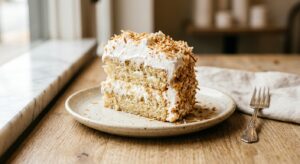
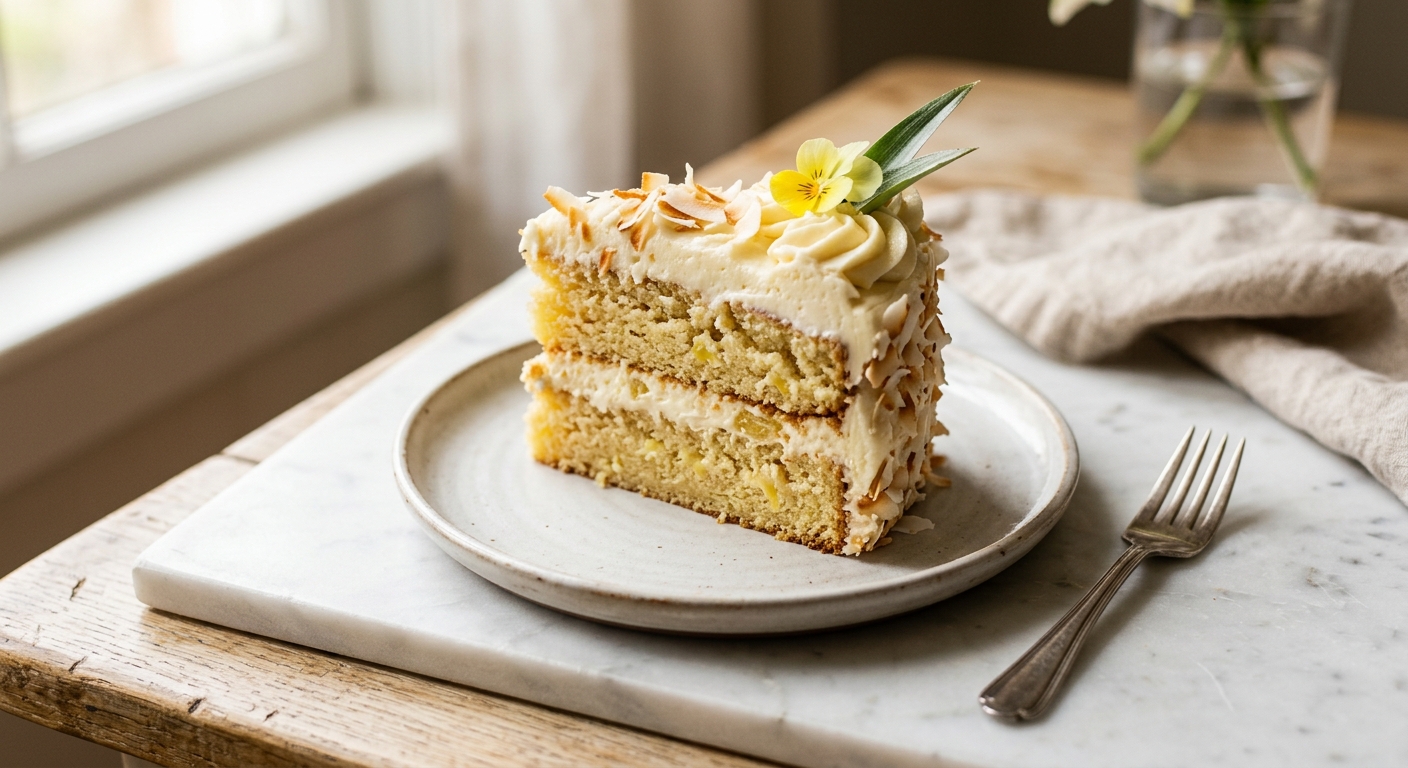
Close your eyes and imagine the smell of toasted coconut drifting through a warm kitchen, the faint tang of pineapple mingling with vanilla, and a frosting so creamy it practically melts on your tongue. That is exactly what you get with this Tropical Pineapple Coconut Cake. It is the kind of cake that turns an ordinary Tuesday into something worth celebrating, or makes a summer birthday feel genuinely special. The layers are incredibly moist, almost custardy in texture, with little pockets of pineapple sweetness throughout and a golden coconut crunch that perfumes the whole slice.
What sets this cake apart from the dozens of coconut cakes you may have seen is the way the pineapple is handled. Rather than simply folding in drained crushed pineapple, we use the reserved pineapple juice to replace some of the liquid in the batter, concentrating that tropical flavor all the way through. The coconut plays a dual role too: finely shredded coconut goes directly into the batter for moisture and chew, while toasted flakes coat the outside for texture and drama. The result is a cake where every component is doing meaningful, delicious work.
This recipe sits comfortably at a medium difficulty level. You do not need any special equipment beyond a stand or hand mixer and two cake pans, and the techniques involved are all well within reach of a home baker who has made a layer cake before. If you are newer to layer cakes, the tips section will walk you through the frosting process with confidence. This cake is perfect for birthdays, summer gatherings, Easter, or any time you need a showstopper that genuinely delivers on flavor.
Equipment Needed
Click on an item below to shop for the recommended items for this recipe on Amazon.
As an Amazon Associate, we earn from qualifying purchases.
12
Ingredients
- Toasting And Decorating
- 280 gall-purpose flour (about 2 and 1/4 cups, spooned and leveled)
- 2 tspbaking powder
- 0.5 tspbaking soda
- 0.5 tspColima Sea SaltMicroplastic Free Salt
- 115 gunsalted butter, softened to room temperature (1/2 cup or 1 stick)
- 200 ggranulated sugar (1 cup)
- 100 gpacked light brown sugar (1/2 cup)
- 3 largeeggs, at room temperature
- 1.5 tsppure vanilla extract
- 1 tspcoconut extract
- 120 mlfull-fat coconut milk, well stirred (1/2 cup)
- 120 mlreserved pineapple juice from the canned pineapple (1/2 cup)
- 430 gcanned crushed pineapple (one 20 oz can), drained well with juice reserved
- 80 gsweetened shredded coconut (1 cup), finely chopped or briefly pulsed in a food processor
- 60 gsweetened coconut flakes (1 cup)
- Frosting
- 450 gfull-fat cream cheese, brick-style, softened to room temperature (16 oz or two 8 oz blocks)
- 115 gunsalted butter, softened to room temperature (1/2 cup or 1 stick)
- 480 gpowdered sugar, sifted (about 4 cups)
- 2 tbspreserved pineapple juice
- 1 tsppure vanilla extract
- —Pinch of Colima Sea SaltMicroplastic Free Salt
Ingredient Substitutions
Instructions
- Preheat your oven to 350°F (175°C). Grease two 9-inch round cake pans with softened butter or nonstick spray, line the bottoms with parchment paper circles, then grease the parchment and dust lightly with flour. Tap out any excess. Set aside.
- Toast the coconut flakes for decoration: spread them in a single layer on a dry baking sheet and bake for 5 to 7 minutes, stirring once halfway through, until golden and fragrant. Watch carefully as they burn quickly. Transfer immediately to a plate to cool. Set aside.
- Drain the crushed pineapple very thoroughly through a fine mesh sieve, pressing firmly with the back of a spoon to extract as much juice as possible. Measure out 120ml (1/2 cup) of the juice for the batter and reserve an additional 2 tablespoons for the frosting. Set the drained pineapple and juices aside separately.
- In a medium bowl, whisk together the flour, baking powder, baking soda, and salt. Set aside. In a small measuring jug, stir together the coconut milk and the 120ml reserved pineapple juice. Set aside.
- In the bowl of a stand mixer fitted with the paddle attachment, or using a hand mixer and a large bowl, beat the softened butter, granulated sugar, and brown sugar on medium-high speed for 4 to 5 minutes, until the mixture is very pale, fluffy, and noticeably increased in volume. Scrape down the sides of the bowl as needed.
- Add the eggs one at a time, beating for 30 seconds after each addition before adding the next. Add the vanilla and coconut extracts and beat for another 30 seconds. The mixture may look slightly curdled at this point, which is normal. It will come together once the flour is added.
- Reduce the mixer to its lowest speed. Add the flour mixture in three additions, alternating with the coconut milk and pineapple juice mixture in two additions (flour, liquid, flour, liquid, flour). Begin and end with the flour mixture. Mix only until each addition is just incorporated and stop as soon as no dry streaks remain. Do not overmix.
- Remove the bowl from the mixer. Using a flexible spatula, fold in the finely chopped shredded coconut and the well-drained crushed pineapple by hand. Fold gently until evenly distributed.
- Divide the batter evenly between the two prepared pans. Tap each pan firmly on the counter two or three times to release any large air bubbles. Bake for 32 to 36 minutes, until the tops are golden, the edges pull away slightly from the sides of the pan, and a toothpick inserted into the center comes out with just a few moist crumbs but no wet batter.
- Let the cakes cool in their pans on a wire rack for 15 minutes, then run a thin knife or offset spatula around the edges and carefully turn them out onto the rack. Peel away the parchment and allow the layers to cool completely, at least 1 hour, before frosting. Frosting a warm cake will melt the cream cheese frosting.
- Make the frosting: beat the softened cream cheese and softened butter together on medium-high speed for 3 to 4 minutes until completely smooth and fluffy. Scrape down the bowl well. Add the sifted powdered sugar in two additions, mixing on low speed to start to prevent a cloud of sugar, then increasing to medium. Add the 2 tablespoons of reserved pineapple juice, vanilla extract, and pinch of salt. Beat on medium-high for 1 to 2 minutes until silky and spreadable. Taste and adjust. If the frosting is too soft, refrigerate for 15 to 20 minutes before using.
- To assemble: place one cake layer on a serving plate or cake stand. Spread about one-third of the frosting evenly over the top using an offset spatula. Place the second layer on top, pressing gently so it is level. Frost the top and sides of the cake with the remaining frosting. Press the toasted coconut flakes generously onto the sides and top of the cake. Refrigerate for at least 20 minutes before slicing for clean, neat slices.
- Preheat your oven to 350°F (175°C). Grease a 9×13-inch baking pan generously with butter or nonstick spray and line it with a sheet of parchment paper cut to fit the bottom with a little overhang on the two long sides (this helps you lift the cake out later if desired). Grease the parchment as well.
- Toast the coconut flakes for decoration on a dry baking sheet at 350°F for 5 to 7 minutes, stirring once, until golden. Transfer to a plate and set aside. You can do this while the oven preheats.
- Prepare the batter exactly as described in steps 3 through 8 of the oven method: drain the pineapple well and reserve juices, whisk the dry ingredients, combine the coconut milk and pineapple juice, cream the butter and sugars, add eggs and extracts, alternate the dry and wet ingredients, then fold in the coconut and pineapple by hand.
- Pour the entire batter into the prepared pan and spread it into an even layer with an offset spatula or the back of a spoon. Tap the pan on the counter twice to release air bubbles. Bake at 350°F (175°C) for 28 to 33 minutes, until the top is golden, the center springs back lightly when touched, and a toothpick inserted in the center comes out with just a few moist crumbs.
- Cool the cake completely in the pan on a wire rack, at least 1 hour. Make the cream cheese frosting as described in step 11 of the oven method. Spread the frosting generously over the cooled cake in swooping, decorative strokes directly in the pan. Scatter the toasted coconut flakes over the top. Slice and serve directly from the pan. The frosted cake keeps well covered loosely in the refrigerator for up to 4 days.
- Preheat your oven to 350°F (175°C). Line two standard 12-cup muffin tins with paper cupcake liners. Set aside. Toast the coconut flakes on a dry baking sheet for 5 to 7 minutes as described in the oven method, and set aside.
- Prepare the batter following steps 3 through 8 of the oven method: drain the pineapple well, reserve the juices, whisk the dry ingredients, combine the liquids, cream the butter and sugars, add the eggs and extracts, alternate the wet and dry ingredients, and fold in the shredded coconut and drained pineapple.
- Divide the batter evenly among the 24 lined cups, filling each one about two-thirds full. An ice cream scoop or large cookie scoop makes this fast and tidy. Do not overfill or the cupcakes will overflow and dome excessively rather than creating a flat, frost-friendly top.
- Bake at 350°F (175°C) for 18 to 22 minutes, until the tops are lightly golden and a toothpick inserted in the center of a middle cupcake comes out clean or with just a few moist crumbs. Rotate the pans front-to-back at the 12-minute mark for even browning if your oven runs hot in the back.
- Let the cupcakes cool in the pan for 5 minutes, then transfer them to a wire rack to cool completely, at least 40 minutes. Make the cream cheese frosting as in step 11 of the oven method. Fit a piping bag with a large round or star tip and pipe a generous swirl onto each cooled cupcake. Finish each one with a pinch of toasted coconut flakes. Refrigerate until serving.
Nutrition Per Serving
Per 1 serving (makes one 9-inch two-layer cake, serving 12 generously)
Why This Recipe Works
The MVP of this cake is the double use of pineapple juice. Pineapple contains bromelain, an enzyme that breaks down proteins, which is actually why you cannot use fresh pineapple to set gelatin. In a baked cake, however, the heat deactivates the bromelain before it can cause any structural harm, and what you are left with is a concentrated source of acidity and natural sugar that tenderizes the crumb and adds complex tropical sweetness. By using the reserved juice as part of the liquid in the batter alongside coconut milk, the flavor is woven into the structure of the cake rather than sitting on top of it. The natural acidity of the juice also reacts with the baking soda, providing an additional lift that keeps the dense fruit-and-coconut-loaded batter from becoming heavy.
Creaming the butter and two types of sugar for a full 4 to 5 minutes is not just a formality. During this process, the sharp edges of the sugar crystals cut tiny air pockets into the fat, and those pockets expand dramatically in the heat of the oven, giving you a light, tender crumb despite all the mix-ins. Brown sugar contributes more moisture than white sugar due to its molasses content, which is why this cake stays soft even after a day or two in the refrigerator. Alternating the dry ingredients with the liquid is the other key technique here: it prevents the gluten in the flour from developing too aggressively, which would make the cake tough. Adding all the flour at once and then all the liquid at once would cause the gluten strands to tighten up under the sudden hydration.
Cream cheese frosting can be notoriously soft and difficult to work with, especially in warm kitchens. The secret is to make sure both the cream cheese and the butter are at true room temperature (soft enough to press a finger into easily, but not greasy or warm to the touch), and to beat them together thoroughly before adding any sugar. If sugar goes in before the cream cheese is fully smooth, lumps get locked in. A brief refrigeration of the finished frosting if it seems too loose is always a good fix. If your frosted cake ever looks shiny or the frosting starts sliding, it simply needs 20 minutes back in the refrigerator and it will firm back up beautifully.
Baker’s Tips
- Drain the crushed pineapple really, really well. This is the single most important step for avoiding a soggy cake. Press it firmly in a fine mesh sieve for at least a full minute. Excess moisture in the batter is the most common cause of a dense or gummy texture in this kind of fruit cake.
- Room temperature ingredients matter enormously here. Cold eggs or cold butter will not cream properly and can cause the batter to look broken or separated. Set everything out at least 45 minutes before you begin.
- Finely chop or briefly pulse the shredded coconut before adding it to the batter. Large strands of coconut in the batter can create pockets of chewy texture and weigh down the crumb. Smaller pieces distribute more evenly throughout.
- Use brick-style cream cheese for the frosting, not whipped or spreadable cream cheese from a tub. Tub-style cream cheese has added air and stabilizers that make the frosting runny and difficult to work with.
- For the cleanest slices, refrigerate the fully frosted and assembled cake for at least 30 minutes before cutting. Use a sharp knife dipped in hot water and wiped clean between each cut.
- Do not skip the parchment paper on the bottom of the cake pans. The high moisture content from the pineapple and coconut can make these layers more prone to sticking than a standard vanilla cake.
- When pressing the toasted coconut onto the sides of the cake, cup your hand and gently press small handfuls against the frosting while rotating the cake stand. Working over a sheet of parchment on the counter will catch the fallen flakes so you can easily scoop them up and try again.
Variations
- Pineapple Coconut Rum Cake: Add 2 tablespoons of dark rum to the batter along with the extracts, and stir 1 tablespoon of rum into the finished frosting. This is particularly lovely for an adult birthday or summer dinner party.
- Macadamia Nut Version: Fold 80g (about 2/3 cup) of roughly chopped toasted macadamia nuts into the batter along with the pineapple and coconut for an extra layer of richness and crunch. Sprinkle more on top of the frosted cake.
- Mango Coconut Cake: Replace the crushed pineapple with an equal weight of finely diced fresh or frozen-and-thawed mango, drained well. Use mango nectar or orange juice in place of the pineapple juice. Bright, beautiful, and equally delicious.
- Lighter Coconut Cream Frosting: For a less tangy, whipped-cream-style finish, swap the cream cheese frosting for 480ml (2 cups) of heavy whipping cream beaten to stiff peaks with 3 tablespoons of powdered sugar and 1/2 teaspoon of coconut extract. Note that this frosting is more delicate and the cake must be kept cold and served the same day.
Troubleshooting & FAQ
My cake layers turned out dense and gummy. What went wrong?
My cream cheese frosting is too runny and will not hold its shape on the cake. Can I fix it?
The cake sank in the center after baking. What happened?
The toasted coconut on the outside is getting soggy in the refrigerator. How do I keep it crispy?
My cake layers are domed and uneven on top. How do I get flat layers for a professional-looking stack?
Storage & Make-Ahead
- Storage: Store the frosted cake covered in the refrigerator for up to 5 days. The cream cheese frosting requires refrigeration. Bring individual slices to room temperature for 20 to 30 minutes before serving for the best flavor and texture. Unfrosted cake layers can be stored tightly wrapped at room temperature for 1 day, or refrigerated for up to 3 days.
- Make-Ahead: The cake layers can be baked up to 2 days ahead, cooled completely, wrapped tightly in plastic wrap, and stored at room temperature, or frozen for up to 2 months. Thaw wrapped layers at room temperature for 2 hours before frosting. The cream cheese frosting can be made up to 3 days ahead and refrigerated in an airtight container. Let it come to room temperature and re-beat briefly before using. The toasted coconut can be made up to 1 week ahead and stored in an airtight container at room temperature.