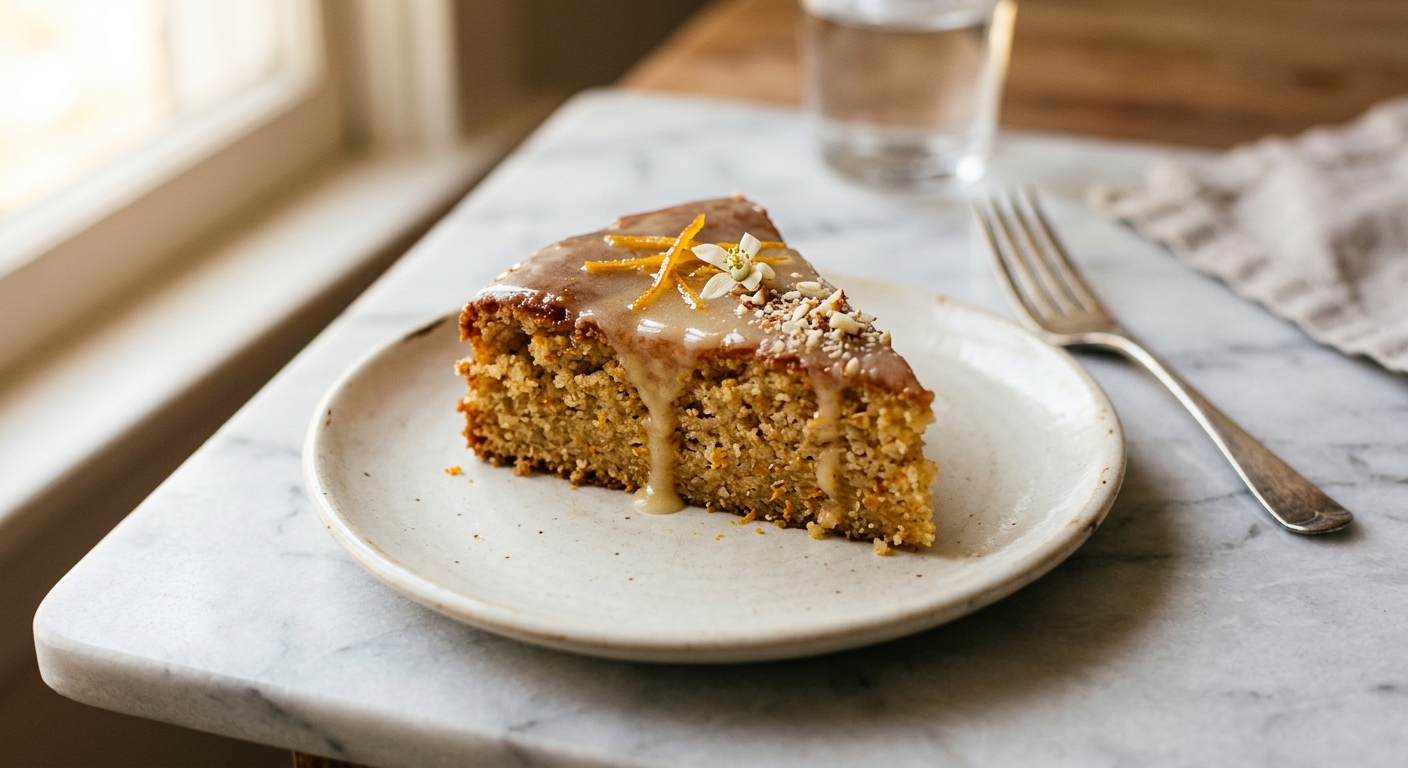
Imagine slicing into a cake so moist it almost gleams, with a crumb so tender it barely holds its shape on the fork. That is exactly what happens when you commit to boiling two whole oranges, peel and pith and all, until they are completely soft, then blitz them into a glossy, amber-colored puree that becomes the backbone of this batter. The result is a cake that smells like a sun-warmed citrus grove and tastes like someone distilled an entire orange into every single bite. There is no flour here, no butter, just ground almonds, eggs, sugar, and that extraordinary whole-orange puree working together into something genuinely special.
What sets this version apart is a three-part approach to depth of flavor. First, simmering the oranges twice, draining and refreshing the water between boils, removes the harsh bitterness from the pith while leaving all of its fragrant oils and natural pectin intact. Second, a generous measure of almond meal gives the cake its characteristic dense, fudgy interior while providing just enough structure to hold clean slices. Third, a light orange blossom water glaze brushed onto the warm cake soaks in as it cools, adding a delicate floral finish that makes this feel celebratory without any fuss. The whole thing comes together in one blender and one bowl.
This cake sits comfortably at the easy end of the baking spectrum, even though it looks and tastes impressively complex. Because there is no gluten to overdevelop, you cannot overmix it. Because the whole orange provides natural moisture and natural pectin, it stays soft for days. It is perfect for anyone baking gluten-free for a crowd, for anyone who loves a cake that improves overnight, and for any occasion where you want to bring something that feels genuinely homemade and a little bit unexpected.
Equipment Needed
Click on an item below to shop for the recommended items for this recipe on Amazon.
As an Amazon Associate, we earn from qualifying purchases.
12
Ingredients
- 2 mediumnavel oranges (about 400g total weight), scrubbed well
- 250 galmond meal or very finely ground blanched almonds (about 2.5 cups)
- 200 gcaster sugar or superfine sugar (about 1 cup)
- 6 largeeggs, at room temperature
- 1 tspbaking powder
- 0.5 tspColima Sea SaltMicroplastic Free Salt
- 1 tsppure vanilla extract
- —For the orange blossom glaze:
- 80 gicing sugar, sifted (about 0.75 cup)
- 2 tbspfresh orange juice
- 0.5 tsporange blossom water
- —To serve (optional):
- 30 gflaked almonds, lightly toasted (about 3 tbsp)
- —Thin orange slices or candied orange peel, for garnish
Ingredient Substitutions
Instructions
- Place the whole, unpeeled oranges in a medium saucepan and cover generously with cold water. Bring to a boil over high heat, then reduce to a steady simmer and cook for 30 minutes. Drain the water, refill the pot with fresh cold water, and simmer for another 30 minutes. This two-boil method removes bitterness from the pith. The oranges are ready when a skewer slides through them with no resistance.
- Drain the oranges and let them cool completely on a cutting board, at least 45 minutes to 1 hour. Do not rush this step. If the oranges are warm when blended with the eggs, they can begin to scramble them. Once cool, cut each orange into quarters and remove any visible seeds.
- Preheat your oven to 325°F (160°C). Grease a 9-inch round springform pan well with butter or neutral oil, then line the bottom with a circle of parchment paper and grease the paper too. This cake is naturally sticky and the double-greasing insurance is worth it.
- Add the cooled orange quarters (skin, pith, and all) to a food processor or high-powered blender and process until you have a very smooth, uniform puree, about 1 to 2 minutes. Scrape down the sides and blend again. The puree should look glossy and have no visible chunks of peel.
- Add the eggs, caster sugar, and vanilla extract to the blender or food processor and blend with the orange puree for about 30 seconds until fully combined and slightly frothy. Transfer this mixture to a large mixing bowl.
- Add the almond meal, baking powder, and salt to the bowl. Using a large spatula or whisk, fold everything together until just combined with no dry streaks remaining. The batter will be fairly thin and pourable. This is expected.
- Pour the batter into the prepared pan and gently tap the pan on the counter twice to release any large air bubbles. Bake on the center rack for 55 to 60 minutes, until the top is a deep golden brown, the edges have pulled slightly away from the pan sides, and a toothpick inserted into the center comes out with only a few moist crumbs (not wet batter). If the top is browning too quickly after 40 minutes, tent loosely with foil.
- Let the cake cool in the pan on a wire rack for 20 minutes before releasing the springform sides. Allow to cool completely before glazing, at least 1 hour. The cake will firm up and become sliceable as it cools. For the glaze, whisk together the icing sugar, orange juice, and orange blossom water until smooth. Brush over the cooled cake and scatter with toasted flaked almonds. Serve at room temperature.
- Boil the oranges using the same two-boil stovetop method described in the oven method (two 30-minute simmers in fresh water each time). Allow to cool completely before proceeding, at least 45 minutes.
- Line the base and sides of a 6-quart (6-litre) slow cooker with a large piece of parchment paper, leaving enough overhang to act as handles for lifting the cake out later. Lightly grease the parchment.
- Puree the cooled orange quarters in a food processor until completely smooth. Add the eggs, sugar, and vanilla and blend for 30 seconds. Transfer to a bowl and fold in the almond meal, baking powder, and salt until no dry streaks remain.
- Pour the batter into the lined slow cooker insert. Place a clean folded kitchen towel or several layers of paper towel under the lid of the slow cooker to absorb condensation and prevent water droplets from falling onto the cake surface. This is the single most important trick for slow cooker baking.
- Cook on High for 2.5 to 3 hours. The cake is done when the edges are set and pulling away from the sides, the center has only a very slight wobble when you gently shake the insert, and a toothpick in the center comes out with moist crumbs. Avoid lifting the lid before the 2-hour mark.
- Turn off the slow cooker and leave the lid ajar for 20 minutes to let steam escape gradually. Then lift the cake out using the parchment paper handles and place on a wire rack to cool completely before glazing. The top will be pale rather than golden, which is perfectly normal for this method. The orange blossom glaze adds all the visual appeal it needs.
- Boil the oranges using the same two-boil stovetop method (two 30-minute simmers). Cool completely before proceeding.
- Grease a 7-inch round cake pan (not springform, as the air fryer fan can be strong) and line with parchment. If you only have a springform, wrap the outside base tightly with foil to prevent any batter leakage from the circulating air.
- Prepare the batter exactly as in the oven method: puree the oranges, blend with eggs, sugar, and vanilla, then fold in almond meal, baking powder, and salt. Pour into the prepared 7-inch pan. This smaller pan will hold approximately two-thirds of the full batter. You can bake the remaining batter as muffins or small cakes in a separate batch.
- Preheat the air fryer to 300°F (150°C) for 5 minutes. Place the cake pan in the basket and bake for 25 minutes without opening. Check at 25 minutes. If the top is already a deep amber, tent loosely with a piece of foil crimped around the edges. Continue baking for a further 20 to 25 minutes.
- The cake is done when a toothpick inserted in the center comes out with just a few moist crumbs and the edges have visibly pulled away from the pan. Because the pan is smaller, the center is deeper and may need the full 50 minutes. Let cool in the pan for 15 minutes, then transfer to a wire rack. Cool completely before applying the glaze.
Nutrition Per Serving
Per 1 serving (makes one 9-inch round single-layer cake)
Why This Recipe Works
The double-boil technique is the heart of this recipe, and understanding why it works helps you trust the process. Citrus peel and pith contain limonin and naringin, bitter compounds that would make a raw-peel cake unpleasantly sharp. Boiling the whole fruit leaches these compounds into the cooking water. Draining and starting with fresh water for a second boil ensures a thorough job. At the same time, the heat softens the pectin in the peel, which when blended creates a naturally emulsified, glossy puree that contributes both structure and extraordinary moisture to the finished cake.
Ground almonds do the structural work that flour would normally do, but in an entirely different way. Rather than forming gluten networks, almond meal provides structure through its fat content and protein, which coagulate during baking. This is why the cake feels dense and moist rather than light and springy. The high fat content of the almonds also keeps the cake from drying out, which is why it stays perfectly tender for days. The baking powder provides just enough lift to prevent the cake from being too heavy, creating a texture that sits somewhere between a traditional cake and a flourless torte.
The six eggs are doing triple duty here: they provide structure through protein coagulation, they emulsify the fat from the almonds with the water from the orange puree, and they contribute richness and color to the crumb. If your cake is very wet in the center after the stated baking time, it is almost always an egg size issue (use large eggs, not extra-large) or an oven temperature calibration issue. An oven thermometer is your best friend with this recipe. If you find the cake sinking in the center after cooling, it was underbaked: the toothpick test should show moist crumbs, never wet batter.
Baker’s Tips
- Do not skip the second boil. Tasting the orange puree before adding it to the batter is a great habit: it should taste pleasantly citrusy with only a very faint, gentle bitterness. If it tastes noticeably harsh, give it a third 15-minute simmer.
- Cool the oranges completely before blending. If they are even slightly warm, they can partially cook the eggs when combined. If you are in a hurry, spread the quartered oranges on a plate and refrigerate for 20 minutes.
- Use a springform pan. Because this cake has no flour, it is more fragile when warm and the springform sides make it much easier to unmold without breaking.
- Weigh your almond meal. Cup measurements for almond meal vary wildly depending on how it is scooped. Too much almond meal makes the cake dense and oily rather than tender.
- The cake is better the next day. The orange flavor deepens, the crumb firms up to the perfect sliceable consistency, and the glaze soaks in beautifully. Baking this the day before you need it is genuinely the ideal approach.
- Toast the flaked almonds in a dry skillet over medium heat for 2 to 3 minutes, stirring constantly, until golden. This small step adds an enormous amount of nutty aroma and crunch to the garnish.
- For a very clean, professional finish, press the glaze through a small sieve before brushing to remove any lumps of undissolved icing sugar.
Variations
- Lemon and Almond version: Replace the oranges with 4 large unwaxed lemons. Reduce the boiling time slightly (45 minutes total across both boils) as lemons soften faster. Use lemon juice in the glaze and omit the orange blossom water in favor of a small pinch of ground cardamom.
- Chocolate Orange Almond Cake: Replace 40g of the almond meal with good quality Dutch-process cocoa powder and add 60g melted dark chocolate (70% cocoa) to the batter when folding. Glaze with a dark chocolate ganache instead of the citrus glaze.
- Olive Oil and Orange Cake: Add 60ml (4 tbsp) of a fruity extra-virgin olive oil to the batter along with the eggs. This pushes the cake further in a savory, Mediterranean direction and adds a lovely richness to the crumb. Finish with a dusting of icing sugar and a few flakes of sea salt.
- Mini Cakes: Divide the batter between a 12-cup muffin tin lined with parchment liners. Bake at 325°F (160°C) for 22 to 26 minutes. Perfect for individual servings or gifting.
Troubleshooting & FAQ
My cake is still very wet and jiggly in the center after the full bake time. What went wrong?
The cake tastes bitter. Did I do something wrong?
My cake sank in the middle after it came out of the oven. Can I fix it?
My glaze is cloudy or grainy. How do I fix it?
The top of my cake is very dark but the inside is not done yet. What should I do?
Storage & Make-Ahead
- Storage: Store covered at room temperature for up to 3 days. The flavor and texture genuinely improve after the first day as the orange flavor deepens and the crumb settles. Refrigerate for up to 1 week, bringing slices to room temperature before serving. Freeze unglazed cake (whole or in slices) wrapped tightly in plastic and then foil for up to 3 months. Thaw overnight in the refrigerator and glaze just before serving.
- Make-Ahead: The whole oranges can be boiled, cooled, and refrigerated (whole, in an airtight container) up to 3 days in advance. The fully baked and cooled cake can be made 1 to 2 days ahead and kept covered at room temperature. In fact, this is strongly encouraged, as the cake is noticeably better on day two. Glaze the day you plan to serve it.