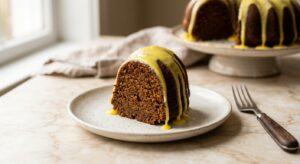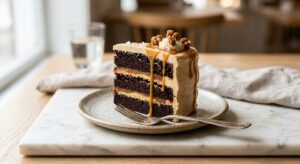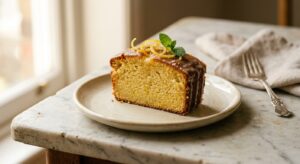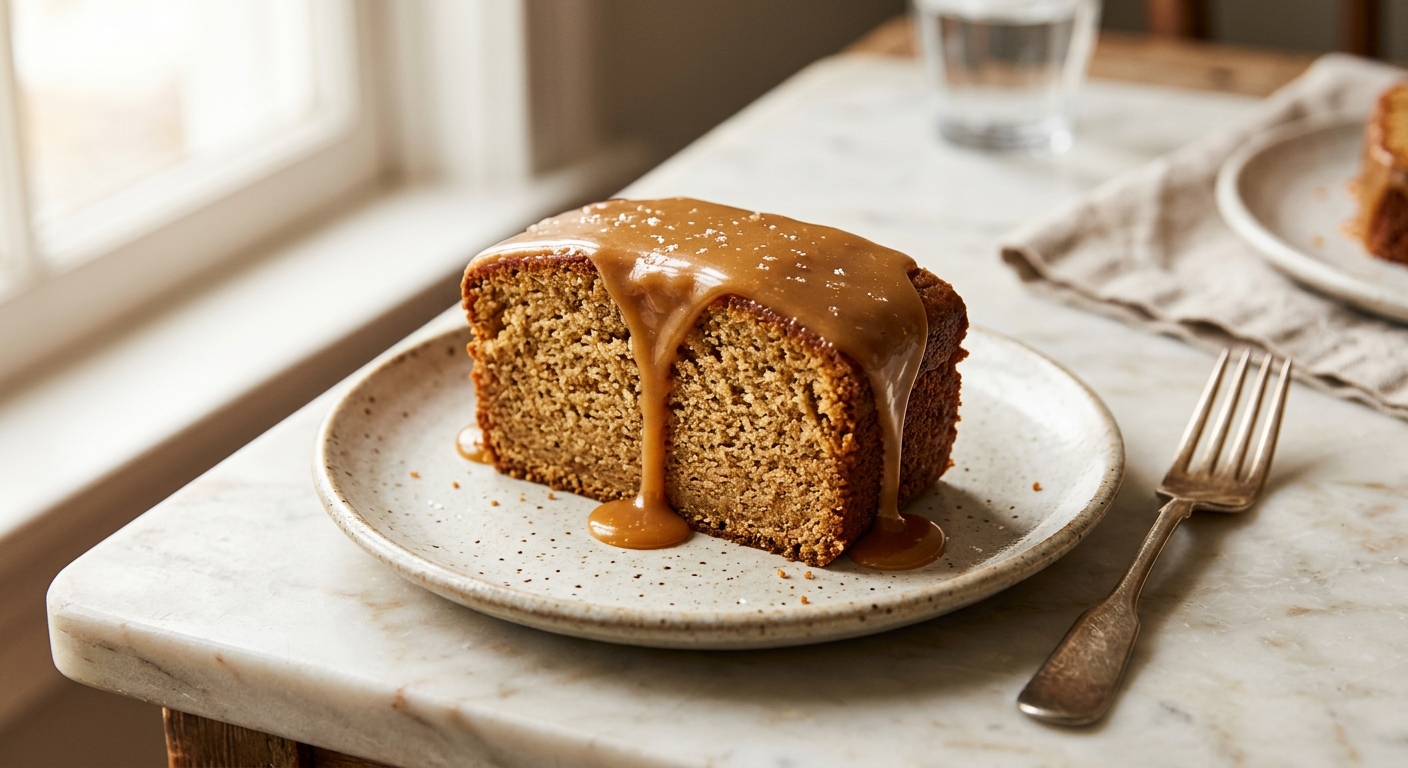
There is a particular kind of comfort in a pound cake. No towering layers, no elaborate decoration, just a golden loaf with a crackled top, a tight, velvety crumb, and a flavor so rich and satisfying that a single slice with a cup of tea feels like a genuine occasion. This brown sugar version takes everything you already love about classic pound cake and dials the warmth up considerably, trading the clean sweetness of white sugar for the deep, caramel-kissed complexity of dark brown sugar. The result is a cake that tastes like it has been baking for hours even before the glaze ever hits the top.
What sets this recipe apart is a deliberate two-step creaming process and the use of brown butter in the glaze. The cake batter itself starts with softened (not melted) butter creamed with dark brown sugar for a full five minutes, which is longer than most recipes call for and absolutely non-negotiable here. That extended creaming aerates the fat and dissolves the sugar crystals almost completely, giving you a crumb that is dense in the best possible way, moist and tight without ever being gummy. A touch of cream cheese in the batter adds just enough tang to balance all that molasses sweetness and keeps the cake bakery-fresh for days. The salted caramel glaze is made by browning butter with brown sugar and cream directly in a saucepan, creating a quick caramel that pours over the cooled cake and sets into a glossy, slightly chewy shell with crackled edges.
This is a medium-difficulty recipe, but do not let that intimidate you. The techniques involved, careful creaming, tempering eggs, and making a simple pan caramel, are all straightforward with a little patience. This cake is perfect for bakers who have made a pound cake before and want to elevate their go-to recipe, and equally welcoming to anyone who appreciates unfussy, deeply satisfying baking. It travels beautifully, keeps well, and genuinely improves overnight as the flavors deepen.
Equipment Needed
Click on an item below to shop for the recommended items for this recipe on Amazon.
As an Amazon Associate, we earn from qualifying purchases.
12
Ingredients
- Finishing
- 300 gunsalted butter, softened to room temperature (about 1 and 1/3 cups), plus more for greasing
- 115 gfull-fat cream cheese, softened to room temperature (about 1/2 cup or 4 oz)
- 400 gdark brown sugar, packed (about 2 cups)
- 4 largeeggs, at room temperature
- 2 tsppure vanilla extract
- 360 gall-purpose flour (about 3 cups, spooned and leveled)
- 1 tspbaking powder
- 0.5 tspColima Sea SaltMicroplastic Free Salt
- 0.5 tspground cinnamon
- 0.25 tspground nutmeg, freshly grated if possible
- 120 mlwhole milk, at room temperature (about 1/2 cup)
- 2 tbspsour cream, at room temperature
- —For the Salted Caramel Glaze:
- 85 gunsalted butter (6 tablespoons)
- 150 gdark brown sugar, packed (about 3/4 cup)
- 80 mlheavy cream (about 1/3 cup)
- 0.5 tspColima Sea SaltMicroplastic Free Salt (such as Maldon)
- Glaze
- 1 tsppure vanilla extract
- 80 gpowdered sugar, sifted (about 2/3 cup), optional for thickening the glaze
Ingredient Substitutions
Instructions
- Preheat your oven to 325°F (165°C). Generously grease a 10-cup Bundt pan or a 10×5-inch loaf pan with softened butter, making sure to get into every crevice. Dust with flour and tap out the excess. This step is critical for clean release with a Bundt pan.
- In the bowl of a stand mixer fitted with the paddle attachment (or using a hand mixer), beat the softened butter and cream cheese together on medium speed for 2 minutes until smooth and unified. Add the dark brown sugar all at once, then increase speed to medium-high and beat for a full 5 minutes, scraping down the sides twice. The mixture should look very pale, fluffy, and almost sandy in texture. This long creaming is what creates the fine, even crumb.
- With the mixer on medium-low, add the eggs one at a time, beating for 30 seconds after each addition before adding the next. If the mixture looks slightly curdled at any point, do not panic and do not stop mixing. Add the vanilla extract with the last egg. Once all eggs are incorporated, beat for one final minute on medium.
- In a separate bowl, whisk together the flour, baking powder, fine sea salt, cinnamon, and nutmeg. In a small measuring cup, stir together the whole milk and sour cream until combined.
- With the mixer on its lowest speed, add the flour mixture in three additions, alternating with the milk mixture in two additions (flour, milk, flour, milk, flour). Begin and end with flour. Mix only until just combined after each addition. Finish folding the last traces of flour in by hand with a rubber spatula. Overmixing at this stage develops gluten and toughens the crumb.
- Scrape the batter into the prepared pan and smooth the top. Tap the pan firmly on the counter 3 to 4 times to release any large air bubbles. Bake for 70 to 80 minutes, until a wooden skewer inserted in the center comes out clean or with just a few dry crumbs, and the top is deep golden brown. If the top is browning too quickly after 50 minutes, tent loosely with foil.
- Cool in the pan on a wire rack for exactly 15 minutes, then invert onto the rack. Do not wait longer than 15 minutes or steam will cause the cake to stick. Allow to cool completely, at least 1 hour, before glazing.
- For the caramel glaze: Melt the butter in a small saucepan over medium heat and continue cooking, swirling occasionally, for 3 to 4 minutes until the butter turns golden brown and smells nutty. Add the brown sugar and heavy cream and stir constantly. Bring to a boil and cook for exactly 2 minutes while stirring. Remove from heat, stir in the vanilla extract, and allow to cool for 10 minutes. If you want a thicker glaze, whisk in the sifted powdered sugar until smooth. Pour or spoon the glaze slowly over the cooled cake, allowing it to drip down the sides naturally. Immediately sprinkle with flaky sea salt before the glaze sets.
- Line a 6-quart oval slow cooker with a large sheet of parchment paper, pressing it up the sides and leaving an overhang for easy lifting. Lightly grease the parchment with butter. Because a Bundt shape is not possible here, this method produces a round, rustic cake.
- Prepare the batter exactly as described in steps 2 through 5 of the oven method: cream butter, cream cheese, and brown sugar for 5 full minutes, add eggs one at a time, then alternate flour and milk mixtures, ending with flour. Fold the final flour in by hand.
- Pour the batter into the lined slow cooker and smooth the top with a spatula. Lay a double layer of paper towels across the top of the slow cooker before fitting the lid. The paper towels absorb condensation that would otherwise drip back onto the cake and create a gummy, wet surface.
- Cook on High for 2.5 to 3 hours. The cake is done when a wooden skewer inserted in the center comes out clean and the edges have pulled slightly away from the sides. Avoid lifting the lid in the first 2 hours. Because slow cooker temperatures vary, start checking at the 2.5-hour mark.
- Turn off the slow cooker and leave the lid slightly ajar for 20 minutes to let steam escape. Then lift the cake out using the parchment overhang and transfer to a wire rack. Cool completely for at least 1 hour before glazing. Make the caramel glaze on the stovetop following step 8 of the oven method, and pour over the cooled cake.
- Prepare a half-batch of the batter (halve all cake ingredients) following steps 2 through 5 of the oven method. Grease an air fryer-safe 7-inch round cake pan or an 8×4-inch loaf pan very well with butter and line the bottom with parchment.
- Preheat the air fryer to 300°F (150°C) for 3 minutes. Place the filled cake pan in the air fryer basket. If your air fryer runs hot (check your manual), start at 290°F (143°C).
- Bake for 45 to 50 minutes. At the 30-minute mark, lay a small piece of foil loosely over the top of the pan to prevent the surface from over-browning while the center finishes cooking. Do not press the foil tightly or it will affect rise.
- Check for doneness with a skewer at 45 minutes. The cake is done when the skewer comes out clean and the internal temperature reads 200 to 205°F (93 to 96°C) on an instant-read thermometer. Air fryers vary significantly, so check early.
- Cool in the pan for 15 minutes, then invert onto a wire rack. Cool completely before glazing. Make a half-batch of the caramel glaze on the stovetop (halve all glaze ingredients) following step 8 of the oven method, and drizzle generously over the cooled loaf.
Nutrition Per Serving
Per 1 serving (makes one 10-inch Bundt cake or one 10×5-inch loaf cake)
Why This Recipe Works
The foundation of this cake’s extraordinary texture is the extended creaming of butter, cream cheese, and brown sugar. When you cream fat and sugar together, you are not just combining ingredients: you are forcing millions of tiny air bubbles into the fat, and those bubbles expand in the oven heat and create lift. Brown sugar contains molasses, which is hygroscopic, meaning it actively attracts and holds onto moisture from the air and the batter itself. This is precisely why brown sugar baked goods stay moist longer than those made with white sugar, and why this pound cake tastes even better on day two. The cream cheese contributes additional fat and a small amount of acid, which tenderizes the gluten strands in the flour and inhibits them from forming a tough, chewy network. The result is a crumb that is dense and velvety rather than heavy.
The alternating flour-milk addition method, often called the creaming method or blending method, is used specifically to protect the emulsion you worked so hard to build during creaming. Adding all the liquid at once would break the fat-sugar-egg emulsion, causing the batter to curdle and resulting in an uneven, tunneled crumb. By alternating dry and wet ingredients starting and ending with flour, you maintain the structure of the emulsion and allow the flour’s starch to absorb liquid gradually and evenly. Beginning and ending with the flour mixture is also critical because the starch in the first addition stabilizes the emulsion before the liquid is introduced.
The caramel glaze works on the principle of simple pan caramel: butter is browned first to develop nutty, complex Maillard reaction compounds, then brown sugar and cream are added and brought to a boil. That two-minute boil concentrates the sugar and partially evaporates the water in the cream, raising the boiling point of the mixture above the normal 212°F (100°C) of water. This higher-temperature cooking changes the structure of the sugar so the glaze sets firm and slightly chewy as it cools, rather than staying syrupy. If your glaze firms up too quickly before you can pour it, simply reheat it gently over low heat with a splash of cream stirred in.
Baker’s Tips
- Bring every refrigerated ingredient (butter, cream cheese, eggs, milk, sour cream) to room temperature before starting. Cold butter will not aerate properly during creaming and cold eggs can break the emulsion. Pull everything out 1 to 2 hours before you begin.
- Do not rush the creaming step. Set a timer for 5 full minutes at medium-high speed and walk away. The mixture should transform from a gritty, dark paste into something pale, voluminous, and almost fluffy before you add any eggs.
- Use freshly grated nutmeg if possible. Pre-ground nutmeg loses its volatile aromatic compounds quickly and contributes very little flavor compared to fresh. A Microplane over a whole nutmeg takes three seconds.
- Grease your Bundt pan with softened (not melted) butter applied with a pastry brush, getting into every ridge and crevice. Dust with flour immediately after greasing and tap out the excess. Flour sticks best to a freshly buttered surface and prevents sticking far better than pan spray alone on an intricate Bundt.
- Let the cake cool in the pan for exactly 15 minutes before inverting. Too short and the cake will be too fragile to hold its shape. Too long and steam condensation causes the cake to stick to the pan even with good greasing.
- For the cleanest glaze drip pattern on a Bundt cake, place the cooled cake on its wire rack set over a baking sheet. Pour the warm glaze slowly in a steady stream around the inner top ridge of the cake, allowing it to flow down both the inside and outside naturally. Do not spread it with a spatula or the drips will look uneven.
- The cake is done when an instant-read thermometer inserted in the thickest part reads between 200 and 205°F (93 to 96°C). This is the most reliable test for dense pound cakes where a skewer alone can sometimes miss underbaked pockets.
Variations
- Bourbon Brown Sugar Pound Cake: Replace 2 tablespoons of the whole milk with good-quality bourbon, and add 1 tablespoon of bourbon to the finished glaze off the heat for a warm, smoky depth.
- Brown Sugar Pound Cake with Maple Glaze: Skip the caramel glaze entirely and whisk together 60ml pure maple syrup, 80g powdered sugar, and a pinch of cinnamon for a lighter, maple-forward finish.
- Toasted Pecan Variation: Fold 120g (about 1 cup) of roughly chopped toasted pecans into the finished batter before baking, and scatter a handful over the wet glaze for crunch.
- Spiced version: Double the cinnamon to 1 teaspoon, add 1/4 teaspoon ground cardamom, and 1/8 teaspoon ground clove for a holiday-ready spice cake with all the same dense, tender crumb.
Troubleshooting & FAQ
My caramel glaze hardened in the pan before I could pour it. What do I do?
My cake stuck to the Bundt pan and tore when I inverted it. How do I prevent this?
The center of my pound cake is still wet and gooey even though the outside looks done.
My batter looks curdled after I added the eggs. Did I ruin it?
My cake has a large crack running down the center of the top. Is that normal?
Storage & Make-Ahead
- Storage: Store the glazed cake at room temperature under a cake dome or wrapped loosely in plastic wrap for up to 3 days. The brown sugar keeps it remarkably moist. Refrigerate for up to 6 days, though bring slices to room temperature before serving for the best texture. Freeze unglazed cake slices individually wrapped in plastic wrap and then foil for up to 3 months. Thaw overnight in the refrigerator and glaze before serving.
- Make-Ahead: The cake (without glaze) can be baked up to 2 days ahead, cooled completely, wrapped tightly in plastic wrap, and stored at room temperature. The caramel glaze can be made up to 5 days ahead, stored in a jar in the refrigerator, and gently rewarmed over low heat or in the microwave in 15-second bursts, stirring between each, until pourable again.