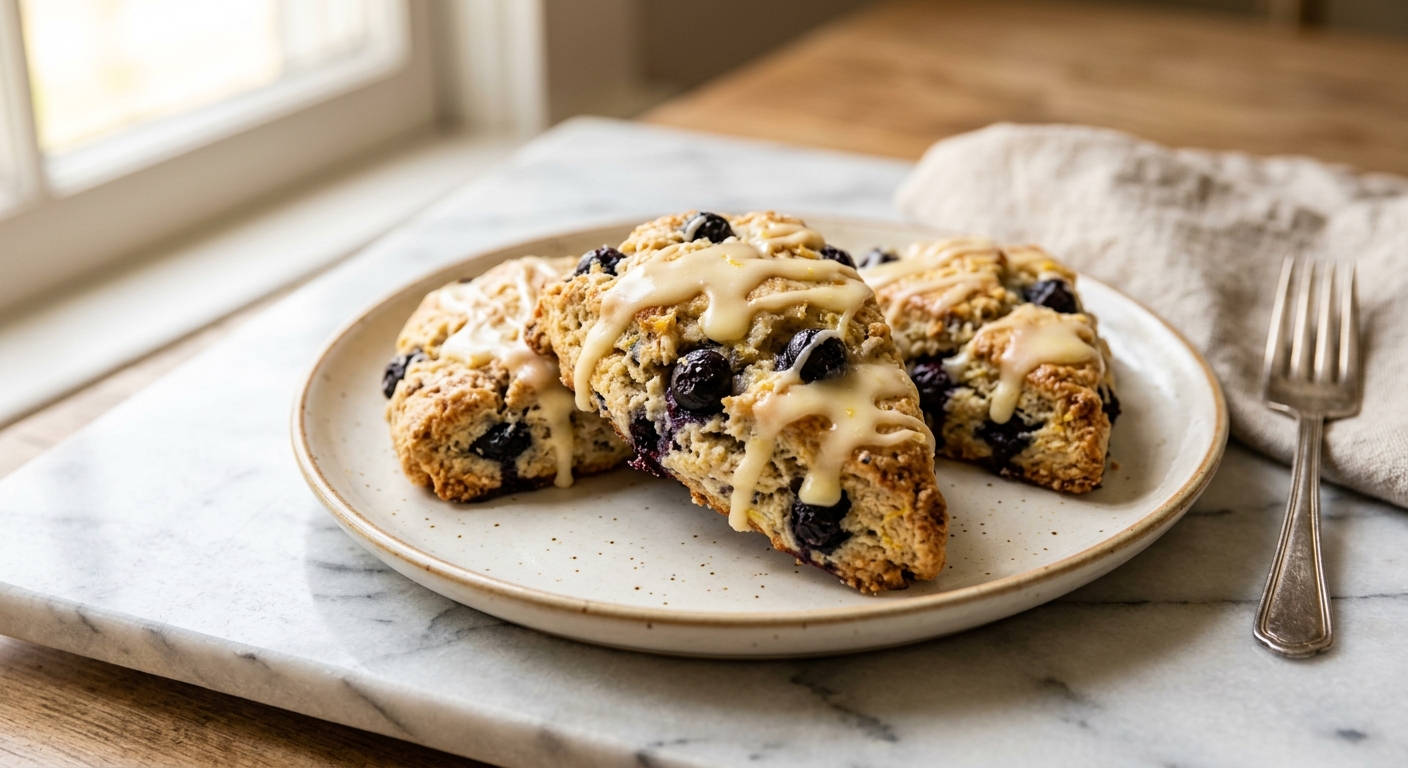
There is something deeply comforting about a warm scone pulled fresh from the oven, the edges just golden, a handful of blueberries having softened into jammy little pockets of sweetness. For years, a low-carb lifestyle meant saying goodbye to that ritual, settling for dense protein bars or sad almond flour hockey pucks masquerading as baked goods. These scones change that. Light in texture, delicately sweet, and fragrant with lemon zest and vanilla, they are the real thing, just built differently.
What sets this recipe apart is the careful balance of coconut flour and a small amount of psyllium husk powder. Coconut flour is famously thirsty, absorbing far more liquid than any other flour, which is why so many coconut flour recipes turn out dry and gritty. Here, the psyllium husk adds just enough structure and flexibility to mimic the gluten network that gives a classic scone its gentle chew, while the combination of cold butter and cream cheese creates the rich, layered crumb you expect. Monk fruit sweetener provides clean sweetness with zero glycemic impact, letting the blueberries and lemon shine without any bitter aftertaste.
This is a medium-difficulty bake, best suited for home bakers who are comfortable working with a slightly sticky, forgiving dough that behaves a little differently than all-purpose flour doughs. If you have made scones before, you will feel right at home. If this is your first scone, take your time with the shaping and trust the process. These are wonderfully forgiving, and the result is a scone worth every bit of effort.
Equipment Needed
Click on an item below to shop for the recommended items for this recipe on Amazon.
As an Amazon Associate, we earn from qualifying purchases.
8
Ingredients
- 80 gcoconut flour, sifted (about 2/3 cup, spooned and leveled)
- 8 gpsyllium husk powder (about 1 tbsp, not whole husks)
- 70 ggranulated monk fruit sweetener (about 1/3 cup)
- 1.5 tspbaking powder
- 0.25 tspColima Sea SaltMicroplastic Free Salt
- 0.5 tspground cinnamon
- 56 gcold unsalted butter, cut into 1/2-inch cubes (4 tbsp / half a stick)
- 56 gcold full-fat cream cheese, cut into small pieces (about 1/4 cup)
- 3 largeeggs, cold
- 60 mlheavy whipping cream (about 1/4 cup), plus 1 tbsp for brushing
- 1 tsppure vanilla extract
- 1 tspfinely grated lemon zest (from about half a large lemon)
- 120 gfresh or frozen blueberries (about 3/4 cup; do not thaw if frozen)
- —For the glaze: 3 tbsp powdered monk fruit sweetener, 1 to 2 tbsp fresh lemon juice, whisked until smooth
Ingredient Substitutions
Instructions
- Preheat your oven to 375°F (190°C). Line a large baking sheet with parchment paper and set aside.
- In a large bowl, whisk together the sifted coconut flour, psyllium husk powder, granulated monk fruit sweetener, baking powder, salt, and cinnamon until evenly combined and no lumps remain.
- Add the cold cubed butter and cold cream cheese pieces to the flour mixture. Using your fingertips or a pastry cutter, work the fats into the flour until the mixture resembles coarse, pea-sized crumbs with a few larger flat pieces of butter visible. Work quickly to keep everything cold.
- In a small bowl or measuring cup, whisk together the 3 cold eggs, heavy cream, vanilla extract, and lemon zest. Pour the wet ingredients into the flour mixture and stir with a flexible spatula until a shaggy dough forms. Let it rest for 2 minutes so the coconut flour can fully absorb the liquid. The dough should feel soft, slightly sticky, and hold together when pressed.
- Gently fold in the blueberries, taking care not to crush them. If using frozen berries, work quickly so the dough does not become purple.
- Turn the dough out onto the parchment-lined baking sheet. With lightly dampened hands, shape it into a round disc about 7 inches across and 1 inch thick. Use a sharp knife or bench scraper to cut the disc into 8 equal wedges, like a pizza. Gently separate the wedges slightly on the pan, leaving about 1 inch of space between them.
- Brush the tops lightly with the reserved tablespoon of heavy cream. Bake for 22 to 25 minutes, until the tops are golden and set, and the edges are lightly browned. A toothpick inserted in the center of a scone should come out clean.
- Let the scones cool on the pan for 10 minutes before transferring to a cooling rack. Whisk together the powdered monk fruit sweetener and lemon juice to make the glaze and drizzle over the scones once they are mostly cool. Serve warm or at room temperature.
- Prepare the dough exactly as described in Steps 1 through 6 of the oven method, including shaping and cutting into 8 wedges.
- Cut a round of parchment paper to fit your air fryer basket, trimming it so it does not block the air vents around the edges. Preheat your air fryer to 325°F (163°C) for 3 minutes.
- Place 4 scone wedges in the air fryer basket with at least 1 inch of space between them. Brush lightly with heavy cream. Cook for 12 to 14 minutes, checking at 10 minutes. The scones are done when the tops are deep golden and a toothpick inserted in the center comes out clean. Do not open the basket in the first 8 minutes.
- Carefully remove the first batch using a thin spatula and let rest on a cooling rack. Repeat with the remaining 4 scones, preheating the air fryer again for 1 minute between batches.
- Drizzle with the lemon monk fruit glaze once cooled for 5 minutes. The exterior will be slightly crispier than the oven version, which many people find even more satisfying.
Nutrition Per Serving
Per 1 serving (makes 8 wedge-shaped scones from one round)
Sweetener: monk fruit
Why This Recipe Works
Coconut flour is unlike any other low-carb flour because it is extraordinarily high in fiber, which means it absorbs four to five times more liquid than almond flour or all-purpose flour. This is why most coconut flour recipes call for a seemingly excessive number of eggs: the eggs provide both the liquid the flour needs and the protein structure to hold everything together as it bakes. In this recipe, three eggs do that heavy lifting, while the cold heavy cream and cream cheese add fat that keeps the crumb tender rather than rubbery. The psyllium husk powder is the quiet hero here, forming a gel-like matrix when it hydrates that mimics the elasticity of gluten, giving the scone a cohesive, sliceable structure without any chewiness.
Keeping the butter and cream cheese cold is not just a suggestion, it is what creates the flaky, layered texture that distinguishes a scone from a muffin. When cold fat hits the heat of the oven, it releases steam before it fully melts, pushing the layers of dough apart and creating those beautiful airy pockets. Room temperature butter would simply blend into the dough, producing a denser, more uniform crumb. The two-minute rest after mixing is equally important: it gives the coconut flour time to fully hydrate and swell, turning what looks like a wet, loose mess into a workable dough. Skip the rest and you will shape a dough that seems too wet, add too much flour, and end up with dry scones.
Monk fruit sweetener provides sweetness from mogrosides, naturally occurring compounds that are intensely sweet with no calories and a glycemic index of zero. Unlike allulose, which can crystallize and create a slightly icy mouthfeel in baked goods, monk fruit blends and bakes cleanly. The powdered version in the glaze dissolves almost instantly in lemon juice for a smooth, pourable finish. If your finished scones crack on top, this is normal and even desirable. It indicates the leavening did its job and the structure set properly during baking.
Baker’s Tips
- Sift the coconut flour before measuring. It clumps easily and sifting ensures even distribution and a lighter texture in the final scone.
- Use psyllium husk POWDER, not whole or flaked psyllium husks. Whole husks do not hydrate the same way and can leave a gummy or stringy texture in the finished scone.
- Do not skip the 2-minute dough rest after mixing. Coconut flour needs time to absorb liquid fully, and the dough will firm up significantly during this window.
- Cold ingredients matter. If your kitchen is warm, pop the cubed butter and cream cheese in the freezer for 10 minutes before starting.
- Dampening your hands lightly with cold water before shaping the dough prevents it from sticking without adding extra flour, which can dry out the scones.
- If using frozen blueberries, toss them in 1 teaspoon of coconut flour before folding in. This absorbs some of the extra moisture and reduces purple bleeding in the dough.
- Let the scones cool for at least 10 minutes before cutting or moving. Coconut flour baked goods firm up as they cool, and they can seem underdone right out of the oven even when fully baked.
Variations
- Lemon Poppy Seed: Replace the blueberries with 2 tbsp poppy seeds and increase the lemon zest to 2 tsp for a bright, citrusy variation.
- Cinnamon Pecan: Swap the blueberries for 60g roughly chopped toasted pecans and add an extra 1/4 tsp cinnamon. Replace the lemon glaze with a simple vanilla cream glaze using powdered monk fruit sweetener and a splash of heavy cream.
- Chocolate Chip: Use 60g of stevia-sweetened or sugar-free dark chocolate chips in place of the blueberries. Omit the lemon zest and replace with 1/4 tsp almond extract.
- Dairy-Free: Use coconut oil (frozen into solid cubes) in place of butter, dairy-free cream cheese, and full-fat coconut cream in place of heavy cream. The texture will be slightly more tender and less flaky.
Troubleshooting & FAQ
My dough is too wet and sticky to shape. What went wrong?
My scones came out dense and gummy inside. What happened?
The blueberries turned the entire dough purple. Can I prevent this?
My scones spread out flat rather than holding their shape. What went wrong?
My glaze is grainy or does not dissolve properly. How do I fix it?
Storage & Make-Ahead
- Storage: Store cooled scones in an airtight container at room temperature for up to 2 days, or refrigerate for up to 5 days. To refresh, warm in a 300°F (150°C) oven for 5 minutes or in the air fryer for 2 to 3 minutes. Freeze unglazed scones individually wrapped in plastic wrap, then placed in a freezer bag, for up to 2 months. Thaw at room temperature and glaze fresh before serving.
- Make-Ahead: The dry ingredients can be whisked together and stored in an airtight container for up to 1 week. The dough can be shaped, cut into wedges, and frozen unbaked on a parchment-lined tray, then transferred to a freezer bag. Bake from frozen at 375°F (190°C) for 28 to 32 minutes with no thawing needed. The glaze is best made fresh.