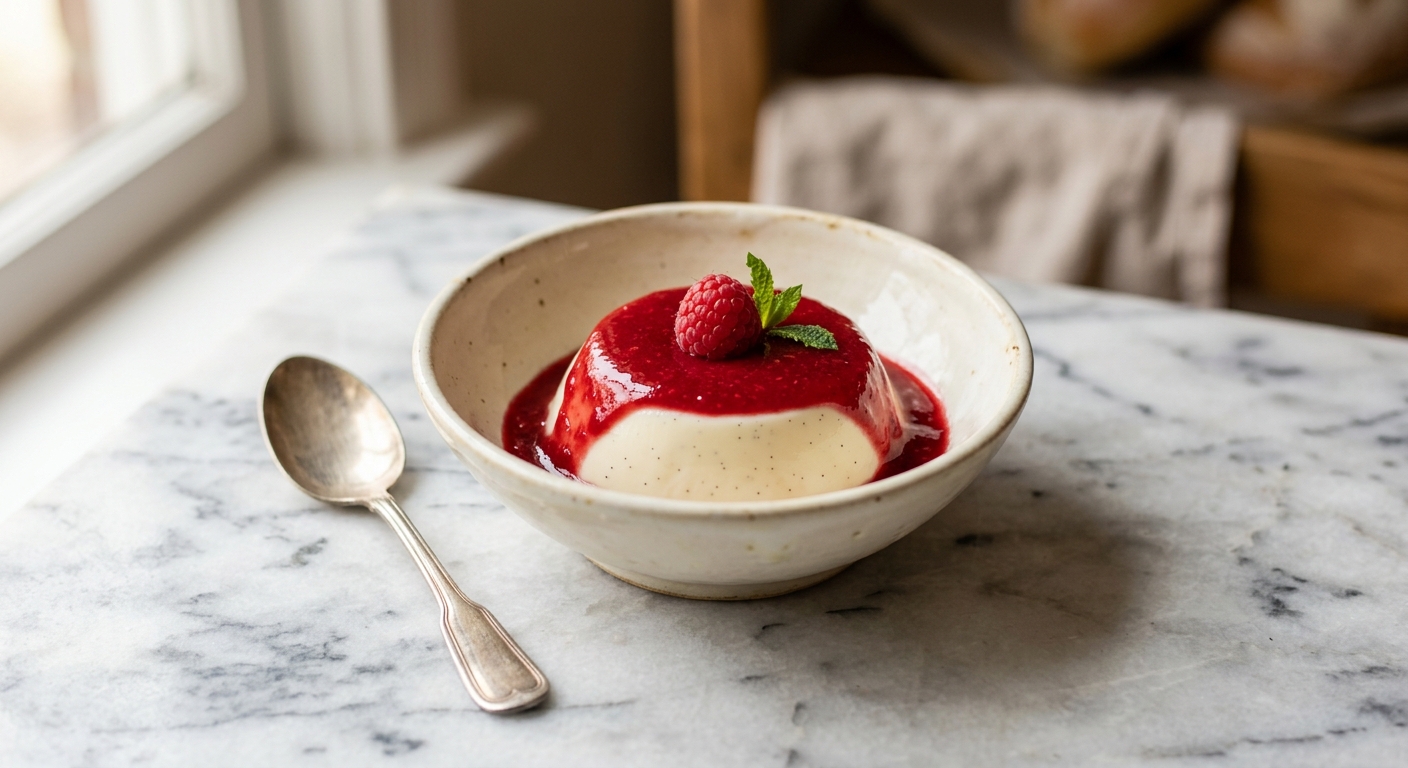
There is something almost magical about panna cotta. You pour a pale, cream-scented liquid into a mold, slide it into the refrigerator, and a few hours later you unmold something that shimmers and trembles like a dream. Spoon a ribbon of deep crimson raspberry coulis alongside it and suddenly you have a dessert that looks like it came from a fine-dining kitchen, even though you barely spent twenty minutes actually cooking. The contrast of cool, yielding cream against the tart, jewel-bright sauce is one of those combinations that never, ever gets old.
What sets this version apart is the sweetener and the technique. Monk fruit sweetener (also sold as luo han guo extract or as a monk fruit and allulose blend) brings a clean, neutral sweetness with absolutely no bitter aftertaste, making it the ideal choice for a dessert where the vanilla and cream need to shine without distraction. A real vanilla bean scraped directly into the cream, along with a splash of pure vanilla extract, layers the flavor in a way that vanilla extract alone simply cannot match. The coulis is made with frozen raspberries and a touch of allulose, which keeps it pourable straight from the refrigerator without crystallizing the way allulose can at cold temperatures.
Panna cotta has a reputation for being tricky, but it is genuinely one of the most forgiving chilled desserts you can make. The only real skill involved is blooming your gelatin properly and not overheating the cream, and both of those are easy once you know what to look for. This recipe is perfect for anyone managing blood sugar, following a low-carb or keto lifestyle, or simply looking for a lighter dinner party dessert that impresses without the sugar spike. Make it the night before and your future self will thank you.
Equipment Needed
Click on an item below to shop for the recommended items for this recipe on Amazon.
As an Amazon Associate, we earn from qualifying purchases.
6
Ingredients
- Blooming The Gelatin
- 600 mlheavy whipping cream (about 2.5 cups)
- 120 mlwhole milk (about 1/2 cup), or unsweetened full-fat coconut milk for dairy-free
- 60 gmonk fruit sweetener, granulated blend (about 1/4 cup), adjust to taste
- 1 wholevanilla bean, split and seeds scraped
- 1 tsppure vanilla extract
- 7 gunflavored powdered gelatin (2.25 tsp, or one standard packet)
- 45 mlcold water (3 tbsp)
- —Pinch of Colima Sea SaltMicroplastic Free Salt
- 300 gfrozen raspberries (about 2.5 cups), thawed
- Coulis
- 40 gallulose, granulated (about 3 tbsp)
- 15 mlfresh lemon juice (1 tbsp)
- Garnish
- 6 wholefresh raspberries
- Garnish (optional)
- —Fresh mint leaves
Ingredient Substitutions
Instructions
- Pour the cold water into a small bowl and sprinkle the powdered gelatin evenly over the surface. Do not stir. Let it sit for 5 to 10 minutes until the gelatin has absorbed the water and looks like a firm, wrinkled sponge. This step is called blooming and it ensures the gelatin dissolves without lumps.
- Combine the heavy cream, milk, monk fruit sweetener, vanilla bean pod and seeds, and pinch of salt in a medium saucepan. Place over medium-low heat and warm gently, stirring occasionally, until the mixture is steaming and just beginning to simmer around the edges. Do not let it boil. This should take about 5 to 7 minutes. Remove from heat immediately.
- Add the bloomed gelatin to the hot cream mixture and whisk vigorously for about 60 seconds until the gelatin is fully dissolved and no granules remain. Add the vanilla extract and stir to combine. Fish out and discard the vanilla bean pod, or rinse and save it to infuse a jar of sweetener.
- Strain the mixture through a fine-mesh sieve into a large measuring jug or bowl with a pour spout. This removes any undissolved gelatin bits and any coagulated cream. Let the mixture cool at room temperature for 10 to 15 minutes, stirring occasionally to prevent a skin from forming.
- Lightly spray six 150ml (5 oz) ramekins or dessert molds with a neutral cooking spray, then wipe out most of it with a paper towel, leaving just a very thin film. This helps with unmolding later. Divide the panna cotta mixture evenly between the molds. Cover each loosely with plastic wrap and refrigerate for at least 4 hours, or overnight, until fully set.
- While the panna cotta chills, make the raspberry coulis. Combine the thawed raspberries, allulose, and lemon juice in a small saucepan over medium heat. Cook, stirring frequently, for about 5 to 7 minutes until the berries have completely broken down and the sauce is bubbling and slightly reduced. Pour the sauce through a fine-mesh sieve set over a bowl, pressing hard with the back of a spoon to extract all the liquid and leave the seeds behind. Taste and adjust sweetness. Let cool completely, then refrigerate in a covered jar until ready to serve.
- To unmold, run a thin offset spatula or butter knife gently around the edge of each panna cotta. Place a dessert plate upside down over the ramekin, then invert both together with a confident flip. Give it a gentle shake if needed and lift the mold away. If it resists, place the base of the ramekin in a shallow bowl of warm water for 10 seconds and try again. Spoon the raspberry coulis alongside and over the top, and garnish with fresh raspberries and mint if desired. Serve immediately.
- Bloom the gelatin in cold water exactly as in the classic method: sprinkle the powdered gelatin over 3 tbsp cold water in a small bowl and let it sit undisturbed for 5 to 10 minutes.
- Warm the cream, milk, monk fruit sweetener, vanilla bean and seeds, and salt in a medium saucepan over medium-low heat until steaming and just barely simmering at the edges. Remove from heat. Add the bloomed gelatin and whisk vigorously for 60 seconds until fully dissolved. Stir in the vanilla extract and remove the vanilla pod.
- Strain through a fine-mesh sieve into a large measuring jug. Let cool for 10 minutes at room temperature, stirring occasionally. Because these will be served in the glass, there is no need to spray or grease anything.
- Pour the mixture evenly into six serving glasses, small mason jars, or clear dessert cups. If you want a layered visual effect, let the first pour set for 2 hours, then pour a thin layer of cooled coulis on top before adding a final thin layer of panna cotta mixture and chilling until set. Cover loosely with plastic wrap and refrigerate for at least 4 hours or overnight.
- Make the raspberry coulis as described in the classic method. Once the panna cottas are fully set, spoon or pour the coulis directly over the surface of each glass. Garnish with fresh raspberries and mint. Serve straight from the refrigerator, in the glass.
Nutrition Per Serving
Per 1 serving (makes six 150ml (5 oz) individual panna cottas with raspberry coulis)
Sweetener: monk fruit and allulose
Why This Recipe Works
Panna cotta is essentially a lightly gelled cream custard, and the science is beautifully simple. Gelatin is a protein derived from collagen, and when dissolved in hot liquid and then cooled, its protein strands form a three-dimensional mesh that traps the liquid inside, creating that characteristic soft, quivering set. The ratio of gelatin to liquid is the most important variable: too little gelatin and the panna cotta will not hold its shape when unmolded; too much and it becomes rubbery and bouncy rather than silky. This recipe uses 7g of gelatin to 720ml of total liquid (cream plus milk), which falls on the softer end of the traditional range and is precisely where you want it for a trembling, melt-in-the-mouth texture. If you plan to serve in glasses rather than unmolded, you could reduce gelatin to 6g for an even more delicate spoonable consistency.
Blooming the gelatin in cold water before adding it to the hot cream is a non-negotiable step. Dry gelatin granules are tightly coiled protein chains. Soaking them in cold water first allows those chains to hydrate and swell before they are introduced to heat. If you add dry gelatin directly to hot liquid, the outer granules seize and clump before the interior has a chance to hydrate, leaving you with rubbery lumps that no amount of whisking will fix. Bloomed gelatin dissolves completely in liquid that is warm (above 50C/122F) but not boiling. Boiling denatures the gelatin proteins and significantly weakens their ability to set, which is why you heat the cream gently and add the gelatin off the heat. Straining through a fine-mesh sieve catches any remaining undissolved granules and also removes the vanilla pod and any skin that may have formed, guaranteeing a flawlessly smooth final texture.
The choice of monk fruit sweetener here is deliberate. Unlike some allulose-heavy blends, a high-quality monk fruit sweetener dissolves cleanly in warm cream and leaves no detectable cooling sensation or bitter finish. The mogrosides (the sweet compounds in monk fruit) are heat stable, meaning they do not break down or change flavor when warmed, making them ideal for cooked applications. Allulose is used in the coulis rather than a monk fruit blend because allulose remains fluid and glossy when cold, preventing the sauce from becoming grainy or crystallizing in the refrigerator, which is a known limitation of allulose at cold temperatures. If your coulis does look slightly grainy after refrigerating, simply warm it briefly over low heat and stir until smooth again before serving.
Baker’s Tips
- Use a measuring jug with a pour spout to transfer the strained panna cotta mixture into the molds. It makes dividing the liquid evenly much easier and avoids drips.
- Do not rush the gelatin blooming step. Give it a full 5 to 10 minutes. You will see it swell and become translucent. This is your visual cue that it is ready to dissolve.
- Taste the warm cream mixture before pouring it into the molds. Monk fruit sweeteners vary in intensity between brands. Adjust sweetness now, because you cannot adjust it once it has set.
- To get a skin-free surface on your panna cotta while it chills, press a small piece of plastic wrap directly onto the surface of each filled mold before refrigerating.
- For the cleanest unmolding, refrigerate for a full 4 hours rather than the minimum. Overnight is even better. A fully set panna cotta releases more cleanly and holds its shape on the plate longer.
- If your coulis tastes too sharp after cooking, add an extra 1 to 2 tsp of allulose and stir over low heat for 30 seconds. If it tastes flat, add a few more drops of fresh lemon juice to brighten the berry flavor.
- Chill your serving plates in the refrigerator for 10 minutes before unmolding. A cold plate keeps the panna cotta from softening at the base while you plate and garnish.
Variations
- Coconut and lime: Replace the milk with full-fat coconut milk, omit the vanilla bean, and add 1 tsp lime zest to the warming cream. Swap the raspberry coulis for a mango and chili coulis made with fresh mango, a squeeze of lime, and a pinch of chili flakes.
- Coffee panna cotta: Add 1.5 tsp instant espresso powder to the warm cream along with the sweetener. Serve with a dark chocolate drizzle made from melted 90% cacao chocolate thinned with a little warm cream.
- Lemon and thyme: Add the zest of one lemon and 3 sprigs of fresh thyme to the warming cream. Remove the thyme before straining. The herbal, citrus note is unexpected and wonderful with the berry coulis.
- Layered berry version: Prepare two batches in contrasting colors. Let the first panna cotta layer (plain vanilla) set for 2 hours, then carefully pour a thin set layer of the coulis mixed with 1g extra gelatin on top, chill for 30 minutes, then pour the second panna cotta layer. The result is a stunning three-layer set dessert.
Troubleshooting & FAQ
My panna cotta did not set and is still liquid after 4 hours. What went wrong?
My panna cotta has a rubbery or bouncy texture instead of being silky and soft. How do I fix this?
My panna cotta will not unmold cleanly and keeps sticking to the ramekin.
My raspberry coulis looks grainy or crystallized after refrigerating. Is it ruined?
There are white streaks or lumps in my finished panna cotta. What caused this?
Storage & Make-Ahead
- Storage: Store covered panna cottas in the refrigerator for up to 4 days. If unmolded, store on plates covered loosely with plastic wrap. Store the raspberry coulis separately in a sealed jar in the refrigerator for up to 5 days. Do not freeze panna cotta, as freezing breaks down the gelatin structure and results in a grainy, weeping texture upon thawing.
- Make-Ahead: This dessert is ideal for making ahead. The panna cottas can be prepared up to 2 days in advance and kept covered in the refrigerator in their molds or glasses. The raspberry coulis keeps refrigerated for up to 5 days and actually develops a deeper flavor overnight. Unmold and plate just before serving.