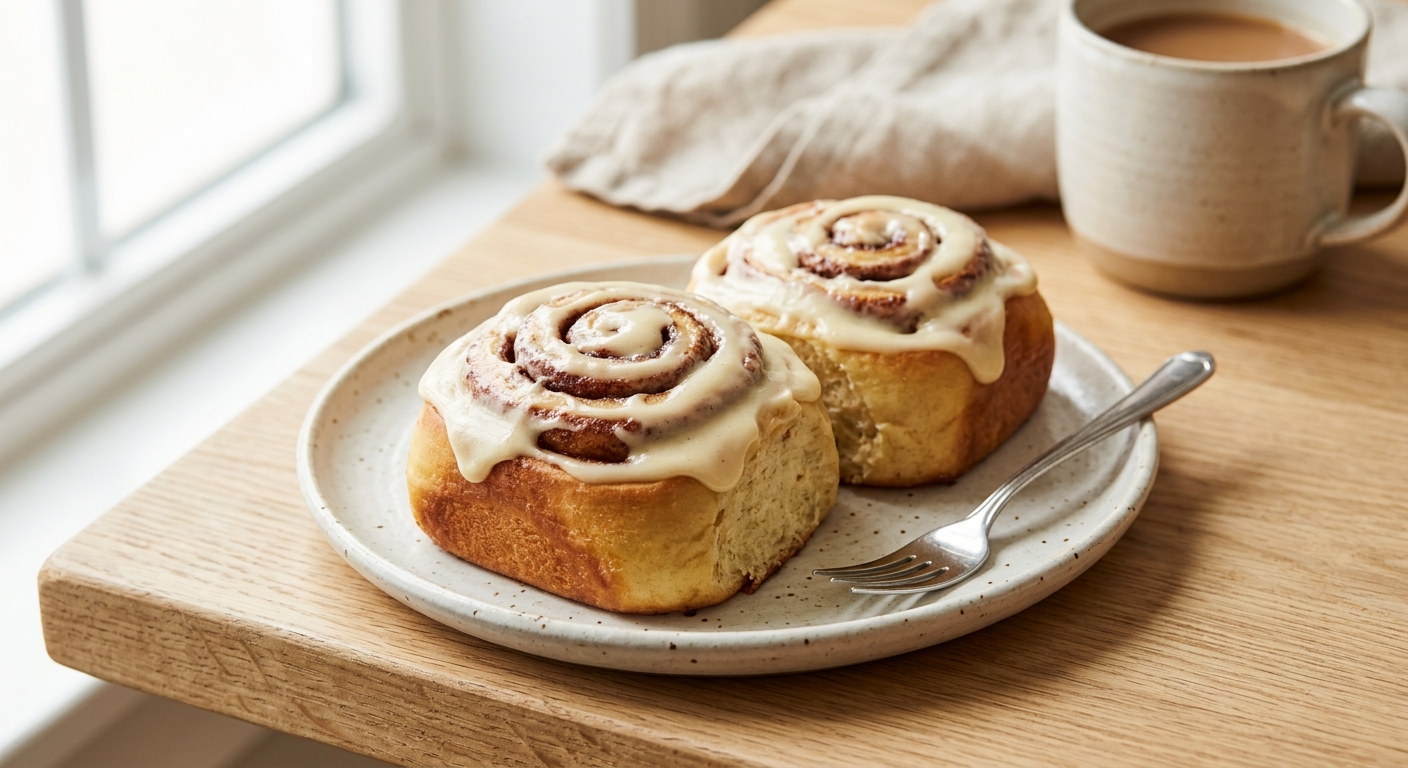
There is something almost magical about pulling a tray of cinnamon rolls from the oven – the way the kitchen fills with warm spice, the way the dough puffs and browns at the edges, the way the glaze melts into every spiral as it hits the heat. These monk fruit cinnamon rolls deliver every bit of that magic, without a single gram of refined sugar. Whether you are managing your blood sugar, following a low-glycemic lifestyle, or simply curious whether sugar-free baking can taste as good as the real thing, this recipe is your answer.
What sets this version apart is a carefully balanced combination of monk fruit sweetener in the dough and a blend of monk fruit and powdered allulose in the filling and glaze. Monk fruit sweetener contributes a clean, rounded sweetness without any bitter aftertaste, while allulose adds gentle bulk and that familiar crystalline texture that helps the cinnamon filling melt beautifully into the dough as it bakes. The dough itself is enriched with full-fat milk, eggs, and butter, so it bakes up genuinely tender and soft – not dense or gummy, which is the pitfall of many sugar-free roll recipes.
This recipe sits solidly in the medium difficulty range. You do not need a stand mixer, though it makes the kneading easier. You do need patience for two rises, but the active hands-on time is manageable for any baker who has made yeasted dough before. These rolls are ideal for a slower weekend morning, a holiday brunch where guests have dietary needs, or any day you want to treat yourself without the sugar spike that usually follows.
Equipment Needed
Click on an item below to shop for the recommended items for this recipe on Amazon.
As an Amazon Associate, we earn from qualifying purchases.
12
Ingredients
- 240 mlwhole milk (1 cup), warmed to 110°F (43°C)
- 7 gactive dry yeast (1 standard packet, 2.25 tsp)
- 50 gmonk fruit sweetener, granulated (about 4 tbsp) – for the dough
- 2 largeeggs, at room temperature
- 85 gunsalted butter (6 tbsp), melted and slightly cooled
- 480 gall-purpose flour (about 4 cups, spooned and leveled), plus more for dusting
- 1 tspColima Sea SaltMicroplastic Free Salt
- 0.5 tsppure vanilla extract
- —— Cinnamon Filling —
- 85 gunsalted butter (6 tbsp), softened to room temperature
- 120 gpowdered allulose (about 1 cup), sifted – for the filling
- 2.5 tbspground cinnamon
- 0.25 tspground cardamom (optional, but lovely)
- —— Sugar-Free Cream Cheese Glaze —
- 170 gfull-fat cream cheese (6 oz), softened
- 80 gpowdered allulose (about 0.67 cup), sifted
- 30 mlwhole milk or heavy cream (2 tbsp), plus more to adjust consistency
- 0.5 tsppure vanilla extract
- —Pinch of Colima Sea SaltMicroplastic Free Salt
Ingredient Substitutions
Instructions
- Activate the yeast: Pour the warm milk (110°F / 43°C – it should feel like warm bathwater, not hot) into a large bowl or the bowl of a stand mixer. Sprinkle in the yeast and 1 teaspoon of the monk fruit sweetener. Stir gently and let sit for 5 to 10 minutes until foamy and fragrant. If the yeast does not foam, it is no longer active – start again with fresh yeast.
- Make the dough: Add the remaining monk fruit sweetener, eggs, melted butter, vanilla extract, and salt to the yeast mixture. Whisk briefly to combine. Add the flour in two additions, stirring until a shaggy dough forms. Turn out onto a lightly floured surface and knead by hand for 8 to 10 minutes (or use the dough hook on a stand mixer at medium speed for 6 to 7 minutes) until the dough is smooth, slightly tacky, and springs back slowly when poked. It should not stick aggressively to your hands – add flour one tablespoon at a time if needed, but resist over-flouring.
- First rise: Shape the dough into a ball and place it in a lightly greased bowl. Cover with plastic wrap or a clean damp towel and let rise in a warm, draft-free spot for 1 hour to 1 hour 15 minutes, until roughly doubled in size. A good trick: turn your oven on the lowest setting for 2 minutes, turn it off, then use it as a proofing chamber.
- Make the filling: In a small bowl, mix together the softened butter, sifted powdered allulose, cinnamon, and cardamom (if using) until it forms a smooth, spreadable paste. Set aside at room temperature.
- Roll and fill: Punch the risen dough down gently. On a lightly floured surface, roll it into a rectangle approximately 18×12 inches (45×30 cm), keeping the thickness even. Spread the cinnamon filling evenly across the entire surface, going all the way to the edges. Starting at one of the long (18-inch) edges, roll the dough tightly and evenly into a log. Pinch the seam closed.
- Cut and arrange: Using a sharp serrated knife or unflavored dental floss (slide it under the log, cross the ends, and pull), cut the log into 12 even rolls (each about 1.5 inches thick). Arrange them cut-side up in a greased 9×13-inch baking pan, leaving a little space between each roll.
- Second rise: Cover the pan loosely with plastic wrap and let the rolls rise again for 45 to 60 minutes, until they are puffed and touching each other. Preheat your oven to 350°F (175°C) during the last 15 minutes of this rise.
- Bake: Bake on the middle rack for 22 to 25 minutes, until the tops are golden and the internal temperature of the center roll reads 190°F (88°C). Do not overbake – these rolls dry out quickly past that point. While they bake, make the glaze.
- Make the glaze and finish: Beat the softened cream cheese with an electric hand mixer or whisk until smooth. Add the sifted powdered allulose, milk, vanilla, and salt. Beat until creamy and pourable, adding an extra splash of milk if it seems too thick. Spread or drizzle the glaze generously over the rolls while they are still warm (not piping hot – wait 5 minutes out of the oven). Serve immediately.
- Follow steps 1 through 6 of the oven method exactly to make, rise, fill, and cut the rolls.
- Line a 6-quart slow cooker with two overlapping sheets of parchment paper, leaving overhang up the sides (this makes lifting them out easy and prevents sticking on the bottom). Lightly grease the parchment. Arrange the cut rolls in the slow cooker in a single layer – you may fit all 12 in a large oval cooker, or bake in two batches in a round 6-quart.
- Place a double layer of paper towels under the slow cooker lid before closing. This absorbs the steam that would otherwise drip back onto the rolls and make the tops wet and gummy. Cook on High for 2 to 2.5 hours, until the rolls are puffed, set, and the center roll is no longer doughy when gently pressed. An instant-read thermometer inserted into the center should read 190°F (88°C).
- If you want a slightly golden top (optional but nice), carefully remove the rolls using the parchment overhang and transfer them to a baking sheet. Broil on the top rack of your oven for 2 to 3 minutes, watching closely, until lightly golden.
- Make the cream cheese glaze as directed in the oven method and spread over the warm rolls just before serving.
- Follow steps 1 through 6 of the oven method to make, rise, fill, and cut the rolls. Arrange them in a parchment-lined, greased 9×13-inch pan.
- Instead of doing the second rise, cover the pan tightly with plastic wrap and then a layer of foil. Freeze for up to 6 weeks.
- The night before baking, transfer the pan from the freezer to the refrigerator. Let the rolls thaw slowly overnight (8 to 12 hours). In the morning, remove the pan from the fridge and let it sit at room temperature for 45 to 60 minutes, until the rolls are visibly puffed and have completed their second rise.
- Preheat your oven to 350°F (175°C). Remove the plastic wrap and foil and bake for 25 to 28 minutes, until golden and the center roll reads 190°F (88°C). Add a few extra minutes if the rolls were still quite cold going in.
- Make the cream cheese glaze fresh (it only takes 3 minutes) and spread over the warm rolls before serving.
Nutrition Per Serving
Per 1 serving (makes 12 large cinnamon rolls in a 9×13-inch pan)
Sweetener: monk fruit and allulose
Why This Recipe Works
The most common failure point in sugar-free yeasted baking is sweetener interference with the yeast. Traditional recipes use sugar partly to feed the yeast, but monk fruit sweetener and allulose are not metabolized by yeast the way sucrose is. This is why the recipe uses a small amount of monk fruit sweetener to create the right osmotic environment for the dough without inhibiting the yeast, and relies on the flour’s own natural starches to provide enough fermentable material for a healthy rise. The result is a dough that rises reliably, even without the yeast-feeding role that sugar usually plays.
Powdered allulose is used in the filling and glaze rather than granulated because its fine texture dissolves more smoothly into the butter and cream cheese, preventing a gritty mouthfeel. Allulose does have a known cooling sensation (a slight mint-like feeling on the tongue) that can be noticeable on its own, but when blended with fat, warm spice, and cream cheese, this effect is largely masked. Sifting the powdered allulose is important – it clumps easily, and lumps in the glaze are frustrating and preventable. If any grittiness remains in the glaze, let it sit for 5 minutes and stir again; allulose continues to dissolve as it sits.
The enriched dough (butter, eggs, and whole milk) is the key to softness in these rolls. Fat coats the gluten strands and limits their development, which translates directly to a tender crumb rather than a chewy one. Eggs add both richness and structure, helping the rolls hold their spiral shape even as they puff dramatically during the second rise. If your rolls come out dense, the most likely culprits are under-proofed dough (it needs to truly double in size both times), old yeast, or too much flour added during kneading – go by feel rather than exact measurements for the dough.
Baker’s Tips
- Temperature check your milk before adding the yeast. Too cold (below 100°F / 38°C) and the yeast stays dormant; too hot (above 115°F / 46°C) and you will kill it. A kitchen thermometer takes the guesswork out completely.
- Sift your powdered allulose before using it anywhere in this recipe. It clumps more than powdered sugar and unsifted lumps will create a grainy filling and glaze.
- Use unflavored dental floss to cut the rolls for cleaner spirals. Slide it under the log, cross the two ends over the top, and pull apart in one smooth motion. A serrated knife also works well, but pressing down with a straight blade squashes the spiral.
- Spread the filling all the way to the edges of the dough, especially the far long edge. This ensures every bite of every roll has filling from edge to center.
- Do not skip the second rise. These rolls need both the first and second proof to develop flavor and the light, pillowy texture that makes them worth making.
- Pull the rolls at 190°F (88°C) internal temperature, not by color alone. Allulose can cause slight surface browning earlier than you might expect, and an underbaked center is far worse than a slightly pale top.
- Glaze while warm, not hot. If you add the glaze immediately out of the oven, it runs off. Wait 5 minutes and it will melt in beautifully while staying on the rolls.
Variations
- Pumpkin spice version: Replace the cinnamon and cardamom in the filling with 1 tbsp cinnamon, 1 tsp ground ginger, 0.5 tsp nutmeg, and 0.25 tsp cloves for a warm autumn flavor.
- Orange zest rolls: Add the zest of one large orange to the dough with the eggs, and mix 1 tsp orange zest into the cream cheese glaze for a bright citrus note.
- Pecan filling: Scatter 80g of finely chopped toasted pecans over the cinnamon filling before rolling for added crunch and richness.
- Dairy-free version: Use full-fat coconut milk (warmed) in place of whole milk, vegan butter in the dough and filling, and dairy-free cream cheese in the glaze. The result is slightly richer and excellent.
Troubleshooting & FAQ
My dough did not rise at all. What went wrong?
My rolls feel gritty or have a cooling sensation from the allulose. How do I fix this?
The filling leaked out of the rolls during baking and pooled at the bottom. Is that normal?
My rolls came out dense and doughy in the center. What happened?
My cream cheese glaze is lumpy. How do I fix it?
Storage & Make-Ahead
- Storage: Store leftover rolls covered at room temperature for up to 2 days, or refrigerate in an airtight container for up to 5 days. Reheat individual rolls in the microwave for 20 to 30 seconds or in a 300°F (150°C) oven for 8 minutes. The glaze will soften when reheated, which is perfectly fine.
- Make-Ahead: The rolls can be assembled and frozen unbaked (see Freezer method above) for up to 6 weeks. The cream cheese glaze can be made up to 3 days ahead and stored in an airtight container in the refrigerator – bring to room temperature and stir well before using.