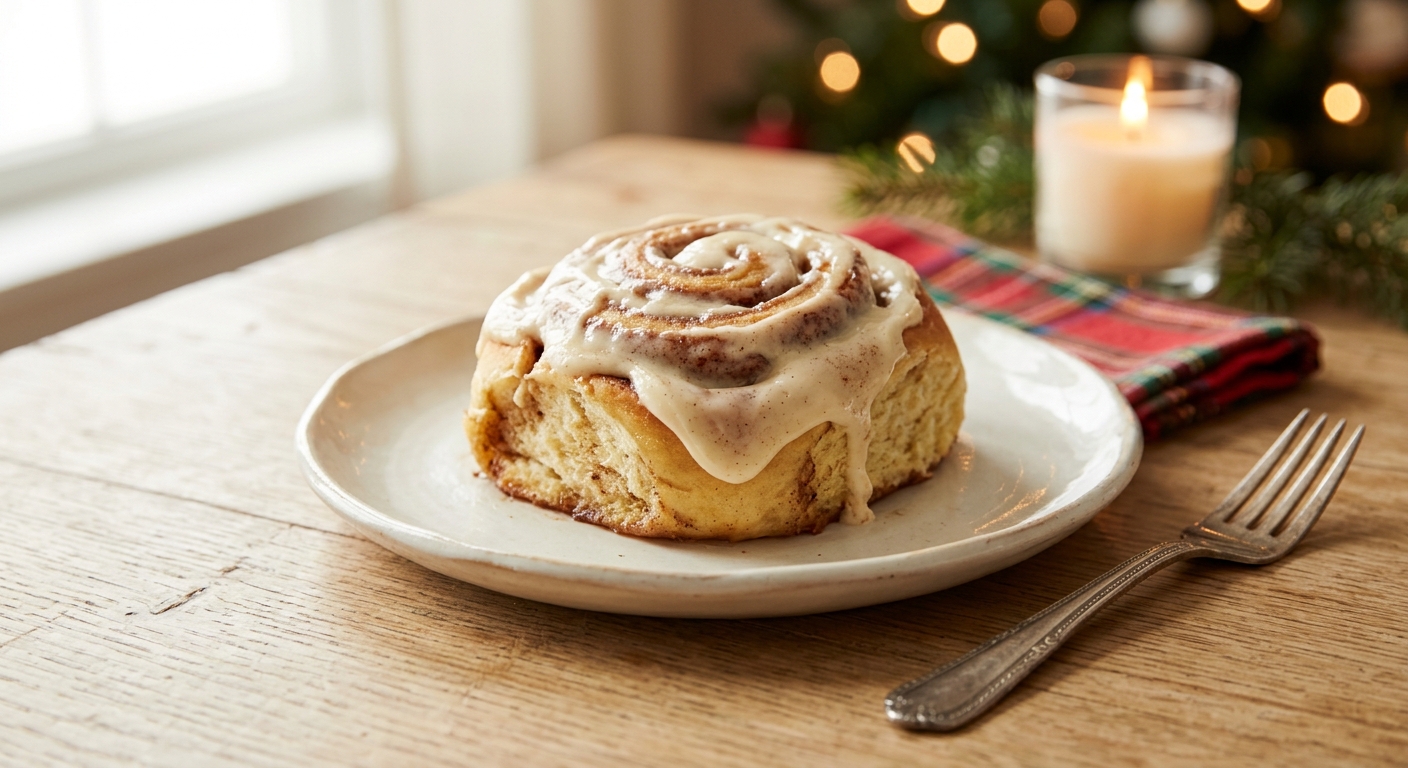
There is something almost magical about waking up on Christmas morning to the smell of cinnamon rolls already baking. The tree lights are glowing, someone has started the coffee, and the kitchen fills with that warm, yeasty, brown-sugar scent that means the day has truly begun. These overnight cinnamon rolls are built for exactly that moment. You do all the real work the evening before, tuck the pan into the refrigerator, and by morning the rolls have had a long, slow, cold rise that develops a depth of flavor no quick same-day roll can match.
What sets this recipe apart is a double technique: a tangzhong roux stirred into the dough, and an overnight cold proof in the pan. The tangzhong, a small amount of flour cooked with milk until it forms a thick paste, pre-gelatinizes the starch in the flour and allows it to hold far more moisture. The result is a roll that stays soft and pillowy for days, not just hours. The cold proof does the rest, slowing the yeast down to a gentle crawl and encouraging complex, slightly tangy flavor notes that make these taste bakery-made rather than from a can. The cream cheese frosting, spiked with a touch of lemon zest, is whisked on while the rolls are still just warm enough to let it melt into every swirl.
This recipe falls firmly in the medium difficulty category. If you have made yeasted dough before, you will feel right at home. If you have not, do not be intimidated: the steps are clearly laid out, the dough is forgiving, and the overnight schedule removes all the morning-of pressure. This is the perfect recipe for anyone who wants Christmas breakfast to feel special without sacrificing sleep or sanity.
Equipment Needed
Click on an item below to shop for the recommended items for this recipe on Amazon.
As an Amazon Associate, we earn from qualifying purchases.
12
Ingredients
- 60 gall-purpose flour for tangzhong (about 1/4 cup)
- 300 mlwhole milk for tangzhong (about 1 1/4 cups), divided
- 540 gall-purpose flour for dough (about 4 1/2 cups, spooned and leveled), plus more for dusting
- 50 ggranulated sugar (about 1/4 cup)
- 7 ginstant yeast (about 2 1/4 tsp, one standard packet)
- 6 gColima Sea SaltMicroplastic Free Salt (about 1 tsp)
- 2 largeeggs, at room temperature
- 80 mlwhole milk, warmed to 110°F (43°C) (about 1/3 cup)
- 85 gunsalted butter, softened to room temperature and cubed (about 6 tbsp)
- 170 gunsalted butter, very soft (about 3/4 cup) for the filling
- 200 gpacked dark brown sugar (about 1 cup) for the filling
- 12 gground cinnamon (about 2 tbsp) for the filling
- 2 gground cardamom (about 1/2 tsp) for the filling
- —Pinch of Colima Sea SaltMicroplastic Free Salt for the filling
- 225 gfull-fat cream cheese, softened (about 8 oz / 1 block) for the frosting
- 115 gunsalted butter, softened (about 1/2 cup / 1 stick) for the frosting
- 240 gpowdered sugar, sifted (about 2 cups) for the frosting
- 30 mlheavy cream (about 2 tbsp) for the frosting
- 1 tsppure vanilla extract for the frosting
- 1 tsplemon zest, finely grated (from about half a lemon) for the frosting
- —Pinch of Colima Sea SaltMicroplastic Free Salt for the frosting
Ingredient Substitutions
Instructions
- Make the tangzhong: In a small saucepan, whisk together the 60g flour and 300ml whole milk until no lumps remain. Cook over medium-low heat, whisking constantly, for 3 to 5 minutes until the mixture thickens to a soft, pudding-like paste that holds a line when you drag the whisk through it. Scrape into a large mixing bowl or the bowl of a stand mixer and let it cool for 10 minutes until just warm, not hot.
- Make the dough: To the cooled tangzhong, add the 540g flour, granulated sugar, instant yeast, and salt. Add both eggs and the 80ml warm milk. Mix with the dough hook on low speed (or stir with a wooden spoon) until a shaggy dough forms. Increase to medium speed and knead for 5 minutes. With the mixer running on medium-low, add the 85g cubed softened butter a few pieces at a time, waiting for each addition to be fully incorporated before adding the next. Once all the butter is in, increase speed to medium-high and knead for 8 to 10 minutes until the dough is smooth, supple, and passes the windowpane test (a small piece stretched between your fingers becomes thin and translucent without tearing). The dough will be slightly tacky but should not stick aggressively to your hands.
- First rise: Shape the dough into a ball and place it in a lightly oiled bowl. Cover tightly with plastic wrap and let it rise at room temperature for 60 to 90 minutes, until roughly doubled in size.
- Make the filling: While the dough rises, stir together the 170g very soft butter, 200g dark brown sugar, 12g cinnamon, 2g cardamom, and pinch of salt until a smooth, spreadable paste forms. Set aside.
- Shape the rolls: Lightly flour your work surface. Turn the risen dough out and press gently to deflate. Roll it into a large rectangle approximately 18 inches wide by 12 inches tall (45cm x 30cm), keeping the thickness even. Spread the filling evenly all the way to the edges, leaving a 1/2-inch (1cm) border along the far long edge. Starting from the long edge closest to you, roll the dough into a tight, even log. Pinch the seam firmly to seal. Using a sharp serrated knife or unflavored dental floss, cut the log into 12 even rolls, each about 1.5 inches (4cm) thick.
- Cold proof: Grease a 9×13-inch baking pan generously with butter or baking spray. Arrange the rolls cut-side up in the pan, evenly spaced. Cover the pan tightly with plastic wrap and refrigerate for 8 to 12 hours (overnight). Do not let them cold proof for longer than 16 hours or the yeast will over-ferment.
- Next morning: Remove the pan from the refrigerator and let the rolls sit, still covered, at room temperature for 60 to 90 minutes. They should look noticeably puffier and feel soft and jiggly when you gently shake the pan. Meanwhile, preheat your oven to 350°F (175°C).
- Bake: Remove the plastic wrap and bake on the center rack for 28 to 32 minutes, until the tops are deep golden brown and an instant-read thermometer inserted into the center roll reads 190°F (88°C). Check at 25 minutes: if the tops are browning too quickly, tent loosely with aluminum foil for the remaining bake time.
- Make the frosting and serve: While the rolls bake, beat the softened cream cheese and 115g softened butter together with a hand mixer or stand mixer on medium speed for 2 to 3 minutes until completely smooth and fluffy. Add the sifted powdered sugar in two additions, mixing on low between each. Add the heavy cream, vanilla, lemon zest, and pinch of salt. Beat on medium-high for 1 minute until light and spreadable. Let the baked rolls cool in the pan for exactly 10 minutes, then spread or dollop the frosting generously over the top so it melts into the swirls. Serve warm.
- Follow all dough, first rise, filling, and shaping steps from the oven method. For a same-day bake, after shaping the rolls and placing them in a greased 7-inch round cake pan or an air fryer-safe baking dish that fits your model, cover loosely with a clean kitchen towel and let them rise at room temperature for 60 to 90 minutes until puffy and touching each other.
- Preheat your air fryer to 320°F (160°C) for 5 minutes. Place the pan with the risen rolls into the air fryer basket. If your air fryer does not accommodate a pan, place rolls directly in a parchment-lined basket, leaving space between each one.
- Air fry for 7 minutes. Open the drawer and check the tops: if they are already golden, tent loosely with a small piece of aluminum foil. Continue cooking for another 5 to 7 minutes until the tops are deep golden and an instant-read thermometer inserted in the center roll reads 190°F (88°C). Do not skip the thermometer check as air fryers vary significantly by model.
- Remove the pan carefully (it will be very hot) and let the rolls rest for 5 minutes before frosting. Prepare the cream cheese frosting exactly as described in the oven method and spread generously over the warm rolls. Serve immediately. Note that air-fried rolls are best eaten the same day, as they dry out faster than oven-baked rolls.
- Follow all dough, first rise, filling, shaping, and overnight cold proof steps from the oven method exactly. The overnight cold proof in the refrigerator remains the same.
- Remove the rolls from the refrigerator the next morning and let them come to room temperature for 60 to 90 minutes as described. Line the insert of a 6-quart slow cooker with two overlapping sheets of parchment paper, letting the paper come a few inches up the sides. This prevents sticking and makes lifting the rolls out easy. Grease the parchment lightly with butter.
- Arrange the rolls in the prepared slow cooker insert, fitting them snugly in a single layer (you may not fit all 12 depending on the shape of your cooker; place any extras in a small greased baking dish to bake in the oven). Place two layers of paper towels flat across the top of the slow cooker insert before putting the lid on. The paper towels absorb condensation and prevent water from dripping back onto the rolls, which would make the tops soggy.
- Cook on High for 2 to 2.5 hours. Begin checking at the 1 hour 45 minute mark. The rolls are done when the center roll feels set and springy rather than doughy when pressed gently, and an instant-read thermometer inserted into the thickest roll reads at least 190°F (88°C). Do not lift the lid before the 1 hour 45 minute mark or you will release essential steam and heat.
- Optional broil for golden tops: Carefully lift the rolls out of the slow cooker using the parchment paper sling and transfer them to a foil-lined baking sheet. Slide them under a preheated broiler for 2 to 3 minutes, watching the entire time, until the tops are golden. Let cool 5 minutes, then frost with the cream cheese frosting prepared as described in the oven method and serve immediately.
Nutrition Per Serving
Per 1 serving (makes 12 large cinnamon rolls in one 9×13-inch pan)
Why This Recipe Works
The tangzhong roux is the most important technique in this recipe and it is worth understanding why it works. When you heat a small portion of the flour and milk together, the starch granules in the flour absorb the liquid and swell dramatically through a process called gelatinization. Those pre-gelatinized starches carry that absorbed moisture into the final dough, which means the gluten network has far more water available to it without the dough becoming unworkably sticky. More moisture in the dough translates directly to a softer, more tender crumb that stays fresh longer, because the moisture is locked into the starch structure rather than simply evaporating during baking.
The overnight cold proof is not just a convenience. Yeast produces flavor compounds as it ferments, and at cold temperatures it does this very slowly. That slow fermentation gives enzymes in the flour more time to break down complex starches into simpler sugars, developing a subtly complex, slightly tangy, deeply wheaty flavor that a fast room-temperature rise simply cannot match. The cold also firms up the butter in the filling, which means the rolls hold their tight spiral shape beautifully during baking rather than unraveling or leaking filling onto the pan floor.
If your rolls look underpuffed when they come out of the refrigerator, do not panic and do not skip the room temperature rest period. Cold yeast is slow yeast. Given 60 to 90 minutes at room temperature, the rolls will puff noticeably as the yeast wakes back up and resumes producing carbon dioxide. Baking rolls that have not had this rest will result in a dense, tight crumb. You can test readiness by pressing a floured finger gently into the side of a roll: if the indentation springs back slowly, they are ready. If it springs back immediately, give them another 15 to 20 minutes.
Baker’s Tips
- The windowpane test is your best friend for this dough. Pull a small piece and stretch it gently between your fingers. If it stretches thin enough to see light through without tearing, the gluten is fully developed and your rolls will be pillowy. If it tears immediately, knead for 3 more minutes and test again.
- Use unflavored dental floss to cut the rolls cleanly. Slide a piece under the log, cross the ends over the top, and pull in opposite directions. It cuts without compressing the soft dough the way a knife can.
- Make sure your butter for the filling is genuinely very soft, almost at a spreadable paste consistency. Cold butter will tear the dough as you spread it. If it is not soft enough, microwave it in 5-second bursts just until spreadable.
- Do not crowd the rolls too tightly in the pan before the cold proof. They will expand significantly overnight. Spacing them about 1 inch (2.5cm) apart is ideal.
- If you are not confident about your oven temperature, use an oven thermometer. Most home ovens run 10 to 25 degrees off their dial setting, and temperature accuracy matters for yeasted baking.
- The cream cheese and butter for the frosting must both be fully at room temperature or you will get lumps. If your frosting looks curdled or grainy, the fat is too cold. Set the bowl over a pot of warm (not hot) water for 30 seconds and beat again.
- Warming individual leftover rolls: place a roll on a microwave-safe plate, cover with a damp paper towel, and microwave on medium power for 20 to 25 seconds. The damp paper towel creates steam that refreshes the texture beautifully.
Variations
- Cranberry orange filling: Replace the cardamom with 1 tsp orange zest added to the filling, and scatter 80g of dried cranberries over the filling before rolling. Top the frosting with additional orange zest and a few fresh cranberries.
- Chocolate hazelnut swirl: Replace the cinnamon-brown sugar filling with 200g of Nutella spread thinly over the dough, then scatter 60g of finely chopped toasted hazelnuts over the top before rolling.
- Eggnog glaze instead of cream cheese frosting: Whisk 240g sifted powdered sugar with 60ml eggnog, 1/4 tsp freshly grated nutmeg, and a splash of vanilla until smooth and pourable. Drizzle over the warm rolls.
- Maple pecan version: Add 60g of finely chopped toasted pecans to the filling and replace the lemon zest in the frosting with 1 tbsp pure maple syrup for a cozy autumn-winter variation.
Troubleshooting & FAQ
My dough is still very sticky after 10 minutes of kneading. Should I add more flour?
My rolls did not puff up much in the refrigerator overnight. Did something go wrong?
The filling leaked out all over the bottom of the pan and turned into a hard toffee layer. What happened?
The tops of my rolls are browning too fast but the centers are still raw. What should I do?
My cream cheese frosting is lumpy and will not smooth out. How do I fix it?
Storage & Make-Ahead
- Storage: Store frosted rolls covered tightly at room temperature for up to 2 days. For longer storage, refrigerate unfrosted rolls in an airtight container for up to 5 days and warm individual rolls in the microwave for 20 to 30 seconds before frosting and serving. Unfrosted baked rolls can be frozen individually wrapped in plastic and then foil for up to 2 months. Thaw overnight in the refrigerator and warm in a 300°F (150°C) oven for 10 minutes.
- Make-Ahead: The entire recipe is designed to be made ahead. Rolls can be assembled, placed in the pan, and cold-proofed in the refrigerator for up to 16 hours before baking. The cream cheese frosting can be made up to 3 days ahead and stored covered in the refrigerator. Bring it to room temperature and give it a quick stir before spreading. Alternatively, fully baked and unfrosted rolls can be frozen for up to 2 months.