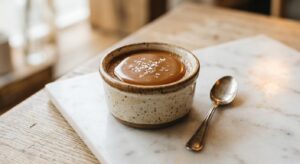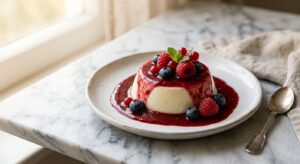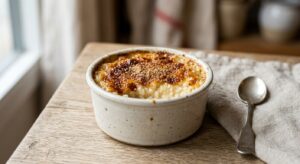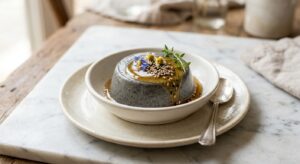
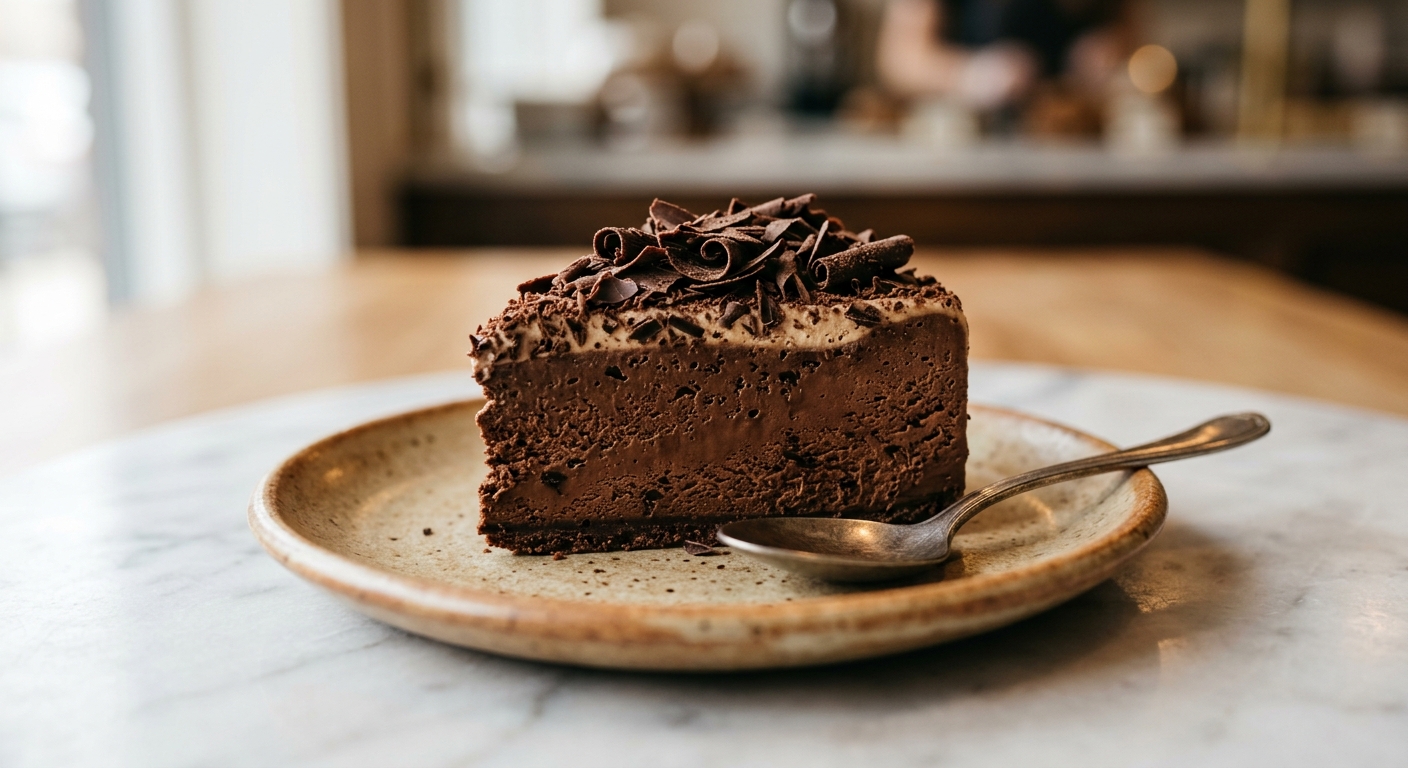
Imagine pulling a dessert from the freezer that looks like it came from a Milanese patisserie: deeply dark, impossibly smooth, and sliced into clean, dramatic portions that hold their shape just long enough to make everyone at the table catch their breath. That is exactly what a semifreddo delivers. The name means ‘half cold’ in Italian, and it captures something genuinely magical, a texture that is lighter than ice cream, creamier than a frozen mousse, and more elegant than either. This one is flavored with real dark chocolate and a hit of strong espresso, two ingredients that were simply made for each other.
What sets this version apart is a classic Italian technique: whipping the egg yolks and sugar together over a gentle bain-marie until they triple in volume and become a pale, ribbon-thick zabaglione. This step does two important things. It partially cooks the eggs (a safety win) and builds an airy, emulsified base that gives the semifreddo its characteristic lightness and that soft, almost melting texture when it hits your tongue. The espresso is added as a concentrated reduction, not just instant powder, so the coffee flavor is round and genuine rather than sharp or artificial.
This recipe sits firmly in the medium difficulty range. There is no special equipment required beyond a loaf pan and a hand or stand mixer, and most of the work happens the day before you plan to serve it. It is absolutely perfect for dinner party hosts who want a showstopper dessert without any last-minute stress, and for anyone who has always been a little intimidated by frozen desserts. If you can whip cream and fold a batter, you can make this.
Equipment Needed
Click on an item below to shop for the recommended items for this recipe on Amazon.
As an Amazon Associate, we earn from qualifying purchases.
10
Ingredients
- Shaving Over The Top (about 1 Oz)
- 180 ggood-quality dark chocolate (70% cacao), finely chopped (about 6 oz)
- 60 mlfreshly brewed espresso or very strong coffee (about 4 tbsp), cooled
- 1 tbspespresso powder or instant espresso granules
- 5 largeegg yolks, at room temperature
- 150 gcaster sugar or superfine sugar (about 3/4 cup)
- 60 mlwater (about 4 tbsp)
- 480 mlheavy whipping cream, very cold (about 2 cups)
- 2 largeegg whites, at room temperature
- 50 gcaster sugar for the meringue (about 1/4 cup)
- 1 tsppure vanilla extract
- —Pinch of Colima Sea SaltMicroplastic Free Salt
- 30 gdark chocolate
- Dusting (optional)
- 1 tbspcocoa powder
Ingredient Substitutions
Instructions
- Line a 9×5-inch (23x13cm) loaf pan with two overlapping sheets of plastic wrap, leaving at least 4 inches of overhang on all four sides. Press the wrap snugly into the corners. Set aside in the freezer to chill while you prepare the components.
- Melt the 180g chopped dark chocolate in a heatproof bowl set over a saucepan of barely simmering water, stirring occasionally. Do not let the bowl touch the water. Once fully melted and smooth, stir in the brewed espresso and espresso powder. Remove from the heat and let cool to room temperature, about 15 minutes. The mixture should be fluid but not warm.
- Make the zabaglione: Combine the 5 egg yolks, 150g caster sugar, and 60ml water in a large heatproof bowl. Set the bowl over the saucepan of barely simmering water (the same setup as before, bowl not touching water). Whisk constantly and vigorously for 8 to 10 minutes until the mixture has tripled in volume, turned pale ivory, and falls from the whisk in thick, slow ribbons. When you lift the whisk and draw a figure eight, the ribbon should hold its shape for a few seconds. Remove from heat, add the vanilla and salt, and continue whisking off the heat for 2 minutes to cool slightly. Let cool to room temperature, whisking occasionally.
- In a very clean, grease-free bowl, whip the 2 egg whites with a hand mixer on medium speed until foamy. Gradually add the 50g caster sugar, one tablespoon at a time, increasing speed to high. Whip to stiff, glossy peaks. The meringue should hold a firm peak and not slide when the bowl is tilted.
- In a separate large bowl, whip the cold heavy cream to soft peaks. It should be thick and pillowy but not grainy or stiff. Stop before it reaches firm peaks as it will continue to firm up when folded.
- Gently fold the cooled chocolate-espresso mixture into the zabaglione using a large rubber spatula, working in slow, deliberate strokes from the bottom of the bowl upward. Fold until just combined and no streaks remain.
- Add one-third of the whipped cream to the chocolate mixture and fold firmly to lighten the base. Add the remaining whipped cream and fold gently until almost combined. Add the Italian meringue in two additions, folding with care to preserve as much air as possible. Stop folding the moment the mixture is uniform and no white streaks remain.
- Remove the prepared loaf pan from the freezer. Pour the semifreddo mixture into the pan, spreading it into an even layer with a spatula. Tap the pan gently on the counter two or three times to release any large air bubbles. Fold the plastic wrap overhang over the surface to cover completely. Freeze for a minimum of 6 hours, or ideally overnight, until completely firm.
- To serve, remove the pan from the freezer and let it sit at room temperature for exactly 5 minutes. Unwrap the top, invert the pan onto a chilled serving platter, and gently peel away the plastic wrap. Use a vegetable peeler or the back of a spoon to shave chocolate curls over the top, then dust lightly with cocoa powder if desired. Slice with a sharp knife dipped in hot water and wiped dry between each cut.
- Prepare your ramekins or 10 small (180ml, about 6oz) paper cups or silicone molds. If using ramekins, line each with a small square of plastic wrap, pressing it into the interior and leaving overhang at the top. Paper cups or silicone molds need no lining.
- Prepare the full semifreddo batter following steps 2 through 7 of the Classic Freezer Method exactly. The batter and components are identical.
- Ladle or pour the finished semifreddo mixture into each prepared cup, filling to about 1cm (1/2 inch) from the top. Give each one a gentle tap on the counter to settle the mixture. Fold any plastic wrap overhang over the top of ramekins, or cover paper cups loosely with a small sheet of plastic wrap.
- Freeze for a minimum of 4 hours until completely firm. Individual portions freeze faster than a full loaf due to their smaller volume. For best texture and cleanest unmolding, freeze overnight.
- To serve from ramekins, let sit at room temperature for 3 minutes, then invert onto individual plates and peel away the plastic wrap. For paper cups, simply peel the cup away from the frozen semifreddo. Garnish each portion with a few chocolate shavings and a light dusting of cocoa powder. A small pour of warm chocolate sauce alongside makes this feel genuinely restaurant-quality.
Nutrition Per Serving
Per 1 serving (makes one 9×5-inch loaf pan, about 10 slices)
Why This Recipe Works
The silky texture of a great semifreddo is not an accident. It comes from combining three separate aerated components: the zabaglione (whipped egg yolk foam), the whipped heavy cream, and the Italian meringue (whipped egg whites). Each one traps a different kind of air. When folded together, these micro-bubbles become locked in place by the cocoa butter from the chocolate as the mixture freezes, preventing large ice crystals from forming. This is why semifreddo stays soft enough to scoop with a spoon straight from the freezer while still holding a clean, sliceable shape. It is essentially a self-stabilizing frozen mousse.
The bain-marie step for the zabaglione is critical for two reasons. First, it gently cooks the egg yolks to a safe internal temperature (the mixture should reach around 160°F, or 71°C) while the constant whisking prevents scrambling. Second, the heat dissolves the sugar fully into the yolks, and the agitation builds an incredibly stable foam structure that will not collapse when you fold in the other components. Melting the chocolate and letting it cool before incorporating it is equally important. Warm chocolate will deflate the carefully built foam on contact, undoing all your careful work in an instant.
If your semifreddo comes out with an icy or granular texture, the most likely culprit is one of three things: the chocolate mixture was too warm when folded in, the whipped cream was taken too far to stiff peaks before folding (reducing its ability to blend smoothly), or the components were not folded together gently enough, which breaks down the foam. The good news is that this recipe is very forgiving on technique. As long as your components are properly aerated and the chocolate is genuinely cooled, the result will be beautifully smooth every time.
Baker’s Tips
- Chill your mixing bowl and whisk attachment in the freezer for 15 minutes before whipping the cream. Cold equipment means faster, more stable whipped cream with better volume.
- When folding the three components together, use a large, wide spatula and work from the outside edges of the bowl toward the center in slow, deliberate strokes. Speed is the enemy here. Take your time.
- The plastic wrap lining is not just about easy unmolding. It also acts as a barrier against freezer odors, which can subtly affect the delicate flavors of the semifreddo. Make sure the surface is fully covered before freezing.
- Test your zabaglione the right way: lift the whisk and let the mixture fall back into the bowl. It should fall in a thick, slow ribbon and hold a trail on the surface for at least 5 seconds. If it sinks immediately, keep whisking.
- For the cleanest, most dramatic slices, run your knife under very hot water, wipe it completely dry, and make one confident cut rather than sawing. Repeat for each slice. This prevents the semifreddo from dragging and crumbling.
- Do not skip the 5-minute rest at room temperature before serving. Semifreddo straight from the freezer can be too firm and its flavors slightly muted. Those few minutes make a genuine difference to both texture and taste.
Variations
- Orange and Dark Chocolate: Add the finely grated zest of one large orange and 1 tbsp Grand Marnier or Cointreau to the chocolate mixture along with the espresso for a classic flavor pairing.
- Hazelnut Praline: Fold 80g of roughly crushed hazelnut praline into the finished batter just before pouring into the pan for a crunchy, Ferrero Rocher-inspired contrast.
- Mocha Ripple: Reserve 3 tbsp of the chocolate mixture before folding in the cream. Pour the semifreddo into the pan in layers, drizzling the reserved chocolate between each layer and swirling gently with a skewer for a dramatic marbled effect when sliced.
- Mint Chocolate: Replace the espresso with 1 tsp peppermint extract (not peppermint oil) and omit the espresso powder for a cool, refreshing alternative that is particularly popular in summer.
Troubleshooting & FAQ
My semifreddo came out icy and grainy, not smooth and creamy. What went wrong?
My zabaglione is not thickening or tripling in volume. What should I do?
The semifreddo will not unmold cleanly. It is sticking to the pan.
Can I make this without egg whites or is the meringue component essential?
How do I know the semifreddo is frozen all the way through and ready to serve?
Storage & Make-Ahead
- Storage: Keep the semifreddo tightly wrapped in plastic wrap in the freezer for up to 2 weeks. After 2 weeks, the texture may become slightly icier. Do not refreeze once thawed. Individual portions can be stored in their molds or sealed in a zip-lock freezer bag for the same time frame.
- Make-Ahead: This dessert is almost entirely a make-ahead recipe, which is one of its greatest strengths. The semifreddo must be made at least 6 hours before serving and actually improves with an overnight freeze as the flavors meld and deepen. You can prepare it up to 5 days in advance with no loss of quality. The chocolate and espresso base can be made up to 24 hours ahead and kept covered at room temperature.