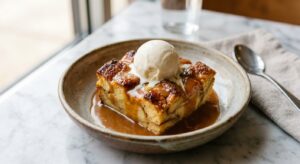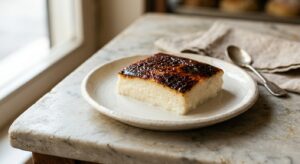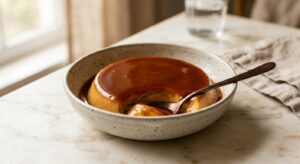
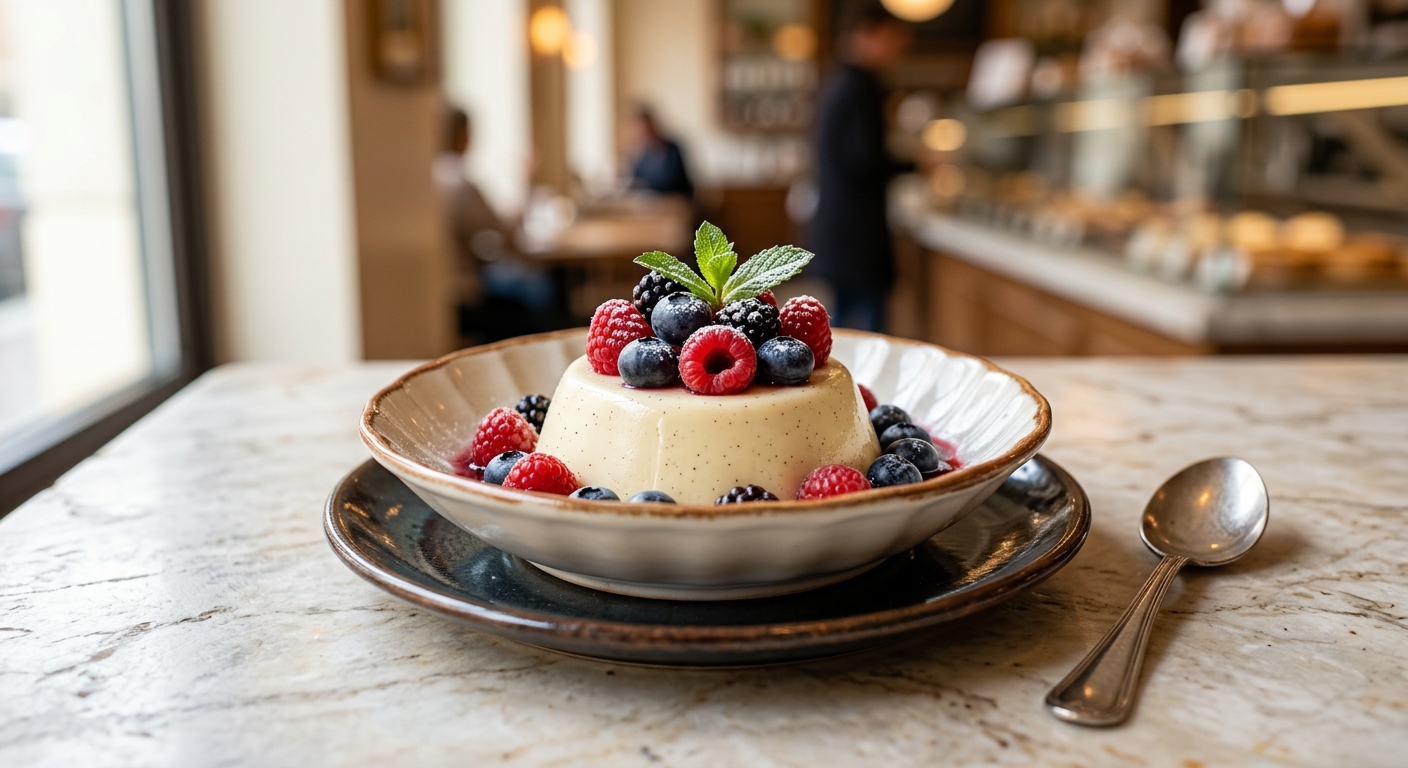
There is something deeply satisfying about unmolding a perfectly set Bavarian cream onto a serving plate and watching it hold its shape just long enough to tremble gently before you crown it with a cascade of fresh summer berries. Bavarois, as it is known in French, is the kind of dessert that feels luxurious and restaurant-worthy yet is assembled entirely in your own kitchen from a handful of humble ingredients. The finished cream is cool, lightly sweet, and impossibly soft, somewhere between a mousse and a panna cotta, with a richness that comes from real egg yolks and a lightness that only freshly whipped cream can give.
What sets this version apart is a commitment to technique over shortcuts. The custard base is a true crème anglaise, cooked gently over a double boiler until it coats the back of a spoon, which gives the cream a depth of vanilla flavor and a satiny texture that instant or packet versions simply cannot replicate. Blooming the gelatin properly and tempering the egg yolks carefully are the two steps that make the difference between a silky, even set and a lumpy, rubbery disappointment. We will walk through both in detail so you feel completely confident.
This recipe sits comfortably in the medium difficulty range. You do not need any specialist equipment beyond a fine-mesh sieve and a hand or stand mixer, and the steps are very forgiving as long as you take your time with the custard. It is perfect for anyone who wants to move beyond box-mix desserts and into the genuinely rewarding world of classic pastry. Make it the day before a dinner party and you will be entirely relaxed when it is time to serve.
Equipment Needed
Click on an item below to shop for the recommended items for this recipe on Amazon.
As an Amazon Associate, we earn from qualifying purchases.
8
Ingredients
- Extra Flavor And Specks)
- 480 mlwhole milk (about 2 cups)
- 480 mlheavy whipping cream, divided (about 2 cups), kept cold
- 6 largeegg yolks, at room temperature
- 120 ggranulated sugar (about 1/2 cup plus 1 tbsp)
- 1 tsppure vanilla extract
- 0.5 tspvanilla bean paste (optional
- 14 gunflavored powdered gelatin (about 2 standard envelopes or 4.5 tsp)
- Blooming The Gelatin
- 60 mlcold water (about 1/4 cup)
- —Pinch of Colima Sea SaltMicroplastic Free Salt
- 300 gmixed fresh berries, such as strawberries, raspberries, and blueberries (about 2.5 cups), to serve
- 2 tbspgranulated sugar (for macerating the berries)
- 1 tspfresh lemon juice (for macerating the berries)
Ingredient Substitutions
Instructions
- Bloom the gelatin: Pour the cold water into a small bowl and sprinkle the powdered gelatin evenly over the surface. Do not stir. Let it sit for 5 to 10 minutes until it absorbs all the water and looks spongy and opaque.
- Make the crème anglaise base: Pour the milk and 240ml (1 cup) of the heavy cream into a medium saucepan. Add the salt. Heat over medium heat, stirring occasionally, until the mixture is steaming and just beginning to show small bubbles around the edges. Do not let it boil. Meanwhile, whisk the egg yolks and 120g sugar together in a large heatproof bowl for about 2 minutes until the mixture is pale, slightly thickened, and falls off the whisk in a slow ribbon.
- Temper the eggs: Slowly pour about one third of the hot milk mixture into the yolk mixture in a thin, steady stream while whisking constantly. This gently raises the temperature of the yolks without scrambling them. Pour the tempered yolk mixture back into the saucepan and return to medium-low heat. Cook, stirring constantly with a heatproof spatula, until the custard thickens enough to coat the back of the spatula and a line drawn through it holds clean, about 8 to 12 minutes. The temperature should reach between 170°F and 175°F (77°C to 79°C) on an instant-read thermometer. Do not let it boil.
- Add vanilla and gelatin: Remove the custard from the heat immediately. Add the bloomed gelatin and stir until it is completely dissolved with no lumps, about 2 minutes. Stir in the vanilla extract and vanilla bean paste if using. Strain the custard through a fine-mesh sieve into a clean large bowl to remove any cooked egg bits and ensure a silky finish.
- Chill the base over ice: Set the bowl of strained custard over a larger bowl filled with ice water. Stir gently and frequently until the custard cools to room temperature and begins to thicken to the consistency of thin honey, about 10 to 15 minutes. Watch it carefully during this step. It should be pourable but beginning to gel around the edges.
- Whip and fold the cream: While the custard is cooling over ice, whip the remaining 240ml (1 cup) of cold heavy cream in a separate chilled bowl using a hand mixer or stand mixer fitted with the whisk attachment. Beat on medium-high speed until soft peaks form. The cream should hold a gentle curve when the whisk is lifted but not be stiff or grainy. Remove the custard from the ice bath.
- Combine the mixtures: Add one third of the whipped cream to the cooled custard and fold gently with a large rubber spatula to lighten the base. Add the remaining whipped cream in two more additions, folding carefully each time with a motion that cuts down through the center and sweeps around the bottom. Stop when there are no streaks remaining. Speed matters here: if the custard is still warm when you add the cream, it will deflate it. If it has set too firmly, the cream will not incorporate smoothly.
- Mold and chill: Lightly spray a 6-cup mold or eight individual 150ml ramekins with neutral cooking spray, then wipe away the excess with a paper towel, leaving only the thinnest film. Pour or ladle the Bavarian cream into the prepared mold. Smooth the surface gently. Cover tightly with plastic wrap pressed directly against the surface and refrigerate for a minimum of 4 hours, or overnight for best results.
- Prepare the berries: About 20 minutes before serving, hull and halve the strawberries if using, then toss all the berries with the 2 tablespoons of sugar and the lemon juice. Let them sit at room temperature so the sugar draws out their juices and creates a light, fragrant syrup.
- Unmold and serve: Run a thin, flexible knife or offset spatula around the inside edge of the mold. Set a chilled serving plate on top and quickly invert. Give the mold a firm but gentle shake downward. You should feel it release with a soft suction. Lift the mold away. If using ramekins, you can serve them directly in the dishes or unmold each one. Spoon the macerating berries and all their syrup generously over and around the cream. Serve immediately.
- Follow steps 1 through 7 of the classic method exactly: bloom the gelatin, make and temper the crème anglaise, dissolve the gelatin, strain, cool over ice, whip the cream, and fold the two together.
- Portion directly into glasses: Instead of using a mold, pour or ladle the Bavarian cream mixture into 8 individual dessert glasses, wine glasses, or small glass bowls. Each glass should hold about 150ml to 175ml of cream. There is no need to grease the glasses.
- Cover each glass loosely with plastic wrap, making sure the wrap does not touch the surface of the cream to avoid condensation marks. Refrigerate for at least 4 hours until fully set and firm.
- Prepare the macerating berry topping in the same way as the classic method: toss the berries with sugar and lemon juice and let them sit for 20 minutes until juicy.
- To serve, remove the plastic wrap from each glass and spoon a generous mound of macerated berries directly onto the surface of the set cream, allowing the syrup to trickle down the sides. Garnish with a small sprig of fresh mint if desired. Serve immediately.
Nutrition Per Serving
Per 1 serving (makes one 6-cup mold or eight individual 150ml ramekins)
Why This Recipe Works
Bavarian cream is essentially three components working in harmony: a crème anglaise that provides richness and flavor, gelatin that provides structure, and whipped cream that provides lightness and volume. The crème anglaise is thickened by the gentle coagulation of egg yolk proteins, which begin to set around 160°F (71°C) and are fully thickened by 175°F (79°C). This narrow temperature window is why patience and a thermometer matter so much. Go below it and the custard stays thin; go above it and the yolks scramble into curds. The tempering step is your safety net: by slowly introducing hot liquid to the cold yolks first, you raise their temperature gradually so they are already partially warmed when they enter the pan, dramatically reducing the risk of curdling.
Blooming the gelatin before adding it to the hot custard is essential rather than optional. Gelatin is a protein derived from collagen, and its molecules need cold water to hydrate and swell before they can dissolve evenly. Skipping this step leads to lumps of undissolved gelatin and an uneven, patchy set. Once bloomed gelatin hits a hot liquid above 140°F (60°C), it dissolves instantly and uniformly. The amount of gelatin here is calibrated deliberately: enough to hold a clean shape when unmolded but not so much that the cream feels rubbery or bouncy. If your kitchen runs warm, you can increase to 15g of gelatin for more confidence when unmolding.
The critical moment in the whole recipe is cooling the custard base before folding in the whipped cream. If the custard is still warm, it will melt the air bubbles in the whipped cream and the finished dessert will be dense and heavy. If it has cooled too far and begun to set firmly, the cream will not fold in smoothly and you will end up with streaks and lumps. You are aiming for the consistency of thin honey: pourable, slightly viscous, and just beginning to gel at the edges. The ice bath gives you control over this. If it sets too quickly, remove it from the ice and let it warm for a minute or two, then stir gently. If it is still too warm, return to the ice bath.
Baker’s Tips
- Use a thermometer for the custard. An instant-read thermometer removes all guesswork from the most critical step and is worth using every time.
- Chill your bowl and whisk attachment in the freezer for 10 minutes before whipping the cream. Cold equipment helps the cream whip faster and hold its structure better.
- Do not overwhip the cream. Soft peaks fold in more evenly and produce a lighter final texture than stiff peaks. If the cream looks grainy or chunky, it has been taken too far.
- Strain the custard even if it looks smooth. A fine-mesh sieve catches any tiny cooked egg fragments and is the difference between a silky and a slightly grainy cream.
- If your cream will not release from the mold, wrap the outside of the mold with a warm damp kitchen towel for 20 to 30 seconds. The gentle warmth loosens the very outer layer just enough to release suction.
- Use a kitchen timer for the ice bath step and stir every 2 minutes so the custard cools evenly around the bowl rather than setting against the cold sides while the center stays liquid.
- For the cleanest unmolding, wet the serving plate lightly with cold water before inverting. This allows you to slide the cream to the center of the plate if it lands off-center.
Variations
- Chocolate Bavarian Cream: Add 100g of finely chopped dark chocolate (70%) to the hot strained custard along with the gelatin and stir until fully melted and smooth. Proceed as directed.
- Coffee Bavarian Cream: Dissolve 2 tsp of instant espresso powder in 1 tbsp of hot water and stir into the custard along with the vanilla. Serve with a dusting of cocoa powder instead of berries.
- Lemon Bavarian Cream: Replace the vanilla with the finely grated zest of 2 lemons and 2 tbsp of fresh lemon juice added to the finished custard. Particularly delicious with blueberries.
- Liqueur-spiked version: Stir 2 tablespoons of Grand Marnier, Chambord, or Frangelico into the custard just before folding in the cream for an adult-friendly dinner party version.
Troubleshooting & FAQ
My custard curdled and looks scrambled. Can I save it?
My Bavarian cream did not set and is still liquid after 4 hours in the fridge. What happened?
My cream is set but rubbery and dense rather than light and creamy. Where did I go wrong?
The top of my cream has a skin on it and the surface looks tough. How do I prevent this?
My macerating berries are sitting in a watery puddle and have gone soft and mushy. What should I do differently?
Storage & Make-Ahead
- Storage: Store covered in the refrigerator for up to 3 days. Once unmolded, the cream is best eaten the same day. Do not freeze Bavarian cream as the texture becomes grainy and the cream separates on thawing.
- Make-Ahead: Bavarian cream is an ideal make-ahead dessert. Prepare the cream up to 24 hours in advance and keep it refrigerated in its mold until ready to serve. The macerated berries can be prepared up to 2 hours ahead and kept at room temperature.