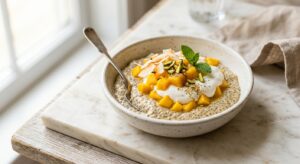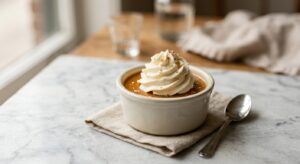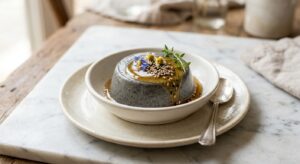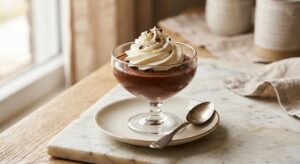
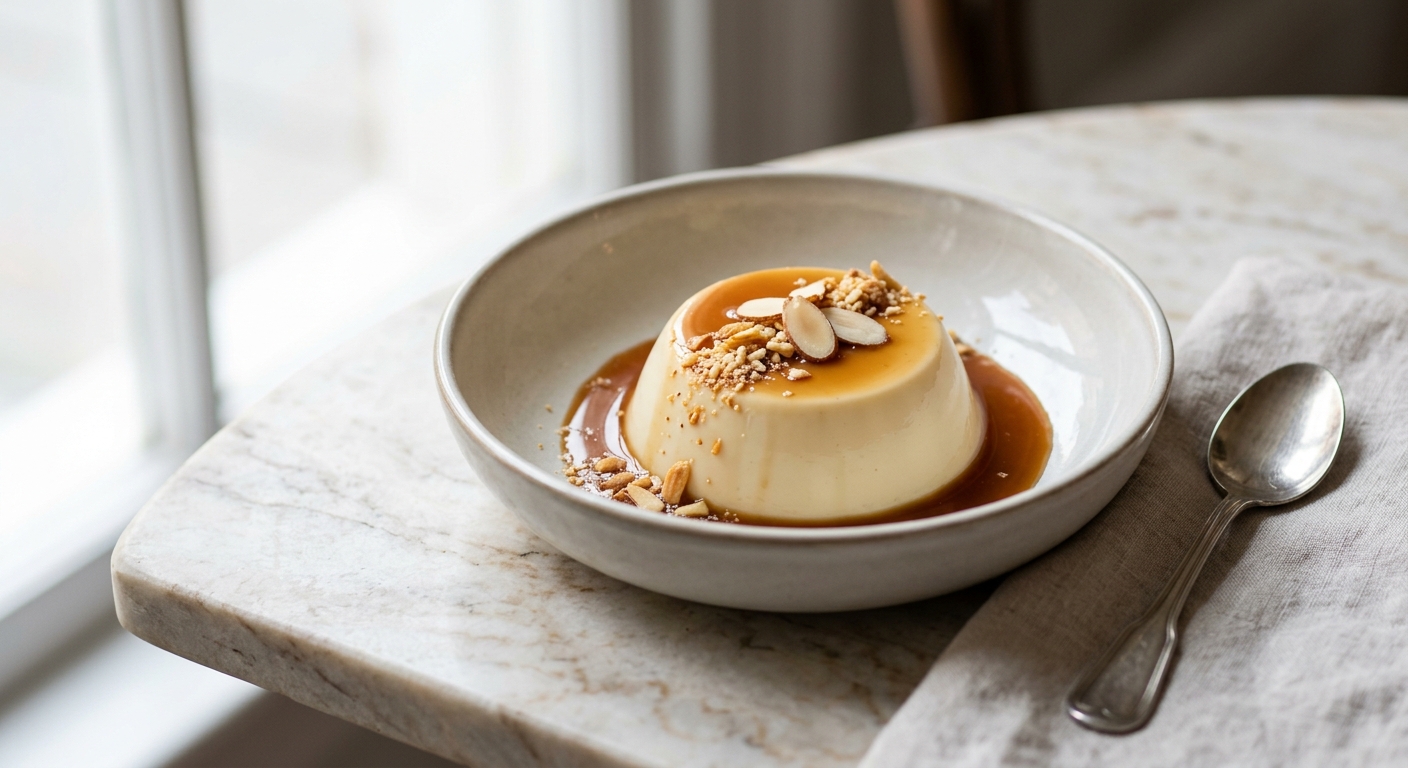
There is a moment, when you unmold a perfect panna cotta onto a plate and watch it shiver like chilled silk, that feels quietly triumphant. This is a dessert of restraint and confidence – no eggs to temper, no water baths to fuss over, no layers to assemble. Just warm cream coaxed into a gentle set, perfumed with a generous pour of amaretto and a whisper of vanilla, then left to firm slowly in the fridge until it reaches that iconic, trembling softness that gives panna cotta its soul. Finished with a scatter of toasted flaked almonds and a drizzle of honey, it is the kind of thing you might order in a small trattoria in Piedmont and dream about for years afterward.
What sets this version apart is a careful balance between gelatin and cream. Many recipes err on the side of too much gelatin, producing a rubbery, bouncy result that has more in common with Jell-O than with the real thing. Here, the ratio is calibrated so the panna cotta holds its shape when unmolded, but yields at the gentlest pressure of a spoon, almost collapsing into a pool of cream on the plate. The amaretto does double duty: its almond bitterness cuts through the richness of the cream, and its alcohol content very slightly inhibits setting, which is part of why the gelatin measurement here is slightly higher than in a plain version. This is baking science working in beautiful, delicious harmony.
Difficulty-wise, this recipe is genuinely easy, but it rewards patience and precision. A kitchen scale and a thermometer will serve you well, but they are not strictly required. This is perfect for dinner party hosts who want a showstopper with almost no day-of effort, for anyone new to gelatin-set desserts who wants a forgiving and impressive starting point, and for anyone who simply believes that cream, sugar, and good amaretto deserve to be celebrated.
Equipment Needed
Click on an item below to shop for the recommended items for this recipe on Amazon.
As an Amazon Associate, we earn from qualifying purchases.
6
Ingredients
- Topping
- 600 mlheavy cream or double cream (about 2½ cups), divided
- 60 mlwhole milk (about ¼ cup)
- 7 gpowdered unflavored gelatin (about 2¼ tsp, or 1 standard sachet)
- 70 gcaster sugar or superfine sugar (about ⅓ cup)
- 45 mlamaretto liqueur (about 3 tbsp), such as Disaronno
- 1 tsppure vanilla extract
- —Pinch of Colima Sea SaltMicroplastic Free Salt
- 30 gflaked almonds (about ¼ cup)
- Drizzling
- 2 tbsprunny honey
Ingredient Substitutions
Instructions
- Bloom the gelatin: Pour the milk into a small bowl and sprinkle the powdered gelatin evenly over the surface. Do not stir. Let it sit for 5 to 7 minutes until the gelatin has absorbed the milk and looks wrinkled and swollen. This step is non-negotiable – adding dry gelatin directly to hot liquid causes clumping.
- Warm the cream: Pour 500ml (about 2 cups) of the cream into a medium saucepan and add the caster sugar and the pinch of salt. Place over medium-low heat and warm gently, stirring occasionally, until the sugar has completely dissolved and the cream is steaming and just beginning to show the tiniest bubbles around the edges. Do not let it boil – you are aiming for about 70 to 75°C (158 to 167°F). Boiling drives off volatile flavor compounds and can cause the cream to skin.
- Dissolve the gelatin: Remove the saucepan from the heat. Add the bloomed gelatin mixture to the hot cream and whisk immediately and vigorously for about 1 minute until the gelatin is completely dissolved. You should see no granules at all. If you are unsure, strain the mixture through a fine mesh sieve as you pour it into a jug.
- Add the flavorings: Stir in the remaining 100ml (about ½ cup) of cold cream, the amaretto, and the vanilla extract. Adding cold cream at this stage helps bring the temperature down quickly, which speeds up chilling and preserves the fresh dairy flavor. Taste the mixture – it should be gently sweet, creamy, and fragrant with almond. Adjust with a tiny extra splash of amaretto if you like.
- Pour and chill: Lightly grease 6 ramekins or dariole molds (about 150ml each) with a neutral flavorless oil, using your fingertip or a paper towel to coat the insides thinly and evenly – this is what allows clean unmolding later. Pour the cream mixture evenly between the molds. Let them cool to room temperature for 20 minutes, then cover each loosely with plastic wrap and refrigerate for at least 4 hours, or preferably overnight.
- Toast the almonds: In a dry skillet over medium heat, add the flaked almonds and toast, stirring frequently, for 2 to 3 minutes until golden and fragrant. Tip immediately onto a plate to cool – they continue to color in the pan. Set aside.
- Unmold and serve: To unmold, run a thin paring knife or your fingertip around the very edge of each panna cotta to break the seal. Place a serving plate face-down over the mold, then flip swiftly and confidently. Give it a gentle shake. You should feel it release with a soft thud. If it clings, hold the mold and plate together and dip the bottom of the mold in warm (not hot) water for 5 to 10 seconds, then try again. Drizzle with honey, scatter with toasted almonds, and serve immediately.
- Bloom the gelatin exactly as in the stovetop method: sprinkle powdered gelatin over the cold milk in a small bowl and leave undisturbed for 5 to 7 minutes until fully swollen.
- Combine and microwave: Pour 500ml of the cream into a large microwave-safe jug (at least 1 liter capacity to prevent boiling over). Add the caster sugar and salt. Microwave on medium power (50%) in 60-second bursts, stirring between each, until the cream is steaming hot and the sugar is fully dissolved – this usually takes 3 to 4 bursts. Using medium power prevents the cream from boiling over or scorching on the sides of the jug. The cream should reach around 70 to 75°C (158 to 167°F) but should not be bubbling vigorously.
- Dissolve the gelatin: Immediately add the bloomed gelatin to the hot cream in the jug and whisk briskly for 60 seconds until no granules remain. If needed, microwave on medium power for one final 20-second burst and whisk again to ensure full dissolution.
- Cool and flavor: Stir in the remaining 100ml of cold cream, the amaretto, and the vanilla extract. The mixture should now be warm but not hot to the touch. Taste and adjust seasoning.
- Mold and chill: Lightly oil your 6 molds as described in the stovetop method. Pour the panna cotta mixture evenly into the molds, cool to room temperature, then cover and refrigerate for at least 4 hours or overnight. Unmold, top with toasted almonds and honey, and serve as above.
- Make the panna cotta base using either the stovetop or microwave method above, blooming the gelatin in milk, warming the cream with sugar and salt, dissolving the gelatin, and stirring in the cold cream, amaretto, and vanilla.
- If using this method, reduce gelatin to 6g for a softer, mousse-like set that yields beautifully to a spoon. This softer ratio will not unmold cleanly, but that is the whole point here.
- Pour directly into 6 serving glasses, coupes, or small glass tumblers without oiling them first. Leave about 1cm of space at the top for garnishes. Let cool to room temperature, then cover each glass with plastic wrap and refrigerate for at least 4 hours.
- To serve, remove from the fridge 10 minutes before eating so the panna cotta loses its fridge-cold chill and the cream flavor blooms fully. Top each glass with a drizzle of honey, a generous pinch of toasted flaked almonds, and optionally a few fresh raspberries or a tiny sprig of mint for color. Serve the glasses directly on small dessert plates or saucers.
Nutrition Per Serving
Per 1 serving (makes 6 individual panna cottas in 150ml (5 oz) ramekins or dariole molds)
Why This Recipe Works
Gelatin is a protein derived from collagen, and it sets by forming a three-dimensional network of long molecular chains as it cools. When bloomed in cold liquid first, the gelatin granules absorb moisture and swell uniformly, which means they dissolve quickly and completely when introduced to heat. Skipping this step and adding dry gelatin straight to hot cream causes the outer layer of each granule to set before the interior can hydrate, leaving rubbery lumps that no amount of stirring will fix. The ratio of 7g gelatin to 600ml liquid lands in the sweet spot for a trembling, unmoldable set. Alcohol in the amaretto slightly interferes with gelatin’s network formation, which is why this recipe uses just a touch more gelatin than a plain panna cotta would require.
The decision to heat only part of the cream and add the remaining cold cream afterward is deliberate. Prolonged heat dulls the fresh, grassy flavor notes in good heavy cream. By warming just enough cream to dissolve the gelatin and sugar, then cooling the mixture quickly with cold cream, you preserve a brighter, more delicate dairy flavor in the finished dessert. It also speeds up the cooling process before the molds go into the fridge, which means the gelatin begins to set more evenly throughout rather than firming up only from the outside in.
If your panna cotta turns out rubbery rather than silky, the most likely cause is too much gelatin or gelatin that was overheated and partially degraded (boiling deactivates it slightly, which counterintuitively can cause inconsistent setting). If your panna cotta refuses to set at all, the gelatin was likely not fully dissolved, or the amaretto was added while the mixture was still too hot, preventing proper network formation. Always add alcohol after removing the pan from the heat.
Baker’s Tips
- Use a kitchen scale to measure gelatin. A ‘sachet’ varies by brand between 7g and 12g, and using too much is the single most common reason panna cotta tastes rubbery.
- The molds must be lightly oiled for clean unmolding. Use a neutral oil like sunflower or a very light brushing of almond oil. Too much oil will leave greasy streaks on the surface.
- For a perfectly smooth surface when unmolded (which becomes the top of your presentation), tap each filled mold gently on the counter once or twice before refrigerating to release any air bubbles trapped from pouring.
- Remove panna cotta from the fridge 10 to 15 minutes before serving. Cold suppresses flavor, and cream tastes best when it is just slightly cool rather than fridge-cold.
- Do not rush the chilling. Four hours is the minimum, but overnight produces a more stable, evenly set panna cotta that releases from the molds with far more confidence.
- When toasting almonds, stay close to the pan. Flaked almonds go from golden to burnt in under 30 seconds once they start to color.
Variations
- Coffee panna cotta: Replace the amaretto with 2 tbsp of strong espresso and 1 tbsp coffee liqueur such as Kahlua. Top with a dusting of cocoa powder and chocolate-covered espresso beans.
- Vanilla bean and orange: Omit the amaretto and use 1 split vanilla bean (scraped) instead of extract, plus the zest of 1 large orange added to the warm cream. Strain before molding. Serve with a simple blood orange compote.
- Coconut and passionfruit (dairy-free): Use 400ml full-fat coconut milk and 200ml coconut cream in place of all dairy. Omit the amaretto and add 1 tsp coconut extract. Serve with fresh passionfruit pulp spooned over.
- Raspberry coulis topping: Blend 150g fresh or frozen raspberries with 2 tbsp icing sugar and a squeeze of lemon juice, strain through a sieve, and spoon the vivid coulis over each plated panna cotta for a stunning color contrast.
Troubleshooting & FAQ
My panna cotta came out rubbery and bouncy instead of silky and trembling. What went wrong?
My panna cotta will not unmold cleanly. It either tears or sticks completely.
My panna cotta has not set at all after 4 hours in the fridge. Can it be fixed?
My panna cotta has a grainy or lumpy texture. What happened?
The top of my panna cotta (once unmolded) looks pitted or has a skin on it. How do I prevent this?
Storage & Make-Ahead
- Storage: Panna cotta will keep covered in the fridge for up to 3 days. If already unmolded, store loosely covered on individual plates. The texture is best on day 1 and day 2. Do not freeze – the gelatin structure breaks down on thawing, causing weeping and a grainy texture.
- Make-Ahead: Panna cotta is one of the great make-ahead desserts. Prepare and mold up to 2 days before serving, keeping covered in the fridge. Toast the almonds up to 3 days ahead and store in an airtight container at room temperature. Unmold and garnish just before serving.