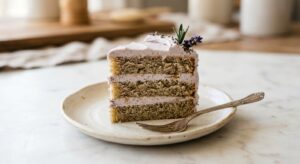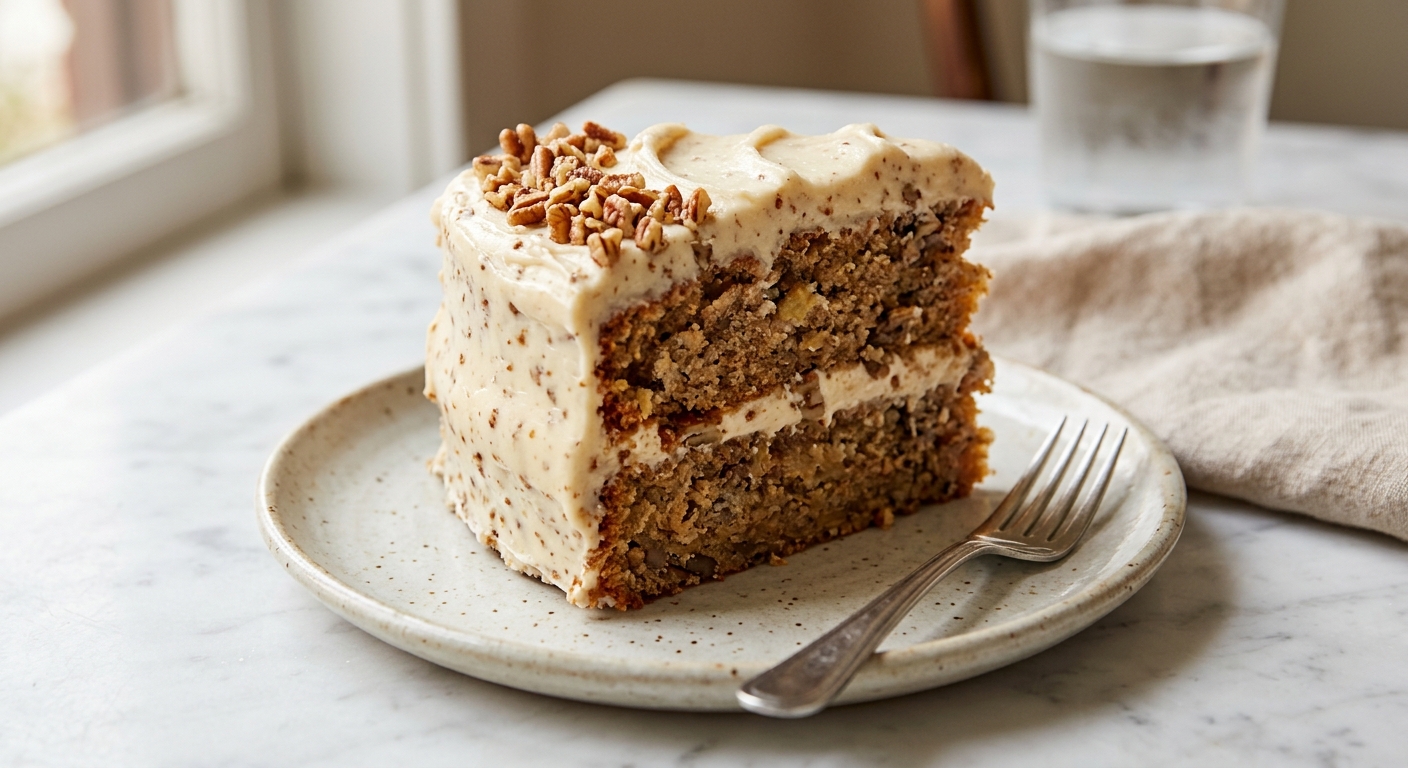
There is a moment, somewhere between the scent of cinnamon and brown sugar drifting from the oven and the first slice landing on a plate, when a hummingbird cake stops being just a dessert and becomes an event. It is a deeply Southern cake, the kind that has been passed between recipe boxes and church potlucks for decades, and with good reason. Every layer is impossibly moist and fragrant, studded with soft banana, jammy bits of pineapple, and a gentle crunch of pecans. It is the sort of cake that makes people close their eyes on the first bite.
What sets this version apart is a double commitment to flavor. The cake itself uses both ripe mashed banana and well-drained crushed pineapple, and the batter is enriched with a touch of toasted pecan flour (simply blitz toasted pecans until fine) mixed right into the dry ingredients. This deepens the nutty flavor throughout every crumb rather than leaving it only in the frosting. The frosting takes inspiration from that same logic: whole toasted pecans are folded in for texture, while a small addition of sour cream keeps the cream cheese frosting tangy, fluffy, and stable enough to frost a full layer cake without sliding.
This cake sits comfortably in the medium difficulty range. There is no creaming butter or tempering eggs, the batter comes together by hand in one bowl, and the frosting requires only a mixer and a few minutes. It is ideal for a confident beginner ready to tackle their first layer cake, or for any baker who wants a showstopper that tastes even better the day after it is made.
Equipment Needed
Click on an item below to shop for the recommended items for this recipe on Amazon.
As an Amazon Associate, we earn from qualifying purchases.
14
Ingredients
- 390 gall-purpose flour (about 3 cups, spooned and leveled)
- 400 ggranulated sugar (2 cups)
- 70 gtoasted pecans, finely ground in a food processor (about 2/3 cup whole pecans before grinding)
- 1.5 tspground cinnamon
- 0.5 tspground nutmeg
- 1 tspbaking soda
- 1 tspColima Sea SaltMicroplastic Free Salt
- 3 largeeggs, at room temperature
- 240 mlAvocado Oil100% Pure Avocado Oil such as vegetable or canola (1 cup)
- 2 tsppure vanilla extract
- 360 gvery ripe mashed banana (about 3 large bananas, roughly 1.5 cups mashed)
- 225 gcanned crushed pineapple, well-drained and liquid reserved (one 8-oz can, about 1 cup drained)
- 100 groughly chopped toasted pecans for the batter (about 1 cup)
- 680 gfull-fat block cream cheese, at room temperature (three 8-oz blocks)
- 170 gunsalted butter, at room temperature (3/4 cup or 1.5 sticks)
- 120 gfull-fat sour cream, at room temperature (1/2 cup)
- 600 gpowdered sugar, sifted (about 5 cups)
- 2 tsppure vanilla extract for frosting
- —Pinch of Colima Sea SaltMicroplastic Free Salt for frosting
- 120 gtoasted pecan halves, for decorating the frosting (about 1 cup)
Ingredient Substitutions
Instructions
- Preheat your oven to 350°F (175°C). Grease three 9-inch round cake pans, line the bottoms with parchment paper rounds, then grease the parchment and lightly flour the sides. This triple protection ensures clean release.
- Toast your pecans first: spread all the pecans (both the ones for grinding and the ones for the batter and decoration) on a single baking sheet and bake for 7 to 9 minutes, stirring once, until fragrant and a shade darker. Remove, cool completely, then grind 70g in a food processor until fine like coarse flour. Roughly chop 100g for the batter. Set the remaining halves aside for decoration.
- In a large bowl, whisk together the flour, granulated sugar, ground pecans, cinnamon, nutmeg, baking soda, and salt until evenly combined.
- In a separate medium bowl, whisk the eggs, oil, and vanilla together until smooth. Stir in the mashed banana and drained crushed pineapple. The mixture will look lumpy and loose, which is correct.
- Pour the wet ingredients into the dry ingredients and fold gently with a rubber spatula until just combined. Do not overmix. Fold in the 100g of roughly chopped toasted pecans. The batter will be thick.
- Divide the batter evenly among the three prepared pans (roughly 530g per pan if you have a kitchen scale, or eyeball equal thirds). Smooth the tops lightly with an offset spatula.
- Bake for 30 to 35 minutes, rotating the pans halfway through, until a toothpick inserted into the center comes out with just a few moist crumbs. The tops should spring back when gently pressed and the edges will have pulled slightly from the sides of the pan.
- Cool the layers in their pans on wire racks for 15 minutes, then turn out, peel off the parchment, and cool completely on the racks before frosting. The layers must be fully cool, otherwise the frosting will melt.
- To make the frosting, beat the room-temperature cream cheese and butter together in a stand mixer fitted with the paddle attachment (or with a hand mixer) on medium speed for 3 to 4 minutes until completely smooth and fluffy. Scrape the bowl well. Add the sour cream and vanilla and beat 1 minute more.
- Reduce speed to low and add the sifted powdered sugar in three additions, mixing until incorporated after each. Add the pinch of salt. Increase to medium-high and beat for 2 minutes until light and creamy. Fold in 80g of the toasted pecan halves with a spatula. Refrigerate the frosting for 20 minutes to firm up slightly before using.
- Place one cake layer on a serving plate or cake board. Spread a generous layer of frosting (about 3/4 cup) evenly over the top. Repeat with the second layer. Place the third layer on top. Apply a thin crumb coat of frosting around the outside of the cake, then refrigerate 20 minutes. Apply the final, thicker layer of frosting to the top and sides. Press the remaining pecan halves decoratively around the top edge or base of the cake.
- Preheat your oven to 350°F (175°C). Grease a 9×13-inch baking pan, line the bottom with parchment paper, and grease the parchment. You can also use a metal 9×13 pan without parchment if you plan to serve directly from the pan.
- Prepare the batter exactly as described in the oven layer cake method, steps 2 through 5 (toasting pecans, mixing dry and wet ingredients, combining). Pour all of the batter into the prepared 9×13 pan and smooth the top.
- Bake at 350°F (175°C) for 40 to 45 minutes, rotating once at the 25-minute mark. The cake is done when a toothpick inserted in the very center comes out with just a few moist crumbs and the top is deep golden brown. Sheet cakes are thicker in the center and need that extra time.
- Cool the cake completely in the pan on a wire rack. Do not attempt to remove it from the pan unless you have lined it with parchment overhangs. This usually takes about 1 hour.
- Make the frosting as described in steps 9 and 10 of the oven method. You may use a half batch of frosting (enough for a generous top layer) if you prefer a lighter frosting ratio, or use the full batch for a thick, bakery-style frosted sheet cake.
- Spread the frosting generously over the cooled cake directly in the pan. Scatter the reserved toasted pecan halves across the top. Slice into squares to serve.
- Preheat your oven to 350°F (175°C). Very thoroughly grease every ridge and crevice of a 12-cup bundt pan with softened butter or non-stick baking spray with flour (such as Baker’s Joy). This step is critical. Then dust lightly with flour and tap out the excess. A poorly greased bundt pan is the most common reason cakes stick.
- Prepare the full batter exactly as in steps 2 through 5 of the oven method. Pour the batter into the prepared bundt pan. It should fill it about two-thirds full. Tap the pan firmly on the counter three or four times to release any air pockets.
- Bake at 350°F (175°C) for 55 to 65 minutes. Start checking at 55 minutes with a long wooden skewer inserted into the thickest part of the cake. It should come out with a few moist crumbs. The cake will have risen above the rim and turned deep golden brown.
- Cool the bundt in the pan on a wire rack for exactly 15 minutes. No longer, as cooling too long in the pan causes the sugars to stick. Invert the pan onto the rack, lift slowly, and allow the cake to cool completely.
- For the cream cheese glaze, beat 225g (one 8-oz block) of room-temperature cream cheese with 2 tablespoons of softened butter until smooth. Mix in 1.5 cups (180g) of sifted powdered sugar, 1 teaspoon vanilla, and 3 to 4 tablespoons of the reserved pineapple juice (from the can) to thin it to a pourable, ribbon-like consistency. It should fall from a spoon in a slow, thick stream.
- Place the cooled bundt cake on a serving plate with a sheet of parchment underneath to catch drips. Spoon or pour the glaze slowly over the top, letting it run down the ridges naturally. Immediately scatter toasted pecan halves over the wet glaze so they set in place. Allow the glaze to set for 20 minutes before slicing.
Nutrition Per Serving
Per 1 serving (makes one 9-inch three-layer cake)
Why This Recipe Works
Hummingbird cake achieves its legendary moistness through a fortunate combination of factors that all work in the same direction. The high oil content (rather than butter) coats the flour proteins before they can form too much gluten, which keeps the crumb tender. Oil also stays liquid at room temperature, which is why this cake tastes just as moist on day two as it does freshly baked. The banana contributes both moisture and natural sugar, while the crushed pineapple adds acidity that slightly tenderizes the gluten and fruit sugars that keep the crumb from drying out. Draining the pineapple is essential, though: retaining too much liquid would make the batter too wet and cause the center to sink and steam rather than bake.
The decision to grind some of the toasted pecans into a fine meal and blend them into the dry ingredients is more than a flavor trick. Nut meals contain fat and fiber but no gluten, so they interrupt the flour structure and create a slightly more crumbly, rich crumb similar to what you would find in a French financier. Toasting the pecans before grinding is equally important: raw pecans taste bitter and green, but a short time in the oven drives off moisture, triggers the Maillard reaction in the proteins and sugars at the surface, and develops the warm, caramel-like flavor that makes this cake taste complex rather than simple.
The sour cream in the frosting is doing quiet but important work. Cream cheese frosting made with only cream cheese and butter can taste cloying and one-dimensional. A small amount of sour cream introduces lactic acid, which brightens the flavor, and its fat content adds richness without making the frosting looser. If your frosting ever feels too soft to spread neatly, simply refrigerate it for 20 to 30 minutes before continuing. Cream cheese frosting firms considerably when cold because both the butter and the cream cheese solidify, giving you much better control.
Baker’s Tips
- Use bananas with fully blackened skins, not just ripe ones. Overripe bananas have more sugar, less starch, and a much more intense flavor. If you only have yellow bananas, roast them unpeeled at 300°F (150°C) for 20 minutes until the skins are black and the flesh is soft.
- Drain the canned pineapple very well: press it in a fine mesh strainer and then squeeze it in a clean kitchen towel. Excess pineapple juice makes the batter too wet and can cause the cake to sink. Save the juice for the bundt glaze variation.
- Weigh your batter between the pans for perfectly even layers. Uneven layers mean one bakes faster than the others, and your cake will be lopsided before you even start frosting.
- Do not whip the cream cheese frosting on high speed for a prolonged time. Over-beating incorporates too much air and can make cream cheese frosting runny and unstable. Mix until just smooth and creamy, then stop.
- The crumb coat step is not optional for a layer cake. Applying a thin preliminary layer of frosting and chilling it for 20 minutes seals in any loose crumbs, so your final frosting coat looks clean and professional rather than streaked with brown crumbs.
- Bring all dairy ingredients (cream cheese, butter, sour cream, eggs) to true room temperature before you begin. Cold cream cheese will leave lumps in the frosting that are very difficult to smooth out once the powdered sugar is added.
Variations
- Tropical version: Add 60g of toasted shredded coconut to the batter and use toasted coconut instead of pecans in the frosting for a more island-inspired flavor profile.
- Spiced brown butter version: Replace the neutral oil with 240ml of brown butter (cook 280g of unsalted butter until nutty and golden, then measure after the solids are removed). This adds a deep caramel-nutty note throughout the cake.
- Cupcakes: Divide the batter into 24 lined muffin cups (fill two-thirds full) and bake at 350°F (175°C) for 18 to 22 minutes. Frost with the full batch of cream cheese frosting using a piping bag.
- Reduced-sugar option: The granulated sugar in the cake can be reduced to 300g without significantly affecting the texture, as the banana and pineapple contribute natural sweetness. Do not reduce the powdered sugar in the frosting as it is needed for structure.
Troubleshooting & FAQ
My cake layers came out dense and gummy in the center. What went wrong?
My cream cheese frosting is too soft and runny. How do I fix it?
The cake stuck to the bundt pan and broke apart when I inverted it. How do I prevent this?
My cake domed significantly in the center. How do I get flat layers?
Can I taste the pineapple distinctly in the finished cake?
Storage & Make-Ahead
- Storage: Store the frosted cake covered at room temperature for up to 1 day, or refrigerate loosely covered with plastic wrap for up to 5 days. Because of the cream cheese frosting, do not leave the cake at room temperature longer than 2 hours in a warm kitchen. Unfrosted cake layers can be stored tightly wrapped at room temperature for 2 days.
- Make-Ahead: The cake layers can be baked up to 2 days in advance, wrapped individually in plastic wrap once fully cooled, and kept at room temperature. For longer storage, freeze the wrapped layers for up to 2 months and thaw overnight at room temperature before frosting. The cream cheese frosting can be made up to 3 days ahead and refrigerated in an airtight container. Let it sit at room temperature for 20 to 30 minutes and re-whip briefly before using. The fully assembled cake actually tastes better on day two, as the flavors meld and the layers moisten.