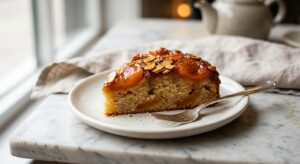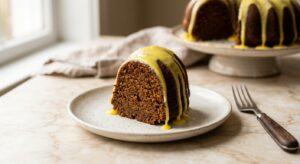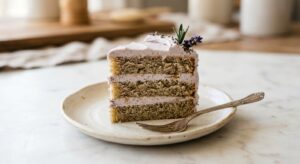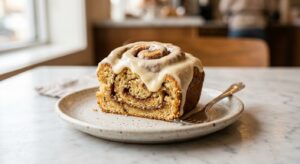
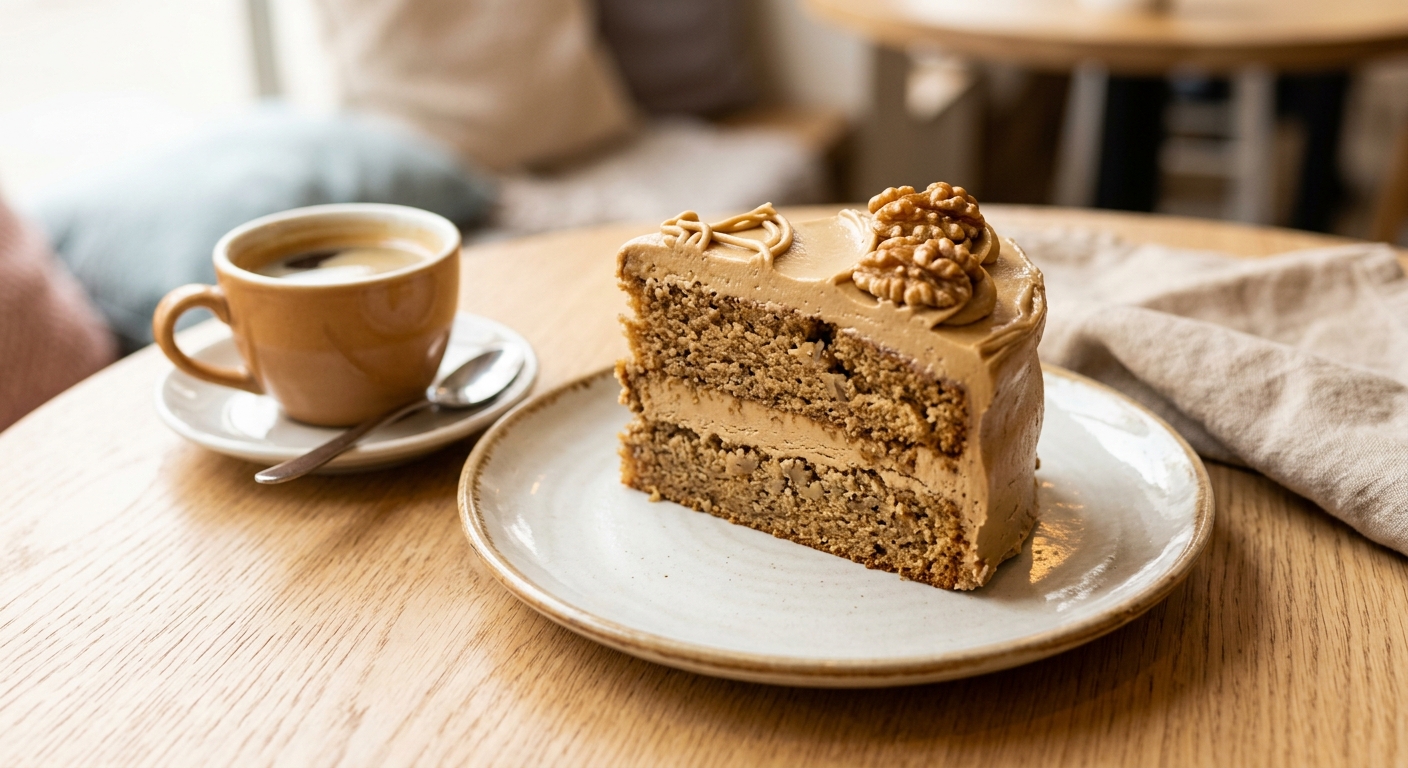
There is something deeply comforting about a coffee and walnut cake. It belongs to a long tradition of British teatime baking, the kind of cake that sits proudly under a glass dome on a wooden counter, waiting to be sliced into generous wedges. The crumb is soft and yielding, flecked with finely chopped toasted walnuts, and the scent when it comes out of the oven is nothing short of intoxicating. A cup of strong coffee alongside is not optional, it is mandatory.
What sets this version apart is the use of real espresso rather than coffee essence or instant granules dissolved in a teaspoon of hot water. Reducing a double shot of espresso slightly concentrates the flavor without adding excess liquid, giving you a cake that genuinely tastes of coffee rather than just hinting at it. The buttercream follows the same philosophy: strong brewed coffee is beaten into properly softened butter with just enough icing sugar to make it spreadable and luscious, not cloying. A touch of fine sea salt in the frosting lifts every single flavor note.
This is a medium-difficulty bake, well within reach of anyone who has made a sandwich cake before. The methods are straightforward, the ingredients are pantry-friendly, and the result looks genuinely impressive on a cake stand. It is perfect for birthdays, Sunday gatherings, or any occasion where you want to bake something that will make people ask for the recipe.
Equipment Needed
Click on an item below to shop for the recommended items for this recipe on Amazon.
As an Amazon Associate, we earn from qualifying purchases.
12
Ingredients
- 200 gwalnut halves (about 2 cups), divided – 160g for the batter, 40g reserved for decoration
- 60 mlfreshly brewed espresso or very strong coffee (about 2 shots), cooled to room temperature
- 225 gunsalted butter, softened (about 1 cup / 2 sticks), plus extra for greasing
- 225 ggolden caster sugar or regular caster sugar (about 1 cup + 2 tbsp)
- 4 largeeggs, at room temperature
- 225 gself-raising flour (about 1 cup + 3 tbsp) – see substitutions if you only have all-purpose
- 1 tspbaking powder
- 0.5 tspColima Sea SaltMicroplastic Free Salt
- 2 tbspwhole milk, at room temperature
- —For the Coffee Buttercream:
- 300 gunsalted butter, softened (about 1 cup + 5 tbsp / 2.5 sticks)
- 500 gicing sugar, sifted (about 4 cups / powdered sugar)
- 45 mlfreshly brewed espresso or very strong coffee (about 3 tbsp), cooled
- 0.25 tspColima Sea SaltMicroplastic Free Salt
- 1 tsppure vanilla extract
Ingredient Substitutions
Instructions
- Preheat your oven to 350°F (175°C) with the rack positioned in the center. Grease two 8-inch (20cm) round cake pans generously with butter, line the bottoms with parchment paper rounds, and dust the sides lightly with flour, tapping out any excess.
- Toast the walnuts first for maximum flavor: spread them on a dry baking sheet and bake for 7 to 8 minutes until fragrant and lightly golden. Watch them carefully, they can go from toasted to burnt quickly. Let them cool for 5 minutes, then transfer 160g to a food processor and pulse 6 to 8 times until finely chopped but not a paste. Some texture is welcome. Set aside the remaining 40g whole halves for decoration.
- In the bowl of a stand mixer fitted with the paddle attachment (or a large bowl with a hand mixer), beat the 225g softened butter and caster sugar together on medium-high speed for 4 to 5 full minutes until the mixture is very pale, almost white, and noticeably fluffy. Do not rush this step. This is where you build the air that gives the cake its lift.
- With the mixer on medium speed, add the 4 eggs one at a time, beating for about 30 seconds after each addition before adding the next. If the mixture starts to look curdled or separated, add a tablespoon of your measured flour and continue. Once all eggs are incorporated, beat in the cooled 60ml espresso.
- Sift the self-raising flour, baking powder, and salt together into a separate bowl. Add half the flour mixture to the batter and fold gently with a large rubber spatula using wide, slow strokes just until it disappears. Add the 2 tbsp milk, fold briefly, then add the remaining flour and fold until just combined. A few faint flour streaks are fine at this stage. Finally, fold in the 160g finely chopped toasted walnuts. Do not overmix – stop as soon as the batter is uniform.
- Divide the batter evenly between the two prepared pans (a kitchen scale makes this easy – weigh each pan to ensure even layers). Smooth the tops with an offset spatula and give each pan a gentle tap on the counter to release any large air bubbles.
- Bake for 26 to 30 minutes, until the cakes are golden brown, have pulled away very slightly from the sides of the pans, and a toothpick inserted into the center comes out with just a few moist crumbs, not wet batter. Do not open the oven door before the 22-minute mark.
- Cool the cakes in their pans on a wire rack for exactly 10 minutes, then run a thin knife or offset spatula around the edges and turn them out gently. Peel off the parchment and allow the layers to cool completely, top-side up, on the rack, at least 45 minutes to 1 hour. Do not frost warm cakes.
- While the cakes cool, make the buttercream. Beat the 300g softened butter in a stand mixer on high speed for 3 to 4 minutes until it is very pale and fluffy. Reduce the speed to low and add the sifted icing sugar in three additions, mixing slowly to prevent a sugar cloud, then increasing to medium after each addition. Add the 45ml cooled espresso, the vanilla extract, and the quarter teaspoon of salt. Increase to high speed and beat for 2 full minutes until the frosting is silky, light, and spreadable. Taste and adjust – a little more espresso for stronger flavor, a tiny pinch more salt to balance sweetness.
- To assemble: place one cooled cake layer on a cake stand or plate. Spread about one-third of the buttercream evenly over the top using an offset spatula, going almost to the edges. Place the second layer on top, flat-side down for the most even surface. Use the remaining buttercream to frost the top and sides, or go for a rustic naked-cake look by frosting the top generously and leaving the sides bare. Decorate with the reserved toasted walnut halves, pressing them gently into the frosting.
- Toast the walnuts in a dry skillet over medium heat for 4 to 5 minutes, stirring frequently, until fragrant and slightly darkened. Transfer 160g to a food processor and pulse until finely chopped. Reserve 40g whole halves for decoration. Line the base and sides of your slow cooker insert with a large piece of parchment paper, leaving plenty of overhang at the sides to act as handles for lifting. Lightly grease the parchment.
- Prepare the batter exactly as in the oven method: cream the 225g butter and sugar for 4 to 5 minutes until pale and fluffy, add the eggs one at a time with a spoonful of flour if needed to prevent curdling, then beat in the 60ml cooled espresso. Fold in the sifted flour, baking powder, and salt in two additions, alternating with the 2 tbsp milk, then fold in the chopped walnuts.
- Pour all of the batter into the lined slow cooker insert and smooth the top with a spatula. Lay two doubled sheets of paper towel across the top of the slow cooker before fitting the lid. This is an essential step: the paper towels absorb condensation, preventing drips onto the batter surface that would make the top wet and dense.
- Cook on High for 2 hours to 2 hours 30 minutes. Begin checking at the 1 hour 45 minute mark. The cake is done when the edges are set and pulling away from the sides, the top feels firm to a light touch, and a toothpick inserted into the center comes out with just moist crumbs. Slow cookers vary significantly in heat, so start checking early.
- Turn off the slow cooker and lift the cake out using the parchment paper handles. Place on a wire rack and allow to cool completely in the parchment, at least 1 hour, before peeling it away and frosting. Prepare the coffee buttercream exactly as in the oven method. Because this is a single thicker layer, frost the top and sides generously and decorate with the reserved walnut halves.
Nutrition Per Serving
Per 1 serving (makes one 8-inch two-layer cake)
Why This Recipe Works
The creaming method used here, beating butter and sugar together at length before adding any other ingredients, is the foundation of a tender, well-structured layer cake. As the butter and sugar are beaten, tiny air bubbles are trapped within the fat. These bubbles expand dramatically in the heat of the oven, giving the cake its rise and light crumb. This is why the instruction to cream for 4 to 5 full minutes matters: a pale, almost white mixture means enough air has been incorporated. A pale yellow, barely-changed mixture means you have undercut the process and will get a denser cake.
Adding the eggs one at a time prevents the emulsion from breaking. Eggs are essentially fat (yolk) and water (white), and you are asking them to combine with a fat-based mixture. Adding them slowly, allowing the butter to emulsify each addition before the next, keeps the batter smooth and cohesive. If the batter does split and look curdled, do not panic: adding a tablespoon of flour provides starch to stabilize the emulsion. The cake will still bake up beautifully. The milk at the end loosens the batter just enough for good spreading without diluting the structure.
Toasting the walnuts before adding them to the batter is a small step that makes a meaningful difference. Raw walnuts have a slightly bitter, tannic edge. Heat drives off volatile compounds and triggers the Maillard reaction on the nut surface, developing deeper, roasted, nutty flavors that stand up to the strong coffee rather than being overwhelmed by it. For the buttercream, using cooled (never hot) espresso is essential: hot liquid would melt the butter and collapse the frosting into a greasy puddle. Patience here, just a few minutes of cooling, is what makes the difference between silky and soupy.
Baker’s Tips
- Butter temperature matters enormously. It should be soft enough that your finger leaves an indent with gentle pressure, but it should still hold its shape and not be shiny or greasy. If your butter is too cold the mixture will not cream properly; if it is too warm the frosting will be loose. Aim for about 65 to 68°F (18 to 20°C).
- Weigh your batter as you divide it between the pans. Two evenly weighted pans bake at the same rate and produce layers that sit level when stacked, making frosting dramatically easier.
- Let your espresso cool fully before adding it to either the batter or the buttercream. Even slightly warm coffee can partially melt the butter in both, causing a greasy batter and a broken frosting.
- For the cleanest, most professional-looking cake, frost a thin crumb coat first: spread a very thin layer of buttercream over the assembled cake to seal in all the crumbs, refrigerate for 20 minutes until firm, then apply the final, generous layer of frosting. You will never see a stray crumb in your frosting again.
- To get clean, attractive walnut halves on top, press them into the frosting while it is still fresh. If the frosting has been refrigerated and is firm, the walnuts may not adhere well. Add them just before serving if needed.
- Sift the icing sugar for the buttercream without fail. Lumps of icing sugar do not dissolve into butter the way they dissolve into liquid, and skipping the sift is the most common cause of gritty frosting.
Variations
- Mocha walnut version: Add 2 tbsp of good-quality Dutch-process cocoa powder to the cake batter (sift it in with the flour) and stir 30g of finely chopped dark chocolate into the finished batter for pools of melted chocolate in the crumb.
- Cardamom coffee walnut cake: Add 1 tsp of freshly ground cardamom to the cake batter with the flour for a Scandinavian-inspired twist. The floral spice is a natural match for both coffee and walnuts.
- Coffee and walnut loaf: Pour the full batter into a greased and lined 9×5-inch (900g) loaf pan and bake at 325°F (165°C) for 55 to 65 minutes, tenting with foil after 40 minutes if it is browning too quickly. Drizzle with a simple coffee glaze (100g icing sugar + 1.5 tbsp espresso) rather than buttercream.
- Mini layer cakes: Divide the batter among 12 muffin cups lined with parchment squares and bake at 350°F (175°C) for 18 to 20 minutes. Split each mini cake horizontally and sandwich with buttercream for individual servings, perfect for parties.
Troubleshooting & FAQ
My cake layers domed and cracked on top. What went wrong?
My batter looked curdled after I added the eggs. Did I ruin it?
My coffee buttercream is too loose and will not hold its shape. What do I do?
The cake is dry. Where did I go wrong?
Can I taste the coffee in the cake, or is it quite subtle?
Storage & Make-Ahead
- Storage: Store the assembled cake under a cake dome or in an airtight container at room temperature for up to 2 days, or refrigerate for up to 5 days. Because of the butter-based frosting, it is stable at cool room temperature. If refrigerated, bring to room temperature for 30 to 45 minutes before serving, as cold buttercream loses its silky texture. Unfrosted cake layers can be wrapped tightly in cling film and stored at room temperature for up to 2 days.
- Make-Ahead: The cake layers bake beautifully up to 2 days ahead. Cool completely, wrap each layer individually in cling film, and store at room temperature or freeze for up to 3 months (thaw overnight in the fridge still wrapped, then bring to room temperature before frosting). The coffee buttercream can be made up to 3 days ahead and refrigerated in an airtight container. Before using, let it come fully to room temperature, then re-beat with a mixer for 1 to 2 minutes to restore its fluffy, spreadable texture.