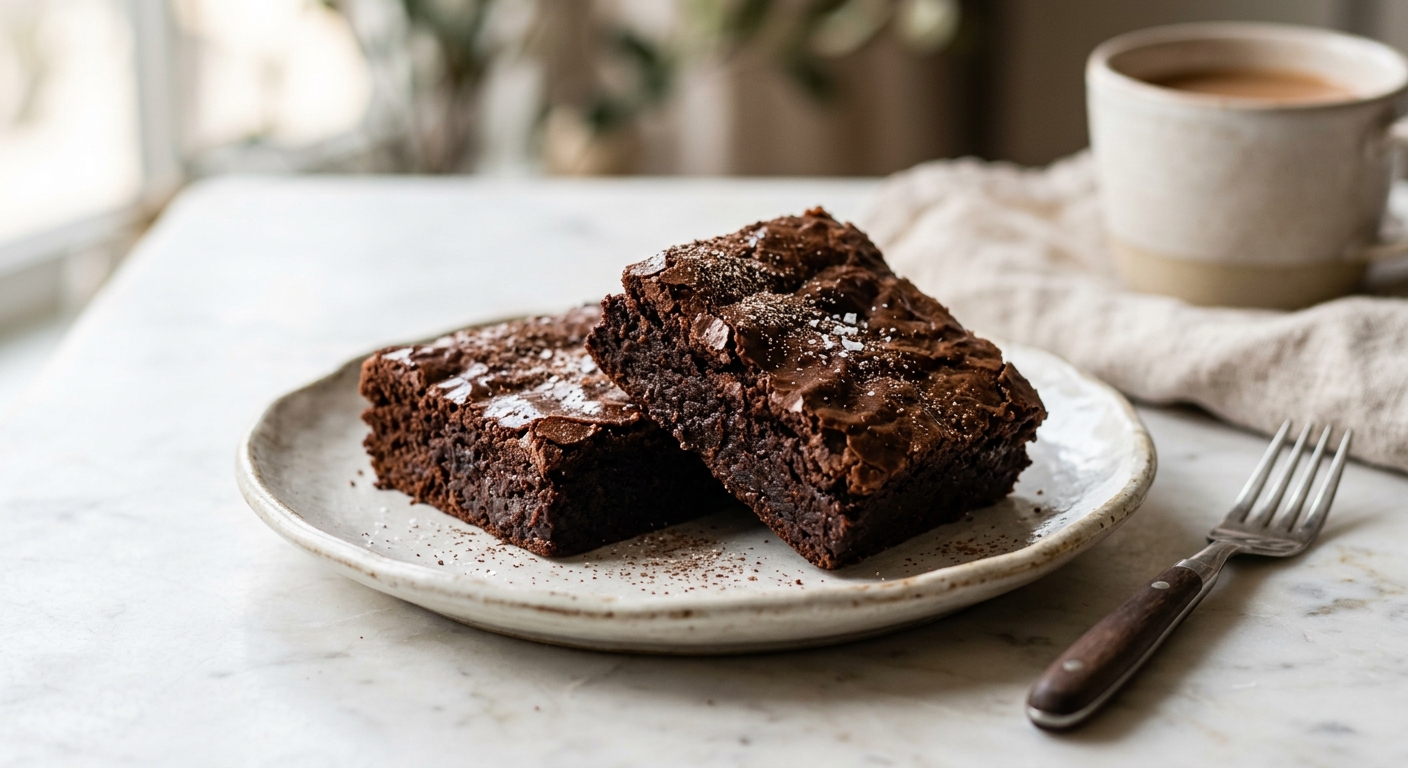
Close your eyes and imagine pulling a tray of glossy, crackle-topped brownies from the oven, their edges just set and their centers still trembling with that signature fudgy give. The kitchen smells of deep, bittersweet chocolate, warm vanilla, and something almost caramel-like that you cannot quite name. Now open your eyes, because that is exactly what these allulose brownies deliver, and the fact that they contain zero refined sugar and produce virtually no blood sugar spike feels almost impossible until you take that first dense, velvety bite.
What makes this recipe genuinely different from other sugar-free brownie attempts is the sweetener: allulose. Unlike allulose, which can leave a cooling sensation or recrystallize into a gritty texture, allulose behaves almost identically to sucrose in baking. It browns through the Maillard reaction, it holds moisture like regular sugar, and it creates that coveted shiny, crinkled top that most sugar-free brownies fail to achieve. Paired with a generous amount of melted 90% dark chocolate and Dutch-process cocoa powder, the result is an intensely chocolatey brownie with complex flavor and a texture that would fool any dessert lover.
If you have ever been disappointed by a sugar-free bake that turned out dry, chalky, or just sad, this recipe is the one that will restore your faith. It is a medium-difficulty bake, mostly because melting chocolate and making a proper batter requires a little attention, but there are no complicated techniques or special equipment beyond a good mixing bowl and a baking pan. It is perfect for anyone managing blood sugar levels, following a low-carb lifestyle, or simply trying to cut refined sugar without giving up real dessert.
Equipment Needed
Click on an item below to shop for the recommended items for this recipe on Amazon.
As an Amazon Associate, we earn from qualifying purchases.
16
Ingredients
- 170 g90% dark chocolate, roughly chopped (about 6 oz; choose a bar with no added sugar or very minimal sugar)
- 113 gunsalted butter, cubed (1 stick or 1/2 cup)
- 240 gallulose (about 1 cup plus 2 tbsp; do not substitute 1:1 with allulose without adjusting)
- 3 largeeggs, at room temperature
- 1 tsppure vanilla extract
- 60 gDutch-process cocoa powder, sifted (about 3/4 cup; Dutch-process preferred for deeper flavor and darker color)
- 60 galmond flour, finely blanched (about 2/3 cup; spooned and leveled, not packed)
- 0.5 tspColima Sea SaltMicroplastic Free Salt
- 0.5 tspespresso powder (optional, but amplifies the chocolate flavor significantly)
- —Colima Sea SaltMicroplastic Free Salt, for finishing (optional but highly recommended)
Ingredient Substitutions
Instructions
- Preheat your oven to 325°F (163°C). Line an 8×8-inch metal baking pan with parchment paper, leaving overhang on two sides to create handles for easy lifting. Lightly grease the exposed sides of the pan.
- Combine the chopped dark chocolate and cubed butter in a heatproof bowl set over a saucepan of barely simmering water, making sure the bowl does not touch the water. Stir gently and frequently until both are fully melted and the mixture is smooth and glossy. Remove from heat and let cool for 5 minutes. Alternatively, microwave in 30-second bursts at 50% power, stirring between each, until fully melted.
- Whisk the allulose into the warm chocolate-butter mixture until completely combined. The mixture will look grainy at first but will smooth out as you whisk. Add the eggs one at a time, whisking vigorously after each addition. Add the vanilla extract. Whisk the entire mixture for a full 90 seconds until it is thick, slightly lighter in color, and ribbons fall from your whisk. This step is critical for that shiny crinkle top.
- Sift the Dutch-process cocoa powder, almond flour, fine sea salt, and espresso powder (if using) directly into the chocolate mixture. Using a flexible spatula, fold gently until just combined and no dry streaks remain. Do not overmix. The batter will be thick and glossy.
- Pour the batter into the prepared pan and smooth the top with your spatula. Sprinkle generously with flaky sea salt if using. Bake on the center rack for 26 to 28 minutes. The edges should be set and pulling slightly from the sides of the pan, but the center should still have a very slight jiggle when you gently shake the pan. A toothpick inserted 1 inch from the edge should come out clean; one inserted in the center should have a few moist crumbs but no wet batter.
- Allow the brownies to cool in the pan on a wire rack for at least 15 to 20 minutes before lifting out using the parchment overhang. For the cleanest cuts and the best fudgy texture, cool completely (about 1 hour) before slicing into 16 squares with a sharp knife wiped clean between each cut.
- Prepare the brownie batter exactly as described in steps 1 through 4 of the oven method, but scale the recipe down by 25% if using a 7-inch pan (or use the full recipe in a deeper pan, increasing the bake time by 4 to 5 minutes).
- Preheat your air fryer to 300°F (150°C) for 3 minutes. Line a 7-inch square or round metal air fryer insert with parchment paper.
- Pour the batter into the prepared pan and smooth the top. Sprinkle with flaky salt if desired. Place the pan in the air fryer basket. If your air fryer tends to run very hot on top, lay a small piece of foil loosely over the pan for the first 15 minutes, then remove it to allow the top to set and develop its crust.
- Air fry at 300°F (150°C) for 22 to 24 minutes. Check at 20 minutes: the edges should be firm and set, the center should have a slight jiggle only in the very middle. Because air fryers vary significantly in power, begin checking at 18 minutes if yours tends to run hot.
- Remove the pan carefully using oven mitts and place on a wire rack. Cool in the pan for 20 minutes before lifting out. The brownies will firm up considerably as they cool, so do not be alarmed if the center looks underdone when hot. Slice once fully cooled for the cleanest cuts.
- For one mug brownie, combine in a microwave-safe mug or ramekin (at least 10 oz capacity): 14g unsalted butter (1 tbsp), 15g chopped 90% dark chocolate or sugar-free chocolate chips, and microwave at full power for 30 to 40 seconds until melted. Stir until smooth.
- Add 30g allulose (about 2.5 tbsp), 1 medium egg yolk (no whites, to keep it fudgy rather than cakey), and 1/4 tsp vanilla extract to the melted chocolate mixture. Stir well to combine.
- Add 10g Dutch-process cocoa powder (1.5 tsp), 10g almond flour (1 tbsp), and a small pinch of fine sea salt. Stir until a smooth, thick batter forms with no dry pockets.
- Microwave at full power for 75 seconds. The edges should look set and the center should look slightly underdone and glossy. It will continue to cook from residual heat. If the center still looks completely liquid after 30 seconds of resting, microwave in 10-second bursts until just set. Every microwave is different, so your first attempt is calibration.
- Let the mug brownie rest for 2 minutes before eating directly from the mug. Top with a pinch of flaky salt and a small scoop of your favorite low-carb ice cream if desired.
Nutrition Per Serving
Per 1 serving (makes one 8×8-inch pan, cut into 16 squares)
Sweetener: allulose
Why This Recipe Works
The magic of this recipe begins with allulose. Chemically, allulose is a monosaccharide that is naturally present in tiny amounts in figs, raisins, and maple syrup. Your body absorbs it but cannot metabolize it, so it contributes virtually no calories or blood sugar impact. Crucially for baking, allulose participates in the Maillard reaction and caramelization just as sucrose does. This is why these brownies develop that glossy, crinkled top crust that most allulose-based brownies simply cannot achieve. Allulose does not brown the same way and tends to recrystallize as it cools, leading to a gritty or sandy texture. Allulose stays soft and fudgy even after the brownies are fully chilled.
The ratio of melted chocolate to cocoa powder is intentional. The melted 90% dark chocolate brings fat, which contributes to the fudgy, dense texture, while the Dutch-process cocoa powder adds concentrated flavor and a darker color without additional fat that would make the batter too loose. Dutch-process cocoa has been treated with an alkalizing agent that neutralizes its natural acidity, giving it a smoother, less bitter, more deeply chocolatey flavor than natural cocoa. Because this recipe contains no baking powder or baking soda, the pH of the cocoa is not critical to leavening, but the flavor difference is noticeable. The optional espresso powder works by suppressing bitterness receptors on your tongue, making the chocolate taste more complex without adding any detectible coffee flavor at moderate amounts.
Whisking the eggs and allulose vigorously into the warm chocolate mixture for a full 90 seconds is the technique that creates that iconic shiny, crinkled brownie top. This step partially dissolves the allulose and incorporates air in a way that forms a thin meringue-like layer on the surface during baking. If you skip this step or rush it, the top will still taste wonderful but will look matte and dull rather than glossy. If your brownies turn out too dry, the most likely culprits are overbaking or measuring almond flour by scooping directly with the measuring cup, which compacts it significantly. Always spoon almond flour into your measuring cup and level off, or weigh it with a kitchen scale for consistent results.
Baker’s Tips
- Use a kitchen scale for this recipe if you can. Almond flour especially is notoriously inconsistent when measured by volume, and a few grams too many will result in cakey rather than fudgy brownies.
- Do not skip letting the melted chocolate mixture cool for 5 minutes before adding eggs. If the mixture is too hot, you will scramble the eggs rather than emulsify them into the batter.
- For the glossiest, most crinkled top, make sure your eggs are at room temperature before adding them. Cold eggs cool the chocolate mixture too quickly and prevent proper emulsification.
- Allulose is hygroscopic, meaning it attracts moisture from the air. This is great for keeping brownies soft, but it also means they can become slightly sticky on the surface in humid weather. Storing them in an airtight container solves this completely.
- The brownies will look underbaked when you pull them from the oven. Trust the jiggle test rather than a clean toothpick in the very center. They firm up dramatically as they cool, and an overbaked allulose brownie turns dry much faster than one made with sugar.
- For perfectly even squares, use a ruler and score the top lightly before cutting all the way through. Wipe your knife clean with a damp cloth between each cut.
Variations
- Espresso Brownies: Increase espresso powder to 1.5 tsp and stir 2 tbsp of strong cooled espresso into the batter along with the vanilla for an intense mocha flavor.
- Salted Tahini Swirl: Drop 3 tbsp of well-stirred tahini in small spoonfuls over the top of the batter before baking and use a toothpick to swirl it in. The nutty, slightly bitter sesame plays beautifully against the dark chocolate.
- Mint Chocolate: Reduce vanilla to 1/2 tsp and add 1/2 tsp pure peppermint extract (not mint) to the batter. Top cooled brownies with a drizzle of melted sugar-free white chocolate tinted green if desired.
- Rocky Road Style: Fold 40g of roughly chopped sugar-free marshmallows and 30g of chopped toasted pecans into the finished batter before pouring into the pan.
Troubleshooting & FAQ
My brownies came out dry and crumbly rather than fudgy. What went wrong?
My brownies did not develop the shiny crinkle top. Why?
The top of my brownies is browning too fast but the center is still raw. What should I do?
Can I use a glass or ceramic baking dish instead of a metal pan?
Why do my brownies taste slightly eggy?
Storage & Make-Ahead
- Storage: Store brownies in an airtight container at room temperature for up to 3 days, or refrigerate for up to 1 week. Allulose-sweetened baked goods retain moisture very well and actually taste better on day two as the flavors deepen. Freeze individually wrapped squares in a zip-top bag for up to 3 months; thaw at room temperature for 30 minutes.
- Make-Ahead: The batter can be prepared up to 24 hours in advance and refrigerated in the pan, covered tightly with plastic wrap. Add 3 to 4 minutes to the bake time when baking from cold. Baked brownies freeze exceptionally well and are ideal for batch cooking.