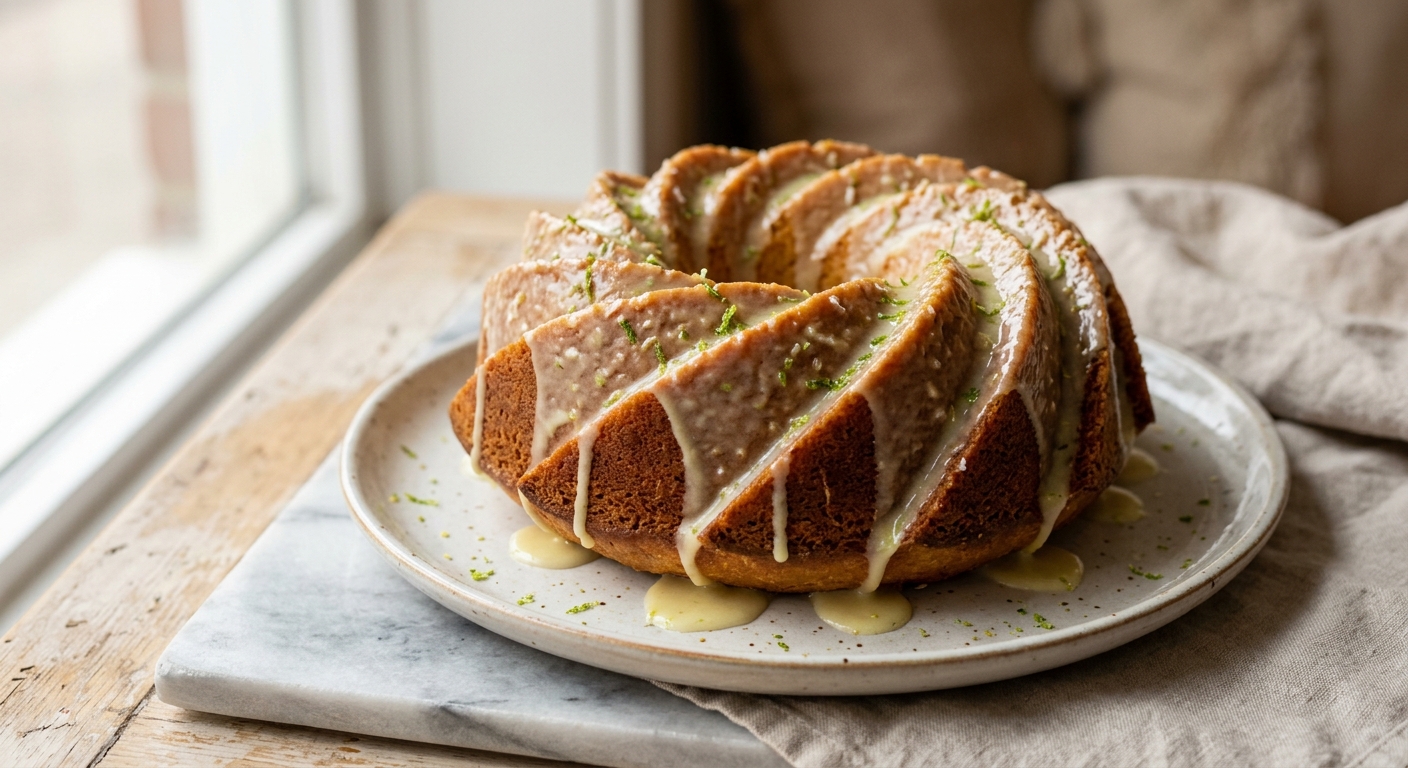
Close your eyes and imagine the smell of toasted coconut mingling with dark rum and fresh lime zest drifting through a warm kitchen. That is exactly what you get the moment this cake comes out of the oven. The golden crust on a Bundt is always a little dramatic in the best possible way, and this one is especially so: deeply bronzed, fragrant with coconut, and glossy with a lime glaze that sets into a delicate, crackly shell. It is the kind of cake that makes people stop mid-conversation and ask what you are baking.
What sets this recipe apart is the two-stage rum technique. First, coconut rum goes directly into the batter, giving the cake a gentle, aromatic depth. Then, the moment the cake comes out of the oven, you brush on a warm coconut rum soak, which pulls the moisture deep into the crumb before the cake even has a chance to cool. This is the difference between a cake that is merely good and one that stays tender and fragrant for days. The lime glaze is not an afterthought either: fresh lime juice and zest are whisked with powdered sugar into a thin, tangy pour that hardens just enough to give every slice a bright, citrusy finish.
This recipe sits firmly in the medium difficulty range, which really just means you need to be patient about greasing your Bundt pan well and giving the cake proper time to cool before unmolding. If you have made a Bundt before, this will feel completely familiar. If this is your first, do not worry: the steps are clear and forgiving. It is perfect for a weekend gathering, a summer dinner party, or any occasion where you want to impress people without spending all day in the kitchen.
Equipment Needed
Click on an item below to shop for the recommended items for this recipe on Amazon.
As an Amazon Associate, we earn from qualifying purchases.
14
Ingredients
- Rum Soak
- 300 gall-purpose flour (about 2.5 cups, spooned and leveled)
- 2 tspbaking powder
- 0.5 tspbaking soda
- 0.75 tspColima Sea SaltMicroplastic Free Salt
- 300 ggranulated sugar (about 1.5 cups)
- 225 gunsalted butter, softened to room temperature (2 sticks or 1 cup)
- 3 largeeggs, at room temperature
- 240 mlfull-fat coconut milk, well stirred (1 cup), at room temperature
- 80 mlcoconut rum, such as Malibu (about 1/3 cup)
- 2 tsppure vanilla extract
- 1 tspcoconut extract
- 100 gsweetened shredded coconut (about 1 cup), toasted
- 2 tsplime zest (from about 2 limes)
- —Softened butter and flour for greasing the Bundt pan
- 60 gunsalted butter (4 tablespoons)
- 60 ggranulated sugar (about 1/4 cup)
- 60 mlcoconut rum (about 1/4 cup)
- 60 mlfull-fat coconut milk (about 1/4 cup)
- Lime Glaze
- 200 gpowdered sugar, sifted (about 1.75 cups)
- 45 mlfresh lime juice (about 2 to 3 limes)
- 1 tsplime zest
- —Toasted coconut flakes and extra lime zest, to garnish
Ingredient Substitutions
Instructions
- Preheat your oven to 325°F (165°C). Using a pastry brush, coat every crevice of a 10- to 12-cup Bundt pan generously with softened butter, then dust lightly with flour, tapping out the excess. This two-step approach is essential for a clean release with a decorative pan.
- Toast the shredded coconut: spread it on a dry baking sheet and bake for 5 to 7 minutes, stirring once, until golden. Watch it closely as it browns quickly. Set aside to cool completely.
- In a medium bowl, whisk together the flour, baking powder, baking soda, and salt. Set aside. In a large bowl, beat the softened butter and granulated sugar together with a hand mixer or stand mixer on medium-high speed for 4 to 5 minutes, until the mixture is very pale, light, and fluffy. This extended creaming is important for a tender crumb.
- Add the eggs one at a time, beating for 30 seconds after each addition and scraping down the sides of the bowl. Mix in the vanilla extract, coconut extract, and lime zest. The batter may look slightly curdled at this point, which is normal.
- Reduce the mixer to low. Add the flour mixture in three additions, alternating with the coconut milk and rum (combined), beginning and ending with flour. Mix only until just combined after each addition; do not overmix. Fold in the cooled toasted coconut with a rubber spatula.
- Scrape the batter into the prepared Bundt pan and smooth the top. Tap the pan firmly on the counter three or four times to release any air bubbles. Bake for 55 to 60 minutes, until a wooden skewer inserted into the thickest part comes out with just a few moist crumbs attached and the top feels springy when lightly pressed.
- While the cake is in its final 10 minutes of baking, make the rum soak. Combine the butter, sugar, coconut rum, and coconut milk in a small saucepan over medium heat. Stir until the butter melts and the sugar dissolves fully, about 3 to 4 minutes. Do not let it boil vigorously. Remove from heat.
- As soon as the cake comes out of the oven, use a skewer or toothpick to poke 20 to 25 deep holes all over the bottom of the cake (which is facing up in the pan). Slowly pour about two-thirds of the warm rum soak over the bottom. Let the cake sit in the pan for 15 minutes to absorb the soak, then invert onto a cooling rack set over a rimmed baking sheet. Brush the remaining soak over the top and sides of the warm cake. Allow the cake to cool completely, at least 45 minutes.
- Make the lime glaze: whisk together the sifted powdered sugar, lime juice, and lime zest until completely smooth and pourable. It should coat the back of a spoon but still flow easily. If it is too thick, add lime juice a teaspoon at a time; if too thin, add a tablespoon more powdered sugar. Pour slowly over the cooled cake, letting it drip naturally down the sides. Garnish immediately with toasted coconut flakes and extra lime zest before the glaze sets.
- Prepare a half batch of the full recipe. Grease and flour a 6-cup Bundt pan or silicone Bundt mold that fits inside your air fryer basket with at least 1 inch of clearance on all sides. Check the fit before you start mixing.
- Preheat the air fryer to 300°F (150°C) for 5 minutes. The lower temperature than conventional oven baking is important here: air fryers circulate heat very aggressively, and a higher temperature will over-brown the outside before the inside sets.
- Mix the half-batch batter following the same steps as the oven method: cream butter and sugar, add eggs and extracts, alternate flour with coconut milk and rum, then fold in the toasted coconut. Pour into the prepared pan and smooth the top.
- Place the pan carefully in the air fryer basket. Bake at 300°F (150°C) for 45 to 50 minutes. At the 35-minute mark, check the color: if the top is already very dark golden, loosely tent it with a small piece of foil. The cake is done when a skewer comes out with just a few moist crumbs.
- Make a half batch of the rum soak while the cake bakes. As soon as the cake comes out, poke holes in the bottom and pour the soak over as described in the oven method. Let rest 15 minutes in the pan, then unmold onto a rack. Cool completely before glazing with a half batch of the lime glaze.
- Check that your 6-cup Bundt pan fits inside your 6-quart slow cooker with the lid able to close (even if slightly ajar is fine). Grease and flour the Bundt pan thoroughly. Make a half batch of the batter following the oven method instructions.
- Pour the batter into the prepared Bundt pan and smooth the top. Place a double layer of paper towels across the top of the slow cooker insert before putting the lid on. This absorbs condensation and prevents water droplets from dripping onto your cake, which would make the surface wet and gummy.
- Carefully lower the Bundt pan into the slow cooker insert. Place the paper towels over the top, then put the lid on, trapping the paper towels. Cook on High for 2.5 to 3 hours. Do not lift the lid for the first 2 hours. The cake is done when it springs back lightly when touched in the center and a skewer comes out with just a few moist crumbs.
- Carefully lift the pan out of the slow cooker using oven mitts and place on a wire rack. Make a half batch of the rum soak on the stovetop. Poke holes over the base of the cake and apply the soak as described in the oven method. Allow to rest in the pan for 20 minutes, then unmold gently.
- Because the slow cooker cake has no crust, it is more delicate when warm. Let it cool fully on the rack, at least 1 hour, before applying the lime glaze. The glaze is especially important in this method as it adds the bright flavor contrast and a touch of structure to the soft surface.
Nutrition Per Serving
Per 1 serving (makes one 10-cup Bundt cake, 14 slices)
Why This Recipe Works
The key to this cake’s extraordinary moistness is the fat ratio and the rum soak working together. Full-fat coconut milk contributes both liquid and fat to the batter, which keeps the crumb tender and gives it a subtle richness that regular milk simply cannot provide. The coconut milk’s fat coats the flour proteins, limiting gluten development and resulting in a finer, softer crumb. Creaming the butter and sugar thoroughly, for a full 4 to 5 minutes, is equally important: this process incorporates tiny air bubbles that expand in the oven, giving the cake its lift and open, tender texture. Because Bundt cakes are dense by nature, this creaming step does the heavy lifting that you might otherwise rely on layers of frosting to disguise.
The rum soak is the single most important step for long-lasting moisture. Baked goods begin to go stale the moment they leave the oven as the starch molecules re-crystallize, a process called retrogradation. When you pour a warm sugar-and-butter soak over a hot cake, the sugar syrup penetrates the crumb and physically interrupts that process, keeping the cake soft for days. The alcohol in the rum also acts as a mild preservative. Poking holes in the base before soaking is not just about getting liquid inside: it also creates pathways that allow the soak to travel all the way to the center rather than pooling near the surface.
The lime glaze is thin by design. A thick royal icing-style coating would overwhelm the coconut and rum flavors, while a pourable glaze made with plenty of fresh lime juice stays tangy and bright. Sifting the powdered sugar before mixing prevents lumps, which matter more with thin glazes where there is no body to hide them. The glaze is added only once the cake is completely cool: on a warm cake, the moisture rising from the surface will dissolve the glaze before it sets, leaving a sticky, uneven finish instead of the clean, crackly shell you are looking for.
Baker’s Tips
- The single most common Bundt cake failure is sticking. Use softened (not melted) butter to grease every nook of the pan, then flour it. Alternatively, use a baking spray that contains flour (such as Baker’s Joy). Do not skip the flouring step even if your pan is non-stick.
- Bring all refrigerated ingredients, including the eggs, butter, and coconut milk, to room temperature before starting. Cold ingredients cause the batter to look curdled and can result in a denser, unevenly baked cake.
- Shake the can of coconut milk well before opening, or stir thoroughly, to recombine the cream and liquid. Using just the thick cream from the top will make the batter too rich and dense.
- Do not rush the unmolding. Letting the cake rest in the pan for exactly 15 minutes after applying the soak gives it time to firm up slightly so it releases cleanly. Too short and it may break; too long and the sugar in the soak can stick.
- For the cleanest glaze pour, place the cooled cake on a rack set over a rimmed baking sheet or sheet of parchment paper. This catches the drips, which you can scoop up and re-pour for a thicker coating.
- Toast the coconut for the garnish in a dry skillet over medium heat for 2 to 3 minutes if your oven is already off. Stir constantly and remove from the heat the moment it turns golden, as it continues to toast from residual heat.
Variations
- Pina Colada version: Add 60g (about 1/2 cup) finely chopped dried pineapple to the batter along with the coconut, and swap the lime glaze for a pineapple glaze made with pineapple juice instead of lime juice.
- Dark rum and brown sugar version: Replace the coconut rum with aged dark rum and swap 100g of the granulated sugar in the batter for light brown sugar. This gives the cake a deeper, more caramel-like flavor with slightly less tropical brightness.
- Chocolate coconut version: Replace 30g of flour with unsweetened cocoa powder and add 1/2 tsp espresso powder to the batter. Skip the lime glaze and instead drizzle with dark chocolate ganache thinned with a splash of coconut rum.
- Non-alcoholic tropical version: Replace all coconut rum with a mix of pineapple juice and coconut water (equal parts), and increase the coconut extract to 1.5 tsp. The cake will be slightly less rich but still beautifully tropical and completely family-friendly.
Troubleshooting & FAQ
My cake stuck to the Bundt pan and broke when I tried to unmold it. What went wrong?
The rum soak made the bottom of my cake soggy. Where did I go wrong?
My lime glaze is grainy or lumpy. How do I fix it?
The cake is very dark on the outside but still wet in the middle when I test it. What should I do?
Can I taste the alcohol in the finished cake, and is it suitable for children?
Storage & Make-Ahead
- Storage: Store the glazed cake loosely covered at room temperature for up to 3 days. The rum soak actually improves the keeping quality, so the cake stays moist and flavorful. Refrigerate for up to 6 days, but bring slices to room temperature before serving for the best texture. The unglazed, soaked cake can be frozen (well wrapped in plastic then foil) for up to 3 months; glaze after thawing.
- Make-Ahead: The cake can be baked, soaked, and fully cooled up to 2 days ahead. Store at room temperature wrapped loosely in plastic wrap and add the lime glaze on the day of serving for the freshest look. The rum soak can be made up to a week ahead and refrigerated; gently rewarm before using. The lime glaze should be made fresh as it firms up quickly.