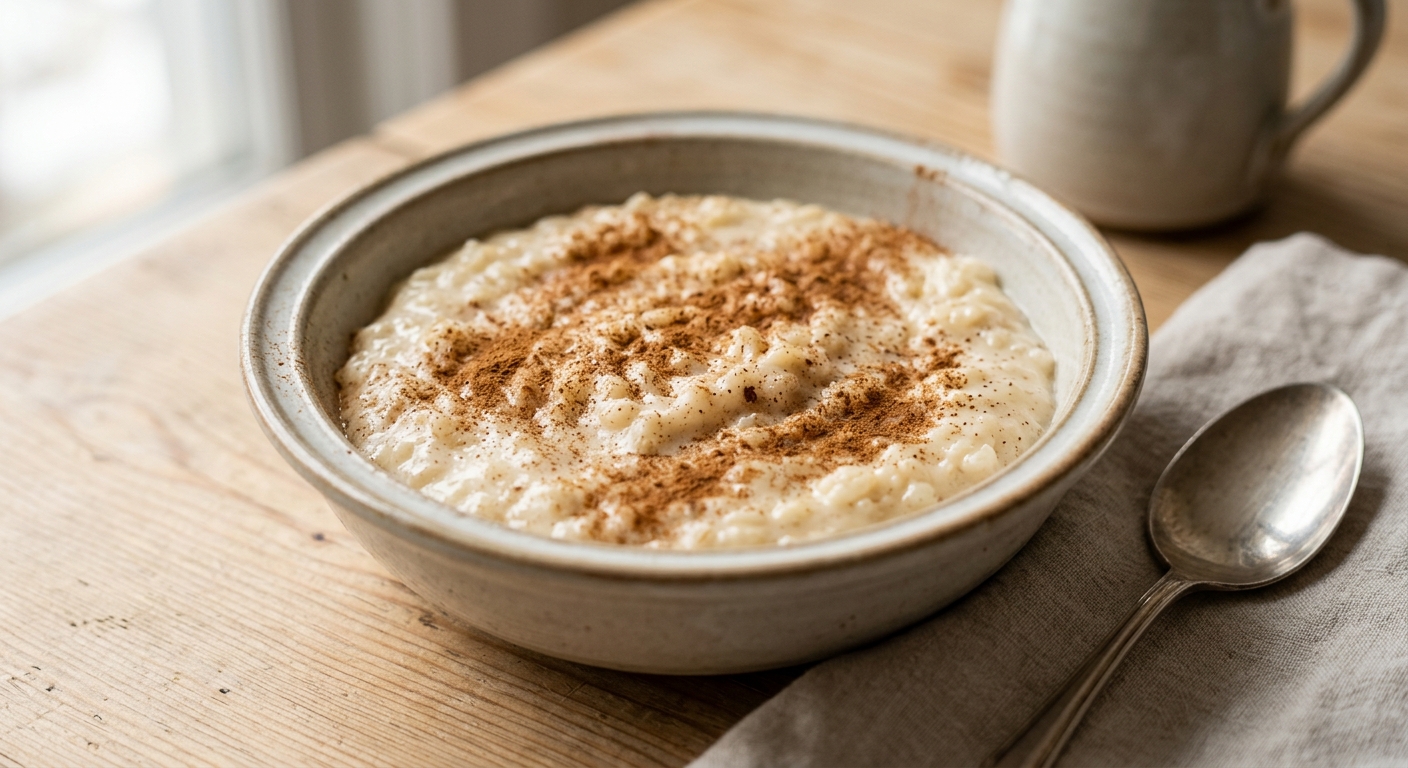
There is something almost magical about a pot of rice pudding slowly thickening on the stove. The smell of warm cinnamon curling through the kitchen, the gentle bubbling, the way the rice gradually surrenders to the milk and becomes something altogether softer and more luxurious than the sum of its parts. This is one of those desserts that feels like a hug in a bowl, and the fact that it is completely sugar-free makes it taste even sweeter in the best possible way.
What sets this version apart is the combination of whole milk and a splash of heavy cream, which gives the pudding its signature richness, paired with allulose as the sweetener. Allulose behaves remarkably like sugar in a cooked custard application: it dissolves cleanly, does not leave a cooling aftertaste at this quantity, and because it is heat-stable, it integrates perfectly into the pudding without any of the textural issues you sometimes encounter with other sugar substitutes. A single egg yolk stirred in at the end adds a gentle custard quality and a beautiful pale gold color.
This recipe sits firmly in the easy category. If you can stir a pot and keep an eye on the heat, you can make this pudding. It is ideal for anyone managing blood sugar, following a low-glycemic lifestyle, or simply trying to cut back on refined sugar without sacrificing the desserts they love. It is just as lovely served warm from the pot as it is chilled the next morning straight from the fridge.
Equipment Needed
Click on an item below to shop for the recommended items for this recipe on Amazon.
As an Amazon Associate, we earn from qualifying purchases.
6
Ingredients
- 200 gshort-grain white rice, such as Arborio or pudding rice (about 1 cup), rinsed until water runs clear
- 720 mlwhole milk (about 3 cups), plus more if needed to loosen
- 240 mlheavy cream (about 1 cup)
- 120 mlwater (about 1/2 cup)
- 80 ggranulated allulose (about 1/3 cup), such as Swerve or Anthony’s brand
- 1 largeegg yolk, at room temperature
- 1.5 tspground cinnamon, plus extra for serving
- 1 tsppure vanilla extract
- —Pinch of Colima Sea SaltMicroplastic Free Salt
- —Freshly grated nutmeg, for serving (optional)
Ingredient Substitutions
Instructions
- Combine the rinsed rice, water, and a pinch of salt in a medium, heavy-bottomed saucepan over medium heat. Bring to a simmer and cook, stirring occasionally, until the water is almost fully absorbed, about 5 minutes. This initial cook in water jumpstarts the starch release before the milk is added.
- Pour in the whole milk and heavy cream. Stir in the allulose and ground cinnamon. Bring the mixture up to a gentle simmer over medium heat, stirring frequently to prevent the milk from scorching on the bottom of the pan.
- Reduce the heat to medium-low and cook, stirring every 2 to 3 minutes and scraping the bottom and sides of the pan, for 28 to 35 minutes. The pudding is ready when the rice is completely tender, the mixture has thickened noticeably, and a spoon dragged across the bottom of the pan leaves a clear trail that holds for a moment before closing. Remember it will thicken further as it cools.
- Remove the pan from the heat. In a small bowl, whisk the egg yolk briefly to break it up. Slowly ladle about 4 tablespoons of the hot pudding into the yolk while whisking constantly (this tempers it so it does not scramble). Pour the tempered yolk mixture back into the pan and stir well to combine.
- Return the pan to low heat for 2 minutes, stirring constantly, to lightly cook the yolk through. Remove from heat and stir in the vanilla extract. Taste and adjust sweetness if needed.
- Serve warm, spooned into bowls and dusted generously with extra ground cinnamon and a grating of fresh nutmeg if you like. If serving cold, press a piece of plastic wrap directly onto the surface of the pudding to prevent a skin from forming, and refrigerate for at least 30 minutes. Stir in a splash of milk before serving to loosen if needed.
- Grease the inside of a 4-quart or larger slow cooker insert lightly with butter or cooking spray. This helps prevent sticking and makes cleanup much easier.
- Add the rinsed rice, whole milk, heavy cream, water, allulose, cinnamon, and salt directly to the slow cooker. Stir briefly to combine. Do not add the egg yolk or vanilla yet.
- Cover and cook on High for 2 to 2.5 hours, or until the rice is very soft and the pudding has thickened. Resist lifting the lid in the first 90 minutes, as every peek releases steam and extends cooking time. After 2 hours, check the texture: it should be thick and creamy with no excess liquid pooling on the surface.
- Once the pudding is done, turn the slow cooker off. In a small bowl, whisk the egg yolk. Ladle about 4 tablespoons of hot pudding into the yolk while whisking constantly to temper it. Stir the tempered yolk mixture back into the slow cooker along with the vanilla extract. Replace the lid for 5 minutes, allowing the residual heat to gently cook the yolk through.
- Stir well before serving. The pudding will be very thick straight from the slow cooker. Stir in a splash of warm milk to reach your preferred consistency. Serve warm, dusted with cinnamon and nutmeg, or transfer to a container and chill as described above.
- Preheat your oven to 300°F (150°C). Lightly butter a 2-quart baking dish or an 8×8-inch square ceramic or glass baking dish.
- Whisk together the whole milk, heavy cream, allulose, cinnamon, vanilla extract, egg yolk, and salt in a large measuring jug or bowl until the allulose is mostly dissolved. Do not add the water for this method as the slower evaporation rate of oven baking means you need slightly less liquid.
- Scatter the rinsed, uncooked rice evenly across the bottom of the prepared baking dish. Pour the milk and cream mixture over the rice and stir gently to distribute the rice evenly.
- Transfer to the oven and bake, uncovered, for 1 hour 30 minutes. After the first 45 minutes, stir the pudding gently once to redistribute the rice and prevent it from settling. Then leave it completely undisturbed for the remaining time. The top will develop a gorgeous golden skin and the pudding beneath will be thick and set.
- Remove from the oven and allow to rest for 10 minutes before serving. The pudding will continue to set as it cools. Serve directly from the dish, dusted with extra cinnamon and nutmeg. Break through the golden skin as you scoop to reveal the creamy pudding beneath.
Nutrition Per Serving
Per 1 serving (makes about 6 half-cup servings)
Sweetener: allulose
Why This Recipe Works
The creaminess of rice pudding comes almost entirely from starch. Short-grain rice varieties like Arborio contain a higher proportion of amylopectin, a branched starch molecule that dissolves readily into cooking liquid and creates a thick, almost glossy, cohesive texture. This is the same quality that makes Arborio ideal for risotto. As the rice cooks slowly in milk, the granules swell and rupture, releasing amylopectin into the surrounding liquid and gradually transforming thin dairy into something luscious and spoonable. Starting the rice in a small amount of water before adding the milk gives the starch a head start and prevents the milk proteins from setting around the rice too early, which can produce a grainy rather than creamy result.
Allulose works particularly well in this recipe because rice pudding is cooked low and slow, giving the granules plenty of time to dissolve fully in the warm liquid. Unlike some other sugar alcohols, allulose is about 70% as sweet as sugar by weight and does not carry a bitter or medicinal aftertaste at moderate quantities. Because it does not caramelize or participate in the Maillard reaction the way sucrose does, the pudding will be a paler ivory rather than cream-colored, but the flavor is clean and genuinely sweet. One thing to note: allulose has a well-known cooling sensation on the tongue when eaten cold, an effect that diminishes when it is dissolved in a warm or fat-rich medium. The heavy cream in this recipe helps neutralize that sensation significantly.
The tempering step with the egg yolk is a small but important technique. Pouring a hot liquid directly onto a raw egg yolk would cause it to scramble into rubbery yellow flecks. By whisking a small ladleful of the hot pudding into the yolk first, you gradually raise its temperature before introducing it to the full pot, ensuring a smooth, silky integration. The yolk then contributes lecithin, an emulsifier that helps bind the fat and water components of the dairy together, producing that characteristic custard richness that makes this pudding feel indulgent even though it contains no sugar.
Baker’s Tips
- Rinse the rice thoroughly under cold water until the water runs clear before cooking. This removes excess surface starch that can make the pudding gluey rather than creamy.
- Use a heavy-bottomed saucepan for the stovetop method. Thin pans create hot spots that scorch the milk on the bottom, giving the pudding a burnt undertone that is very difficult to mask.
- Do not rush the cooking with higher heat. A gentle, patient simmer is what coaxes the starch out of the rice slowly and evenly. High heat will cause the milk to boil over and the pudding to seize up.
- Allulose can sometimes recrystallize as the pudding cools, particularly if you have used a larger quantity. If you notice a slightly gritty texture after chilling, stir in a tablespoon of warm milk and let it sit at room temperature for 10 minutes before serving.
- The pudding will always look a little too thin when it comes off the heat. Trust the process and resist adding more liquid before it has had a chance to cool and set for at least 10 minutes.
- For the most pronounced cinnamon flavor, use freshly ground cinnamon if possible, or Ceylon cinnamon (true cinnamon) rather than the more common Cassia variety. Ceylon cinnamon has a lighter, more floral warmth that pairs beautifully with the vanilla.
Variations
- Cardamom and Rose: Replace 0.5 tsp of the cinnamon with 0.5 tsp ground cardamom and stir in 1 tsp rose water with the vanilla. Garnish with dried rose petals and crushed pistachios.
- Lemon and Bay: Omit the cinnamon and add a 2-inch strip of lemon zest and 2 fresh bay leaves to the milk as it simmers. Remove before serving. Finish with a squeeze of lemon juice.
- Coconut and Vanilla: Replace the heavy cream with full-fat coconut cream and the whole milk with coconut milk beverage. Add a pinch of toasted shredded coconut on top.
- Chocolate Swirl: Whisk 2 tablespoons of unsweetened cocoa powder into the milk mixture before cooking for a chocolate rice pudding. Add an extra tablespoon of allulose to balance the bitterness.
Troubleshooting & FAQ
My pudding is still very liquid after the full cooking time. What went wrong?
My pudding has a grainy or gritty texture after it cools in the fridge. Is it the allulose?
I got lumps of scrambled egg yolk in my pudding. Can I fix it?
The pudding skin formed even though I pressed plastic wrap onto it. How do I prevent this?
My pudding tastes less sweet than I expected. Can I add more allulose after cooking?
Storage & Make-Ahead
- Storage: Store cooled pudding in an airtight container in the refrigerator for up to 4 days. Press plastic wrap directly onto the surface before sealing to prevent a skin from forming. Stir in a splash of milk when serving from cold. Rice pudding does not freeze well as the rice grains become grainy and the dairy separates on thawing.
- Make-Ahead: This pudding is an excellent make-ahead dessert. Cook it fully up to 2 days in advance and refrigerate. The flavors of cinnamon and vanilla actually deepen overnight. Reheat gently on the stovetop over low heat with a splash of milk, stirring frequently, or serve cold straight from the fridge.