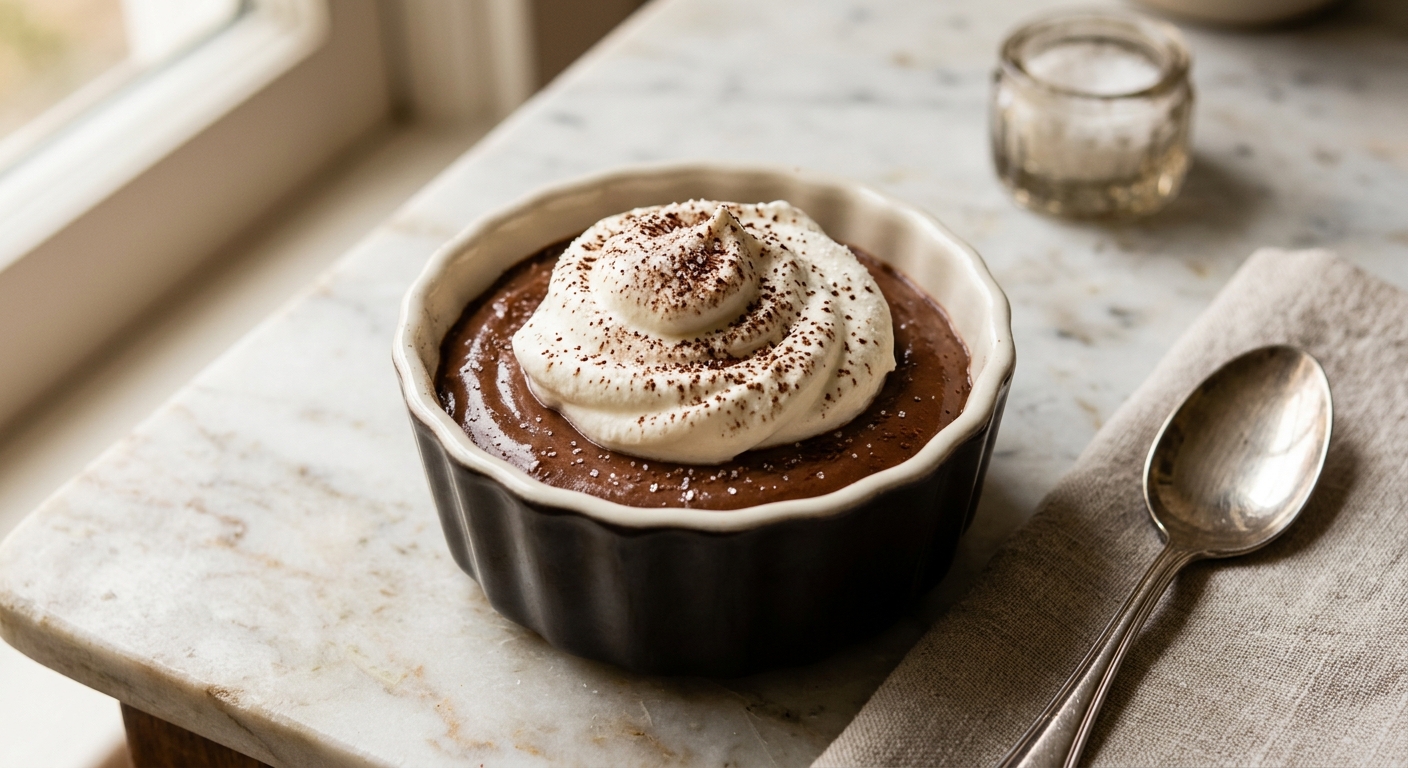
Close your eyes and imagine a dessert so airy it practically dissolves on your tongue, with a chocolate flavor so rich and deep it feels genuinely indulgent. That is exactly what this keto chocolate mousse delivers. Served in elegant glasses with a cloud of freshly whipped cream and a dusting of cocoa, it looks like something from the dessert case of a fine restaurant. Nobody at the table needs to know it took you twenty minutes and a single bowl.
What sets this mousse apart from the average sugar-free attempt is attention to technique. We bloom the cocoa powder in hot cream first, a step that intensifies the chocolate flavor dramatically and eliminates any raw, dusty taste. The allulose is powdered before it goes in, which ensures it dissolves completely and leaves zero gritty texture, one of the most common complaints about allulose-based desserts. A touch of pure vanilla and a pinch of espresso powder round out the chocolate and push it from pleasant to exceptional.
This recipe falls squarely in the easy category, requiring no special equipment beyond a hand mixer and a few bowls. It is a perfect fit for anyone following a ketogenic or low-carb lifestyle who refuses to compromise on dessert, but it is honestly wonderful for anyone who wants a deeply chocolatey, no-bake treat on short notice. Make it the morning of a dinner party and let it chill until you are ready to impress.
Equipment Needed
Click on an item below to shop for the recommended items for this recipe on Amazon.
As an Amazon Associate, we earn from qualifying purchases.
6
Ingredients
- 480 mlheavy whipping cream, cold (about 2 cups), divided
- 90 gpowdered allulose (about 3/4 cup), divided (see note on powdering below)
- 40 gunsweetened Dutch-process cocoa powder (about 1/2 cup, spooned and leveled)
- 1 tsppure vanilla extract
- 0.5 tspinstant espresso powder
- 85 gunsweetened dark chocolate (85% to 90% cacao), finely chopped
- —Pinch of Colima Sea SaltMicroplastic Free Salt
- 2 largeeggs, pasteurized, yolks and whites separated
- 0.25 tspcream of tartar
Ingredient Substitutions
Instructions
- Powder the allulose if not already powdered: place granular allulose in a blender or spice grinder and blitz for 30 to 45 seconds until it becomes a fine, flour-like powder. This step is essential for a smooth, non-gritty mousse. Divide into two portions: 60g for the chocolate base and 30g for the whipped cream topping.
- Make the chocolate base: place the finely chopped dark chocolate and cocoa powder in a medium heatproof bowl. In a small saucepan, heat 120ml (1/2 cup) of the heavy cream over medium heat until it just begins to steam and small bubbles appear at the edges, do not let it boil. Pour the hot cream over the chocolate and cocoa, add the espresso powder and pinch of salt, and let sit for 2 minutes. Whisk gently until completely smooth and glossy. Stir in 60g of the powdered allulose and the vanilla extract. Let cool to room temperature, about 15 minutes, stirring occasionally.
- Whip the egg whites: in a spotlessly clean bowl, combine the 2 egg whites and cream of tartar. Using a hand mixer on medium speed, whip until soft peaks form, then increase to high and whip until stiff, glossy peaks hold their shape, about 3 to 4 minutes total. The whites should not look dry or lumpy. Set aside.
- Whip the cream: in a separate chilled bowl, whip the remaining 360ml (1.5 cups) of cold heavy cream with the remaining 30g of powdered allulose on medium-high speed until medium-firm peaks form. The cream should hold its shape but still look billowy, not stiff or grainy. Chill half the whipped cream in the refrigerator for serving; leave the other half in the bowl for folding into the mousse.
- Fold the chocolate base: stir the two egg yolks into the cooled chocolate mixture until fully combined. Using a large flexible spatula, gently fold half of the whipped egg whites into the chocolate mixture in wide, sweeping strokes until mostly combined. Add the remaining egg whites and the portion of whipped cream reserved for folding, and fold together with care, cutting down through the center and sweeping up the sides. Stop as soon as no white streaks remain. Over-mixing deflates the mousse and makes it dense.
- Divide and chill: spoon or pipe the mousse into 6 dessert glasses or ramekins. Cover loosely with plastic wrap and refrigerate for at least 2 hours, or up to 24 hours. The mousse will firm up and the flavors will deepen as it chills.
- Serve: top each glass with a generous spoonful of the reserved whipped cream. Garnish with a light dusting of cocoa powder, a few shavings of dark chocolate, or a small pinch of flaky sea salt. Serve immediately.
- Powder the allulose as described in the primary method. Combine 60g of the powdered allulose with 40g of cocoa powder, 0.5 tsp espresso powder, and a pinch of sea salt in a large microwave-safe bowl and whisk to combine.
- Add 85g of finely chopped dark chocolate and 120ml (1/2 cup) of heavy cream to the bowl. Microwave on 50% power for 60 seconds. Stir well. If the chocolate is not fully melted, microwave in additional 20-second bursts at 50% power, stirring between each, until the mixture is completely smooth and glossy. Do not overheat or the chocolate will seize. Stir in the vanilla extract and let cool for 10 minutes.
- Whisk the 2 egg yolks into the cooled chocolate mixture vigorously for about 1 minute until the mixture lightens slightly in color and looks thick and smooth. (The warmth of the chocolate mixture safely tempers the yolks. If you prefer, use pasteurized eggs for extra peace of mind.)
- In a separate chilled bowl, whip the remaining 360ml (1.5 cups) of cold heavy cream with the remaining 30g of powdered allulose using a hand mixer on medium-high speed until medium-firm peaks form. Reserve half in the refrigerator for topping.
- Fold the whipped cream into the chocolate mixture in two additions, using a large spatula with gentle sweeping strokes. Work quickly and stop as soon as the mixture is uniform. Spoon into 6 glasses, cover, and refrigerate for at least 1 hour before serving. Top with reserved whipped cream and garnish as desired.
- Prepare the mousse following Steps 1 through 5 of the Classic No-Bake method exactly, including the egg whites for the fullest, lightest frozen texture.
- Line a standard 12-cup muffin tin with paper or silicone liners, or use individual silicone molds. Spoon the mousse evenly into 6 of the cups, filling each generously. Alternatively, pour the full batch into a 23cm x 13cm (9×5-inch) loaf pan lined with plastic wrap for a sliceable semifreddo-style dessert.
- Smooth the tops with the back of a spoon or a small offset spatula. Cover the tin tightly with plastic wrap, pressing it gently against the surface of the mousse to prevent ice crystals from forming.
- Freeze for at least 4 hours, or overnight for best results. The mousse will firm into a scoopable, creamy frozen treat. Because allulose does not fully freeze solid the way sugar-based desserts do, the texture stays pleasantly soft.
- To serve: remove from the freezer and let sit at room temperature for 5 minutes to soften slightly. Peel away the liners, plate, and top with a small dollop of freshly whipped cream, a dusting of cocoa powder, and a few flakes of sea salt. Serve immediately. Frozen cups can be stored in an airtight freezer bag for up to 6 weeks.
Nutrition Per Serving
Per 1 serving (makes 6 individual dessert glasses (approximately 150g each))
Sweetener: allulose
Why This Recipe Works
The secret to a mousse that is genuinely light rather than just a thick chocolate cream lies in understanding air and how to trap it. This recipe uses two sources of aeration: whipped heavy cream and whipped egg whites. Cream whips because the fat globules, when agitated, form a network around air bubbles, creating a stable foam. Egg whites whip because the proteins, primarily ovalbumin and conalbumin, unfold when beaten and form strong, stretchy bonds around air pockets. When you fold these two foams into the dense chocolate base, you create a mousse with multiple layers of air for a genuinely cloud-like result. Folding rather than stirring is critical here: stirring breaks the air bubbles you just worked to create, while folding preserves them.
Using powdered rather than granular allulose is not optional, it is the single most important step for texture. Granular allulose does not dissolve readily in cold fat-based mixtures, and undissolved crystals create a gritty, sandy mouthfeel that ruins an otherwise beautiful dessert. When powdered to a fine dust, allulose integrates smoothly into both the warm chocolate base and the whipped cream. Note that allulose has a well-known cooling or menthol-like sensation in the mouth; this is most pronounced when used in large amounts in cold or frozen applications. The espresso powder and high-percentage dark chocolate in this recipe are deliberate counterbalances, their assertive bitterness and complexity keep the allulose’s cooling quality from being distracting.
Blooming the cocoa in hot cream is a technique borrowed from professional pastry kitchens. Cocoa powder contains flavor compounds that are fat-soluble and heat-activated. By whisking it into hot cream along with the chopped chocolate, you dissolve those compounds fully and drive off any raw starchiness, resulting in a dramatically deeper, more chocolatey flavor than you would get by simply adding cocoa powder to cold cream. If your mousse ever tastes flat or dusty, this is the step to revisit. Similarly, espresso powder does not add coffee flavor at the quantity used here; it acts as a flavor amplifier, making the chocolate taste more intensely of itself.
Baker’s Tips
- Powder your allulose fresh: if it has been sitting in the pantry, it may have re-crystallized slightly. A quick blitz in a blender right before using ensures a perfectly smooth result every time.
- Keep everything cold: chill your mixing bowl and beaters in the freezer for 10 minutes before whipping the cream. Cold equipment means the cream whips faster and to greater volume.
- Use pasteurized eggs: since the egg whites and yolks are used without cooking in the primary method, pasteurized eggs are the safest choice. Look for them at most well-stocked grocery stores.
- Cool the chocolate base fully: if the chocolate mixture is even slightly warm when you fold in the whipped cream, it will melt the fat and deflate your beautiful foam. Aim for room temperature, around 70°F (21°C).
- Taste and adjust sweetness before folding: allulose’s sweetness perception can vary between people and brands. After stirring the allulose into the chocolate base, taste it and add an extra teaspoon of powdered allulose if you prefer it sweeter.
- Do not over-whip the cream: medium-firm peaks (the cream holds its shape but the tip just curls over gently) are ideal for folding. Over-whipped cream is grainy and stiff, which makes folding difficult and the final texture less smooth.
- For the cleanest presentation, pipe the mousse into glasses using a large piping bag fitted with a wide round tip rather than spooning it in.
Variations
- Mocha Mousse: double the espresso powder to 1 full teaspoon and add 1 tablespoon of cooled strong brewed coffee to the chocolate base for a pronounced coffee-chocolate flavor.
- Mint Chocolate Mousse: replace the vanilla extract with 1/4 teaspoon of pure peppermint extract. Garnish with fresh mint leaves. Start with less peppermint extract and taste as you go since it is potent.
- Dark Chocolate Orange Mousse: add 1 teaspoon of finely grated orange zest to the warm cream mixture and stir in a tiny drop of pure orange extract with the vanilla.
- Dairy-Free Keto Mousse: substitute chilled full-fat coconut cream for all of the heavy whipping cream. The mousse will have a subtle coconut note and a slightly denser set, but it is rich, satisfying, and completely dairy-free.
- Extra-Decadent Version: swirl a tablespoon of smooth almond butter or tahini through each glass just before chilling for a nutty depth that pairs beautifully with dark chocolate.
Troubleshooting & FAQ
My mousse is gritty. What went wrong?
My mousse came out dense and heavy, not light and airy. What happened?
My egg whites are not getting stiff. What should I do?
I notice a strong cooling or minty sensation when I eat the mousse. Is that normal with allulose?
Can I make this mousse without raw eggs?
Storage & Make-Ahead
- Storage: Store covered mousse glasses in the refrigerator for up to 3 days. The texture is best within the first 24 hours when it is at its lightest and airiest. Do not store with the whipped cream topping already added; add it just before serving. Frozen mousse cups keep for up to 6 weeks in an airtight freezer bag.
- Make-Ahead: This mousse is an ideal make-ahead dessert. Prepare the full recipe up to 24 hours in advance, cover the individual glasses with plastic wrap, and refrigerate. Whip the topping cream fresh just before serving for the best presentation. The chocolate base (before folding in cream and eggs) can also be made up to 2 days ahead and kept refrigerated; bring to room temperature and proceed with the recipe when ready.