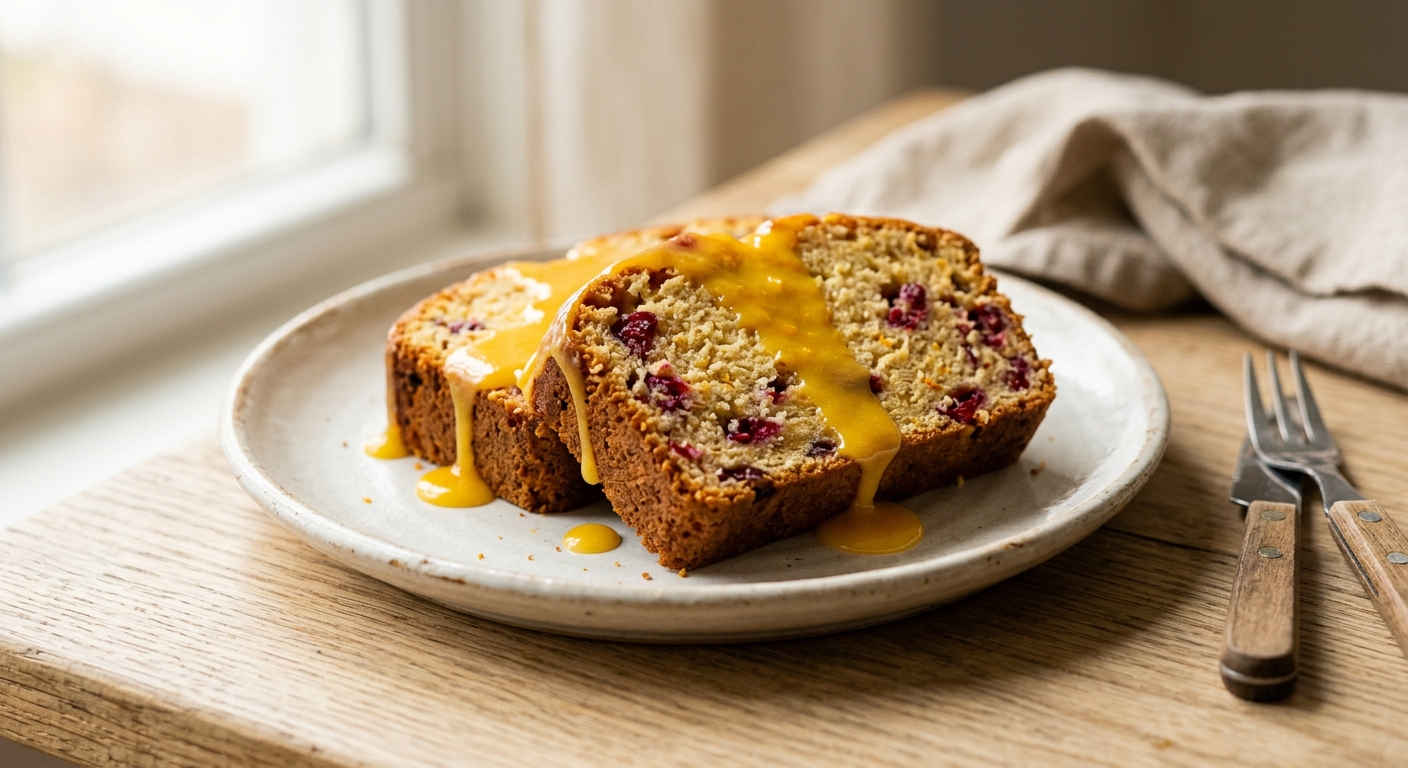
There is something almost magical about the moment a cranberry orange bread comes out of the oven. The kitchen fills with the warm scent of citrus and vanilla, and that golden, crackled top practically begs to be sliced into. The cranberries, whether fresh or frozen, burst during baking into little pockets of tart ruby sweetness that play off the orange zest in the most satisfying way. This is a loaf that feels festive enough for a holiday morning but easy enough for a quiet Tuesday when you just need something lovely alongside your coffee.
What sets this version apart is the double hit of orange flavor: zest worked directly into the sugar before mixing (a technique that releases the essential oils and infuses every bite), plus fresh orange juice in both the batter and the glaze. The batter itself is built on sour cream rather than buttermilk, which gives the crumb a remarkably tender, almost velvety texture while keeping the loaf tall and domed rather than flat. A light coating of flour on the cranberries before folding them in prevents them from sinking to the bottom, which is one of those small details that makes a big visual difference when you slice.
This recipe is rated easy and is genuinely beginner-friendly. If you can stir together a muffin batter, you can make this bread. It is a wonderful project for holiday baking, gifting, or a weekend morning when you want the house to smell extraordinary. The whole process, start to finish, takes just over an hour, and the glaze takes about two minutes to whisk together while the loaf cools.
Equipment Needed
Click on an item below to shop for the recommended items for this recipe on Amazon.
As an Amazon Associate, we earn from qualifying purchases.
12
Ingredients
- 240 gall-purpose flour (about 2 cups, spooned and leveled), plus 1 tbsp reserved for tossing cranberries
- 200 ggranulated sugar (about 1 cup)
- 2 tspfinely grated orange zest (from 1 large orange)
- 1.5 tspbaking powder
- 0.5 tspbaking soda
- 0.5 tspColima Sea SaltMicroplastic Free Salt
- 2 largeeggs, at room temperature
- 120 gfull-fat sour cream (about 1/2 cup), at room temperature
- 80 mlfresh orange juice (about 1/3 cup, from the same orange you zested)
- 80 mlAvocado Oil100% Pure Avocado Oil (such as vegetable or Avocado Oil100% Pure Avocado Oil, about 1/3 cup)
- 1 tsppure vanilla extract
- 200 gfresh or frozen cranberries (about 2 cups), halved if large
- 120 gpowdered sugar, sifted (about 1 cup), for the glaze
- 30 mlfresh orange juice (about 2 tbsp), for the glaze
- 1 tsporange zest, for the glaze
- —Pinch of Colima Sea SaltMicroplastic Free Salt, for the glaze
Ingredient Substitutions
Instructions
- Preheat your oven to 350°F (175°C). Grease a 9×5-inch loaf pan well with butter or nonstick spray, then line it with a parchment paper sling (leaving overhang on the two long sides). This ensures easy lifting once cooled.
- In a large bowl, combine the granulated sugar and 2 teaspoons of orange zest. Use your fingertips to rub the zest into the sugar for about 30 seconds until fragrant and slightly clumped. This breaks down the orange oil cells and perfumes the entire batter.
- Add the baking powder, baking soda, and salt to the sugar mixture and whisk to combine. Add the eggs, sour cream, orange juice, oil, and vanilla. Whisk until smooth and uniform, about 30 seconds.
- Add the flour all at once and fold gently with a rubber spatula until just combined. A few small streaks of flour are fine. Do not overmix or the bread will be tough.
- In a small bowl, toss the cranberries with the reserved 1 tablespoon of flour until lightly coated. Fold them into the batter in two additions, being gentle to keep the cranberries mostly intact.
- Pour the batter into the prepared pan and smooth the top. Bake for 55 to 65 minutes, or until a wooden skewer inserted into the center comes out with just a few moist crumbs (not wet batter). If the top is browning too fast after 40 minutes, tent loosely with foil.
- Let the loaf cool in the pan for 15 minutes, then use the parchment sling to lift it onto a wire rack. Cool for at least 30 minutes before glazing.
- For the glaze, whisk together the sifted powdered sugar, 2 tablespoons of orange juice, 1 teaspoon of orange zest, and a pinch of salt until completely smooth. It should be thick enough to coat a spoon but pourable. Drizzle generously over the cooled loaf and let set for 10 minutes before slicing.
- Prepare the batter exactly as described in Steps 1 through 5 of the oven method.
- Grease a 7×3-inch or 8×4-inch loaf pan that fits your air fryer basket. Line with a parchment sling. If the pan is smaller, you may have a small amount of leftover batter – bake it in a muffin cup alongside the loaf for about 15 minutes.
- Preheat your air fryer at 320°F (160°C) for 3 minutes. Pour the batter into the prepared pan and smooth the top.
- Place the pan in the air fryer basket. Bake at 320°F (160°C) for 40 minutes. Check the top: if it is browning quickly, place a small piece of foil loosely over the top (do not seal it, just rest it gently on top).
- Continue baking for 5 to 15 minutes more until a skewer inserted into the center comes out with just a few moist crumbs. Because air fryers vary significantly, start checking at 40 minutes total.
- Remove from the air fryer and cool in the pan for 15 minutes, then lift onto a wire rack. Cool for at least 30 minutes before applying the glaze as described in Step 8 of the oven method.
- Preheat your oven to 375°F (190°C). Line a standard 12-cup muffin tin with paper liners and lightly grease the tops of the tin (batter may overflow slightly and you want clean release). Have a second tin or a silicone muffin mold ready for the extra batter.
- Prepare the batter exactly as described in Steps 1 through 5 of the oven method.
- Using a large cookie scoop or a spoon, divide the batter evenly among the muffin cups, filling each about three-quarters full. Do not overfill or the muffins will spread flat instead of doming.
- Bake at 375°F (190°C) for 20 to 24 minutes, until the tops are golden and spring back lightly when touched, and a toothpick inserted in the center comes out with just a few moist crumbs.
- Allow the muffins to cool in the tin for 5 minutes, then transfer to a wire rack. Once fully cooled, drizzle each muffin with the orange glaze. The glaze sets within 10 minutes at room temperature.
Nutrition Per Serving
Per 1 serving (makes one 9×5-inch loaf, about 12 slices)
Why This Recipe Works
Rubbing the orange zest directly into the sugar before any other mixing is one of those small steps that delivers outsized flavor. The friction and pressure from your fingertips rupture the tiny oil glands in the zest, releasing volatile aromatic compounds called terpenes, primarily limonene, into the fat molecules of the sugar. This infusion distributes the orange flavor evenly throughout the batter rather than leaving it concentrated in isolated flecks of zest. It takes 30 seconds and makes a genuinely noticeable difference in the final flavor.
Using oil rather than melted butter keeps this loaf moist for days. Butter is about 16 to 18 percent water, which evaporates during baking and contributes to staling as the loaf cools. Oil is 100 percent fat and stays liquid at room temperature, keeping the gluten strands coated and the crumb tender long after the loaf is out of the oven. Sour cream reinforces this effect, contributing both fat and acidity. The acidity activates the baking soda, providing lift, while the fat contributes to that velvety, almost pound-cake-like crumb texture.
Tossing the cranberries in flour before folding them in is a classic quick-bread technique that prevents sinking. Raw cranberries are dense and slippery, and without the flour coating they tend to slide through the batter to the bottom of the pan. The flour creates a slightly tacky surface that helps the berries grip the batter and stay suspended during baking. For the same reason, folding rather than stirring vigorously at this stage protects the structure: overmixed batter develops too much gluten and produces a tough, tunneled loaf, whereas a gently folded batter bakes up open and tender.
Baker’s Tips
- Bring eggs and sour cream to room temperature before starting. Cold dairy and eggs can cause the batter to look broken or curdled. Room temperature ingredients emulsify smoothly and bake more evenly.
- Zest your orange before juicing it. Once juiced, the fruit collapses and is nearly impossible to zest cleanly.
- Use a light-colored metal loaf pan if you have one. Dark pans absorb more heat and can over-brown the bottom and sides before the center is done.
- Do not open the oven door before 45 minutes. Cranberry orange bread has a delicate structure during the first half of baking. Cold air from an opened oven door can cause the center to sink.
- The loaf is done when a skewer comes out with a few moist crumbs, not when it comes out completely clean. A completely clean skewer often means the loaf is overbaked and will be dry.
- If your glaze is too thick, add orange juice one teaspoon at a time. If too thin, add a tablespoon of sifted powdered sugar. Glazing a fully cooled loaf prevents the glaze from melting and running off.
- For cleaner slices, use a serrated bread knife and wipe it clean between cuts.
Variations
- Cranberry Orange Walnut: Fold in 75g (about 3/4 cup) of roughly chopped toasted walnuts along with the cranberries for added crunch and a nutty depth.
- Cranberry Orange Ginger: Add 1 teaspoon of ground ginger and 2 tablespoons of finely chopped crystallized ginger to the batter for a warmly spiced variation.
- White Chocolate Cranberry Orange: Fold 100g (about 2/3 cup) of white chocolate chips into the batter. The sweetness of the chocolate balances the tartness of the cranberries beautifully.
- Mini Loaves: Divide the batter among three 5×3-inch mini loaf pans. Bake at 350°F (175°C) for 30 to 38 minutes. Makes wonderful edible gifts.
- Cream Cheese Swirl: Beat 115g (4 oz) of softened cream cheese with 2 tablespoons of sugar and 1 egg yolk until smooth. Spoon half the batter into the pan, add dollops of the cream cheese mixture, then top with remaining batter. Swirl gently with a knife.
Troubleshooting & FAQ
My loaf is browned on the outside but still wet in the middle. What happened?
All my cranberries sank to the bottom of the loaf. How do I prevent this?
My loaf has a large crack down the center. Is something wrong?
The bread has a slightly bitter aftertaste. What went wrong?
My glaze soaked into the loaf instead of sitting on top. What did I do wrong?
Storage & Make-Ahead
- Storage: Store the glazed loaf loosely covered at room temperature for up to 3 days. For longer storage, refrigerate in an airtight container for up to 6 days. Bring slices to room temperature before serving for the best texture. The unglazed loaf freezes beautifully: wrap tightly in plastic wrap, then foil, and freeze for up to 3 months. Thaw overnight at room temperature and glaze just before serving.
- Make-Ahead: The unglazed loaf can be baked up to 2 days ahead, wrapped well, and stored at room temperature. Glaze just before serving for the freshest appearance. The batter can also be mixed, poured into the pan, covered tightly with plastic wrap, and refrigerated overnight, then baked directly from the fridge (add 5 minutes to the bake time). The glaze can be whisked together up to 3 days ahead and stored covered in the refrigerator. Stir well before using.