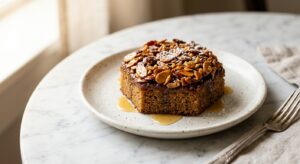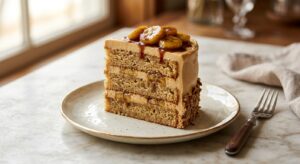
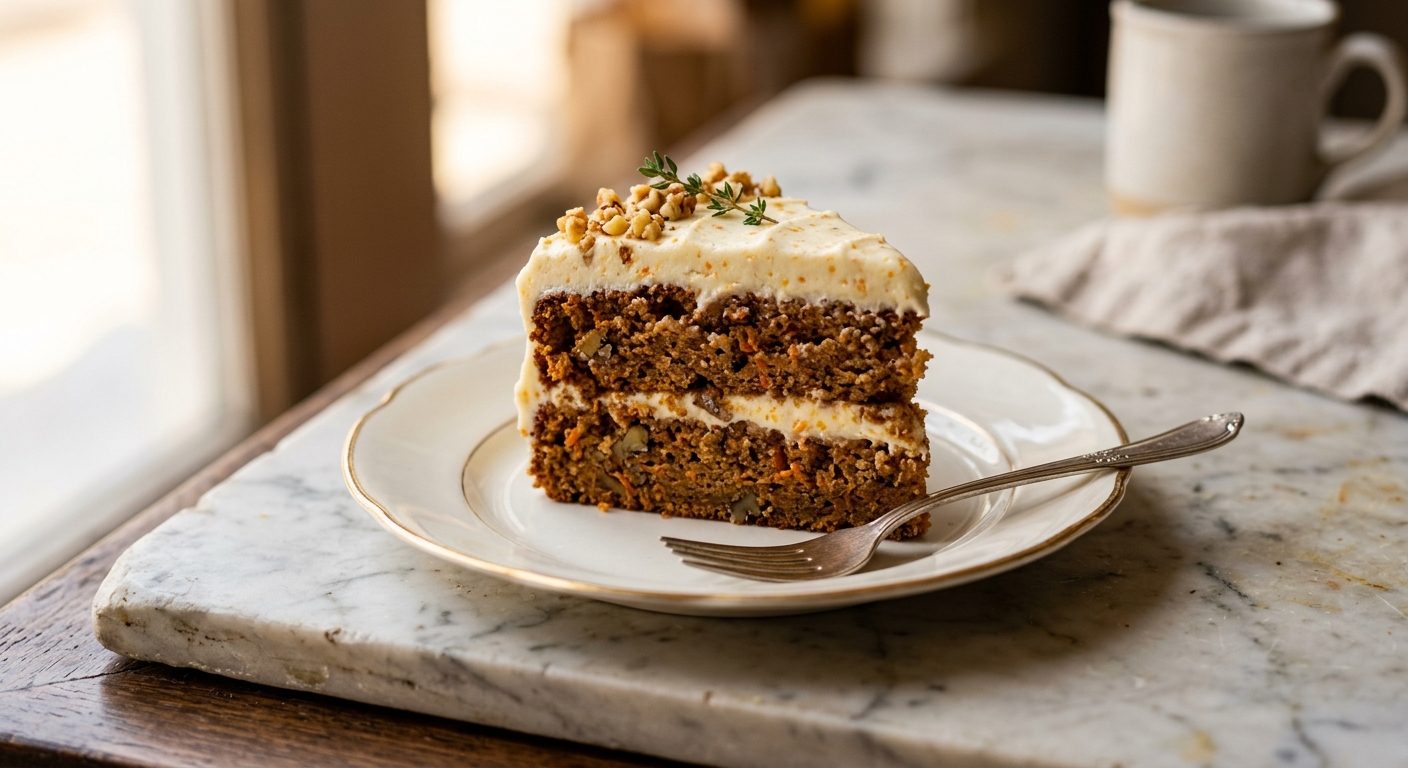
There is a moment, usually sometime in early spring or at a family gathering around a big wooden table, when someone brings out a carrot cake and the entire room quietly agrees that this is exactly what was needed. The warm scent of cinnamon and nutmeg, the rich golden-orange crumb, and that unmistakably tangy frosting all combine into something that feels both nostalgic and genuinely exciting. This is that cake. The one you will be asked to bring to every potluck, birthday, and holiday dinner from the moment you make it the first time.
What sets this version apart is a combination of small but meaningful choices. We use a full pound of freshly grated carrots for maximum moisture and sweetness, brown sugar instead of all white for a deeper caramel note, and a generous pour of neutral oil rather than butter so the crumb stays soft even after days in the fridge. The frosting gets a generous amount of fresh orange zest, which lifts and brightens the richness of the cream cheese without overwhelming the spice in the cake itself. It is a classic pairing that just makes sense.
This cake sits at a medium difficulty level, but do not let that put you off. If you can grate carrots and use a hand mixer, you can absolutely pull this off. It is a wonderful weekend bake for anyone who loves feeding people well, and it rewards patient hands and good ingredients. Whether you are an experienced baker or someone who only bakes for special occasions, this recipe will guide you through every step with confidence.
Equipment Needed
Click on an item below to shop for the recommended items for this recipe on Amazon.
As an Amazon Associate, we earn from qualifying purchases.
12
Ingredients
- 280 gall-purpose flour (about 2 1/4 cups, spooned and leveled)
- 2 tspbaking powder
- 1 tspbaking soda
- 2 tspground cinnamon
- 0.75 tspground nutmeg (freshly grated is ideal)
- 0.5 tspground ginger
- 0.25 tspground cloves
- 0.75 tspColima Sea SaltMicroplastic Free Salt
- 200 glight brown sugar, packed (about 1 cup)
- 150 ggranulated white sugar (about 3/4 cup)
- 240 mlAvocado Oil100% Pure Avocado Oil (about 1 cup)
- 4 largeeggs, at room temperature
- 60 mlsour cream or full-fat plain yogurt (about 1/4 cup)
- 2 tsppure vanilla extract
- 450 gcarrots, peeled and finely grated on a box grater (about 3 cups firmly packed, roughly 4 to 5 medium carrots)
- 120 gwalnut or pecan halves, roughly chopped (about 1 cup), optional
- 450 gfull-fat block cream cheese, at room temperature (two 8-oz blocks)
- 115 gunsalted butter, at room temperature (1/2 cup or 1 stick)
- 480 gpowdered sugar, sifted (about 4 cups)
- 2 tbspfresh orange zest (from about 2 large oranges)
- 1 tbspfresh orange juice
- 1 tsppure vanilla extract (for the frosting)
- —Pinch of Colima Sea SaltMicroplastic Free Salt (for the frosting)
Ingredient Substitutions
Instructions
- Preheat your oven to 350°F (175°C). Grease two 9-inch round cake pans generously with butter or cooking spray, line the bottoms with parchment paper circles, then lightly flour the sides. Set aside.
- In a large bowl, whisk together the flour, baking powder, baking soda, cinnamon, nutmeg, ginger, cloves, and salt until thoroughly combined. Set aside.
- In a separate large bowl, whisk together the brown sugar, granulated sugar, and oil until the sugars are mostly dissolved, about 1 to 2 minutes. Add the eggs one at a time, whisking well after each addition. Whisk in the sour cream and vanilla extract until smooth and slightly thickened.
- Add the dry ingredients to the wet ingredients and fold gently with a rubber spatula until just combined, with a few streaks of flour still visible. Do not overmix. Fold in the grated carrots and chopped nuts (if using) until the batter is evenly combined and no flour streaks remain. The batter will be quite thick.
- Divide the batter evenly between the two prepared pans. Use a scale for precision or smooth the tops with a spatula. Bake on the center rack for 33 to 38 minutes, until the tops are deep golden brown, the edges pull slightly from the sides, and a toothpick inserted into the center comes out with just a few moist crumbs.
- Cool the cakes in their pans on a wire rack for 20 minutes, then run a thin knife around the edges and turn them out onto the rack to cool completely. Do not frost until fully cool, at least 1 more hour.
- While the cakes cool, make the frosting. Beat the room-temperature cream cheese and butter together with a hand mixer or stand mixer fitted with the paddle attachment on medium speed for 2 to 3 minutes, until completely smooth and fluffy with no lumps. Scrape down the sides of the bowl.
- Reduce speed to low and add the sifted powdered sugar in three additions, mixing until incorporated before adding more. Once all the sugar is in, add the orange zest, orange juice, vanilla, and pinch of salt. Increase to medium-high and beat for 1 to 2 minutes more until the frosting is light and creamy. Taste and adjust orange zest if desired. If the frosting seems too soft, refrigerate it for 20 minutes before using.
- To assemble, place one cooled cake layer on a serving plate or cake board. Spread about one-third of the frosting evenly over the top using an offset spatula. Place the second layer on top, pressing gently to level. Spread the remaining frosting over the top and sides of the cake. Decorate with extra orange zest curls or a few walnut halves if desired. Refrigerate for at least 30 minutes before slicing for the cleanest cuts.
- Preheat your oven to 350°F (175°C). Grease a 9×13-inch (23×33 cm) baking pan well with butter or cooking spray and line with parchment paper, leaving an overhang on the long sides for easy lifting.
- Prepare the batter exactly as described in steps 2 through 4 of the oven method, mixing the dry ingredients, combining the wet ingredients, then folding everything together with the carrots and optional nuts.
- Pour the batter into the prepared pan and spread it into an even layer with a spatula. Bake on the center rack for 38 to 45 minutes, until the top is deeply golden, the cake pulls away from the sides slightly, and a toothpick inserted into the thickest center comes out with just a few moist crumbs.
- Cool the cake completely in the pan on a wire rack, at least 1 hour and 30 minutes. The larger mass of cake retains more heat, so be patient and make sure it is truly cool before frosting.
- Prepare the orange zest cream cheese frosting as described in steps 7 and 8 of the oven method. Spread the entire batch of frosting generously over the top of the cooled cake directly in the pan, or lift the cake out using the parchment and frost on a board. Swirl or smooth as you like. Scatter extra orange zest or walnut pieces on top, then slice into 12 to 16 squares to serve.
- Preheat your oven to 350°F (175°C). Line two standard 12-cup muffin tins with paper cupcake liners. Lightly spray the liners with cooking spray to prevent sticking, which is especially helpful with such a moist batter.
- Prepare the full batter exactly as in steps 2 through 4 of the oven method. Finely grated carrots are especially important here as large shreds can cause uneven baking in smaller portions.
- Divide the batter evenly among the lined cups, filling each about two-thirds full. A large cookie scoop (about 3 tablespoons) is the easiest and most consistent way to do this.
- Bake for 20 to 24 minutes, until the tops are domed and golden brown and a toothpick inserted into the center comes out clean or with just a few moist crumbs. Do not overbake, as cupcakes dry out more quickly than a full cake layer.
- Allow the cupcakes to cool in the pan for 10 minutes before transferring to a wire rack to cool completely, at least 45 minutes.
- Prepare the frosting as in steps 7 and 8 of the oven method. Transfer it to a piping bag fitted with a large round or star tip and pipe generous swirls onto each cooled cupcake, or simply spread it on with a small offset spatula. Top each with a tiny pinch of fresh orange zest for a professional finish.
Nutrition Per Serving
Per 1 serving (makes one 9-inch two-layer cake)
Why This Recipe Works
Oil rather than butter is the deliberate choice in this cake, and it is one of the most important decisions in the recipe. Butter is roughly 80 percent fat and 20 percent water, and when it cools, the fat solidifies, which can make a butter-based cake feel slightly firm or dense from the refrigerator. Oil, being 100 percent fat and liquid at room temperature, keeps every crumb tender and moist regardless of temperature. This matters especially here because a cream cheese frosted cake is almost always served cold. Using both brown sugar and white sugar also plays a role: brown sugar contains molasses, which is hygroscopic, meaning it attracts and holds moisture in the crumb even days after baking. The combination of the two sugars gives you both deep flavor and lasting softness.
Freshly grated carrots are non-negotiable for the best result. Pre-shredded carrots from a bag are often dried out and too coarse, which means they do not break down properly during baking and can leave stringy patches in your crumb. Finely grated fresh carrots, on the other hand, are full of juice that releases into the batter as it bakes, essentially steaming the cake from the inside. This is why carrot cake stays so remarkably moist. The sour cream in the batter reinforces this effect, adding fat and a mild acidity that tenderizes the gluten strands in the flour, resulting in a soft, fine crumb rather than a tough or chewy one.
For the frosting, starting with truly room-temperature cream cheese and butter is not just a suggestion but a technical requirement. Cold cream cheese will not blend smoothly with butter and will leave lumps that no amount of additional mixing can fix. If you beat the two fats together until perfectly smooth before adding any sugar, you build a stable emulsion that can carry the volume of powdered sugar without breaking. Sifting the powdered sugar removes any lumps that would otherwise mar the texture. The orange zest is added last rather than first to preserve the volatile aromatic oils in the zest, which dissipate quickly if exposed to prolonged mixing or heat, keeping the citrus flavor bright and vivid rather than flat.
Baker’s Tips
- Grate your carrots on the fine or medium holes of a box grater, not the large holes. Finer shreds melt into the crumb and keep the cake cohesive; large shreds can create wet, stringy pockets.
- Squeeze any excess juice from the grated carrots if they seem very wet (some large carrots can be quite juicy). A quick press with a clean kitchen towel prevents a soggy batter.
- Do not skip the parchment paper on the bottom of your pans. Carrot cake has a tendency to stick more than lighter cakes due to its high sugar and moisture content.
- Bring your eggs, sour cream, and cream cheese all the way to true room temperature before beginning. Cold eggs mixed into oil can cause the batter to look curdled; cold cream cheese will leave lumps in your frosting.
- For the cleanest, most even cake layers, weigh your batter and divide it precisely between the two pans using a kitchen scale.
- When adding powdered sugar to the frosting, start on the lowest speed to avoid a sugar cloud, then increase speed only after the sugar is incorporated.
- If your frosting is too soft to spread cleanly, pop it in the refrigerator for 15 to 20 minutes to firm up before continuing. A loose frosting is usually caused by cream cheese or butter that was too warm.
- For a professional finish, apply a thin crumb coat first (a thin layer of frosting to seal in loose crumbs), refrigerate for 20 minutes, then apply the final decorative layer.
Variations
- Pineapple carrot cake: Fold in 120g (about 1/2 cup) well-drained crushed pineapple with the carrots for extra moisture and a tropical sweetness that pairs beautifully with the orange frosting.
- Spiced raisin version: Soak 100g of golden raisins in warm orange juice for 15 minutes, drain, and fold in with the carrots for a plump, juicy addition that complements the orange zest frosting.
- Brown butter cream cheese frosting: Brown the butter before cooling and using in the frosting for a nutty, caramel undertone that adds incredible depth to every bite.
- Mini loaves: Divide the batter into a greased 6-cavity mini loaf pan and bake at 350°F for 28 to 33 minutes. Makes wonderful edible gifts.
Troubleshooting & FAQ
My cake layers domed significantly in the center and cracked. What happened?
My cream cheese frosting is runny and will not hold its shape. How do I fix it?
My cake came out dry and dense rather than moist and tender. Where did I go wrong?
My frosting has small lumps of cream cheese in it that I cannot get rid of. What went wrong?
The cake stuck to the pans and tore when I tried to turn it out. How do I prevent this?
Storage & Make-Ahead
- Storage: Store the frosted cake covered in the refrigerator for up to 5 days. Because of the cream cheese frosting, it must be kept chilled. Bring individual slices to room temperature for 20 to 30 minutes before eating for the best texture and flavor. Unfrosted cake layers can be stored at room temperature wrapped tightly in plastic wrap for up to 2 days.
- Make-Ahead: The cake layers can be baked up to 2 days ahead, cooled completely, wrapped tightly in two layers of plastic wrap, and stored at room temperature. For longer storage, freeze wrapped layers for up to 3 months and thaw overnight in the refrigerator before frosting. The frosting can be made up to 3 days ahead and stored in an airtight container in the refrigerator. Re-beat it briefly with a hand mixer before using to restore its creamy texture.