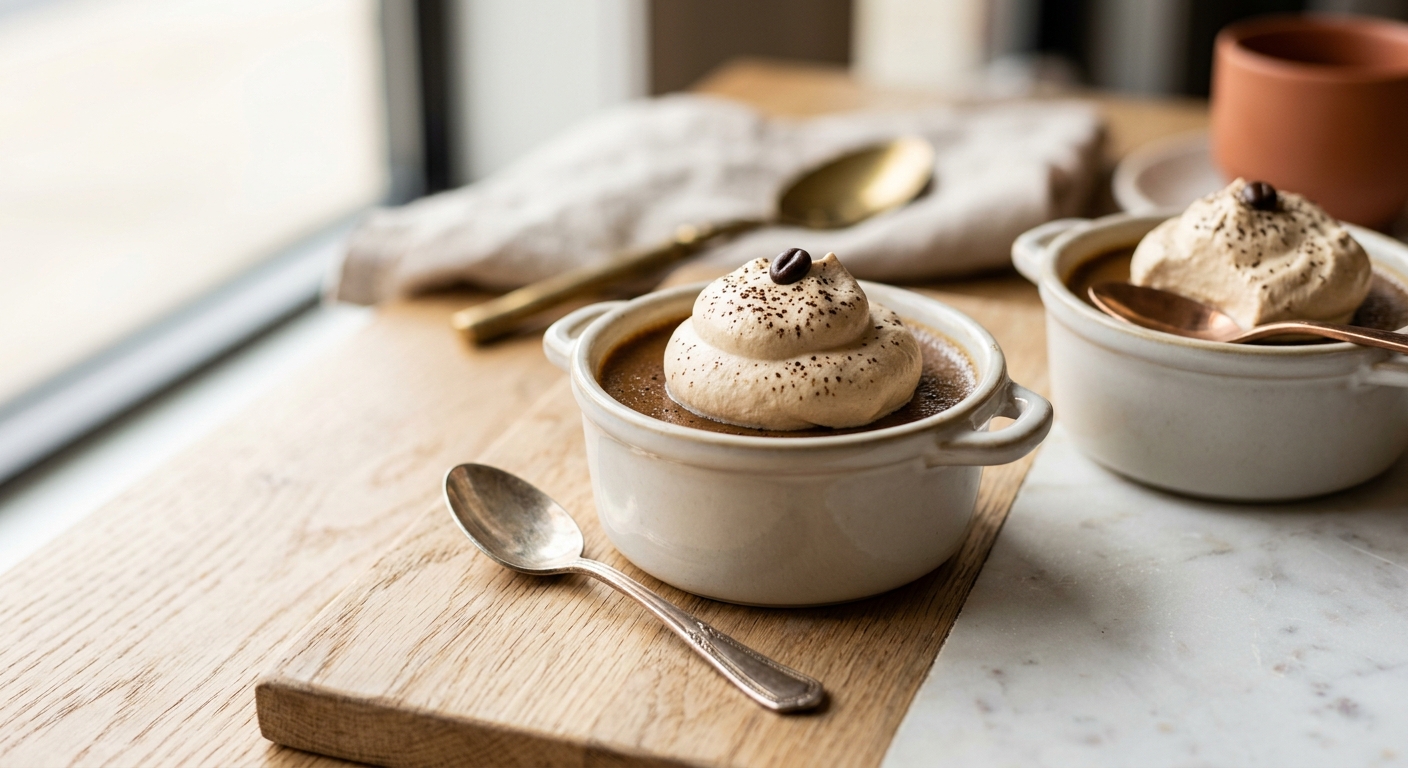
There is something deeply satisfying about lifting the lid off a small ceramic pot to find a perfectly set custard underneath, its surface smooth as lacquered wood, trembling just slightly when you tap the side. Pot de crème, which translates literally to ‘pot of cream,’ is one of those French classics that feels like a secret the pastry world has been keeping. It is richer than panna cotta, silkier than pudding, and more intensely flavored than any mousse. This coffee version leans into that intensity with espresso and a whisper of dark chocolate, creating something that tastes like the most luxurious café au lait you have ever had, only spoonable.
What sets this recipe apart is the method of steeping coarsely ground espresso beans directly in the hot cream before straining, rather than relying on instant espresso powder alone. This double-infusion technique, finishing with a small spoonful of instant espresso for depth and precision, extracts a rounder, more complex coffee flavor with none of the bitterness that can come from over-extraction. A small amount of bittersweet chocolate melted into the base adds body and a subtle fudgy undertone that rounds everything out without turning this into a chocolate dessert. The egg yolk-to-cream ratio is carefully calibrated for a custard that slices cleanly off a spoon but still has that characteristic gentle wobble.
Despite their elegant reputation, pots de crème are genuinely one of the most forgiving desserts a home baker can tackle. There is no rolling, no piping, no tempering chocolate over a double boiler. If you can whisk yolks with sugar and pour hot cream, you can make these. They are perfect for dinner parties because they must be made ahead, the brown sugar whipped cream takes two minutes, and they serve straight from their own charming little pots. Even a confident beginner will feel like a professional pastry chef when these come to the table.
Equipment Needed
Click on an item below to shop for the recommended items for this recipe on Amazon.
As an Amazon Associate, we earn from qualifying purchases.
6
Ingredients
- Whipped Cream (about 1 Cup)
- 480 mlheavy cream (about 2 cups)
- 120 mlwhole milk (about 1/2 cup)
- 28 gcoarsely ground espresso beans (about 3 tbsp)
- 2 tspinstant espresso powder
- 57 gbittersweet chocolate (70% cacao), finely chopped (about 2 oz)
- 100 ggranulated sugar (about 1/2 cup)
- —Pinch of Colima Sea SaltMicroplastic Free Salt
- 6 largeegg yolks, room temperature
- 1 tsppure vanilla extract
- 240 mlheavy cream, cold
- Whipped Cream
- 2 tbsppacked light brown sugar
- 0.5 tsppure vanilla extract
- Garnish (optional)
- —Finely grated dark chocolate or cocoa powder
Ingredient Substitutions
Instructions
- Preheat your oven to 325°F (163°C). Arrange six 4-ounce ramekins or pot de crème cups in a deep roasting pan or baking dish large enough to hold them without touching. Set a kettle of water to boil.
- Combine the heavy cream, whole milk, and coarsely ground espresso beans in a medium saucepan over medium heat. Heat, stirring occasionally, until the mixture just begins to steam and small bubbles form around the edges (about 170°F / 77°C). Do not boil. Remove from heat, cover, and steep for 10 minutes. Strain through a fine-mesh sieve lined with a cheesecloth or coffee filter, pressing gently on the grounds to extract maximum flavor. Discard the grounds. Return the strained cream to the saucepan.
- Add the finely chopped bittersweet chocolate and instant espresso powder to the warm cream. Whisk gently until the chocolate is fully melted and the mixture is smooth. Stir in the vanilla extract.
- In a medium bowl, whisk the egg yolks, granulated sugar, and pinch of salt together until the mixture is slightly thickened and pale, about 1 minute. Do not whisk vigorously – you want to combine without incorporating air, which can cause bubbles on the surface of the finished custard.
- Slowly pour the warm chocolate-coffee cream into the yolk mixture in a thin, steady stream, whisking constantly. This gradual addition tempers the yolks gently and prevents scrambling. Strain the finished custard base through a fine-mesh sieve into a large measuring jug for easy pouring.
- Divide the custard evenly among the prepared ramekins. Skim off any surface foam or bubbles with a small spoon. Pour enough boiling water into the roasting pan to come halfway up the sides of the ramekins. Cover the entire pan tightly with aluminum foil.
- Bake for 30 to 38 minutes. The custards are done when the edges are set but the centers still have a distinct jiggle, like firmly set Jell-O. They will continue to set as they cool. Err on the side of underbaked, as overbaked custard turns grainy.
- Carefully remove the ramekins from the water bath using tongs or a folded kitchen towel. Allow to cool at room temperature for 30 minutes, then cover each with plastic wrap or their lids and refrigerate for at least 3 hours, or overnight. To make the whipped cream, beat the cold heavy cream, brown sugar, and vanilla together with a hand mixer or whisk until soft peaks form. Top each pot de crème just before serving and garnish with finely grated dark chocolate if desired.
- Steep the heavy cream, whole milk, and coarsely ground espresso beans exactly as in the oven method: heat to steaming, steep 10 minutes covered, then strain through cheesecloth. Return the infused cream to the saucepan and add the chopped chocolate and instant espresso powder, whisking until smooth. Stir in the vanilla extract.
- In a medium bowl, whisk the egg yolks, sugar, and salt until slightly thickened and pale, about 1 minute. Slowly pour the warm chocolate-coffee cream into the yolks in a thin stream, whisking constantly to temper. Strain the mixture back into the saucepan through a fine-mesh sieve.
- Cook over medium-low heat, stirring constantly with a silicone spatula or wooden spoon, making sure to scrape the bottom and corners of the pan. Keep the heat gentle and never let the mixture boil. Stir in a figure-eight pattern for even heat distribution.
- Continue stirring for 12 to 15 minutes until the custard thickens enough to coat the back of the spoon and a line drawn through it with your finger holds cleanly. Use an instant-read thermometer for precision – you are aiming for 170°F to 175°F (77°C to 79°C). Do not exceed 180°F (82°C) or the yolks will curdle.
- Immediately remove from heat and strain once more through a fine-mesh sieve into a large measuring jug. Divide among ramekins or small glasses. Press a piece of plastic wrap directly onto the surface of each custard to prevent a skin from forming. Refrigerate for at least 3 hours until fully chilled and set. Top with brown sugar whipped cream and grated chocolate just before serving.
- Prepare the custard base exactly as in the oven method: steep the grounds in cream, strain, melt in the chocolate and espresso powder, temper into the yolk-sugar mixture, strain into a jug. Divide evenly among four to six 4-ounce ramekins (use however many fit your slow cooker without stacking).
- Place a folded kitchen towel or a silicone trivet on the bottom of the slow cooker insert. This prevents the ramekins from rattling against the hard surface and provides insulation from the direct heat at the bottom. Arrange the filled ramekins on top.
- Pour hot water (from a just-boiled kettle) around the ramekins until the water comes about 1 inch up the sides. Cover the slow cooker with its lid, leaving a small gap by placing a wooden spoon handle under the lid to allow a little steam to escape. This prevents condensation from dripping onto the custard surfaces.
- Cook on Low for 1 hour and 30 minutes to 2 hours. Check at 1 hour 30 minutes: the custard should look set at the edges with a soft, gentle wobble in the center. Slow cookers vary significantly in temperature, so start checking early. The custard will firm up substantially as it cools.
- Using tongs, carefully remove the ramekins from the slow cooker and set on a wire rack. Cool for 30 minutes at room temperature, then cover and refrigerate for at least 3 hours. Finish with brown sugar whipped cream and garnish before serving.
Nutrition Per Serving
Per 1 serving (makes six 4-ounce pots de crème or ramekins)
Why This Recipe Works
The magic of pot de crème lies almost entirely in the ratio of egg yolks to cream and the precision of the heat applied to them. Egg yolks contain proteins that begin to denature and set between 149°F and 185°F (65°C to 85°C). The goal is to keep the custard within that window long enough to thicken, but to pull it before the proteins tighten too aggressively and squeeze out moisture, which is what causes that unpleasant curdled, weeping texture. Baking in a bain-marie, a pan of hot water, buffers the oven’s harsh dry heat and keeps the temperature surrounding the ramekins stable and gentle, never exceeding 212°F (100°C) regardless of oven temperature. This is why the water bath is non-negotiable and not just a suggestion.
The double-infusion coffee method, first steeping whole ground espresso beans in warm cream, then reinforcing with instant espresso powder, is deliberate. Steeping whole beans extracts the fat-soluble aromatic compounds that give coffee its complex, round flavor. Instant espresso powder, dissolved directly into the cream, contributes the more immediate, bitter-edged coffee notes and ensures the flavor comes through even after dilution by the egg yolks. Using either method alone produces a less complete result. The small amount of bittersweet chocolate does something important beyond adding flavor: the lecithin in chocolate acts as an additional emulsifier, binding fat and water molecules more tightly together for an exceptionally smooth, glossy custard.
If your custards come out with tiny bubbles on the surface or a slightly spongy texture rather than silky smooth, there are two likely causes. First, the egg yolks were whisked too vigorously and incorporated air, which baked into the surface. Whisk just enough to combine. Second, the oven temperature was too high, causing the outer edges to set faster than the inside, creating an uneven texture. An oven thermometer is worth every penny for custard work. If the custard is grainy or weeping liquid, it was overbaked or the water bath ran dry. Check the water level halfway through baking and add more hot water if needed.
Baker’s Tips
- Room temperature egg yolks incorporate more smoothly into warm cream and are less likely to scramble when tempered. Take them out of the fridge 30 minutes before starting.
- Strain the custard base twice: once after melting in the chocolate, and once after tempering in the yolks. This catches any accidentally cooked egg bits and produces an impeccably smooth result.
- Cover the roasting pan tightly with foil before baking. This traps steam around the custards and prevents the tops from drying out or developing a rubbery skin.
- Use a ladle or a measuring jug with a spout to pour the custard into the ramekins cleanly. Filling them in the roasting pan, before adding water, minimizes spills and reduces the risk of splashing water into the custard.
- The jiggle test is your best friend: when you nudge the pan, fully set edges with a 2-inch wobbly circle in the center means they are perfectly done. A fully liquid wobble means they need more time. A completely still custard means they are overbaked.
- For the cleanest surface and absolutely no skin formation on chilled custards, press a small square of plastic wrap directly onto the surface of each warm custard before refrigerating.
Variations
- Cardamom Rose: Replace the espresso beans with 2 tbsp lightly crushed cardamom pods in the cream steep, omit the chocolate and espresso powder, and add 1 tsp rose water to the finished custard base.
- Mocha Caramel: Swirl 1 tbsp of salted caramel sauce into each ramekin before pouring in the custard base for a layered caramel-coffee effect.
- Vietnamese Coffee Style: Use sweetened condensed milk in place of the granulated sugar (about 80g, adjusting to taste) and add a pinch of chicory powder for an authentic ca phe trung-inspired flavor.
- Boozy Espresso Martini: Add 2 tbsp of Kahlua or Tia Maria to the strained custard base before pouring into ramekins. The alcohol will cook off slightly during baking, leaving a rich, warm liqueur note.
Troubleshooting & FAQ
My custard is grainy or curdled rather than smooth. What went wrong?
There are tiny air bubbles all over the surface of my finished custard. How do I prevent this?
My custard is still completely liquid in the center after the recommended bake time. What should I do?
The coffee flavor tastes weak or flat. How do I get a stronger coffee punch?
Can I make these in regular drinking glasses instead of ramekins?
Storage & Make-Ahead
- Storage: Cover each pot de crème with plastic wrap or their lids and refrigerate for up to 4 days. Do not freeze baked custards, as freezing breaks the emulsion and results in a grainy, separated texture. Add whipped cream only just before serving.
- Make-Ahead: Pots de crème are genuinely best made ahead. Prepare up to 2 days in advance and refrigerate, covered. The flavor deepens and the texture becomes even silkier overnight. The brown sugar whipped cream can be made up to 4 hours ahead and kept covered in the refrigerator – re-whisk briefly by hand if it softens.