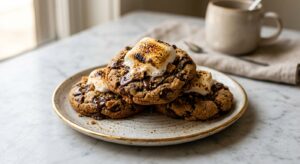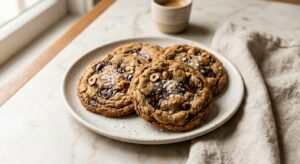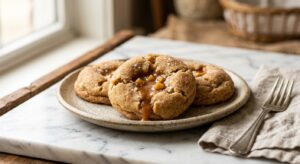
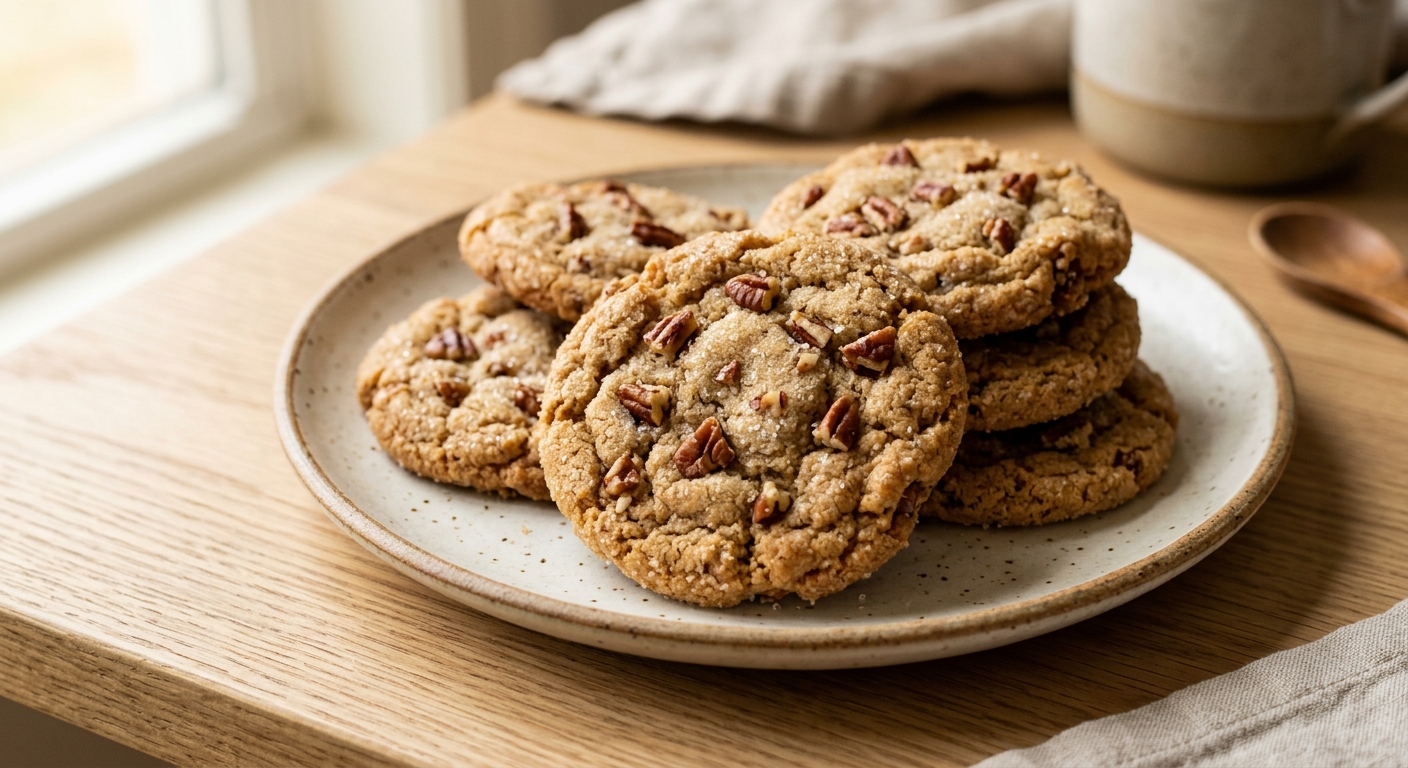
There is a particular kind of magic that happens when butter hits a hot pan and slowly transforms from pale yellow to a deep, amber-flecked liquid that smells like toasted hazelnuts and caramel. That is brown butter, and it is the secret backbone of these pecan sandies. Where most shortbread-style cookies are pleasant but forgettable, these have a richness and depth that makes people stop mid-bite and ask what on earth is in them. The answer is simple: patience, pecans, and that glorious browned butter.
What sets this recipe apart is the double layer of nutty flavor. The butter is browned until the milk solids turn golden and fragrant, and the pecans are toasted separately in the oven before being folded in. Both steps take only a few extra minutes, but they are the difference between a cookie that is merely good and one that is genuinely memorable. The dough is also given a full chill in the refrigerator, which firms up the fat, concentrates the flavors, and ensures the cookies hold their shape in the oven without spreading into thin, greasy discs.
These sandies sit comfortably in the easy-to-medium range of baking. There is no creaming, no layering, and no frosting required. If you have never browned butter before, this is a wonderful first recipe to try it in because the flavor payoff is so obvious. They are perfect for holiday cookie tins, an afternoon coffee, or honestly just because it is Tuesday and your kitchen deserves to smell this good.
Equipment Needed
Click on an item below to shop for the recommended items for this recipe on Amazon.
As an Amazon Associate, we earn from qualifying purchases.
24
Ingredients
- Rolling
- 225 gunsalted butter (1 cup), cut into tablespoon pieces
- 120 graw pecan halves (about 1 cup), roughly chopped
- 200 gall-purpose flour (about 1 2/3 cups, spooned and leveled)
- 60 gcornstarch (about 1/2 cup)
- 90 gpowdered sugar (about 3/4 cup), sifted
- 1 tsppure vanilla extract
- 0.5 tspColima Sea SaltMicroplastic Free Salt
- 0.25 tspground cinnamon
- 60 ggranulated sugar (about 1/4 cup)
- Rolling Sugar
- 1 tspvanilla bean paste or seeds from 1/2 vanilla pod
Ingredient Substitutions
Instructions
- Toast the pecans: Spread the chopped pecans on a dry baking sheet and toast in a 325°F (165°C) oven for 8 to 10 minutes, stirring once, until golden and fragrant. Transfer immediately to a plate to cool completely. Do not skip this step as raw pecans taste flat compared to toasted ones.
- Brown the butter: In a light-colored saucepan over medium heat, melt the butter, stirring occasionally. Continue cooking as it foams, then subsides, and small golden-brown flecks begin to form at the bottom, about 5 to 7 minutes total. The butter will smell deeply nutty and caramel-like. Immediately pour it into a large heatproof mixing bowl, scraping out every last browned bit from the pan. Let cool to room temperature, about 20 minutes, then refrigerate until it is just barely firm but not hard, about 30 to 40 minutes. It should look like soft, creamy butter.
- Make the dough: Beat the cooled brown butter with the sifted powdered sugar using a hand mixer or stand mixer fitted with the paddle on medium speed until smooth and creamy, about 2 minutes. Add the vanilla extract and salt. Sift in the flour, cornstarch, and cinnamon, then mix on low speed just until the dough comes together and no dry streaks remain. Fold in the toasted pecans by hand with a spatula.
- Shape and chill: Roll the dough into a log about 2 inches (5 cm) in diameter, or divide and roll into two slightly shorter logs. Wrap tightly in plastic wrap and refrigerate for at least 1 hour, or up to 48 hours. The dough can also be frozen at this stage for up to 2 months.
- Prepare the vanilla sugar: Stir the granulated sugar together with the vanilla bean paste or seeds until evenly combined and fragrant. Spread on a plate.
- Slice and coat: Preheat oven to 325°F (165°C) and line two baking sheets with parchment paper. Unwrap the chilled dough and roll the log firmly in the vanilla sugar to coat the outside. Slice into rounds about 1/2 inch (1.2 cm) thick. Press any crumbling edges back together gently. Place 1.5 inches (4 cm) apart on the prepared sheets.
- Bake: Bake one sheet at a time on the center rack for 13 to 15 minutes, until the edges are just barely golden and the centers look set but still pale. They will firm up significantly as they cool. Do not overbake. Let the cookies cool on the baking sheet for 5 minutes before transferring to a wire rack to cool completely.
- Prepare the dough: Follow all dough preparation steps from the oven method (toast pecans, brown and chill butter, mix dough, shape into log, and chill at least 1 hour).
- Prepare the vanilla sugar and coat: Stir granulated sugar with vanilla bean paste on a plate. Roll the chilled dough log in the sugar, then slice into 1/2-inch (1.2 cm) rounds as directed.
- Prep the basket: Cut a circle of parchment paper to fit your air fryer basket or tray, leaving small gaps at the edges for airflow. Preheat the air fryer to 300°F (150°C) for 3 minutes. Do not go higher, the sugared surface will burn before the cookie bakes through at higher temperatures.
- Bake in batches: Arrange 4 to 6 cookies in a single layer with about 1 inch (2.5 cm) between them. Air fry at 300°F (150°C) for 8 to 10 minutes, until the edges are pale golden. The cookies will look slightly underdone in the center. That is correct.
- Cool properly: Let the cookies rest in the basket for 3 minutes before moving them, as they are fragile when hot. Transfer to a wire rack and cool completely before eating. They crisp up beautifully as they cool.
Nutrition Per Serving
Per 1 serving (makes about 24 round cookies)
Why This Recipe Works
Browning the butter before chilling it back to a solid fat is the key transformation in this recipe. When butter browns, the water evaporates and the milk proteins undergo the Maillard reaction, creating hundreds of new flavor compounds that taste like toasted nuts, caramel, and toffee. By chilling the brown butter back to its original solid consistency, you reintroduce it into the recipe as a creamed fat, which gives the dough structure. If you tried to use it liquid, the cookies would spread and the texture would be greasy. Patience here is not just a virtue, it is chemistry.
Cornstarch is a classic shortbread trick and it earns its place here. When mixed with flour, cornstarch dilutes the gluten-forming proteins, meaning less gluten develops as the dough is mixed. Less gluten equals a more tender, crumbly, melt-in-your-mouth texture. The low oven temperature of 325°F (165°C) reinforces this: a gentle heat dries the cookies out slowly without setting a tough crust, encouraging that signature sandy snap rather than a chewy bite.
If your cookies spread in the oven, the most likely culprit is dough that was not cold enough when it went in. Always bake from a fully chilled log. If your cookies crumble apart when sliced, the dough may be too cold and brittle: let the log sit at room temperature for 5 minutes before slicing. And if the flavor seems flat, double-check that you browned the butter long enough. The transformation from melted to browned is dramatic and obvious, with a deep golden color and a strong nutty aroma. If you are not sure, give it another minute.
Baker’s Tips
- Use a light-colored or stainless steel saucepan when browning butter so you can clearly see the color of the milk solids. Dark nonstick pans make it very hard to judge doneness.
- Pour the brown butter into the mixing bowl immediately once browned, scraping the pan. The residual heat of the pan will keep cooking the solids and can take them from brown to burnt in under a minute.
- Measure flour by spooning it into the measuring cup and leveling off, or weigh it in grams. Scooping directly compacts the flour and can result in dry, crumbly dough.
- A sharp knife is essential for clean slices. A dull blade will drag through the pecans and cause the log to crumble. Wipe the blade clean between every few slices.
- Rotate your baking sheet halfway through the bake time if your oven has hot spots. Sandies are forgiving, but even browning makes a big difference in appearance.
- The cookies should still look slightly underdone at the center when you pull them from the oven. They continue to firm up and set on the hot baking sheet as they cool. Overbaked sandies taste dry and lose their characteristic melt-in-your-mouth quality.
Variations
- Maple Pecan Sandies: Replace the vanilla extract with 1 tsp maple extract and add 1 tbsp pure maple syrup to the dough. Reduce powdered sugar by 10g to compensate for the added moisture.
- Brown Butter Espresso Sandies: Add 2 tsp finely ground espresso powder to the dough with the flour. The coffee amplifies the caramel notes of the brown butter beautifully.
- Chocolate-Dipped: Once cookies are fully cooled, dip one half in tempered dark chocolate and place on parchment to set. A flake of sea salt on the chocolate while still wet is highly recommended.
- Cinnamon-Spiced Rolling Sugar: Replace the vanilla bean paste in the rolling sugar with 1/2 tsp ground cinnamon and a pinch of cardamom for a warmly spiced coating.
Troubleshooting & FAQ
My cookies spread out flat and lost their shape in the oven. What went wrong?
My cookies are crumbling apart when I try to slice the dough log. How do I fix it?
The brown butter does not seem to have much flavor. Did I do something wrong?
Why do my cookies taste dry or sandy in a bad way rather than delicate and melt-in-your-mouth?
The vanilla rolling sugar is not sticking to the outside of my dough log. What should I do?
Storage & Make-Ahead
- Storage: Store in an airtight container at room temperature for up to 5 days. Place a sheet of parchment between layers to protect the sugared surface. Cookies can be frozen (fully baked) for up to 2 months. Freeze in a single layer first, then transfer to a bag. Thaw at room temperature for 20 minutes.
- Make-Ahead: The dough log can be made up to 2 days ahead and refrigerated, or frozen for up to 2 months. Slice and bake directly from the refrigerator. If baking from frozen, add 2 to 3 minutes to the bake time and thaw the log just enough to slice without crumbling.