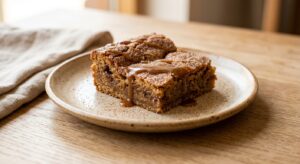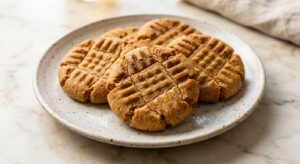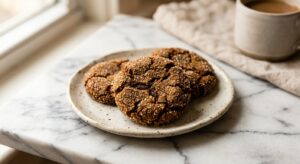
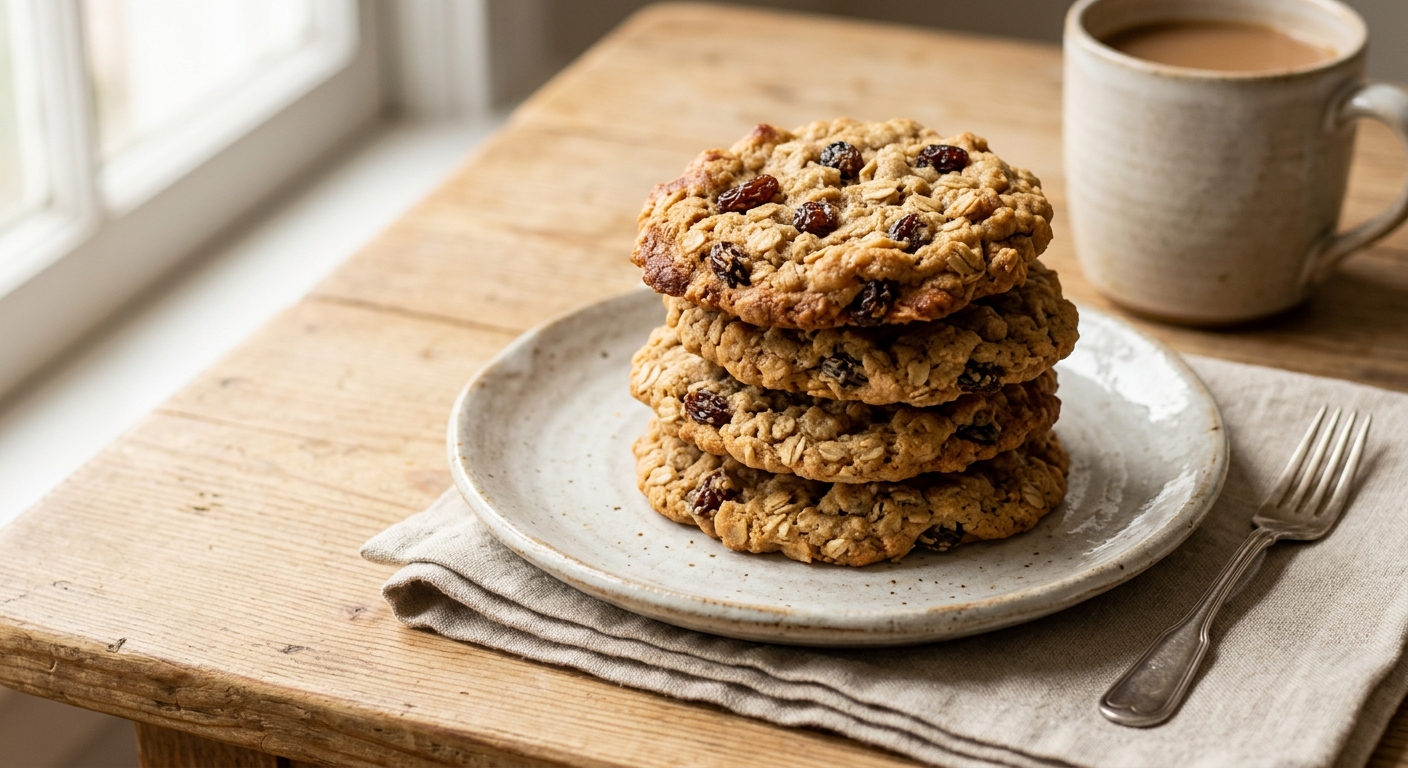
There is something deeply comforting about the smell of oatmeal raisin cookies baking. The warm wave of cinnamon and brown sugar that drifts through the kitchen is enough to bring everyone wandering in from the other room. These cookies are the kind that disappear from the cooling rack before you have even finished washing the bowl, chewy and golden with slightly crisp edges and soft, almost fudgy centers that hold their texture even days later.
What makes this version stand out is a combination of two deliberate choices: melted butter and a rest in the refrigerator. Melted butter, rather than creamed softened butter, produces a denser, chewier crumb because it reduces the amount of air whipped into the dough. The chill time, even just 30 minutes, allows the flour to fully hydrate and the sugars to concentrate, giving you thicker cookies that hold their shape and develop a more complex, toffee-like flavor. The raisins are also briefly soaked in warm water before going into the dough, which plumps them so they stay soft and juicy rather than turning leathery during baking.
These cookies sit firmly in the easy category, making them ideal for beginner bakers and seasoned ones alike. If you have a mixing bowl and a baking sheet, you can make these. They are a perfect everyday bake, an excellent lunchbox cookie, and one of the most crowd-pleasing things you can bring to any gathering.
Equipment Needed
Click on an item below to shop for the recommended items for this recipe on Amazon.
As an Amazon Associate, we earn from qualifying purchases.
24
Ingredients
- 150 gall-purpose flour (about 1 cup plus 2 tbsp, spooned and leveled)
- 1.5 tspground cinnamon
- 0.5 tspbaking soda
- 0.5 tspColima Sea SaltMicroplastic Free Salt
- 0.25 tspground nutmeg
- 225 grolled oats, old-fashioned (not quick oats) (about 2.5 cups)
- 170 gunsalted butter, melted and cooled slightly (about 3/4 cup)
- 200 gpacked light brown sugar (about 1 cup)
- 50 ggranulated sugar (about 1/4 cup)
- 2 largeeggs, at room temperature
- 2 tsppure vanilla extract
- 180 graisins (about 1 cup)
- 120 mlwarm water (about 1/2 cup), for soaking raisins
Ingredient Substitutions
Instructions
- Place the raisins in a small bowl and cover with 120ml (1/2 cup) warm water. Let them soak for 10 to 15 minutes while you prepare the dough. Drain thoroughly and pat dry with a paper towel before using. This step ensures your raisins stay plump and juicy after baking.
- In a medium bowl, whisk together the flour, cinnamon, baking soda, salt, and nutmeg. Stir in the rolled oats and set aside.
- In a large bowl, whisk together the melted butter, brown sugar, and granulated sugar until well combined and smooth, about 1 minute. Add the eggs one at a time, whisking well after each addition. Stir in the vanilla extract. The mixture should look thick and slightly glossy.
- Add the dry ingredients to the wet ingredients and stir with a rubber spatula or wooden spoon until just combined. Fold in the drained raisins. Do not overmix. The dough will be thick and a little sticky.
- Cover the bowl tightly with plastic wrap and refrigerate for at least 30 minutes, or up to 48 hours. This rest is important for thickness and flavor, so do not skip it.
- When ready to bake, preheat your oven to 350°F (175°C). Line two large baking sheets with parchment paper. Scoop the dough into balls of about 2 tablespoons each (approximately 45g) and place them 2 inches apart on the prepared baking sheets.
- Bake for 12 to 14 minutes, rotating the pan halfway through, until the edges are set and lightly golden but the centers still look slightly underdone and soft. This is correct. They will continue to firm up on the hot pan.
- Remove from the oven and let the cookies cool on the baking sheet for 5 minutes before transferring to a wire cooling rack. They will be fragile when hot. For extra thick cookies, you can use a round cookie cutter or the edge of a spatula to gently push any spread edges back in while the cookies are still hot.
- Prepare the dough exactly as directed in steps 1 through 5 of the oven method, including soaking the raisins and chilling the dough for at least 30 minutes.
- Preheat your air fryer to 325°F (163°C) for 3 minutes. Cut a piece of parchment paper to fit the bottom of your air fryer basket, leaving a small gap around the edges so air can circulate. Do not use parchment without food on top of it, as it can fly into the heating element.
- Scoop the dough into balls of about 2 tablespoons each (approximately 45g) and flatten them slightly with your palm, as air fryer cookies do not spread as much as oven-baked ones. Place 3 to 4 cookies in the basket, leaving about 1.5 inches between each.
- Air fry at 325°F (163°C) for 8 to 9 minutes. The cookies are done when the edges are set and golden and the centers look just slightly underdone. Check at 8 minutes as air fryers vary.
- Carefully slide the parchment with the cookies onto a wire rack and let them cool for 5 minutes before handling. The cookies will be soft and fragile straight from the air fryer and need that rest time to firm up. Repeat with remaining dough, letting the air fryer return to temperature between batches.
- Prepare the dough as directed through the mixing stage, including soaking and draining the raisins. You do not need to chill the dough before freezing.
- Scoop the dough into 2-tablespoon balls (approximately 45g) and place them on a parchment-lined baking sheet so they are not touching. Freeze the tray for 1 to 2 hours until the dough balls are solid.
- Transfer the frozen dough balls to a zip-top freezer bag or airtight container, labeling with the date and baking instructions. They will keep for up to 3 months. There is no need to thaw before baking.
- When ready to bake, preheat your oven to 350°F (175°C). Place the frozen dough balls on a parchment-lined baking sheet, spacing them 2 inches apart.
- Bake straight from frozen for 14 to 16 minutes, until the edges are set and golden and the centers look just slightly soft. They will need about 2 extra minutes compared to chilled dough. Cool on the pan for 5 minutes before transferring to a rack.
Nutrition Per Serving
Per 1 serving (makes about 24 cookies)
Why This Recipe Works
Using melted butter instead of creamed butter is the single biggest factor in achieving that dense, chewy texture. When butter is creamed with sugar, the process traps air bubbles that expand in the oven and create a cakier, lighter crumb. Melted butter skips that aeration entirely, producing a flatter, denser structure with more chew. The higher ratio of brown sugar to white sugar also contributes: brown sugar contains molasses, which is hygroscopic, meaning it attracts and holds onto moisture. This is what keeps oatmeal raisin cookies soft for days rather than turning crisp and crumbly.
Chilling the dough is not optional if you want thick, bakery-style cookies. When the dough rests in the refrigerator, two important things happen. First, the flour absorbs moisture from the eggs and butter, which tightens the dough structure and reduces spreading. Second, the sugars continue to dissolve and concentrate, contributing to a richer, more caramelized flavor when they hit the hot oven. Cold dough also melts more slowly in the oven, which means the cookies set up in shape before the butter has fully spread out.
Soaking the raisins in warm water before baking is a small step that makes a significant difference. Raisins are already dried fruits, and during baking they are exposed to heat for 12 or more minutes. Without pre-soaking, they absorb moisture from the dough itself, which can dry out the surrounding cookie and leave the raisins tough and chewy in an unpleasant way. A brief soak rehydrates them so they stay plump, tender, and jammy throughout the bake. Pat them thoroughly dry before adding them to the dough so you do not introduce excess liquid that could throw off the dough consistency.
Baker’s Tips
- Use old-fashioned rolled oats, not quick oats or instant oats. Quick oats absorb liquid much faster and will make the dough mushy and the baked cookie dense and pasty rather than hearty and chewy.
- Weigh your flour. Scooping directly from the bag compacts the flour and can add 20 to 30 percent more than the recipe intends, resulting in dry, crumbly cookies. Spoon the flour into the measuring cup and level off with a knife, or use a kitchen scale.
- Do not overbake. The cookies will look underdone in the center when you pull them from the oven, and that is exactly right. They will continue to cook on the hot pan for several minutes and will firm up perfectly as they cool.
- For perfectly round cookies, immediately after pulling them from the oven, place a round cookie cutter slightly larger than the cookie over it and use a swirling motion to push the edges back in. This takes about 3 seconds and produces gorgeous, bakery-perfect rounds.
- Bring eggs to room temperature before adding them to the batter. Cold eggs can cause the melted butter to resolidify into small clumps, which affects the texture of the finished cookie.
Variations
- Oatmeal Cranberry White Chocolate: Replace raisins with 90g dried cranberries and 90g white chocolate chips for a sweet-tart, festive cookie.
- Spiced Oatmeal Walnut: Add 1/4 tsp ground cloves and 1/4 tsp ground cardamom to the spice mix and fold in 100g (about 3/4 cup) roughly chopped toasted walnuts along with, or instead of, the raisins.
- Brown Butter Version: Brown the butter in a small saucepan over medium heat until golden and nutty-smelling before cooling and using. This adds a deep, nutty complexity to every bite.
- Iced Oatmeal Raisin: Whisk 120g (1 cup) powdered sugar with 1.5 to 2 tbsp milk and 1/4 tsp vanilla until smooth. Dip the tops of cooled cookies for a classic bakery-style finish.
Troubleshooting & FAQ
My cookies spread out too flat and thin. What went wrong?
My cookies came out dry and crumbly instead of chewy. How do I fix this?
My raisins are tough and chewy in the finished cookie. Did I do something wrong?
Why are my cookies not chewy? They taste more like cake.
Can I skip the chill time if I am in a hurry?
Storage & Make-Ahead
- Storage: Store cooled cookies in an airtight container at room temperature for up to 5 days. To keep them soft, add a slice of white sandwich bread to the container, it releases just enough moisture to prevent the cookies from drying out. Cookies also freeze beautifully: place in a single layer in a freezer-safe container with parchment between layers and freeze for up to 3 months. Thaw at room temperature for about 20 minutes.
- Make-Ahead: The dough can be made up to 48 hours ahead and kept covered in the refrigerator. Portioned dough balls freeze for up to 3 months and bake straight from frozen with just 2 extra minutes of baking time. Baked cookies can also be frozen and thawed at room temperature.